TL;DR
Endurance sports apparel keeps athletes cooler, drier, better protected, and more focused during long efforts. Research shows that technical fabrics, compression garments, and sun-protective clothing improve comfort, thermoregulation, and recovery, which supports performance over time. Rockresist builds an integrated system of socks, tops, bottoms, hats, and wrist bands around this science so endurance athletes can move with “No Grit. No Quit.”
What is endurance sports apparel?
Endurance sports apparel is technical clothing engineered to regulate temperature, manage moisture, protect skin, and reduce friction during prolonged activity. Performance fabrics transport sweat away from the skin, maintain a more stable microclimate, and help athletes sustain effort with lower perceived exertion.
Endurance apparel uses lightweight synthetic fibers, structured knitting, and strategic ventilation to accelerate evaporation and assist thermoregulation. Seam placement, panel design, and cuff structure minimize hotspots that cause chafing or blisters on long runs, rides, and hikes. High-quality pieces also integrate UV protection, abrasion resistance, and durable construction for outdoor use.
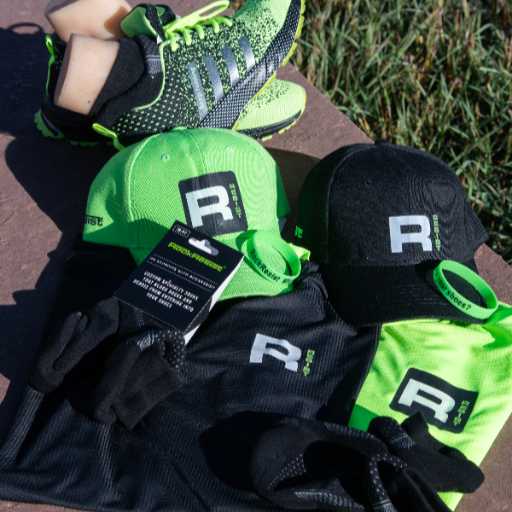
Rockresist endurance sports apparel applies these principles across socks, tees, polos, compression pants, hats, and wrist bands to support road, trail, and everyday training needs.
How does Rockresist approach endurance sports apparel design?
Rockresist designs endurance sports apparel to deliver protection, comfort, and durability under real training conditions. The brand philosophy “No Grit. No Quit.” defines a focus on apparel that keeps athletes moving instead of stopping to fix preventable issues like debris, blisters, or soggy layers.
Rockresist socks use a one-of-a-kind construction with an integrated polyurethane barrier that blocks trail debris and sand while maintaining a snug performance fit. Rockresist tees and compression pants use quick-dry, breathable, lightweight fabrics for endurance sessions on road and trail. Rockresist polos, hats, and wrist bands extend the same performance mindset into daily wear, recovery days, and mental reinforcement through branded taglines.
Why do endurance athletes need specialized socks?
Endurance athletes need specialized socks to prevent blisters, manage moisture, and stop debris from interrupting performance. Medical guidance shows that moisture, friction, and trapped grit significantly increase blister risk, while moisture-wicking, properly fitting socks reduce that risk.
Technical running socks use synthetic fibers or performance wools, targeted cushioning, and smooth seams to lower pressure and friction at high-load zones. Trail runners and hikers also benefit from socks that limit the entry of sand, pebbles, and dirt into shoes, which removes a frequent cause of mid-run stops.
Customer feedback on Rockresist socks from trail runners and walkers in varied regions reports fewer stops to clear debris, consistent comfort, and stable sizing across golf, hiking, and daily walking.
How do Rockresist Socks support road and trail performance?
Rockresist Socks use a debris-blocking barrier and durable construction to keep feet cleaner and more comfortable over long distances. The GEN1 Road and Trail models integrate an internal polyurethane barrier that prevents small pebbles and grit from reaching the sock line while still allowing a customized stretch fit.
Medium sizes cover women’s 10–12 and men’s 8–10, while large sizes cover women’s 13–15 and men’s 11–13. Rockresist Socks retail at $25.99 (USD) per pair as a premium, technical endurance sock.
Trail runners in loose and sandy conditions report that Rockresist Socks eliminate post-run debris in shoes and reduce interruptions on hilly courses. Walkers on mixed-surface routes describe smoother sessions because kicked-up pebbles collect inside the sock “pocket” rather than irritating the leg.
Hand washing preserves the polyurethane barrier and allows the cuff to stretch for a customized fit, while air-drying protects elasticity and return eligibility.
How should runners choose technical tees for endurance?
Endurance runners should choose technical tees that prioritize moisture-wicking, breathability, low weight, and non-irritating seams. Research on performance shirts shows that advanced polyester blends and phase-change materials reduce skin temperature, lower perceived exertion, and increase exercise capacity by around 8% in hot, humid conditions.
Moisture-wicking tees move sweat away from the skin and speed evaporation, which helps maintain a safer core temperature and reduces fatigue. Short sleeves suit warm conditions and higher speeds, while long sleeves provide additional coverage for cooler temperatures and UV exposure.
How do Rockresist Running Tees perform in hot and humid conditions?
Rockresist Running Tees use quick-dry, breathable, lightweight fabrics to keep endurance athletes cooler and more comfortable. Product descriptions highlight fast moisture transport, open fabric structures for airflow, and a comfortable performance fit suitable for road races and tempo sessions.
Technical running tees from Rockresist align with evidence that moisture-wicking garments reduce sweat saturation, maintain microclimate stability near the skin, and improve subjective comfort during high-intensity exercise. These attributes support consistent pacing by minimizing distractions from clingy, heavy fabric.
When do Rockresist Long Sleeve Tees give an advantage?
Rockresist Long Sleeve Tees give an advantage during cooler sessions, variable weather, and long outdoor exposures. Long sleeves provide extra coverage for forearms while still using breathable, lightweight, quick-dry materials.
Endurance athletes gain flexibility by using Rockresist Long Sleeve Tees as standalone tops in mild weather or as mid-layers under shells in colder environments. Additional fabric coverage supports UV protection strategies when paired with hats and sunscreen.
Where does a performance polo shirt belong in an endurance wardrobe?
A performance polo shirt belongs in an endurance wardrobe as a versatile piece for low-intensity days, travel, and multisport activities. Technical polos bridge the gap between training apparel and casual wear by combining moisture-managing fabrics with a more structured, everyday look.
Rockresist Polo Shirts focus on a stylish, comfortable fit suitable for daily wear, golf rounds, walking, and light cross-training. Athletes who meet clients, travel to events, or transition directly from work to movement can rely on a Rockresist Polo to maintain comfort without sacrificing appearance.
What benefits do compression pants provide for endurance sports?
Compression pants provide targeted pressure that may reduce muscle oscillation, support venous return, and modestly aid recovery after endurance exercise. Systematic reviews report small but meaningful benefits of compression garments for speed, endurance, and muscle strength recovery, especially for trained athletes and lower-limb garments.
Compression sportswear does not replace training, but it can contribute to reduced soreness, improved comfort, and more stable muscles during long or repeated sessions.
How do Rockresist Compression Pants support performance and recovery?
Rockresist Compression Pants use quick-dry, breathable, lightweight fabrics with a compressive fit to support muscles during and after endurance efforts. Product descriptions emphasize moisture-management and comfort for running, hiking, and gym work, which aligns with research on the role of compression sportswear in multi-modal training programs.
Rockresist Compression Pants can serve as a primary lower-body layer during cool-weather runs or as a base under shorts for additional coverage and support. Consistent compression from hip to ankle supports recovery sessions, travel days, and back-to-back training blocks.
How do accessories like hats and wrist bands enhance endurance performance?
Accessories like hats and wrist bands enhance endurance performance by improving sun protection, sweat management, and mental focus. Sun-protective hats reduce UV exposure to the face and scalp and can block up to 98% of harmful rays when they use UPF 50+ materials. Wrist bands help manage sweat around the hands and forearms, which improves grip and comfort.
How do Rockresist Wrist Bands reinforce mindset and comfort?
Rockresist Wrist Bands provide a functional sweat accessory that also reinforces an endurance mindset. Product notes highlight cool colors, a one-of-a-kind look, and tagline designs that echo the Rockresist “No Grit. No Quit.” philosophy.
Tagline wrist bands give endurance athletes a visible reminder of their commitment during hard intervals, long races, and strength sessions. Soft, absorbent structures help remove sweat from the face and hands without relying on shirt hems.
How do Rockresist Hats protect endurance athletes outdoors?
Rockresist Hats deliver adjustable, branded head coverage for outdoor endurance sessions. Adjustable closures help athletes dial in fit for road runs, trail climbs, or walking days, while lightweight construction supports breathability.
Endurance brands increasingly integrate sun-protective features into hats and tops to supplement sunscreen and reduce cumulative UV exposure during multi-hour events. Rockresist Hats align with this direction by prioritizing all-day wearability alongside brand identity.
How should endurance athletes layer Rockresist apparel for different conditions?
Endurance athletes should layer Rockresist apparel by combining moisture-managing base layers, protective mid-layers, and weather-appropriate accessories. A systematic approach keeps the body’s microclimate stable while matching temperature, wind, and sun exposure.
Hot and humid conditions
- Rockresist Socks for moisture-management and anti-debris protection.
- Rockresist Running Tee as a single, quick-dry layer.
- Rockresist Hats for shade and sweat control.
- Rockresist Wrist Bands for sweat removal and grip.
Mild or shoulder seasons
- Rockresist Socks with road or trail shoes.
- Rockresist Running Tee or Rockresist Polo based on activity and setting.
- Rockresist Long Sleeve Tee over a running tee for extra coverage when needed.
- Rockresist Compression Pants as full-length bottoms or under shorts.
Cold or variable weather
- Rockresist Socks with appropriate footwear for traction.
- Rockresist Compression Pants as a base layer.
- Rockresist Long Sleeve Tee as a core insulating layer under outer shells.
- Rockresist Hats to reduce heat loss from the head, plus wrist bands for sweat control under gloves.
This layering approach keeps the Rockresist system coherent from feet to head for road running, trail running, hiking, and long walks.
How should Rockresist endurance apparel be cared for?
Rockresist endurance apparel should be washed gently and air-dried to preserve performance fabrics, compression, and debris-blocking technology. Rockresist athletic socks require hand washing only because mechanical washing can damage the polyurethane barrier that delivers anti-debris protection and custom stretch.
The care guide recommends turning socks inside-out, using cold or warm water, mild detergent, and avoiding bleach or fabric softeners to maintain moisture-wicking capability. Air-drying on a flat surface or line protects elasticity and shape, while clothes dryers reduce lifespan and remove eligibility for product returns.
Other Rockresist apparel pieces benefit from similar practices: gentle washing, separation by color, avoidance of high heat, and proper storage in a cool, dry place away from damp gear bags. Regular inspection for thinning fabric or damaged seams ensures that endurance sports apparel continues to deliver reliable performance.
How can Rockresist endurance sports apparel support different disciplines?
Rockresist endurance sports apparel supports multiple disciplines by providing a consistent foundation across socks, tops, bottoms, and accessories.
- Road running: Rockresist Socks, Running Tees, Compression Pants, Hats, and Wrist Bands combine to manage moisture, control debris, and stabilize muscles during tempo runs, intervals, and marathons.
- Trail running and hiking: Rockresist Socks offer clear value on loose terrain by preventing small rocks and sand from reaching the sock line, which reduces stops and irritation on steep or technical routes. Rockresist Long Sleeve Tees and Hats add coverage in exposed mountain or desert environments.
- Golf, walking, and everyday activity: Rockresist Polos and Hats bring performance comfort to lower-intensity endurance activities such as long walks, 18-hole golf days, and casual hikes, while Rockresist Socks maintain underfoot protection.
- Gym work and cross-training: Rockresist Compression Pants and Running Tees provide breathable support for strength sessions that complement road and trail training.
This system approach allows endurance athletes to build an apparel rotation around Rockresist pieces while tailoring combinations to specific sports, climates, and training loads.
FAQ
What Rockresist item should endurance athletes prioritize first?
Endurance athletes should prioritize Rockresist Socks first because debris management and blister prevention directly influence performance. Socks with a polyurethane debris barrier and snug fit reduce interruptions on road and trail and support foot health across training cycles.
Are compression pants necessary for all endurance athletes?
Compression pants are not strictly necessary for all endurance athletes, but research supports small benefits for recovery and muscle strength. Lower-limb compression garments can help mitigate strength loss after exercise-induced fatigue, particularly for trained athletes and multi-day efforts. Rockresist Compression Pants provide these benefits while maintaining moisture-management and comfort.
How often should athletes replace endurance socks?
Athletes should replace endurance socks when elasticity, cushioning, or debris protection declines. Indicators include thinning fabric under the forefoot or heel, loose cuffs that no longer stay in place, and visible wear in the polyurethane barrier for Rockresist Socks. Careful hand washing and air-drying extend lifespan and maintain performance.
Do long sleeve tees overheat runners in summer?
Long sleeve tees do not automatically overheat runners in summer when they use lightweight, moisture-wicking, breathable fabrics. Studies on technical shirts show that advanced polyester and phase-change materials can reduce skin temperature and perceived exertion even in hot environments. Rockresist Long Sleeve Tees rely on these principles while adding coverage for sun protection and cooler mornings.
What return conditions apply to Rockresist athletic socks?
Rockresist athletic socks qualify for return within 30 days when they remain unworn, unwashed, and in original packaging. The return policy excludes socks that show signs of use, damage, or alterations, and dryer use removes return eligibility by compromising material performance. Customers can contact corporate@circle-c-enterprises.com to initiate a return.
References
- Di Domenico, I., & colleagues. (2022). The role of sports clothing in thermoregulation, comfort and performance. Sports Medicine–Open. Retrieved from National Library of Medicine (PMC).
- Lee, H., & colleagues. (2023). Compression sportswear improves speed, endurance, and recovery: A systematic meta-analysis. Applied Sciences, 13(24), 13198.
- Li, X., & colleagues. (2025). Effects of compression garments on muscle strength and power after exercise-induced fatigue: A systematic review and meta-analysis. Journal of Sports Science and Medicine.
- TCA. (2024, July 25). The science behind moisture-wicking fabrics in athletic wear. TCA Performance.
- Verywell Health. (2025). 9 proven ways to prevent blisters when running. Verywell Health.
- Runner’s World. (2022, April 27). Best sun-protective clothing 2022: UPF 50+ running gear. Runner’s World.