
Table of Contents
- Why Runners Look for Alternatives to Bulky Gaiters
- Quick Comparison: Gaiter Alternatives by Weight, Coverage, and Price
- High-Cuff Running Socks: The Lightest Way to Block Grit
- Trail-Running Shoe Gaiters: Low-Profile Coverage That Stays Put
- Gaiter-Compatible Trail-Running Shoes: What to Check Before You Buy
- Preventing Rocks in Running Shoes Without Full-Length Gaiters
- When Full Gaiters Are Still Worth Wearing
- Conclusion
- Frequently Asked Questions
Last Updated: October 21, 2026
Why Runners Look for Alternatives to Bulky Gaiters
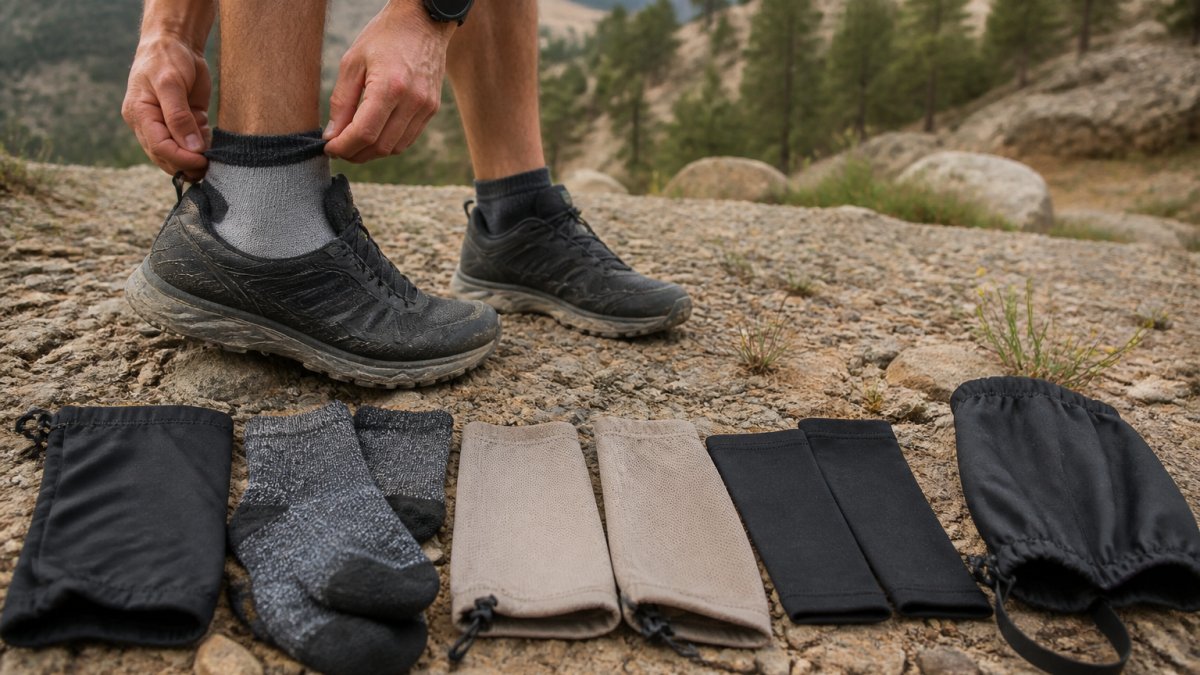
Full-length gaiters work. That's not the debate. The problem is what they cost you in weight, heat, and hassle on a fast trail run. At RockResist, we hear from runners who've tried the traditional route and want something lighter, and the reasons are consistent: bulky fabric traps heat on summer climbs, straps and hooks slow down shoe changes, and the whole setup feels like overkill for a 10-mile training loop. Many runners find that alternatives to bulky hiking gaiters solve the same grit problem with far less gear. Below, we break down the realistic options, from high-cuff socks to low-profile shoe gaiters, and explain when the full gaiter still earns its place.
Quick Comparison: Gaiter Alternatives by Weight, Coverage, and Price
The right alternative depends on how much debris you actually face and how much bulk you are willing to carry. The table below compares the main substitutes on the metrics that matter most: weight per pair, packed size, coverage height, typical price, and the trail conditions each one handles. Use it as a starting filter, then read the section for your top candidate.
| Option | Approx. Weight per Pair | Packed Size | Coverage | Typical Price | Best For |
|---|---|---|---|---|---|
| High-cuff running socks | 2-3 oz | Folds to palm size | Ankle collar only | $25-$35 | Grit, sand, light debris, dry dusty trails |
| Low-profile shoe gaiters | 1.5-3 oz | Stuff sack size of a golf ball | Shoe collar to low ankle | $30-$60 | Mud, slush, rocky trails, shallow snow |
| Gaiter-compatible shoes | Built into shoe | N/A (worn) | Integrated collar | Shoe cost only | Runners replacing footwear who want clean integration |
| Waterproof trousers with cinched cuffs | 6-12 oz | Packable stuff sack | Ankle to waist | $80-$200 | Rain, wet brush, splash protection |
| Full gaiters | 6-12 oz | Rolled cylinder | Ankle to knee | $40-$100 | Deep snow, dense brush, scree |
A few patterns stand out. High-cuff socks and low-profile shoe gaiters are the only options that pack down to pocket size, which is why they dominate for fast-and-light three-season running. Waterproof trousers add rain protection that no gaiter alternative provides, but they run warmer and cost more. Full gaiters remain the heaviest and bulkiest option, and they are the only ones that protect the shin and knee from brush and scree.

Price ranges reflect common retail pricing for running-specific gear; specialty and premium models can sit above these bands. The key is to match coverage height to the debris you actually encounter, not to buy the most protection available.
High-Cuff Running Socks: The Lightest Way to Block Grit
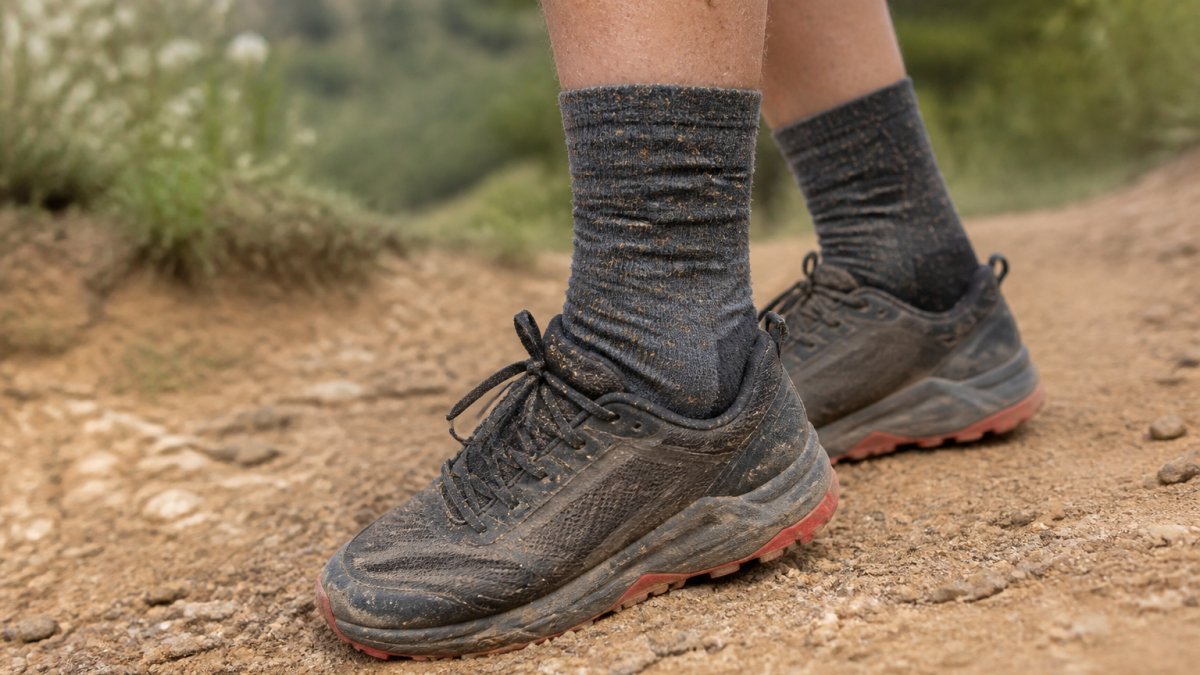
High-cuff running socks are the simplest alternative to bulky hiking gaiters: a sock with an extended collar that sits over the shoe opening and blocks grit at the source. There's no strap, no hook, and nothing to adjust mid-run. RockResist GEN1 Trail Running Socks use an integrated debris-blocking barrier you can wear up for loose terrain or tuck in for a lower profile, priced at $30.00. A non-slip build keeps them in place, and added heel material reduces friction at the collar.
Trail-Running Shoe Gaiters: Low-Profile Coverage That Stays Put
Trail-running shoe gaiters are short, low-profile covers that attach at the shoe collar and stop debris before it reaches your sock. They cover more than a high-cuff sock but weigh a fraction of full gaiters. The trade-off is setup: most rely on an instep strap, an underfoot strap, or a hook-and-loop closure, and getting the fit right takes a few tries. These suit runners facing mud, snow, and rocky ground where ankle coverage matters but knee-high fabric doesn't.

Gaiter-Compatible Trail-Running Shoes: What to Check Before You Buy
Gaiter-compatible trail-running shoes solve the problem at the source: the shoe itself has attachment points for a low gaiter, so coverage integrates cleanly with no slipping and no separate underfoot strap to wear through. Before you buy, work through the checks below.
Attachment system type. Confirm the shoe has a dedicated gaiter attachment system, not just a generic loop. Common designs include a front hook or loop at the toe, a heel tab or clip at the rear, and sometimes a Velcro patch at the instep.
Collar height match. Verify the shoe collar height matches your gaiter so there is no gap for grit. Measure the distance from the top of the shoe collar to the gaiter hem. If you plan to wear a high-cuff sock underneath, test the fit with that sock on, since a thick cuff can change how the collar sits and push the gaiter hem up.
Trouser cuff interaction. If you run in waterproof trousers or tights with cinched cuffs, check that the cuff sits over the gaiter hem rather than under it. A cuff over the hem sheds water cleanly; a cuff tucked under the hem channels water into the shoe.
Membrane and drainage. A waterproof membrane in the shoe changes the calculus. With a gaiter-compatible shoe and a low gaiter, water that enters over the collar has nowhere to drain if the membrane is intact. Many runners pair a low gaiter with a non-waterproof, quick-draining shoe for wet conditions, accepting wet feet in exchange for fast drying.
RockResist GEN1 Trail Running Socks, Debris-Blocking Low Cut →
Fit with your actual sock. Test the fit with your actual sock, since a thick high-cuff sock can change how the collar sits. Bring the socks you plan to run in when you try shoes on, and walk or jog a few steps to check for heel slip and collar pressure.
This route costs more upfront but eliminates the compatibility guesswork. The trade-off is commitment: once you buy the shoe, you are tied to its gaiter system.
Preventing Rocks in Running Shoes Without Full-Length Gaiters
Preventing rocks in running shoes comes down to sealing the collar, and you don't need full-length gaiters to do it. Start with a high-cuff sock worn over the shoe opening. Add a low-profile shoe gaiter if you're on loose scree or mud. Lace your shoes with the heel locked down so the collar stays snug, and check your sock cuff after water crossings, since wet fabric sags. A common mistake is sizing socks too loose. Layer waterproof trousers over the sock cuff on wet days for a cleaner seal.
When Full Gaiters Are Still Worth Wearing
Full gaiters still win in specific conditions, and pretending otherwise is dishonest. Deep snow, dense brush, and sharp scree demand knee-high protection that no sock or low gaiter provides. Winter hiking with postholing, routes through thorny scrub, and alpine terrain with loose rock all justify the weight. The honest trade-off is heat and mobility: full gaiters run warmer and restrict ankle flex. If your trails are dry singletrack and gravel, they're overkill. If you're breaking trail in snow, they're essential.
Conclusion
The real challenge isn't finding gear, it's matching coverage to the terrain you actually run. RockResist builds debris-shielding gear for exactly this problem: GEN1 socks with an integrated barrier, moisture-management fibers, and reinforced construction tested on rugged trails. Start with a pair and see how much grit you stop at the collar. Add to cart and run with No Grit. No Quit.
Frequently Asked Questions
What can I use instead of hiking gaiters?
The most common substitutes are high-cuff running socks with a built-in debris barrier, low-profile trail-running shoe gaiters, and gaiter-compatible shoes with attachment points. High-cuff socks are the lightest option because there is nothing extra to strap on, while low-profile gaiters add coverage above the ankle for looser terrain. Full gaiters still make sense for deep snow, scree, or long brushy sections where you need coverage up the calf.
Can high-cuff socks keep dirt and rocks out of shoes?
A high-cuff sock only helps if the cuff sits above the shoe collar and seals the gap where grit enters. RockResist GEN1 low-cut socks use an integrated barrier that blocks dirt, sand, and small trail debris at the shoe collar, and the barrier can be worn up on loose terrain or tucked in for a lower profile. Pair that with a snug heel hold and you remove most of the entry path for pebbles.
Are trail-running gaiters less bulky than hiking gaiters?
Yes. Trail-running shoe gaiters typically stop at or just above the ankle and use a thin stretch fabric, so they pack down small and add little weight. Hiking gaiters often run to mid-calf, use heavier fabric, and rely on a full underfoot strap. If your main problem is grit flicked up by your own stride, a low-profile gaiter or a debris-blocking sock solves it without the bulk.
How do I stop pebbles from getting into my running shoes?
Start at the collar. Wear a sock whose cuff sits above the shoe opening, or add a low gaiter that seals that gap. Lace the shoe snugly at the top two eyelets so the collar hugs the ankle, and check that your heel is locked in rather than sliding. On very loose ground, stop once early in the run to empty anything that got in before it works into the sock and causes friction.
When are full hiking gaiters worth wearing?
Full gaiters earn their weight in deep snow, dense brush, sharp scree, and wet mud where you need coverage up the calf rather than just at the ankle. They also help in cold conditions by adding a wind-blocking layer over the lower leg. For dry, dusty trails and packed dirt where the only issue is small debris at the collar, a lighter option usually wins on comfort and heat.