
Last Updated: August 18, 2026
Best Hiking Socks for Blister Prevention on Mountain Trails
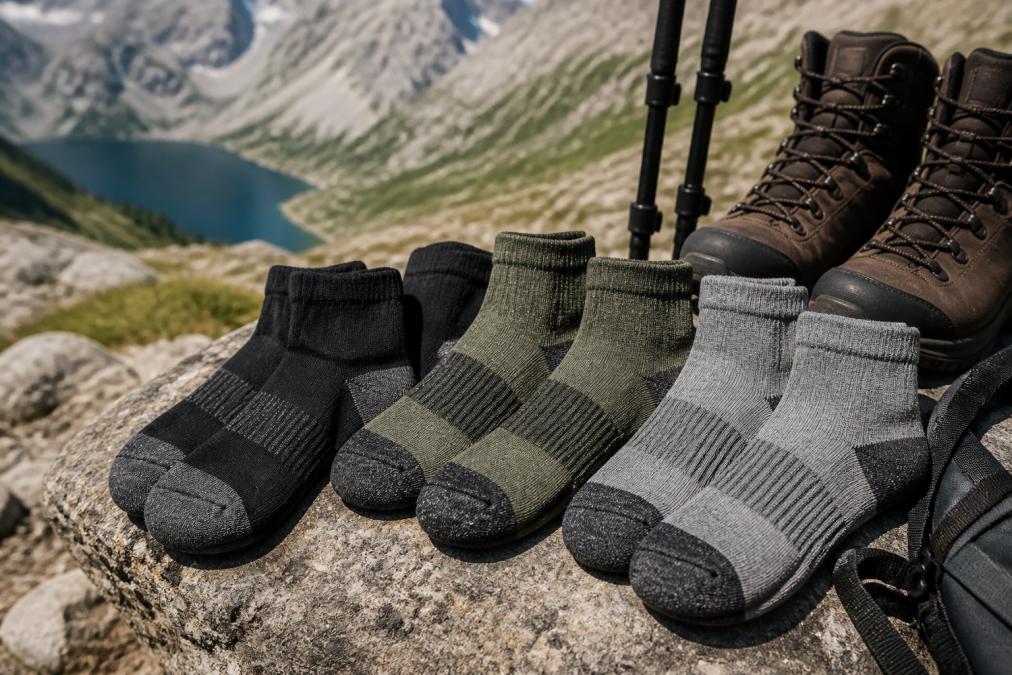
The right sock prevents blisters by managing moisture, heat, and friction through seamless toe construction, arch support, moisture-wicking fibers, and debris-shielding cuffs. According to American Podiatric Medical Association guidance on foot health, moisture is the primary environmental factor in blister formation during athletic activity.
The RockResist GEN1 Road & Trail Low Cut Athletic Socks address each factor with moisture-management fibers and debris-shielding cuff design at $25.99 per pair or $58.48 for a three-pair bundle. Add to cart

Merino Wool vs Synthetic Hiking Socks: Which Wins on Technical Terrain
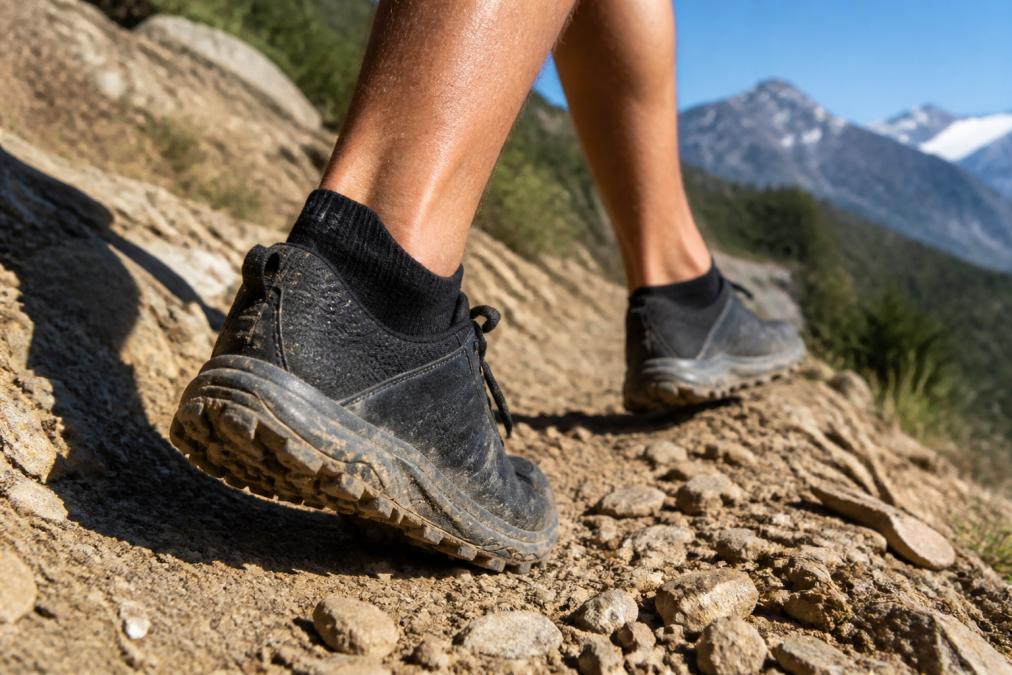
Merino wool excels at odor resistance and thermal regulation for multi-day backpacking in cool conditions, while synthetic blends win on durability and moisture-wicking under sustained high output, making them ideal for trail running and technical terrain. As noted by REI Co-op's expert hiking sock guide, the best performing socks combine both materials, using merino for comfort and synthetics for reinforcement in heel and toe zones.
| Feature | Merino Wool | Synthetic Blend |
|---|---|---|
| Odor resistance | Excellent | Moderate |
| Moisture-wicking speed | Moderate | Fast |
| Abrasion resistance | Moderate | High |
How to Choose Hiking Sock Thickness for Rugged Mountain Trails
Match sock thickness to boot stiffness and terrain: lightweight for trail running in warm conditions, midweight for most all-day hiking, and heavyweight for backpacking and cold conditions. For rugged mountain use, midweight delivers adequate cushioning without compressing inside the boot, while crew heights protect the ankle from boot collar abrasion.
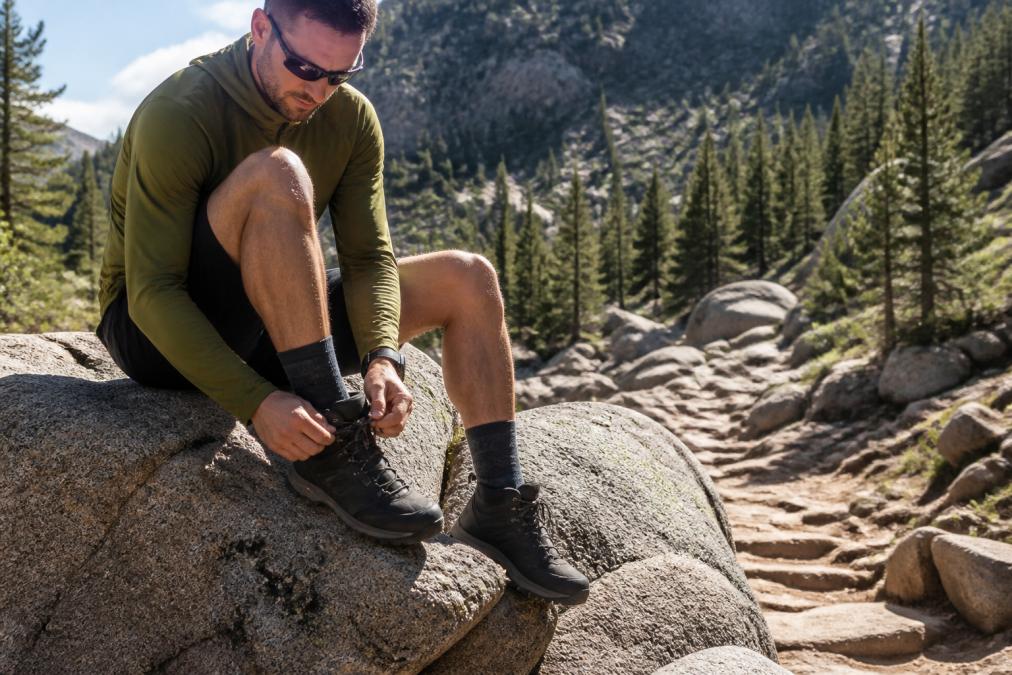
The RockResist Sock Bundle gives you three pairs at $58.48, making it practical to keep different weights on hand for different conditions. Add to cart

Foot comfort on technical terrain is not a small detail. It determines whether you finish strong or limp back to the trailhead. RockResist socks are engineered with debris-shielding cuff technology, reinforced seams, and moisture-management fibers specifically for the conditions that break down generic athletic socks. Get the pair built for the terrain you actually run. Add to cart and stop managing blisters mid-route.
This article was written using GrandRanker