
Table of Contents
- Why Preventing Debris in Running Shoes Matters
- Trail Running Gaiters: What They Are and How They Work
- Best Socks for Trail Running: Your First Line of Defense
- Terrain-Specific Strategies for Preventing Debris in Running Shoes
- Lacing Techniques and Shoe Features That Keep Debris Out
- How to Clean Trail Running Shoes After a Muddy Run
- Common Mistakes That Let Debris Wreck Your Runs
- Conclusion
Last Updated: August 17, 2026
Why Preventing Debris in Running Shoes Matters
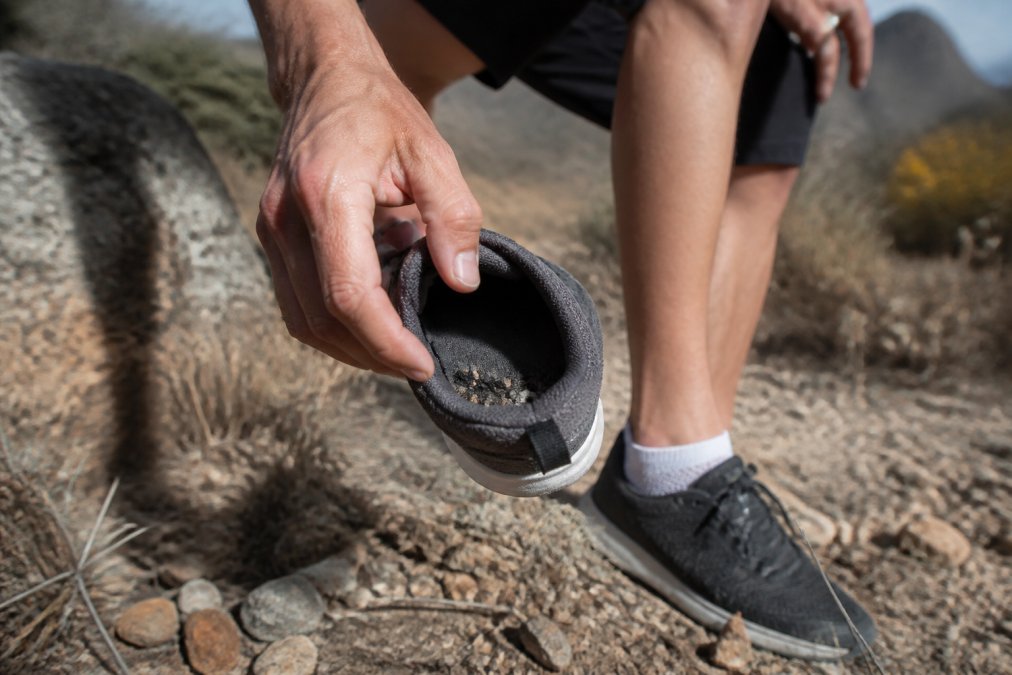
Preventing debris in running shoes is one of those problems that sounds minor until it sidelines you three miles from the trailhead. Sand, grit, and small stones work their way past your shoe opening, shift under your foot with every stride, and grind against skin until you've got a blister that ruins the rest of your run. At RockResist, we've seen this happen to athletes on everything from groomed park paths to technical mountain singletrack, and the fix is rarely just "tie your shoes tighter."
The damage isn't just cosmetic. Debris that lodges against the upper fabric of your shoe can abrade the mesh from the inside out, shortening the lifespan of a pair of trail running shoes that cost real money. Moisture trapped alongside that debris creates the perfect environment for hot spots to escalate into open wounds.
This guide covers the full prevention toolkit: trail running gaiters, the right socks, terrain-specific strategies, lacing techniques, and post-run cleaning. Below, we'll show you exactly how to keep your footwear clean, your feet blister-free, and your attention where it belongs, on the trail ahead.
Trail Running Gaiters: What They Are and How They Work
Trail running gaiters are lightweight protective covers that wrap around the lower leg or shoe collar to seal the gap between your shoe and the ground. They act as a physical barrier, blocking sand, grit, stones, and debris from entering through the shoe opening during off-road runs.
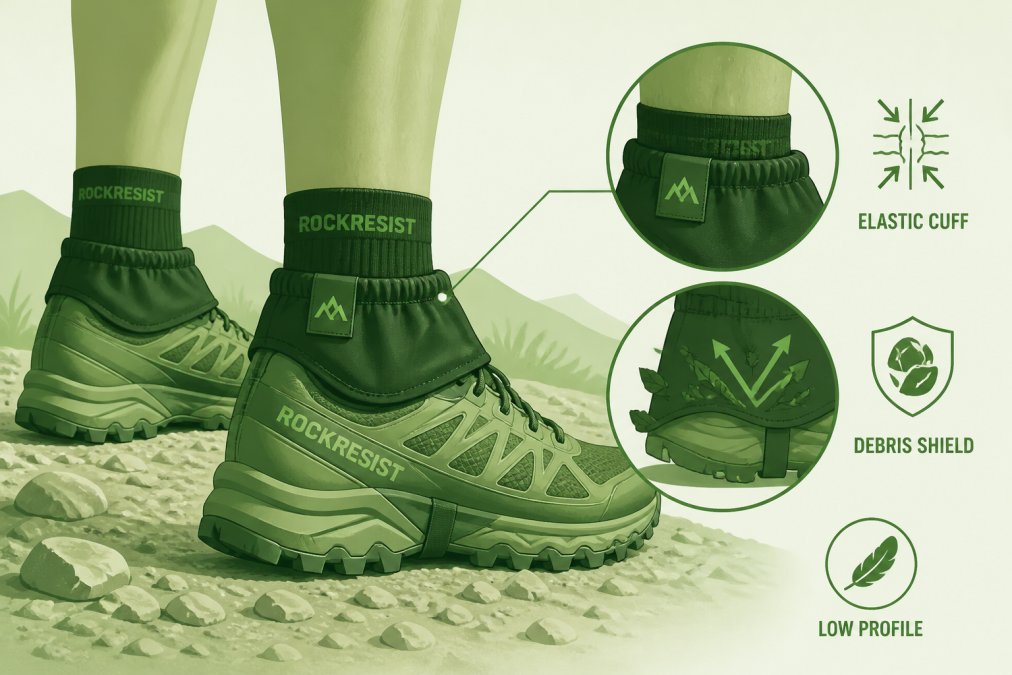
Most trail gaiters attach via a combination of elastic cuffs at the ankle, a hook or clip that connects to the lace attachment point on the shoe, and a heel tab or strap that runs under the outsole. The result is a snug seal that moves with your foot without restricting breathability. For runners who've dealt with the same pebble-in-the-shoe problem on every single outing, gaiters are often described as a revelation.
Types of Trail Running Gaiters
Trail gaiters fall into two broad categories based on height and construction:
-
Low-profile ankle gaiters, These sit just above the shoe collar and are the most common choice for trail running. They're lightweight, pack small, and add almost no bulk. Best suited for dry to moderately wet terrain where the primary threat is sand, grit, and small stones.
-
Mid-height gaiters, These extend further up the calf and provide more coverage in deep mud, stream crossings, and wet brush. They're heavier and warmer, making them better suited for ultra-marathon distances or technical mountain terrain where conditions change unpredictably.
For most trail runners, low-profile gaiters strike the right balance between protection and breathability.
Shoe-Specific Compatibility: Getting the Right Fit
This is where most runners get tripped up. Not all gaiters fit all shoes. Before buying, check whether your trail shoe has:
- A lace attachment point (a small loop or hook at the toe box or tongue), most gaiters require this
- A heel tab on the outsole for the strap to pass under
- Enough ankle collar height to seat the elastic cuff properly
Many trail shoe manufacturers design their uppers with gaiter compatibility built in. If your current shoes lack these attachment points, low-profile gaiters with strong adhesive attachment systems are an alternative, though they're less secure on technical terrain.
Best Socks for Trail Running: Your First Line of Defense
The right sock does more than cushion your foot. A well-engineered trail running sock creates a secondary barrier against debris while managing the moisture that makes debris-caused blisters so much worse.
What to Look for in a Debris-Blocking Sock
The most effective socks for trail running share a few key construction features:
- Debris-shielding cuffs, A tighter-weave or reinforced band at the ankle opening that prevents fine particles from migrating down into the shoe
- Moisture-wicking materials, Synthetic fibers that pull sweat away from skin keep the foot drier, which reduces friction and the likelihood that grit will stick to your skin
- Reinforced seams, Flat or seamless construction at the toe and heel eliminates the ridges that trap debris and create hot spots during endurance efforts
- Snug but not compressive fit, A sock that bunches or slides creates its own debris-like friction problem
The RockResist GEN1 Road & Trail Low Cut Athletic Socks are built around exactly these principles. The debris-shielding cuff technology and moisture-management fibers are designed specifically for the kind of sustained off-road effort where a regular athletic sock fails. At $25.99 per pair, or $58.48 for a three-pack bundle with free shipping, they're a direct investment in blister-free running.

Terrain-Specific Strategies for Preventing Debris in Running Shoes
Not all debris is the same. The strategy that works on a dry desert trail fails completely in a muddy forest, and vice versa. Matching your approach to the terrain is the difference between a clean run and a blister-fest.
Sand and Grit on Dry Trails
Fine sand is the most insidious debris type. Individual grains are small enough to pass through gaps that would stop a pebble, and they accumulate gradually, you don't notice the problem until you've got a hot spot forming.
On dry, sandy terrain:
- Use low-profile gaiters with a tight elastic cuff to close the shoe opening
- Pair them with a debris-shielding sock that has a reinforced ankle band
- Tighten laces snugly at the ankle without cutting circulation, loose lacing creates a funnel for grit
- On particularly sandy routes, stop every 30-45 minutes to shake out your shoes before debris has time to migrate under the insole
According to American Podiatric Medical Association guidance on footwear and foot health, friction-related injuries from foreign objects in footwear are among the most common preventable causes of foot problems in active adults.
Mud and Wet Conditions
Mud presents a different problem. It doesn't slip through gaps the way sand does, instead, it builds up on the upper fabric and around the shoe opening, adding weight and eventually working its way inside as it softens and breaks down.
For muddy, wet terrain:
- Switch to mid-height gaiters that cover more of the ankle and lower leg
- Choose trail shoes with a tighter mesh upper that resists mud penetration
- Accept that some mud will enter and plan for a post-run clean, prevention in deep mud is about minimizing intrusion, not eliminating it
- After each run in wet conditions, remove insoles immediately to allow both shoe and insole to air dry separately
Lacing Techniques and Shoe Features That Keep Debris Out
Here's what most guides miss: the way you lace your shoes has a measurable effect on how much debris gets in. A loose lace pattern creates a gap at the tongue that acts as an open door for sand and small stones. A properly tensioned lace system holds the tongue flat against the foot and closes that gap.
The heel-lock lacing technique is worth learning for trail running specifically. It uses the extra lace loops at the top of most trail shoes to create a figure-eight lock that prevents heel slip, and a heel that doesn't slip means the shoe collar stays seated where it belongs, reducing the gap at the ankle.
Key shoe features that reduce debris intrusion:
- Integrated tongue gussets, A gusseted tongue is attached to the upper on both sides so it can't shift laterally, eliminating the gap that forms when a floating tongue moves out of position
- Higher ankle collar, More collar height means more coverage before debris can enter
- Tighter mesh construction, Denser synthetic materials on the upper fabric slow the penetration of fine particles, though they trade some breathability for protection
As documented in REI's trail running shoe buying guide, gusseted tongues are one of the most underrated features for debris prevention in off-road footwear, yet they're absent from many entry-level trail shoes.
How to Clean Trail Running Shoes After a Muddy Run
Preventative maintenance doesn't end when you take your shoes off. Caked-on dirt and dried mud left on trail running shoes degrades the upper fabric, stiffens the midsole, and can permanently alter the fit. Cleaning after every muddy run extends shoe life significantly.
Removing Caked-On Dirt and Mud
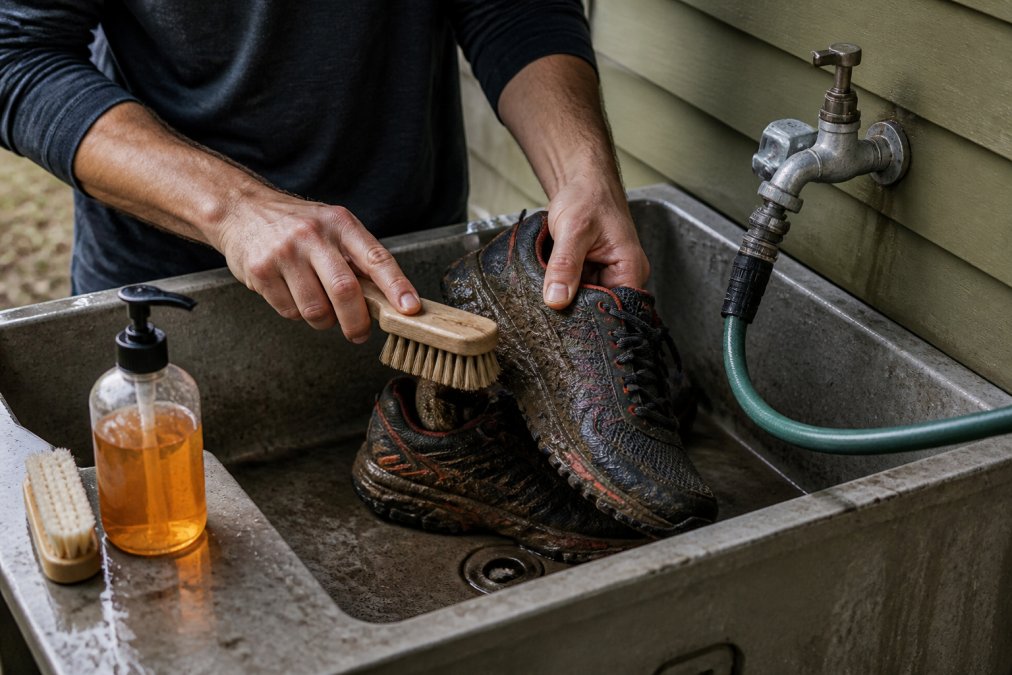
The biggest mistake is cleaning shoes while the mud is still wet. Wet mud smears and drives deeper into the mesh. Let shoes dry first, ideally overnight, then follow these steps:
- Knock off the bulk. Clap the soles together or tap against a hard surface to break off large mud chunks
- Use a stiff brush. A dedicated shoe brush or old toothbrush works well for scrubbing caked-on dirt from the outsole lugs and upper fabric
- Rinse with cool water. Avoid hot water, which can loosen adhesives and degrade synthetic materials
- Apply mild soap. A small amount of dish soap or a purpose-made cleaning solution applied with the brush loosens remaining grit from the mesh
- Rinse thoroughly. Soap residue left in the mesh can cause skin irritation on your next run
- Air dry. Remove insoles, loosen laces fully, and let shoes dry at room temperature away from direct heat. Stuffing with newspaper speeds the process
Never put trail running shoes in a dryer. The heat damages the adhesive bonds between the upper and midsole.
DIY vs. Commercial Cleaning Solutions
This is a genuine fork in the road, and the right answer depends on how often you run in dirty conditions.
| Approach | Best For | Cost | Effectiveness |
|---|---|---|---|
| Mild dish soap + brush | Occasional muddy runs | Very low | High for most debris |
| Baking soda paste | Odor and light staining | Very low | Moderate |
| Purpose-made shoe cleaner | Frequent trail runners | Moderate | High, gentler on materials |
| Enzymatic cleaner | Heavy mud, odor control | Moderate | High for organic debris |
For most trail runners, mild soap and a stiff brush handle the job. Purpose-made cleaning solutions earn their keep if you're running off-road multiple times per week, they're formulated to be gentle on synthetic materials and mesh while still cutting through trail grime.
Waterproofing and Protective Sprays
Once your shoes are clean and dry, a water-repellent spray adds a protective layer that causes mud and water to bead off the upper fabric rather than soaking in. This doesn't make shoes waterproof, it slows saturation and makes post-run cleaning easier.
Apply spray in a well-ventilated area, hold the can 15-20 centimeters from the shoe surface, and coat the upper fabric evenly. Allow to dry fully before running. Reapply every 20-30 runs or when you notice water is no longer beading.
According to Outdoor Industry Association's footwear care guidelines, regular application of durable water repellent treatments can extend the functional life of trail footwear by reducing moisture absorption and the associated material breakdown.
Common Mistakes That Let Debris Wreck Your Runs
The thing nobody tells you about debris prevention is that most runners are already doing something, they're just doing the wrong things in the wrong order. Here are the patterns that consistently fail:
Relying on shoe fit alone. A well-fitted trail shoe reduces debris intrusion but doesn't eliminate it. Even the best-fitting shoe has a gap at the ankle collar. Without a gaiter or debris-shielding sock, that gap is always open.
Wearing cotton socks on trail. Cotton absorbs moisture and holds it against your skin. Wet skin plus debris equals blisters, almost without exception. Moisture-wicking synthetic materials are non-negotiable for off-road running.
Cleaning shoes while wet. As covered above, wet mud smears into mesh rather than brushing off. Patience here saves you a lot of scrubbing time.
Skipping the insole. Debris that makes it past your sock often ends up under the insole, where it causes pressure points that are hard to diagnose. Pull insoles after every trail run, shake them out, and let them air dry separately.
Ignoring terrain-specific gear selection. A low-profile gaiter that works perfectly on a dry desert trail provides inadequate coverage in deep mud. Matching your protective layer to the terrain you're actually running is the core principle that ties all of this together.
Not replacing worn socks. Reinforced seams and debris-shielding cuffs wear out. A sock that worked well 200 miles ago may have lost the structural integrity that made it effective. For serious trail runners, replacing socks on a regular schedule is part of the maintenance routine, not an afterthought.
Frequently Asked Questions
Are gaiters effective for keeping debris out of trail shoes?
Yes, trail running gaiters work well when properly fitted to your specific shoe model. Low-profile gaiters with a snug elastic cuff seal the shoe opening against sand, grit, and small stones. They attach via a heel tab and a lace anchor point, so they stay in place on technical terrain. Pairing gaiters with debris-blocking socks gives you a two-layer protective system that handles most off-road conditions without adding significant weight or reducing breathability.
How do I stop rocks and sand from getting into my running shoes?
Three things work together: a close-fitting shoe with a tighter mesh upper, trail running gaiters that seal the shoe opening, and socks with a high debris-shielding cuff. On sandy or gravelly terrain, even a small gap at the collar of your shoe lets grit migrate inside with every footstrike. Checking that your lacing is snug at the top two eyelets also reduces the gap where stones enter. Preventative maintenance, cleaning and inspecting your shoes after each run, keeps the shoe collar from stretching out over time.
What are the best socks for preventing debris buildup on trail runs?
Look for socks with a tall, structured cuff that sits above the shoe collar and blocks debris before it reaches your foot. Moisture-wicking synthetic materials or merino blends keep sweat from softening skin and causing blisters. Reinforced seams at the toe and heel prevent breakdown on abrasive terrain. The RockResist GEN1 Road & Trail Low Cut Athletic Socks ($25.99) are engineered with a debris-shielding cuff and moisture-management fibers specifically for trail running conditions.
How do I keep my trail running shoes clean after a muddy run?
Let caked-on mud dry completely before you touch it, wet mud smears deeper into the mesh upper. Once dry, knock the soles together and use a stiff brush to break off the bulk. Rinse with cool water, apply a small amount of mild soap to the brush, and scrub the upper fabric and outsole. Rinse thoroughly, remove the insoles, and air dry away from direct heat. Avoid machine washing, which degrades adhesives and synthetic materials faster than hand cleaning.
Debris-related foot problems are preventable, but prevention requires the right gear working together, not a single fix. RockResist's GEN1 Road & Trail Low Cut Athletic Socks are engineered with debris-shielding cuff technology and moisture-management fibers to address the problem at the source. Pair them with a compatible gaiter, dial in your lacing technique, and follow a consistent post-run cleaning routine. Add to cart and run your next trail knowing your feet are covered.
This article was written using GrandRanker