
Table of Contents
- What Makes the Best Socks for Long Distance Hiking
- Merino Wool vs Synthetic Hiking Socks: Which Wins on Trail
- Hiking Sock Cushion Levels Explained
- How to Prevent Blisters on Long Hikes
- Top Picks: Best Long Distance Hiking Socks for 2026
- Durability, Sustainability, and Sock Repair on the Trail
- How to Choose the Right Hiking Sock for Your Terrain
- Conclusion
Last Updated: August 16, 2026
Most hikers obsess over boots. The sock is an afterthought, until mile 15, when a hot spot turns into a full blister and the trip is effectively over. At RockResist, we've tested gear across rugged terrain where that mistake costs more than comfort. The right sock for long distance hiking determines whether you finish strong or limp to camp.
Below, we break down everything that separates a high-performance trail sock from a liability: materials, cushion levels, sock height, blister mechanics, and our top picks for 2026.
Quick Picks:
- Best Overall: RockResist GEN1 Road & Trail Low Cut Athletic Socks, debris-blocking, moisture-wicking, built for serious terrain
- Best Value: RockResist Sock Bundle (3-Pair), 25% off, free shipping, covers multi-day trips without repeating socks
What Makes the Best Socks for Long Distance Hiking
The best socks for long distance hiking share four non-negotiable qualities: moisture management, anatomical fit, appropriate cushioning, and durability under sustained friction. The footbed, heel lock, and seamless toe are functional design choices that determine how much the sock moves inside your boot. Movement equals friction. Friction equals blisters.

Ventilation zones and breathability are equally critical on long routes. A sock that traps heat accelerates moisture buildup, which softens skin and increases blister susceptibility. The best trail socks use strategic mesh panels or open-knit zones to allow airflow across the ball of the foot and over the toe box, where heat concentrates most.
Sock Height and Cuff Styles
Sock height affects protection, ventilation, and debris entry. For most long distance hiking, low cut and micro-crew are the dominant choices.
Low cut socks sit just above the ankle collar of a trail shoe, offering maximum breathability and minimal weight. The trade-off is debris entry around the ankle, which is why debris-shielding cuff technology matters at this height.
Micro-crew and crew heights provide more ankle coverage and better protection against trail debris and brush. Backpackers carrying heavy loads often prefer crew height because it adds padding between the boot collar and the Achilles tendon, reducing hotspot formation.
Fit, Arch Support, and Heel Lock
An anatomical fit is non-negotiable for long distance hiking. Socks that bunch, slip, or fold create localized pressure points that translate directly into blisters. Look for socks with arch support bands knitted into the midfoot to hold the sock in place during toe-off and heel strike.
Heel lock construction, where the heel cup is reinforced and shaped to cradle the calcaneus, prevents the sock from riding up during sustained climbing or descent. On a flat trail, a loose heel is a nuisance. On a 3,000-foot descent with a loaded pack, it's a blister factory.
Merino Wool vs Synthetic Hiking Socks: Which Wins on Trail
Merino wool is a natural fiber with inherent thermal regulation properties. It insulates when wet, manages odor through natural antimicrobial action, and feels soft against skin. For multi-day trips where sock washing is infrequent, merino's odor resistance is a genuine functional advantage. Most quality trail socks use merino blended with nylon or lycra to extend abrasion resistance.
Synthetic blends using nylon, lycra, and polyester-based moisture-wicking fibers excel at quick-drying performance. After a river crossing or heavy sweat session, a synthetic sock dries significantly faster than merino. For thru-hiking in wet climates or high-output trail running, that quick-drying capability reduces maceration risk.
For temperatures above 60°F and high-output activities, a synthetic or merino-synthetic blend outperforms pure merino on moisture management. For cooler temperatures or slower-paced backpacking where odor control matters more, merino blends are the better call.
As documented in American Podiatric Medical Association's foot health resources, moisture management is one of the primary factors in preventing trail-related foot problems, including blisters and fungal infections.
| Material | Odor Resistance | Quick-Drying | Durability | Best For |
|---|---|---|---|---|
| Merino Wool | Excellent | Moderate | Moderate | Multi-day, cool temps |
| Synthetic Blend | Moderate | Excellent | High | Hot weather, trail running |
| Merino-Nylon Blend | Very Good | Good | High | All-around long distance |
| Merino-Lycra Blend | Very Good | Good | Very High | Technical terrain, thru-hiking |
Hiking Sock Cushion Levels Explained
More cushion absorbs more impact but adds heat and bulk. Less cushion improves ground feel and reduces weight but transfers more shock to the foot.
The four standard levels are no cushion, light, medium, and heavy. For long distance hiking, medium cushion is the most versatile choice for most foot types and terrain. It provides enough padding to reduce foot fatigue on rocky terrain without overheating the foot on warm-weather routes.
No cushion or ultralight: Preferred by thru-hikers counting grams and trail runners who prioritize ground feel and quick-drying performance.
Light cushion: A solid middle ground for trail runners and fast-packing, offering minimal protection without bulk.
Medium cushion: The standard recommendation for most long distance hikers. Protects high-pressure zones at the heel and forefoot while remaining compatible with most boot fits.
Heavy cushion: Best for backpackers carrying heavy loads on rugged terrain or hikers with heel pain. The added thickness can affect boot fit, so sizing up may be necessary.
How to Prevent Blisters on Long Hikes
Blister prevention comes down to controlling three variables: friction, moisture, and pressure. Address all three and blisters become rare.
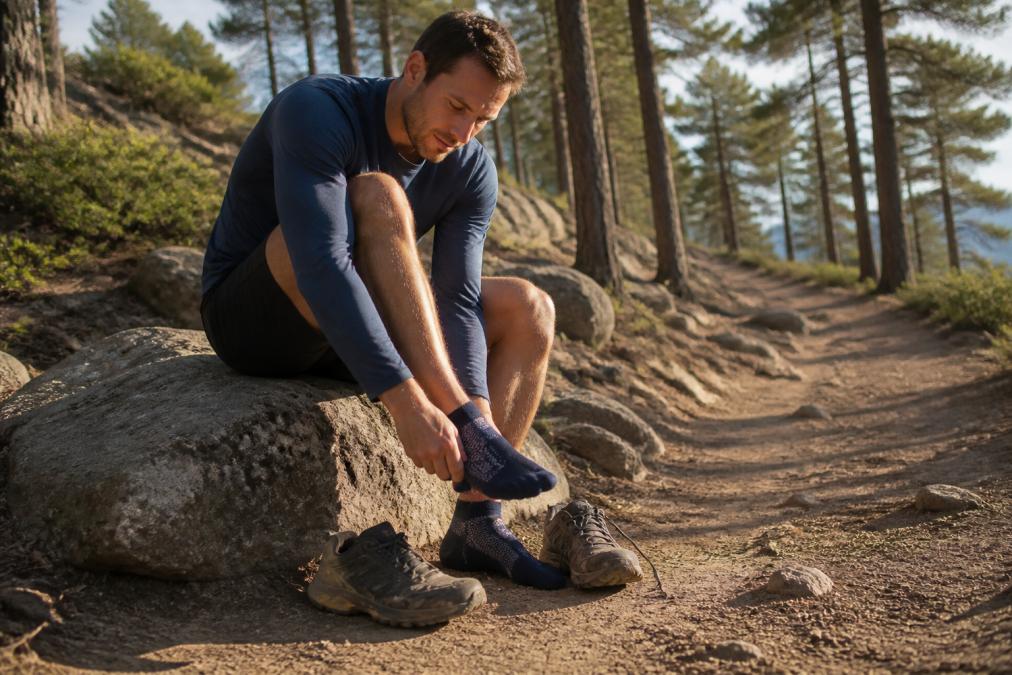
According to research on friction blisters from the Wilderness Medical Society, blisters form when repetitive shear forces separate skin layers, creating a fluid-filled pocket. That process is mechanical and largely preventable with the right gear and technique.
Foot Anatomy and Pressure Points That Cause Blisters
Blisters cluster at predictable locations: the heel, the ball of the foot under the first and fifth metatarsal heads, the little toe, and the top of the toes. Each location corresponds to a specific mechanical stress pattern. The heel blisters when the sock slips during heel strike. The ball of the foot blisters under sustained forefoot loading, especially on descents. The little toe blisters when the boot is too narrow or the sock bunches laterally. Understanding which pressure points your foot anatomy generates helps you choose the right cushion placement and sock construction.
Sock Layering Systems for Multi-Day Trips
A sock layering system is the practice of wearing a thin liner sock beneath a standard hiking sock to redirect friction away from the skin. The two sock layers slide against each other instead of the sock sliding against your foot. This approach is particularly effective for thru-hiking and multi-day trips where cumulative friction exposure is high. Liner socks are typically made from thin synthetic or merino material and weigh almost nothing.
The one caveat: layering adds volume inside the boot. If your boot fit is already snug, adding a liner sock will create pressure across the toe box. Test the combination at home before committing to it on a long route.
Top Picks: Best Long Distance Hiking Socks for 2026
The socks listed here are the ones the RockResist team has put through sustained testing on demanding terrain.
1. RockResist GEN1 Road & Trail Low Cut Athletic Socks
Best for: Trail runners, road-to-trail athletes, and hikers who need debris protection without bulk.
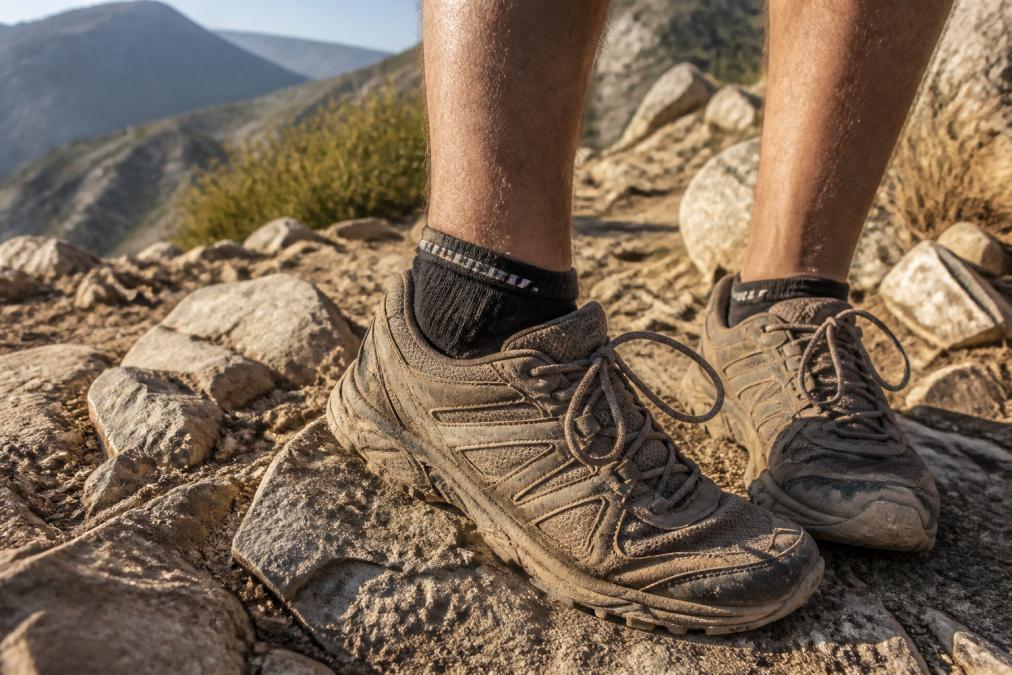
The GEN1 solves a problem that low-cut socks have always had: debris entry. The debris-shielding cuff technology keeps grit, pine needles, and small rocks out of the shoe without adding the height of a crew sock. The moisture-management fiber construction wicks sweat away from the footbed throughout sustained effort. The reinforced seams at the toe and heel are built for endurance. The seamless toe construction eliminates the toe-seam pressure point that causes blisters on long descents. The heel lock keeps the sock anchored during heel strike, preventing the slippage that generates shear blisters.
What works: Debris-blocking cuff, moisture-wicking performance, seamless toe, heel lock, reinforced durability.
What to know: Low cut height means less ankle coverage than a crew. Hikers doing dense brush terrain may want additional gaiter coverage.
Price: $25.99
RockResist GEN1 Road & Trail Low Cut Athletic Socks
2. RockResist Sock Bundle (3-Pair)
Best for: Multi-day backpackers, thru-hikers, and athletes who rotate socks across a training week.
The bundle pricing solves a real problem for serious hikers: you need at least three pairs of quality socks to rotate through a multi-day trip without repeating. Three pairs at the bundle price of $58.48 (versus $77.97 purchased individually) represents a meaningful saving while ensuring you have a clean, dry pair available each day of a long trip. The bundle includes the same GEN1 construction, so the debris-shielding cuff, moisture-wicking fibers, and reinforced seams carry across all three pairs.
What works: Significant cost saving over single-pair pricing, free shipping, covers multi-day trip rotation, consistent GEN1 performance across all pairs.
What to know: All three pairs share the same low-cut profile. If you need crew height for ankle coverage, check sizing and cuff preference before ordering.
Price: $58.48 for 3 pairs (25% off regular price)
RockResist Sock Bundle (3-Pair)
| Sock | Height | Best For | Price |
|---|---|---|---|
| RockResist GEN1 | Low cut | Trail running, debris protection | $25.99 |
| RockResist Bundle (x3) | Low cut | Multi-day trips, training rotation | $58.48 |
Durability, Sustainability, and Sock Repair on the Trail
Durability in a hiking sock is about how well it maintains structural integrity under sustained friction at the heel and ball of the foot, repeated washing, compression from boot lacing, and exposure to abrasive rock and trail debris. Reinforced nylon content at high-wear zones is the primary driver of durability.
On sustainability, many performance sock manufacturers now use recycled nylon, responsibly sourced merino wool, and reduced-water dyeing processes. As noted by the Textile Exchange's fiber and materials benchmark, responsible fiber sourcing is an increasingly standard expectation across outdoor apparel.
Sock repair on the trail: Darning a worn hiking sock is a practical skill that extends the life of quality gear. A worn heel or toe can be repaired with a darning needle and matching yarn by weaving new material across the worn area in a grid pattern. It takes roughly 20 minutes and adds several additional seasons of use to a sock that would otherwise be discarded.
How to Choose the Right Hiking Sock for Your Terrain
Choosing the right hiking sock for your terrain starts with three questions: How long is the route? How technical is the terrain? What is the expected temperature and moisture exposure?
For short day hikes on groomed trails, light cushion and synthetic moisture-wicking construction is practical. For multi-day backpacking on rugged terrain with significant elevation change, medium cushion with a merino-nylon blend delivers the best combination of foot fatigue reduction and odor control. For technical terrain including scrambling and rocky trail running, prioritize abrasion resistance, heel lock, and a seamless toe over cushion level.
| Terrain Type | Recommended Cushion | Preferred Material | Priority Feature |
|---|---|---|---|
| Groomed trail, day hike | Light | Synthetic | Quick-drying |
| Rugged trail, multi-day | Medium | Merino-nylon blend | Odor resistance, heel lock |
| Technical scrambling | Light-medium | Synthetic | Seamless toe, heel lock |
| Heavy pack, rocky terrain | Medium-heavy | Merino-nylon blend | Cushioning, durability |
| Hot weather trail running | Light or no cushion | Synthetic | Breathability, quick-drying |
Most performance hiking socks use shoe size ranges rather than S/M/L designations. If your foot falls between sizes, size up rather than down. A slightly roomier sock with a good heel lock will stay in place. A slightly tight sock will restrict circulation and create pressure points across the top of the foot.
For hikers who have struggled with moisture-wicking socks that still leave feet soaked after a few hours, the issue is usually not the sock material alone. It's the combination of sock, boot waterproofing, and insole ventilation. Pairing a high-performance moisture-wicking sock with a boot that has adequate ventilation is the system that actually manages foot moisture on long routes.
As covered in guidance on athletic footwear and foot health from the American Orthopaedic Foot and Ankle Society, the interaction between sock, insole, and footwear construction significantly affects foot health outcomes on sustained activity.
The best socks for long distance hiking are the ones that match your specific terrain, foot anatomy, and effort level, not the most expensive pair on the shelf or the most popular brand in the category.
Frequently Asked Questions
Is it better to hike in thick or thin socks?
It depends on the terrain and boot fit. Thick socks with heavy cushioning suit rugged terrain and multi-day backpacking trips where foot fatigue is a real concern. Thin or light-cushion socks work better in warm conditions or trail runners where a snug anatomical fit matters more. The wrong thickness for your boot can actually cause blisters by creating excess friction, so match cushion level to your footwear and the length of your hike.
Do merino wool socks prevent blisters on long hikes?
Merino wool reduces blister risk by managing moisture and reducing friction, but it is not blister-proof on its own. Its natural moisture-wicking and thermal regulation properties keep feet drier than cotton, and drier feet blister less. A seamless toe construction and a secure heel lock matter just as much. Pairing merino wool socks with properly fitted boots and breaking in both before a long-distance hike gives you the best blister prevention combination.
How many pairs of socks do I need for a long-distance hike?
For a day hike, one pair is enough. For multi-day trips, plan on one pair per day plus one spare. Rotating pairs allows socks to dry fully between wears, which extends their life and reduces odor. On thru-hiking trips where resupply is limited, two to three pairs of quick-drying synthetic blend or merino wool socks cover most hikers well. The RockResist 3-pair bundle at $58.48 is built exactly for this rotation strategy.
Are compression socks good for long distance hiking?
Light compression can reduce foot fatigue and swelling on long descents or multi-day trips, especially for hikers prone to ankle or calf soreness. Full graduated compression is generally better suited to post-hike recovery than active trail use, where you need freedom of movement. If you want the benefit without restricting movement, look for socks with targeted arch support and a snug heel lock rather than full-leg compression.
What type of socks are best for long distance walking and hiking?
Merino wool and synthetic blend socks outperform cotton on long-distance hiking because they wick moisture, resist odor, and maintain their shape over miles of rugged terrain. Look for a seamless toe to cut friction, ventilation zones for breathability, and a cushion level matched to your terrain. For abrasive conditions or debris-heavy trails, reinforced seams and a debris-shielding cuff design add meaningful protection that standard athletic socks cannot provide.
Foot problems end trips. The right sock is the most direct line of defense against blisters, debris intrusion, and foot fatigue on long routes. RockResist's GEN1 Road & Trail socks address all three with debris-shielding cuff technology, moisture-management fibers, and reinforced seams built for sustained use on demanding terrain. For multi-day coverage, the 3-Pair Bundle gives you a full rotation at 25% off. Add to cart and stop treating your socks as an afterthought.
This article was written using GrandRanker