
Table of Contents
- Why Debris Gets Into Hiking Shoes (and What It Costs You)
- Step 1: Fix Hiking Shoe Fit and Debris Entry Points
- Step 2: How to Keep Pebbles Out of Hiking Shoes With Socks and Cuffs
- Step 3: Hiking Gaiters for Dirt and Rocks That Fit Low-Cut Shoes
- Step 4: Managing Trouser Cuffs and Trail Conditions
- Step 5: How to Clean Dirt From Inside Shoes After the Trail
- Trade-Offs, Limitations, and What Won't Work
- Conclusion
- Frequently Asked Questions
Last Updated: October 18, 2026
Why Debris Gets Into Hiking Shoes (and What It Costs You)
Every mile with grit in your shoe is a mile of friction. That friction wears on your skin, and the result is a blister that ends the day early. The entry point is almost always the collar, the gap where your ankle meets the shoe. Low-cut shoes leave that gap wide open.
At RockResist, we build gear around this exact problem on Colorado trails. Here is what we see most: runners blame their socks when the real issue is fit and clothing. A loose collar, a low cuff, or a short trouser leg all funnel grit straight to your heel.
The cost is not just discomfort. Blisters force you to stop, adjust, and slow down. On rugged terrain, that adds risk.
Step 1: Fix Hiking Shoe Fit and Debris Entry Points
The best fix starts with fit. A shoe that moves on your foot pumps debris in with every step. Tighten the fit at the collar and heel first, then test on a short walk before you commit to a long one.
Lacing, Collar, and Heel Lock Adjustments
Most entry happens at the collar and the heel. A heel-lock lacing pattern pulls your foot back into the shoe and closes the gap. Some shoes also offer a second eyelet row for a snugger fit.
- Use a heel-lock lacing pattern to lock the foot back
- Tighten the top two eyelets so the collar hugs the ankle
- Check that the shoe collar sits flush against your sock
- Re-tie mid-hike if the fit loosens on descents
The American Podiatric Medical Association guidance on footwear fit stresses proper fit for foot health. A snug collar is your first line of defense.
Step 2: How to Keep Pebbles Out of Hiking Shoes With Socks and Cuffs
Socks are the simplest barrier you already own. A tall, snug sock cuff covers the gap at the collar and blocks pebbles before they reach your foot. This is the easiest answer to how to keep pebbles out of hiking shoes without extra gear.
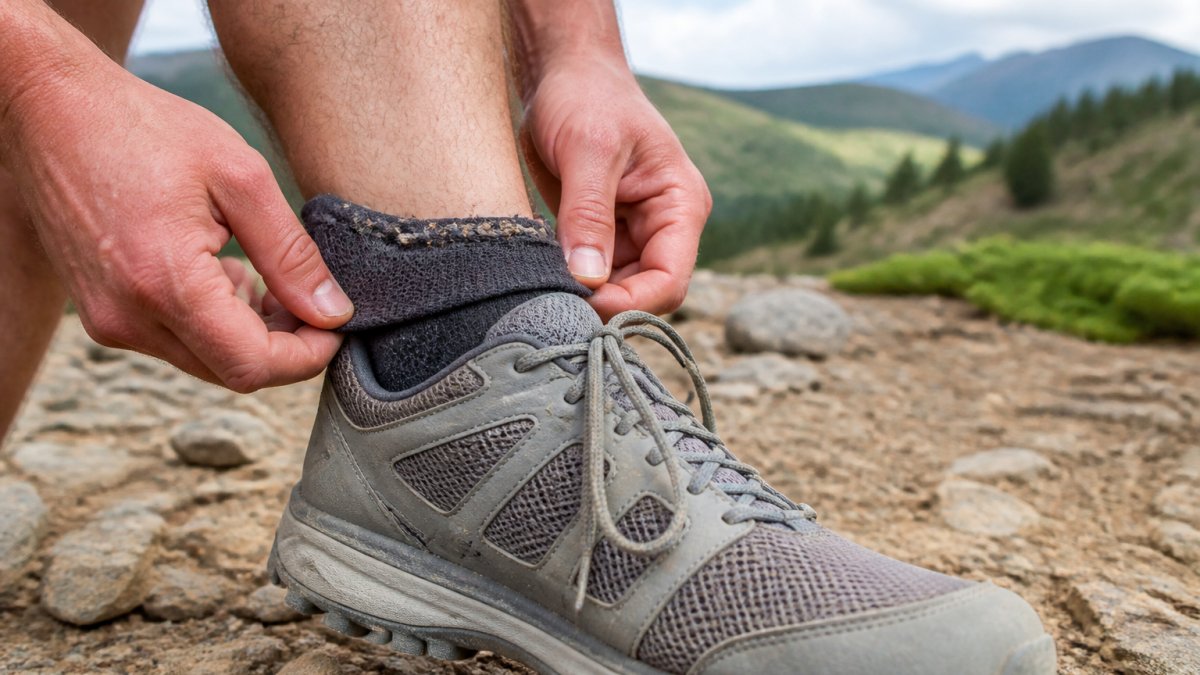
Cuff height matters more than most people think. A sock that stops below the collar leaves a gap. A sock that rises just above it seals that gap.
Our RockResist GEN1 Trail Running Socks are built for exactly this. The integrated barrier blocks dirt, sand, and small debris at the shoe collar. You can wear the barrier up for loose terrain or tuck it in for a lower profile.

Step 3: Hiking Gaiters for Dirt and Rocks That Fit Low-Cut Shoes
Gaiters are the heavy-duty answer. Hiking gaiters for dirt and rocks wrap the ankle and seal the shoe opening, so debris never reaches the collar. The catch: not every gaiter works with low-cut shoes, and a poorly fitted gaiter can be worse than none at all.
Gaiter Types and Compatibility With Trail Runners
Low gaiters are the right match for trail runners and low-cut hiking shoes. They cover the ankle and collar without the bulk of a full mountaineering gaiter. Look for a model with a strap under the sole and a snug top elastic.
- Low gaiters: best for trail runners and low-cut shoes; typically cover from the instep to just above the ankle
- Mid gaiters: more coverage, better for boots and tall grass
- Full gaiters: overkill for low-cut shoes and add heat
Check compatibility before you buy. A gaiter designed for a boot shaft will not seal against a low-cut collar. Match the gaiter to your shoe height.
How to Fit a Gaiter to a Low-Cut Shoe
A gaiter only works if it stays put. Most low gaiters attach with a hook-and-loop strap or a cord under the arch, plus a top elastic or drawcord at the calf. Before you trust one on a long hike, test these four points:
- Underfoot attachment: The strap should sit in the arch or instep, not under the heel where it wears through. Check that it does not slip sideways on descents.
- Top seal: The elastic should sit snug against your sock or calf without pinching. If it gaps, debris funnels in from the top.
- Collar overlap: The gaiter hem should overlap the shoe collar by at least an inch. A hem that stops at the collar leaves a seam for grit to work through.
- Heel coverage: The back of the gaiter should cover the heel counter. A short back panel lets pebbles bounce in on steep downhills.
A common pattern is that trail-running gaiters fit low-cut shoes best because they are cut shorter and use lighter elastic. Boot gaiters are longer and wider at the hem, so they bunch at the ankle and rub.
Trade-Offs of Gaiters on Low-Cut Shoes
Gaiters reduce entry but do not seal out fine dust. The fabric breathes, and fine particles work through over a long day. They also add heat around the ankle, which matters on summer hikes. The underfoot strap can wear out on abrasive rock, so inspect it after rocky routes. For most low-cut shoe wearers, a low gaiter is worth it on loose gravel, scree, and brushy trails, and unnecessary on packed dirt.
Step 4: Managing Trouser Cuffs and Trail Conditions
Your clothing can dump debris into your shoe. A loose trouser cuff catches sand and pebbles, then drops them straight down onto the collar. Short trousers and wide cuffs make it worse.
Trail conditions decide how much you fight. Loose gravel, sand, and scree push grit toward your shoe. Brush and tall grass flick seeds and dirt onto your ankles.
RockResist GEN1 Trail Running Socks, Debris-Blocking Low Cut →
- Tuck cuffs into your socks or use a snug cuff
- Choose fitted trousers over wide, loose cuts
- On sandy or gravelly ground, tighten the collar before you start
- Cross brushy sections with gaiters or a high sock barrier
Fine dust is the hard limit. No sock or gaiter stops every particle. Fine dirt works through fabric and settles inside over a long day. Set realistic expectations and plan a mid-hike check.
Step 5: How to Clean Dirt From Inside Shoes After the Trail
Cleaning is part of prevention. Caked-on dirt and grit left inside the shoe grind into your foot on the next outing. A quick routine after every hike keeps the interior clear and the shoe working.
The Post-Hike Cleaning Routine
- Tip the shoe upside down and shake out loose dirt
- Pull out the insoles and tap them clean
- Brush the interior with a soft brush to dislodge grit
- Wipe caked-on dirt from the collar and seams
- Rinse laces and let everything air-dry fully
- Check the tread and outsoles for packed debris
How to clean dirt from inside shoes comes down to two moves: shake and brush. Do it outdoors before you pack up. Let insoles and shoes dry fully so moisture does not turn into odor or breakdown.
Why Each Step Matters
Shake first. Loose grit is easiest to remove before it works into seams. Turn the shoe over and tap the heel against a rock or post.
Remove the insoles. Grit collects under the insole and against the lasting board. Pull the insole out, tap it, and brush both sides. A soft brush or an old toothbrush reaches the edges.
Brush the interior. A dry soft brush lifts grit from the heel pocket and toe box. Work from the collar down so debris falls out rather than deeper in.
Wipe the collar and seams. Caked dirt at the collar hardens and rubs. A damp cloth removes it before it dries into the fabric.
Rinse laces separately. Laces hold grit that transfers back to the shoe. Rinse them and let them dry flat.
Air-dry fully. Stuff the shoe with newspaper or leave it open in shade. Do not dry near direct heat, which can warp the midsole and shrink the upper.
Clearing Stones From the Tread
Stones caught in the tread are a common source of repeat debris. Turn the shoe over and use a blunt tool, such as a stick or the back of a brush, to pry stones out of the lugs. Check the heel and the edges of the outsole, where small pebbles wedge tight. A stone left in the tread can crack the rubber or work loose on the next hike and drop into the shoe.
Trade-Offs, Limitations, and What Won't Work
No solution is perfect. Every barrier trades something: coverage, heat, or convenience. Knowing the limits saves you from chasing a fix that cannot work.
- Gaiters add heat and weight. They seal well but can feel warm on summer hikes.
- Socks cannot stop fine dust. They block pebbles and grit, not every particle.
- Tight lacing can pinch. Snug is good; too tight cuts circulation.
- No barrier survives a bad fit. A loose shoe pumps in debris no matter what you wear.
The honest answer: match the tool to the trail. For most low-cut shoe wearers, a debris-blocking sock handles the everyday problem, and a low gaiter covers the worst days.
Conclusion
Debris in your shoe is a solvable problem, but it takes the right combination of fit, socks, and gear. Start with a snug collar and a sock that covers the gap, then add gaiters for loose terrain.
RockResist builds gear for exactly this fight. Our GEN1 socks feature a debris-shielding cuff, moisture-management fibers, and reinforced seams tested on rugged Colorado trails. Grab the three-pair bundle at $67.50 to keep a fresh pair ready while the others dry. Add to cart and hit the trail with no grit and no quit.

Frequently Asked Questions
How can I keep dirt and small rocks out of my hiking shoes?
Start with fit: lace the shoe so the collar sits snug against your ankle and use a heel-lock lacing pattern to stop your foot sliding forward. Add a sock with a debris-blocking cuff that sits above the shoe opening, then use low-cut gaiters on loose gravel or scree. Tuck trouser cuffs into or over the gaiter top. Fine dust will still get through mesh uppers on dry trails, so plan to shake out and brush your shoes at breaks rather than expecting a fully sealed system.
Do hiking gaiters keep dirt out of shoes?
Gaiters cover the gap between your trouser cuff and the shoe collar, which is where most gravel and small rocks enter. For low-cut hiking shoes and trail runners, choose a low gaiter that attaches with a strap under the arch or a hook to the laces. They work well against pebbles, sand, and brush, but they do not stop fine dust from passing through the shoe's mesh. Expect gaiters to cut the big debris, not eliminate every particle.
Can the right socks help keep debris out of hiking shoes?
Yes, if the sock has a cuff that rises above the shoe collar. A debris-blocking cuff creates a physical barrier where grit normally sneaks in, and a non-slip fit keeps that barrier in place during high-movement activity. RockResist GEN1 low-cut socks use an integrated barrier you can wear up on loose terrain or tuck in for a lower profile, and added heel material reduces friction at the collar. Pair them with a snug lacing job for the best result.
How do I clean dirt from inside my hiking shoes?
Take the insoles and laces out first, then turn the shoe over and shake or tap the heel to dislodge loose grit. Brush the interior with a soft brush, working from the toe toward the heel opening. Hand-wash insoles with mild soap and water, rinse, and air-dry them away from direct heat. Wipe caked-on dirt from the upper with a damp cloth, let everything dry fully, then reassemble. Do not machine wash or tumble dry shoes or performance socks.