Table of Contents
- Merino Wool vs Synthetic Socks for Hiking: The Core Trade-Off
- How to Choose Hiking Socks: Fit, Fabric, and Cushioning
- Moisture, Drying Speed, and Odor: Where Each Material Wins
- How to Prevent Blisters While Hiking: What the Fabric Actually Changes
- Hiking Socks for Hot Weather: Why Synthetics Dry Faster
- Best Socks for Long Distance Hiking: Multi-Day and Backpacking Realities
- Durability, Care, and End of Life
- Conclusion
- Frequently Asked Questions
Last Updated: October 19, 2026
Merino Wool vs Synthetic Socks for Hiking: The Core Trade-Off
The merino wool vs synthetic socks for hiking debate comes down to one trade-off: wool manages odor and temperature better, synthetics dry faster and cost less. Neither wins everywhere. What matters is matching the fiber to your terrain, your climate, and how many days you'll be out. This guide from RockResist breaks down where each material actually performs, so you can stop guessing at the register.
Here's the part most guides skip: the label on the sock tells you more than the marketing copy ever will. A sock labeled "merino" can contain as little as a third wool. A "synthetic" sock might blend three fibers with different jobs. Read the percentages before you read the price tag.
How to Choose Hiking Socks: Fit, Fabric, and Cushioning
Choosing hiking socks starts with three decisions: fiber content, cushioning level, and height. Get those right and most comfort problems disappear before you hit the trail. Get them wrong and no sock technology will save you.
Read the Fiber Percentage Before Anything Else
Merino wool content above roughly 60% delivers the material's real benefits: odor resistance, softness, and temperature regulation. Below that, you're mostly buying polyester or nylon with a wool cameo. Synthetic blends typically combine polyester for moisture movement, nylon for abrasion resistance, and a small amount of elastane for stretch and fit retention. Each fiber has a job, and the blend ratio tells you which one dominates.
Match Cushioning and Height to Your Terrain
Cushioning absorbs impact on hard, rocky ground. On smooth trails, extra cushioning just adds heat and bulk. Height matters too: low-cut socks suit warm weather and fast day hikes, while crew height keeps debris out and protects ankles on loose terrain. Fit should be snug without pressure points at the heel or toes.
Moisture, Drying Speed, and Odor: Where Each Material Wins
Moisture-wicking is where synthetics shine on paper and merino shines in practice. Synthetic fibers move sweat away from skin fast and dry quickly, which matters in wet conditions. Merino absorbs moisture into the fiber itself, so feet feel drier longer even though the sock holds more water. On odor, merino wins clearly: wool fibers naturally resist odor buildup, while polyester tends to hold smells after repeated use. For multi-day hiking without laundry access, that difference is real.
Temperature regulation is merino's other strength. Wool insulates when wet and breathes in heat, so foot temperature stays steadier across conditions. Synthetics perform well in warm weather but can feel clammy once saturated.
How to Prevent Blisters While Hiking: What the Fabric Actually Changes
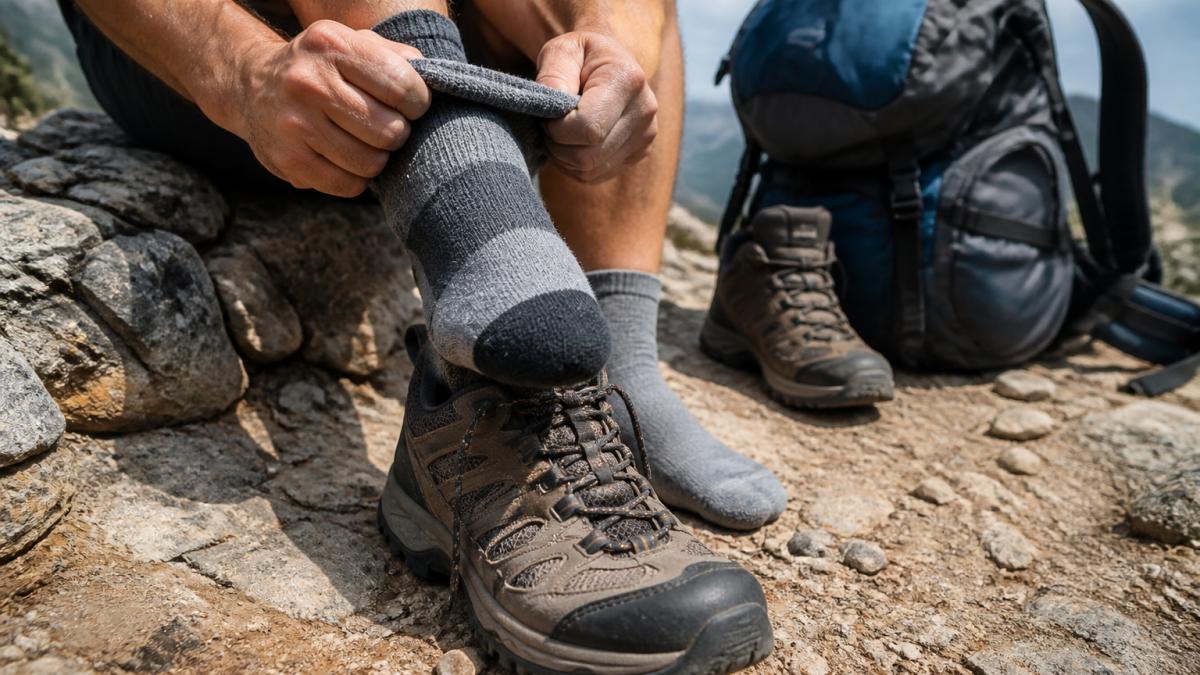
Blisters come from friction, moisture, and heat working together. Fabric changes two of those three. A sock that manages sweat reduces the softening effect moisture has on skin, and a snug, non-slip fit cuts the micro-movement that causes friction in the first place.
A common mistake is sizing up to avoid pressure. A loose sock bunches, rubs, and creates hotspots faster than a snug one. Look for reinforced heel and toe zones, flat seams, and a fit that stays put. Debris is the third factor most guides ignore. Sand and grit trapped at the shoe collar act like sandpaper against damp skin. RockResist builds a debris-shielding cuff into its socks specifically for this problem, which matters on loose, rocky terrain where grit gets in constantly.
Hiking Socks for Hot Weather: Why Synthetics Dry Faster
Hot-weather hiking favors synthetics for one reason: drying time. Polyester and nylon are hydrophobic, they don't absorb water into the fiber, so moisture sits on the surface and evaporates quickly. A soaked synthetic sock can go from dripping to merely damp on your pack during a one-hour lunch stop in low humidity. Merino holds more water inside the fiber and takes longer to air dry, though it still feels dry against skin because the fiber's structure pulls moisture away from the surface.
The trade-off is odor and heat buildup. Synthetic socks in warm conditions can turn ripe fast, polyester's oleophilic surface holds body oils and odor-causing bacteria even after washing. Some hikers also find them clammy once saturated because there's no moisture buffering. A thin merino blend (around 40-50% wool with nylon and elastane) gives you breathability and odor resistance with faster drying than pure merino, at the cost of some durability.
Climate matters more than temperature alone. In dry heat (low humidity, high evaporation), synthetics win clearly on drying speed. In humid heat (sweat doesn't evaporate efficiently), merino's moisture buffering keeps feet feeling drier even though the sock is wetter, and odor control becomes the bigger daily problem. For day hiking in heat, either works. For a sweaty multi-day trip, bring a spare pair regardless of material and rotate them.
RockResist GEN1 Trail Running Socks, Debris-Blocking Low Cut →
Practical drying tactics for hot-weather trips:
- Clip wet socks to the outside of your pack, not inside, airflow matters more than sunlight.
- Rotate two pairs: wear one, air-dry the other. A synthetic pair may dry in 1-2 hours in dry heat; a merino blend may need 3-5 hours.
- Avoid wringing merino aggressively, it distorts the fiber. Roll in a towel and press.
- If socks can't fully dry overnight, put them on damp in the morning; body heat finishes the job within the first hour of hiking.
Best Socks for Long Distance Hiking: Multi-Day and Backpacking Realities
The best socks for long distance hiking balance odor control, drying time, and durability, and merino blends usually win that combination. Multi-day trips expose every weakness: odor buildup, moisture that never fully dries, and abrasion that wears thin spots into holes.
Backpacking realities change the math. You can't launder daily, so odor resistance matters more than it does on a day hike. You also can't wait days for a sock to dry, so a quick-drying blend helps. Many long-distance hikers land on a merino-synthetic blend: enough wool for odor and temperature control, enough synthetic fiber for durability and faster drying. Bring at least two pairs and rotate them so one air dries while you wear the other.
Durability, Care, and End of Life
Durability favors synthetics, but the gap is narrower than most guides suggest. Polyester and nylon resist abrasion better than fine merino, which is why pure merino socks tend to wear through at the heel and toe first. The mechanism: fine wool fibers are shorter and more fragile than continuous synthetic filaments, so repeated friction breaks them down faster. Blends with reinforced heel and toe zones, typically nylon or polyester knit into high-wear areas, close much of that gap. A sock with 50-60% merino and 35-45% nylon often outlasts a 100% merino sock by a wide margin while keeping most of wool's odor and temperature benefits.
Care decides how long any sock lasts. Wool dislikes heat: hot water and tumble drying shrink fibers and speed wear. Hand-washing in cool water and air drying preserve both materials, and rotating pairs gives each one time to dry fully. Machine washing on a gentle cycle in a mesh bag is acceptable for most blends, but avoid fabric softener, it coats fibers and reduces wicking. Synthetics tolerate warmer washing but can pill and hold odor if not washed thoroughly.
Real-world drying scenarios matter more than care-label theory:
- Trailside: Rinse socks in a stream, wring gently (roll in a towel if you have one), and clip to your pack. Synthetics may dry in 1-2 hours in dry conditions; merino blends need 3-5 hours.
- Overnight in a shelter or tent: Hang socks from your pack's haul loop or a line. Humid conditions slow drying for both materials, bring a spare pair.
- Travel between hikes: Wash in a sink with a few drops of mild soap, roll in a towel, and air dry overnight. Avoid radiators and direct sun, which can degrade elastane.
On end of life, wool biodegrades more readily than synthetic fibers, though durability and replacement frequency matter just as much to the overall footprint. A synthetic sock that lasts twice as long may have a lower annual impact than a wool sock replaced every season. Synthetic fibers also shed microplastics during washing, a growing concern that wool avoids. Repairability is limited for both; most hikers replace rather than darn, though wool socks can be darned more easily than synthetic knits.
Conclusion
The merino wool vs synthetic socks for hiking question has no universal answer, only a right answer for your trip. Match the fiber to your climate, your hike length, and how much you care about odor versus drying speed. If you want debris protection and moisture management built for rugged ground, our GEN1 Trail Running Socks pair a debris-blocking cuff with moisture-wicking construction for $30, and the 3-pair bundle at $67.50 keeps a fresh pair ready while the others dry. Add a pair to your cart and let your feet do the rest.


Frequently Asked Questions
Are merino wool or synthetic socks better for hiking?
It depends on the hike. Merino wool wins on odor resistance and comfort across a range of temperatures, which suits cool-weather day hikes and multi-day trips where you cannot wash socks often. Synthetics such as polyester and nylon dry faster and cost less, making them a strong pick for hot-weather hiking and high-sweat efforts. Many experienced hikers choose a blend: merino for next-to-skin softness paired with synthetic fibers for structure and quicker drying.
Do synthetic hiking socks dry faster than merino wool socks?
Yes. Synthetic fibers like polyester and nylon absorb very little water, so they release moisture quickly through airflow and body heat. Merino wool can hold a significant share of its weight in water before it feels damp, which is why it stays comfortable when wet but takes longer to dry. On a hot-weather hike or a trip where you rinse socks at night, a synthetic or synthetic-heavy blend will usually be dry by morning while a thick merino sock may still be damp.
Which hiking sock material is better for preventing blisters?
Fabric matters less than fit, moisture, and friction. Blisters form when damp skin rubs repeatedly against a seam or a loose sock. A snug, non-slip fit with a reinforced heel reduces movement inside the shoe. Merino wool feels soft against skin and manages moisture well, while synthetics dry faster and can feel cooler. Whichever you choose, keep socks wrinkle-free, size them correctly, and address hot spots early. A debris-blocking cuff also helps keep grit out that would otherwise cause friction.
How long do merino wool hiking socks last?
Fine merino wears faster than nylon or polyester, especially at the heel and toe where abrasion is highest. A merino sock used regularly on rugged terrain might show thin spots within a season or two, while a merino-synthetic blend with reinforced heel and toe panels usually lasts longer. Care habits matter too: hand-washing and line-drying preserve fibers far better than machine washing and tumble drying, which break down wool and elastic over time.