
Last Updated: August 20, 2026
How to Prevent Blisters on Long Trail Runs
Blisters result from friction, moisture, and pressure, three variables you can control through proper socks, fit, and hotspot protection.
Step 1: Choose Socks Engineered for Trail Running
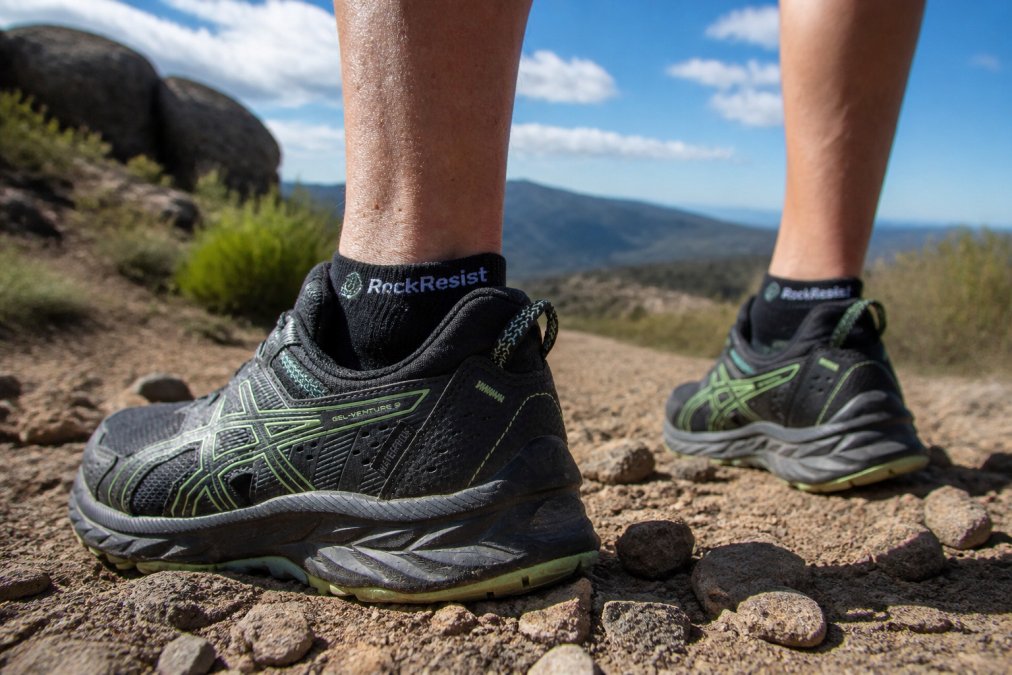
Select socks with synthetic fibers or merino wool that wick moisture away from your skin. Avoid cotton, it absorbs sweat and creates blister conditions. The RockResist GEN1 Road & Trail Low Cut Athletic Socks ($25.99) feature debris-shielding cuff technology and reinforced heel and toe areas.

Step 2: Nail Your Lacing Pattern and Fit
Improper lacing causes heel slippage and uneven pressure distribution. Your heel should not slip during walking, even a quarter-inch of movement creates friction over 10+ miles. Lace firmly through the midfoot and slightly looser at the ankle, then test your fit on a 3-mile shakedown run before longer distances.
Step 3: Manage Moisture and Protect Hotspots
Apply anti-chafe lubricants to known pressure points before your run. Use athletic tape or hydrocolloid dressings to reduce shearing forces on hotspots, and break in new shoes gradually over 3-5 runs before tackling long trail efforts.
How to Treat Trail Running Blisters
Address blisters at the first burning sensation before fluid fills. Clean the area with an antiseptic wipe and apply a hydrocolloid dressing to absorb fluid and cushion pressure. If already ruptured, keep the skin intact, it protects the raw dermis underneath, and cover with a hydrocolloid dressing or tape. Keep the blister clean and dry; hydrocolloid dressings can stay on for 24-48 hours. Once healed, the resulting callus provides natural protection.
Conclusion
Preventing blisters requires a complete system: moisture-wicking socks, proper lacing and fit, and proactive hotspot management. Start with proven gear designed for Colorado trails and pair it with proper fit and moisture management.
This article was written using GrandRanker