
Table of Contents
- Quick Comparison: Top Moisture Wicking Socks for Desert Hiking
- How to Prevent Blisters in Desert Hiking: The Science of Dry Feet
- Merino Wool vs. Synthetic Socks for Hiking: Which Wins in the Heat?
- 1. RockResist GEN1 Trail Running Socks: Best Overall for Debris Shielding
- 2. RockResist Trail Running Sock Bundle: Best Value for Multi-Day Treks
- 3. Darn Tough Coolmax Vertex Micro Crew: Best for Maximum Breathability
- 4. Smartwool PhD Run Light Elite: Best for Temperature Regulation
- 5. Injinji Run Lightweight No-Show: Best for Toe Splay and Blister Prevention
- What Most Desert Sock Guides Miss
- Frequently Asked Questions
Last Updated: September 16, 2026
Quick Comparison: Top Moisture Wicking Socks for Desert Hiking
Desert hiking punishes feet: sand works into every seam, surface temperatures climb above air temperature, and sweat has nowhere to evaporate. The five moisture wicking socks below are ranked for those conditions, with RockResist leading on debris shielding.
| Sock | Height | Best For | Price |
|---|---|---|---|
| RockResist GEN1 | Low cut | Debris shielding, all-around desert use | $25.99 |
| RockResist 3-Pair Bundle | Low cut | Multi-day treks, value | $58.48 |
| Darn Tough Coolmax Vertex | Micro crew | Maximum breathability | Varies by retailer |
| Smartwool PhD Run Light Elite | Micro crew | Temperature regulation | Varies by retailer |
| Injinji Run Lightweight | No-show | Toe splay, blister prevention | Varies by retailer |
How to Prevent Blisters in Desert Hiking: The Science of Dry Feet
Blisters form when friction, heat, and moisture combine; remove any one and the skin survives. In the desert, moisture is the hardest variable to control, which is why moisture wicking socks matter more here than anywhere else. Skin softens when it stays wet and tears at a fraction of the friction it would otherwise tolerate; add grit through the shoe collar and you have an abrasive paste grinding against damp skin for hours.
Friction, Heat, and Moisture: The Blister Triangle
Friction reduction starts with fit: a sock that bunches at the heel or slides in the toe box creates hot spots long before a blister appears. Look for seamless construction, an anatomical fit, and a heel lock.
Merino Wool vs. Synthetic Socks for Hiking: Which Wins in the Heat?
Synthetic blends win for pure desert heat, but merino wool is better for temperature swings. Merino regulates temperature, resists odor naturally, and stays warm when damp, but dries slowly and wears fast under heavy sweat loads. Synthetics move moisture faster, dry quicker, and resist abrasive rock and sand better.
Wicking Rate and Evaporative Cooling
Wicking rate describes how quickly a fabric moves liquid from the skin side to the outer surface, where it evaporates. Evaporative cooling is the payoff: as sweat leaves the fabric, it carries heat with it. Desert humidity is usually low, so the bottleneck is how fast the fabric hands sweat off, which is why a thin, high-surface-area knit outperforms a thick, plush one in extreme heat even when both use the same fiber.
How the Two Fibers Behave When Saturated
- Merino: absorbs roughly a third of its own weight in moisture before it feels damp, buying you time on the first climb. Past that point it releases moisture slowly, and a soaked wool sock can stay heavy for hours in shade or on a cool pre-dawn start.
- Synthetics (polyester, nylon, Coolmax-type fibers): absorb almost nothing, so they feel clammy sooner but shed moisture far faster once you are moving and air is flowing. They also resist abrasion from sharp granite and windblown sand better than fine wool fibers.
A practical pattern: lightweight synthetic or synthetic-dominant blends for the hottest months and mid-day miles, merino for shoulder seasons, pre-dawn starts, and multi-day trips where odor control matters. For one sock that handles both, look for a wool-synthetic blend, not cotton, which is hydrophilic and holds sweat against the skin.
The Desert-Specific Trade-Offs Most Comparisons Ignore
- UV protection: denser knits and higher wool content block more sun reaching the tops of your feet through mesh uppers. A thin synthetic no-show offers the least coverage; a midweight crew the most.
- Odor over multi-day treks: merino's natural antimicrobial properties let you rotate two pairs across a long weekend. Synthetics need a silver or copper treatment to come close, and those fade with washing.
- Sand abrasion: fine merino fibers pill and thin faster when grit works in. On loose sand and scree, a synthetic-dominant blend outlasts pure wool by a noticeable margin.
1. RockResist GEN1 Trail Running Socks: Best Overall for Debris Shielding
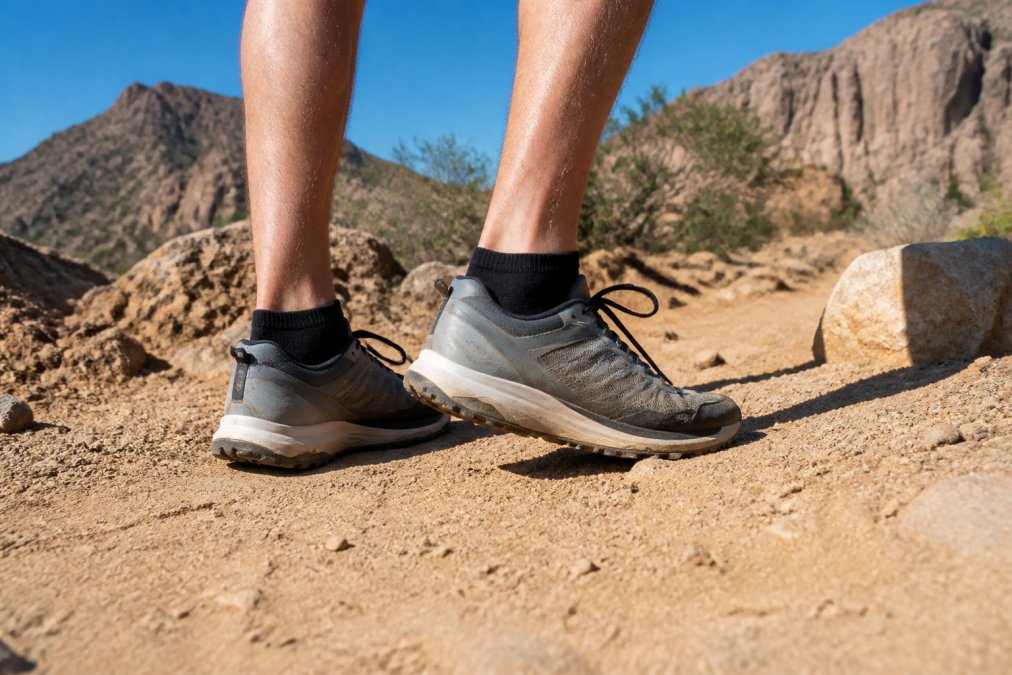
RockResist GEN1 is the top pick because it solves the problem the other socks ignore: grit entering at the shoe collar. Its integrated barrier blocks dirt, sand, and small debris, and you can wear it up for loose terrain or tuck it in for a lower profile.
Pros and Cons
Pros:
- Debris-blocking barrier at the shoe collar
- Two wearing positions for loose or packed terrain
- Non-slip fit with reinforced heel friction control
- Unisex sizing across three ranges
Cons:
- Low cut offers less ankle protection than a crew height
- Single-pair price is higher than budget synthetic socks
2. RockResist Trail Running Sock Bundle: Best Value for Multi-Day Treks
The RockResist three-pair bundle is the better buy for anyone hiking more than a weekend. Three pairs of the GEN1 sock run $58.48, a 25% savings over buying individually, and every bundle includes RockResist wrist bands at no extra charge. Multi-day desert treks demand at least one fresh pair per day: a saturated sock cannot wick, so rotating pairs is blister prevention, not a luxury.
Pros and Cons
Pros:
- 25% savings versus single-pair pricing
- Three pairs supports daily rotation
- Free wrist bands included
- One size selection covers all three pairs
Cons:
- All three pairs ship in a single size, so you cannot mix sizes
- Only worthwhile if you actually need three pairs
3. Darn Tough Coolmax Vertex Micro Crew: Best for Maximum Breathability
If breathability is your single priority, a Coolmax-based micro crew is the strongest option here. Coolmax is engineered for fast moisture transport, and the micro crew height adds ventilation zones above the ankle that a low cut cannot offer.
4. Smartwool PhD Run Light Elite: Best for Temperature Regulation
For desert hikes that start cold and finish hot, merino is hard to beat. Wool's thermal regulation keeps feet warm in pre-dawn starts and manages moisture once the sun is up, and its natural antimicrobial properties help with odor control over consecutive days. The limitation is abrasion resistance: wool fibers wear faster than synthetics against sharp rock, so expect a shorter lifespan on scrambling routes.
RockResist GEN1 Trail Running Socks →
5. Injinji Run Lightweight No-Show: Best for Toe Splay and Blister Prevention
Toe-sleeve construction is the standout feature. Separating each toe eliminates the skin-on-skin friction that causes blisters between toes, a real advantage in heat when feet swell and toes press together.
What Most Desert Sock Guides Miss
Three factors decide comfort in extreme heat, and standard roundups skip all of them.
Sand and Debris Management
Grit entering at the shoe collar is the leading cause of hot spots on sandy routes: sand and sweat combine into an abrasive paste that grinds against softened skin with every step, and no amount of wicking fiber compensates.
Two fixes exist, and they are not interchangeable:
- A debris-blocking cuff seats against the shoe collar and blocks sand at the entry point. It works with low-cut shoes and adds no bulk, but it only covers the collar, sand entering over the top of a low shoe still gets in.
- Gaiters cover the whole shoe-to-ankle gap and are the more complete solution on dunes and loose scree. They add warmth and weight, which matters in extreme heat, and they require a compatible shoe or a strap system.
UV Protection for Feet
Desert sun reaches the tops of your feet through mesh uppers and low-cut collars, and feet are one of the most commonly missed spots for sunburn because hikers assume shoes provide coverage. They do not.
Sock height and knit density are the two levers:
- No-show and low-cut socks leave the ankle and the top of the foot exposed through mesh. Fine for a short morning hike, risky for a full day.
- Micro crew and crew heights cover the ankle and lower shin, where mesh uppers and low collars leave the most skin exposed.
- Denser knits block more UV than open, highly breathable meshes. That is a real trade-off: the most breathable sock is often the least protective.
Sock Layering Systems for Desert Hiking
A thin liner under a wicking outer sock adds a friction layer that moves against itself instead of your skin. In extreme heat, some hikers run a liner plus a lightweight outer sock and rotate the outer pair midday.
When a liner helps:
- Long days (10-plus miles) with a history of blisters. The liner takes the friction so your skin does not.
- Feet that swell significantly in heat. A liner lets the outer sock move without dragging on skin.
- Multi-day treks where you want a second moisture-transport stage to keep the outer sock from saturating as fast.
When a liner hurts:
- Loose sand and grit. A second layer is a second place for sand to lodge, and it can bunch if the fit is not precise.
- Very hot, very dry conditions with a fast-drying outer sock. The liner adds warmth and can slow drying between wears.
Frequently Asked Questions
What material is best for desert hiking socks?
For desert hiking, look for a blend of merino wool and synthetic fibers like polyester or nylon. Merino wool provides natural antimicrobial properties and temperature control, while synthetics add durability and speed up moisture-wicking. Avoid 100% cotton, which holds sweat and causes blisters. The best moisture wicking socks for desert hiking balance hydrophobic and hydrophilic fibers to pull sweat away from your skin and spread it for fast evaporation.
How do I prevent blisters when hiking in hot, dry climates?
Preventing blisters in desert hiking comes down to managing friction, heat, and moisture. Wear moisture-wicking socks with seamless construction and reinforced heels to reduce abrasion. Keep sand and debris out with a debris-shielding cuff like the RockResist GEN1. Change socks every 2-3 hours if your feet sweat heavily. Apply a thin layer of petroleum jelly or anti-chafe balm on hot spots before they turn into blisters. Ensure your boots fit properly with a secure heel lock to stop sliding.
Are wool socks good for desert hiking?
Yes, merino wool is excellent for desert hiking despite its association with cold weather. Merino wool regulates temperature by keeping you cool when it's hot and warm when it's cold. It wicks moisture vapor away from your skin and resists odor naturally. However, pure merino can wear out faster than synthetics. The best socks for hot weather hiking often blend merino with nylon or spandex for durability and elasticity. Look for lightweight or ultra-light cushioning to avoid overheating.
How often should I change my socks while hiking in the desert?
In desert conditions, change your socks every 2 to 3 hours or whenever they feel damp. Sweat and trail debris accelerate friction, which leads to blisters. Carry at least two extra pairs in your pack. Rotate them and let the worn pair dry on the outside of your pack. If you're on a multi-day trek, the RockResist Trail Running Sock Bundle gives you three pairs at a 25% savings, so you always have a dry set ready.