
Last Updated: October 24, 2026
Quick Summary
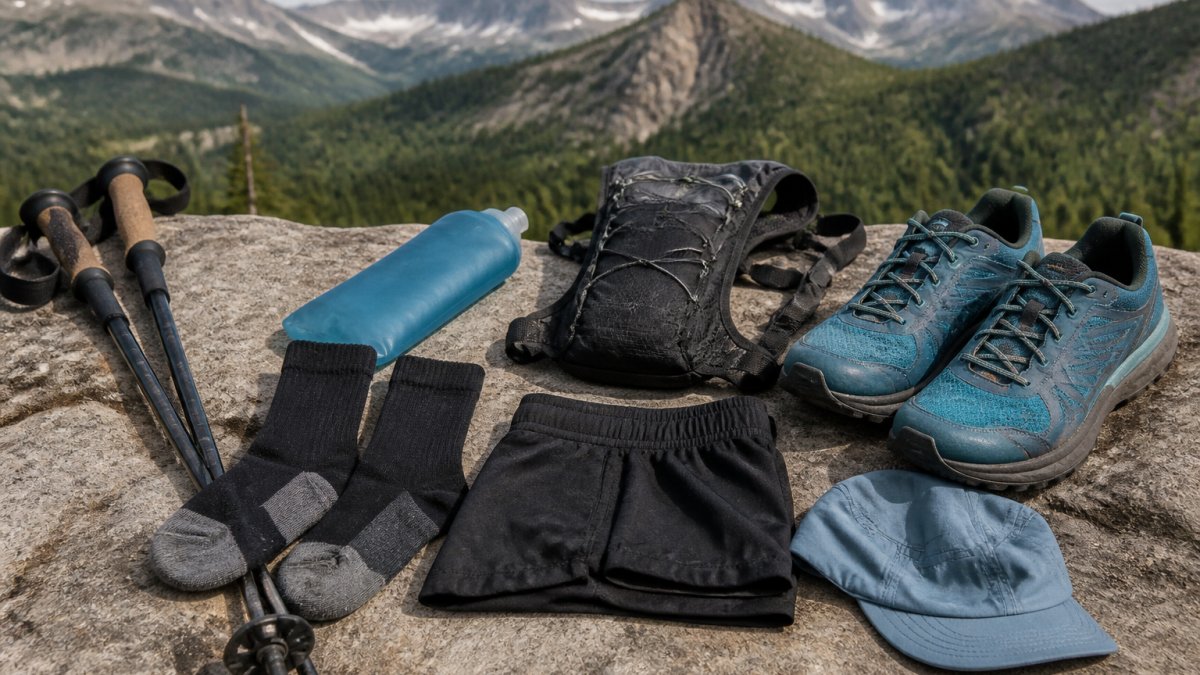
The five essential gear items for Colorado trail running are debris-blocking socks, well-fitted trail shoes with gaiters, a hydration vest sized to your run, moisture-wicking layers with a packable shell, and sun protection like a hat, sunglasses, and sports sunscreen. Build the kit around run duration and refill spacing, since altitude, fast weather swings, and rocky terrain drive every choice.
- Debris-blocking socks stop grit at the collar, the leading cause of blisters on long efforts.
- Size your hydration vest to time on feet: 5-8 liters covers most 1-3 hour runs.
- Test vest fit loaded, running a short downhill and climb before you commit.
- Carry a packable shell even on clear mornings; cold runners left the layer in the car.
- Use broad-spectrum, water-resistant sunscreen and reapply every couple of hours on long efforts.
Table of Contents
- Why Colorado Trail Running Demands Different Gear
- 1. Debris-Blocking Trail Running Socks
- 2. Trail Running Shoes With Gaiters
- 3. A Trail Running Hydration Vest
- 4. Moisture-Wicking Layers and Weather Protection
- 5. Sun Protection: Hat, Sunglasses, and Sports Sunscreen
- Your Trail Running Gear Checklist by Run Duration
- Gear Up for Your Next Colorado Trail Run
- Frequently Asked Questions
Why Colorado Trail Running Demands Different Gear
Colorado trail running is a gear problem disguised as a fitness problem. High altitude thins the air, afternoon storms roll in fast, and the terrain underfoot is loose rock and dust rather than packed dirt.
The stakes are simple. According to the U.S. National Weather Service guidance on mountain weather, conditions in high terrain can change within hours, so layers and protection matter more than they do on a road loop.
Below, we break down each item, what to look for, and where runners commonly get it wrong.
Altitude, Weather Swings, and Rocky Terrain
Three forces shape every gear decision on these trails.
- Altitude: The air is thinner, so effort feels harder and sweat loss climbs. Breathable, moisture-wicking clothing beats heavy cotton every time.
- Weather swings: A warm start can turn cold and wet above treeline. Packable layers and a windproof or rain shell earn their space.
- Rocky terrain: Loose scree and dust work into shoes at the collar. That grit is the leading cause of blisters on long efforts.
A common mistake is treating a mountain run like a road run with better scenery. It isn't. The gear has to handle debris, exposure, and rapid change.
1. Debris-Blocking Trail Running Socks
The single most underrated item in a trail kit is the sock.
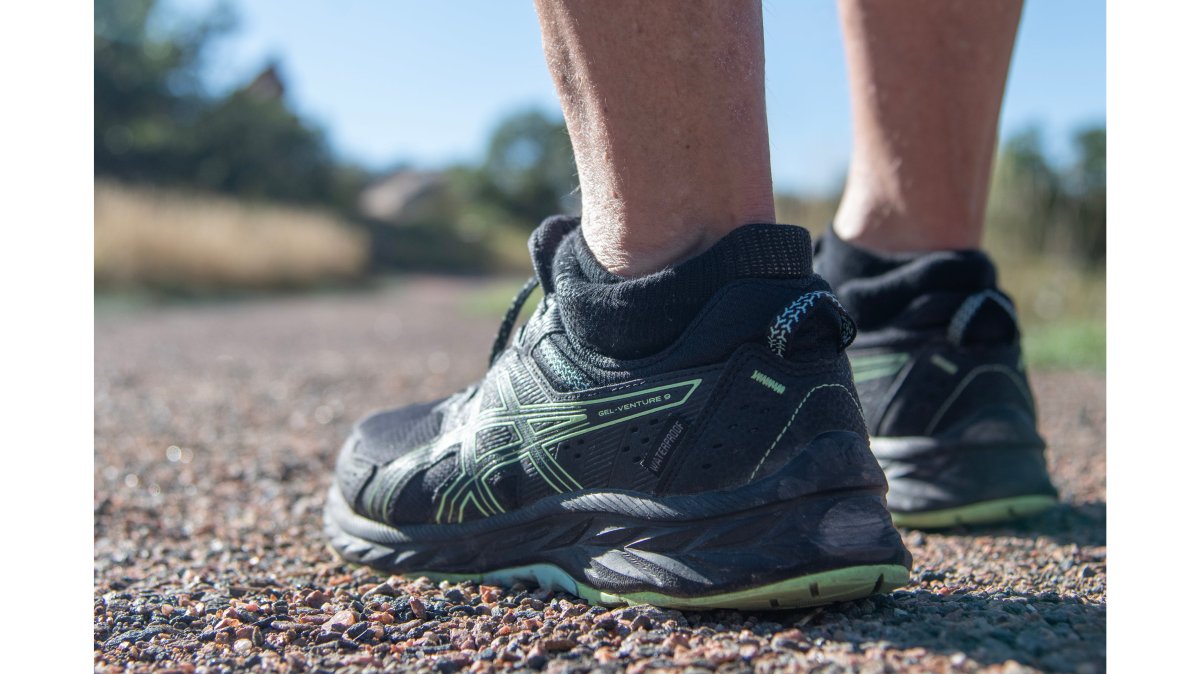
Our pick is the RockResist GEN1 Trail Running Socks, Debris-Blocking Low Cut.

A common mistake is buying thin road socks for technical trails. They feel great in the store and fail at mile eight.
Best for: runners logging long miles on loose, dusty trails. Skip if: you only run smooth, packed paths where grit is never an issue.
2. Trail Running Shoes With Gaiters
Shoes come next, and the fit matters more than the brand. A trail shoe should lock the heel, leave toe room for descents, and pair with a gaiter or debris cuff to seal the collar.
Look for a rock plate underfoot on sharp terrain, aggressive lugs for loose climbs, and a fit that doesn't slide. If you're weighing gaiter options, our guide to alternatives to bulky hiking gaiters for trail runners covers lighter setups. Getting the size right matters too, so read how to choose trail running shoe size before you buy.
Watch out: sizing up "for descents" without testing the heel lock leads to black toenails and slipping on technical ground. Try shoes with the socks you'll actually race in.
3. A Trail Running Hydration Vest
A hydration vest is the piece of trail running gear that separates a short loop from a real day out, and on high-altitude trails it is also your fluid and electrolyte plan. At elevation, breathing rate and sweat loss climb even when the air feels cool and dry, so runners often underestimate how much they need to drink. The vest is the delivery system; the capacity and the mix inside it are the actual decisions.
Size the vest to duration and refill spacing
Match capacity to time on feet and to how far apart water sources are, not to how much you can carry.
- Under 1 hour: a handheld bottle or a minimal 1-2 liter vest is enough. Carry one bottle and skip the reservoir.
- 1-3 hours: a 5-8 liter vest with a 1.5-2 liter reservoir or two 500 mL soft flasks covers most runs with a refill option.
- 3-6 hours: a 8-12 liter vest with a reservoir plus front bottles, and a plan for where you will refill. Front bottles are easier to monitor and refill than a reservoir alone.
A common mistake is buying the largest vest "for flexibility." An over-capacity vest bounces when it is half full and encourages carrying water you do not need. Buy for your typical long run, then add a collapsible flask for the occasional bigger day.
Fit is a test, not a size
A vest should sit snug against the back with no sway at the shoulders when you run downhill. Test it this way before you commit:
- Load it with the water and layers you would actually carry.
- Tighten the sternum straps so the vest stays against your ribs, not your throat.
- Run a short downhill and a short climb. If the vest lifts off your back or the bottles swing, adjust the side compression or size down.
- Reach every front pocket without breaking stride. If you cannot get a gel out while running, the pocket layout is wrong for you.
Look for soft, breathable mesh against the skin, adjustable sternum straps (two is better than one on longer vests), and side compression that lets you cinch the load as water disappears.
Electrolytes, not just water
On hot exposed climbs and long efforts, plain water alone can leave you low on sodium. Use an electrolyte mix in at least one bottle or the reservoir, and carry a few extra electrolyte tablets or powder sticks for refills. A practical pattern is one bottle with electrolytes and one with plain water, so you can alternate and adjust to how you feel.
RockResist GEN1 Trail Running Socks, Debris-Blocking Low Cut →
What the vest carries besides water
The vest is also your storage for nutrition, a packable shell, a phone, and emergency insulation. Keep the heaviest items close to your back and low, put nutrition in front pockets you can reach while moving, and reserve the rear pocket for layers and safety gear you hope not to use.
Best for: runs over an hour, exposed climbs, and any route where refills are far apart. Skip if: you are doing a short, supported loop with water at the trailhead, a handheld is lighter and simpler.
4. Moisture-Wicking Layers and Weather Protection
Layering is where mountain runners win or lose the day.
The RockResist Long Sleeve Tee works as a breathable, quick-dry base with long sleeves for sun coverage and layering. For warmer efforts, the ultra-thin Running Tee keeps airflow high.
Carry a packable puffy or shell in the vest even on clear mornings. In practice, the runners who get cold are the ones who left the layer in the car.
5. Sun Protection: Hat, Sunglasses, and Sports Sunscreen
Sun exposure is the gear problem runners underestimate most on high-altitude trails. UV intensity rises with elevation, exposed ridgelines offer little shade, and snow or light-colored rock can reflect light back at you from below. The result is a run that feels cool but leaves you burned, dehydrated, and squinting. Treat sun protection as a system: cover, shade, and screen.
Cover: hat, sunglasses, and clothing
A lightweight cap with a curved brim shades the face and eyes, and an adjustable back closure keeps it secure on windy ridgelines. The RockResist Hat is our pick for this. Wrap-style sunglasses that stay put on descents protect the eyes from UV and from dust and grit kicked up on loose terrain. Long sleeves and a light neck gaiter or buff add coverage without much weight, and they double as warmth when the afternoon clouds roll in.

Screen: sunscreen that survives sweat
Use a sports sunscreen labeled broad-spectrum and water-resistant, and reapply on exposed skin every couple of hours on long efforts. Carry a small stick or tube in a front vest pocket so reapplying does not require stopping. The back of the neck, ears, nose, and the tops of your hands are the spots runners most often miss.
The altitude and weather swing angle
On high trails, the same clear morning that makes you reach for sunscreen can turn cold and windy above treeline within hours. That is why sun protection and insulation belong in the same section of your kit. A cap and sunglasses handle the exposed climb; a headband or beanie and lightweight gloves handle the cold, windy summit that follows. Pack both even when the forecast looks mild, because the gear you leave in the car is the gear you will want at the turnaround.
Best for: every run above treeline and any exposed, shadeless route. Skip if: you are running a short, fully shaded forest loop on a cool day, a cap and sunglasses are still worth carrying.
Your Trail Running Gear Checklist by Run Duration
Build your trail running gear checklist around how long and how remote the run is. This table is the short version we use.
| Run Duration | Socks | Hydration | Layers | Sun & Safety |
|---|---|---|---|---|
| Under 1 hour | Debris-blocking socks | Handheld bottle | Single breathable tee | Cap and sunscreen |
| 1-3 hours | Debris-blocking socks | Small hydration vest | Tee plus packable shell | Cap, sunglasses, sunscreen |
| 3-6 hours | Fresh sock rotation | Vest with reservoir and electrolytes | Base, midlayer, rain shell | Full sun kit, gloves, headband |
| Ultra distance | Multiple sock pairs | Large vest, nutrition plan | Full layering system | Emergency essentials, GPS watch, trekking poles |
For longer efforts, our gear guide for ultra running goes deeper on packing and nutrition. Add a GPS watch, a route planner app, and a small emergency kit for remote terrain. Safety and emergency essentials are not optional on long, isolated runs.
Gear Up for Your Next Colorado Trail Run
The kit that works here is not complicated, but it is specific: debris-blocking socks, well-fitted shoes with gaiters, a hydration vest sized to the run, moisture-wicking layers with a packable shell, and real sun protection.
At RockResist, we build gear for exactly this terrain. Our debris-shielding cuff technology, moisture-management fibers, and reinforced seams are designed to keep grit out and blisters away, tested on the same rugged trails you run.
Get started with RockResist and add the GEN1 Trail Running Socks to your cart before your next long effort.
Frequently Asked Questions
What are the five essential gear items for Colorado trail running?
The five essentials are debris-blocking socks, trail running shoes with gaiters, a hydration vest, moisture-wicking layers with a packable shell, and sun protection. Each one addresses a specific Colorado condition: grit on rocky trails, sudden afternoon storms, high-altitude sun, and long climbs where you need water within reach. Build your kit around these five before adding extras like trekking poles or a GPS watch.
How do you keep rocks and debris out of your running shoes?
Start with shoes that fit snugly at the collar and add gaiters or a debris-blocking sock cuff. RockResist GEN1 socks use an integrated barrier at the shoe collar that you can wear up on loose terrain or tuck in for a lower profile. Stop and empty your shoes the moment you feel grit, because a small rock rubbing for a few miles is how blisters start. Pair the socks with gaiters on scree-heavy routes for the best coverage.
Do you need a hydration vest for trail running?
For runs over about 90 minutes or any route without water access, yes. A hydration vest carries a water reservoir or bottles, electrolytes, and energy gels without bouncing. On Colorado trails, long climbs and dry air increase fluid loss, so plan roughly 500 to 700 milliliters per hour depending on heat and effort. For short runs under an hour, a handheld bottle is often enough.
What should you wear for trail running in changing weather?
Dress in a moisture-wicking base layer, add a light midlayer, and pack a windproof or rain shell you can pull on when clouds build. Afternoon thunderstorms are common on high routes, and temperatures drop fast above tree line. A cap or headband and light gloves cover cold starts and windy summits. Packable layers you can stash in your vest matter more than heavy insulation.
How is Colorado trail running different from running at lower elevations?
Altitude is the biggest factor. Most Colorado trailheads sit above 1,800 meters, and climbs often push past 3,000 meters, where the air holds less oxygen and effort feels harder. UV exposure is stronger, weather shifts faster, and rocky terrain punishes thin socks and loose shoes. Give yourself extra time on climbs, carry more water than you would at sea level, and wear sunscreen even on cloudy days.
