

Table of Contents
- Measure Your Feet at Home Before Shopping
- How Should Trail Running Shoes Fit
- How Much Toe Room in Running Shoes
- Trail Running Shoe Size Chart and Sizing Up
- Trail Running Shoe Width and Fit Adjustments for Foot Shape
- Test Your Fit Before Committing to Miles
- Frequently Asked Questions
Last Updated: October 10, 2026
Measure Your Feet at Home Before Shopping
Getting the right trail running shoe size starts with knowing your actual foot measurements.
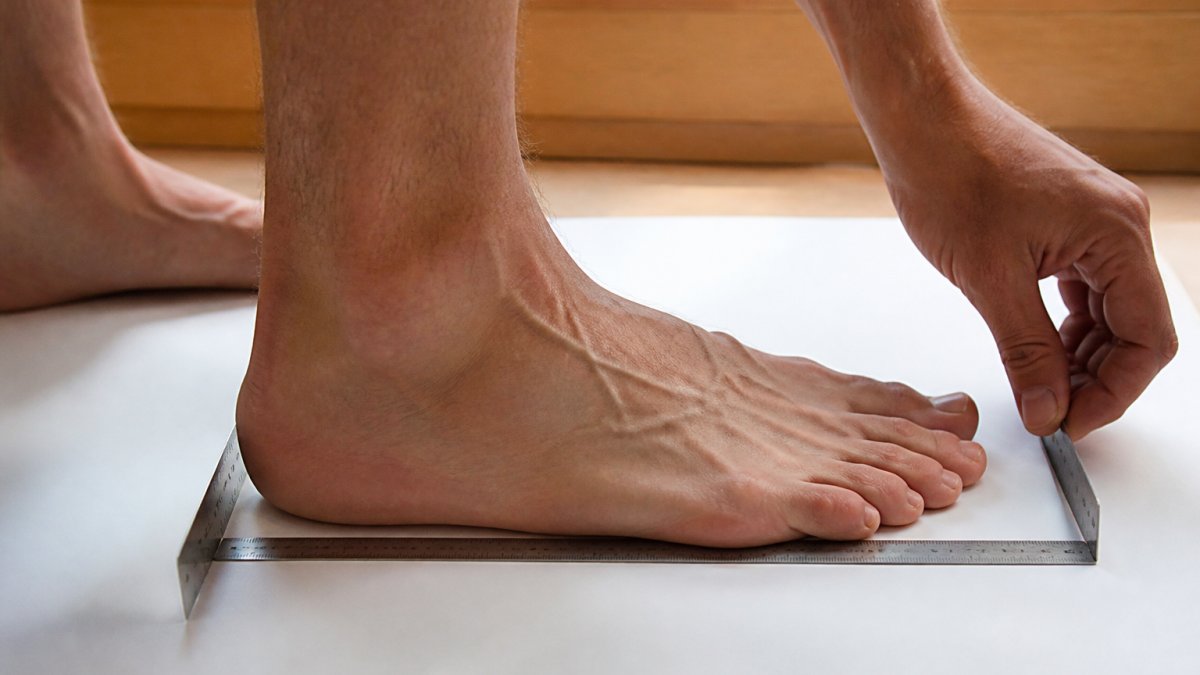
Step 1: Measure your foot length
Stand barefoot on a hard floor with your heel against a wall. Mark where your longest toe ends and measure from the wall to that mark.
Step 2: Measure your foot width
With your foot still flat on the floor, measure the widest part of your foot across the ball (the area behind your toes). This tells you whether you have a narrow, regular, or wide foot shape.
Step 3: Account for socks and swelling
Measure your foot width while wearing the trail running socks you'll actually run in, they're thicker than regular socks and add bulk.

Step 4: Convert measurements to shoe size
Use a standard shoe-size conversion chart based on your foot length measurement, not your regular street-shoe size. A foot length of 9.5 inches typically corresponds to a men's size 11 or women's size 12.5, though this varies by brand.
Step 5: Account for brand-specific sizing variation
Shoe brands vary in sizing. Some run narrow; others run wide. Before ordering, check the brand's fit guide and read reviews from runners with similar foot measurements.
How Should Trail Running Shoes Fit
Trail running shoes should feel snug but not tight, holding your foot stable without restricting blood flow. A proper fit requires checking three zones: the midfoot, the heel, and the toe box.
The Secure Midfoot
Your midfoot (arch area) needs to feel locked in place without squeezing. When you walk or run, your foot should not slide side to side, heel-to-toe movement is normal, but lateral movement means the shoe is too loose. Test by twisting your foot left and right; your foot should move with the shoe, not inside it. Trail shoes need more security than road shoes because unpredictable terrain can roll your ankle if the fit is loose.
Heel Lock Without Slippage
Your heel must stay in place when you descend to prevent blisters and maintain control. Lace the heel area firmly without cutting off circulation; your heel should move less than a quarter inch when you walk. If your heel lifts with each step, the shoe is too loose or the heel cup is too shallow. Some shoes have a reinforced heel collar with extra padding that helps prevent slippage, check that it feels soft against your skin.
How Much Toe Room in Running Shoes
Trail running shoes need room in front of your longest toe. When you descend steep terrain, your foot slides forward in the shoe with each step. Without toe clearance, your toenail hits the front of the shoe repeatedly. This causes black toenails, bruising, and pain.
The standard rule is a thumb's width of space between your longest toe and the shoe's end. That's roughly half an inch. Measure this while wearing the socks you'll run in. Press your foot forward in the shoe (simulating a downhill step) and check the gap. If your toe touches the shoe, the shoe is too small.
However, too much toe room creates problems too. Your foot slides around inside the shoe, which causes blisters on your toes and the ball of your foot. The shoe should be snug everywhere except the toe box, which has breathing room but still holds your foot stable.
Trail running shoe size differs from road running shoe size. Road shoes prioritize a sleek fit. Trail shoes prioritize stability and protection, which requires more room in the toe box and a wider platform overall.
Trail Running Shoe Size Chart and Sizing Up
When to Size Up From Your Regular Shoe Size
Most runners need to size up from their regular street shoe size when buying trail running shoes. A half size up is common. A full size up is normal for runners with wider feet or those who swell significantly during runs.
Here's why: Trail shoes have thicker insoles, more protective padding, and a wider toe box than regular shoes. Your regular shoe size accounts for thinner insoles and a narrower profile. When you put that same size in a trail shoe, it feels cramped.
Additionally, trail running generates more impact than road running. Your feet swell more. A shoe that fits perfectly at the start of a run can become uncomfortably tight by mile five. Sizing up prevents this compression.
Test this before committing to a full pair. Many running specialty stores let you try shoes on a treadmill or short course. Do a ten-minute test run. If your toes feel pressure or your foot feels restricted, size up.
Accounting for Foot Swelling and Socks
Foot swelling during a run is real and significant. Your feet swell due to impact, increased blood flow, and fluid redistribution. A shoe that fits snugly at the start of a run can feel tight by the halfway point.
Trail running socks are thicker than road running socks. RockResist trail running socks, for example, feature reinforced heel material and integrated debris-blocking barriers that add volume. When you measure your foot width at home, wear the exact socks you'll run in. This prevents the surprise of lacing up on race day and finding your shoes are too tight.
RockResist Trail Running Sock Bundle, 3 Pairs →
For runs longer than two hours, consider sizing up an additional half size. Longer efforts produce more swelling. You want room to accommodate this without your foot sliding around.
Trail Running Shoe Width and Fit Adjustments for Foot Shape
Not all feet are the same shape. Some runners have narrow feet. Others have wide forefeet with narrow heels. Some have high arches. Others are flat-footed. Trail running shoe fit must account for your specific foot shape, not just your size.
Narrow feet: If your foot width measurement is significantly smaller than average, look for shoes with narrower toe boxes and adjustable lacing systems. Standard trail shoes may feel loose across your midfoot even in the correct size. Many brands offer narrow-fit options.
Wide feet: Wide-footed runners need shoes with a roomy toe box and a wider platform. Sizing up may help, but some shoes simply run narrow. Check the manufacturer's fit reviews. Runners with wide feet often report whether a shoe accommodates them.
High arches: High-arched feet need shoes with good arch support. The midfoot should feel supported without creating pressure. Test the shoe's arch by pressing on the inside of the midfoot. It should feel firm and supportive, not hard or painful.
Flat feet: Flat-footed runners need stability. Look for shoes with a stiffer midsole and a wider base. The midfoot should feel secure without excessive arch support, which can be uncomfortable for flat feet.
Test Your Fit Before Committing to Miles
The best fit test happens on actual terrain, not in a store. Many running specialty stores have treadmills or short outdoor courses where you can test shoes before buying.
The standard fit test: flat ground
Do a ten to fifteen-minute run at your normal pace on flat or gently rolling terrain. This reveals basic fit problems that a walk-around never will.
Pay attention to three things during your test run:
- Heel slippage: Does your heel lift with each step? Even slight movement creates blisters. If you feel your heel moving, the shoe is too loose.
- Toe pressure: Do your toes feel crowded or pressed against the front of the shoe? If yes, size up.
- Midfoot stability: Does your foot feel locked in place, or does it shift side to side? Shifting means the shoe is too loose or your foot shape doesn't match the shoe's design.
After your test run, check for red marks or hot spots on your feet. These are early warning signs of blisters. A properly fitting shoe leaves minimal marks.
The terrain-specific fit test: downhill
Because trail running shoes are designed for technical terrain, a downhill test is essential. If the specialty store has access to a short hill or incline, ask to run down it during your test. If not, request permission to return the shoes if they fail a downhill test after purchase.
During a downhill segment, your foot slides forward in the shoe with each step. This is when toe clearance, heel lock, and midfoot stability matter most. Use this checklist:
-
Toe clearance on descent: As you run downhill, press your foot forward in the shoe (this happens naturally). Can you feel your longest toe approaching the shoe's end? There should be roughly a thumb's width (about half an inch) of space between your toe and the shoe's front, even when your foot slides forward. If your toe touches the shoe or feels pressure, the shoe is too small.
-
Heel lock on descent: Does your heel stay planted in the heel cup, or does it lift and slide with each downhill step? Your heel should move less than a quarter inch. If it lifts noticeably, the shoe is too loose or the heel cup is too shallow for your foot shape. Heel slippage on descents is the leading cause of blister formation at the back of the foot.
-
Lateral stability on uneven ground: If the test course includes rocks, roots, or side-to-side terrain, notice whether your foot rolls or twists inside the shoe. Your foot should move with the shoe, not independently. If you feel your arch or midfoot shifting, the shoe is too loose or too wide for your foot.
-
Overall comfort after descent: After running downhill, your feet should feel secure and stable, not sore, numb, or compressed. Numbness in the toes suggests the shoe is too tight; soreness in the arch or heel suggests fit or support issues.
If the shoe doesn't feel right after testing
Do not buy it. A good fit should feel secure and comfortable immediately. Shoes do not "break in" the way they used to. Modern trail shoes are designed to fit well out of the box.
If you experience pressure in the toe box but heel lock and midfoot stability are good, size up.
Frequently Asked Questions
Should you size up in trail running shoes?
Yes, most runners size up a half to a full size in trail running shoes compared to regular street shoes. Trail running involves descents where your foot slides forward in the shoe, impact on uneven terrain, and foot swelling during longer runs. Sizing up prevents toe pressure and blisters on downhill sections. However, the exact size depends on your foot shape, the shoe's width, and how much toe room you need. Follow the measurement method in this guide rather than assuming a standard increase.
How do you measure your feet for trail running shoes?
Measure both feet in the afternoon or evening when they're slightly swollen from daily activity. Place your foot flat on a hard surface with a ruler or measuring tape along the floor. Measure from your heel to the tip of your longest toe. Write down both measurements in inches. Compare your measurements to the shoe manufacturer's size chart, then add 0.5 to 1 inch for trail running to account for swelling and toe movement. This at-home method eliminates guesswork and helps you order the right size online or know what to look for in-store.
How much space should be between your toes and the end of a trail running shoe?
You should have roughly a thumb's width (about 0.5 inches) of space between your longest toe and the shoe's end when you're standing. On descents, your foot slides forward slightly, so this clearance prevents your toes from hitting the shoe's front. If you have less than a thumb's width, you risk blisters and toe pressure on longer runs. If you have more than one full inch, the shoe is too large and your foot will shift excessively, causing heel slippage and instability on technical terrain.
What's the difference between a sizing problem and a shoe-shape problem?
A sizing problem means the shoe length is wrong for your foot, either too short (toes hit the end) or too long (excessive heel movement). A shoe-shape problem occurs when the shoe's width or arch profile doesn't match your foot's structure, even if the length is correct. Signs of a shape mismatch include rubbing on the sides of your foot, pressure across the midfoot, or an arch that doesn't align with your natural arch. If adjusting size doesn't fix discomfort, try a different brand or model with a wider toe box or different arch support rather than simply going larger.