

Table of Contents
- Why Do Socks Slide Down in Shoes
- Shoe Fit and Heel Slippage: The Root Cause
- Step 1: Choose the Right Sock Size and Fit
- Step 2: Select Socks With Heel Grips and Secure Construction
- Step 3: How to Keep No-Show Socks From Slipping
- Step 4: Match Sock Fabric and Thickness to Your Shoe Type
- Running Socks That Prevent Blisters and Slipping
- Advanced Solutions: Silicone Grips, Adhesives, and Testing
- Frequently Asked Questions
Last Updated: October 10, 2026
Why Do Socks Slide Down in Shoes
Understanding how to stop socks from slipping inside shoes starts with knowing the two main reasons: no-show socks slip off the heel when the collar is too loose or lacks grip, while crew socks slide down when the cuff loses elasticity. Both are fixable once you identify which problem you're facing.
How to stop socks from slipping inside shoes requires addressing three factors: fit, friction, and material quality. A sock that's too large will move regardless of grip material. A sock with lost elasticity will slide down over time. A shoe that's too big creates the perfect environment for slippage.
The difference between no-show socks slipping off the heel and crew socks sliding down the leg
No-show socks slip off the heel when the back loses contact with your heel bone during movement, usually in loose-fitting shoes or when heel material lacks grip. The sock collar drops below the shoe collar line.
Crew socks slide down when the cuff elastic stretches or when sock weight pulls fabric downward. This is more common with heavier socks or low-sitting cuffs, causing bunching at the arch or heel.
Shoe Fit and Heel Slippage: The Root Cause
Shoe fit is often the culprit. A shoe that's even a half-size too large creates excess heel space that no grip material can fully compensate for. Heel movement during activity pulls the sock down.
To check fit: put on your shoe with a sock and try to slip your finger between your heel and the back. If more than one finger fits comfortably, the shoe is too loose. Your heel should move only slightly during activity.
Heel slippage also occurs when shoes break in unevenly or the heel cup wears down over time, requiring socks with stronger grip material.
Step 1: Choose the Right Sock Size and Fit
Getting your sock size right is the foundation of preventing slippage. Buying the wrong size guarantees slipping socks.
Match your shoe size to the sock size chart. For RockResist GEN1 Trail Running Socks: size S fits women's 7-9 and men's 5-7, size M fits women's 10-12 and men's 8-10, and size L fits women's 13-15 and men's 11-13. Too-large socks bunch; too-small socks create pressure points.

If you wear a size between two sock sizes, go with the smaller size. A snug sock stays in place better than a loose one. You can always adjust fit with your shoe lacing or by choosing a thicker sock, but you can't fix a sock that's already too big.
Step 2: Select Socks With Heel Grips and Secure Construction
Heel grip material makes the difference between socks that stay put and socks that slip. Look for socks with silicone or rubberized grip zones specifically placed at the heel and arch.
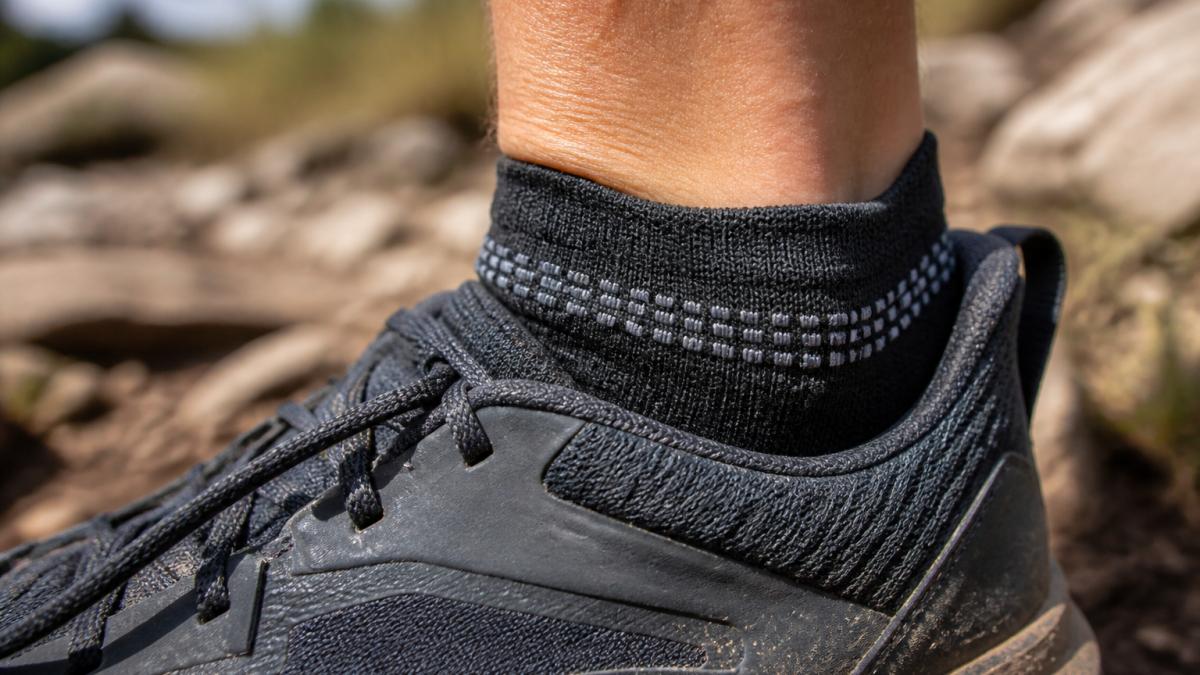
Secure construction means reinforced seams and a snug heel cup. Cheap socks have loose stitching that fails under pressure. RockResist socks feature reinforced seams and non-slip construction for high-movement activities.
Socks with added cushioning or thicker knit at the heel create more surface area for grip material, especially important for shoes with worn heel cups.
Step 3: How to Keep No-Show Socks From Slipping
No-show socks sit below the shoe collar, leaving less fabric to grip. Find no-show socks with a reinforced heel band and snug arch fit.
Look for no-show socks with heel grip extending slightly up the back to prevent sliding. The arch should be snug but not tight.
Test no-show sock fit before long runs or hikes. If the collar slips below the shoe collar or heel slides, try the next size up or stronger grip material.
Step 4: Match Sock Fabric and Thickness to Your Shoe Type
Fabric composition and thickness directly affect grip performance and durability. The wrong combination undermines even the best grip technology.
Fabric types and their grip durability
Synthetic blends with high nylon content offer moisture-wicking and durability. Socks with elastane tend to bag out within 30-40 washes, causing the heel cup to loosen and grip material to shift.
Cotton-dominant socks absorb moisture and lose grip when wet, making them poor choices for running or high-sweat activities. Cotton also loses elasticity quickly, so crew socks made primarily from cotton are more likely to slide down your leg over time.
Thickness matching to shoe fit and activity
Thickness is described as ultralight, lightweight, midweight, or heavyweight. Matching thickness to your shoe's internal volume prevents both excessive movement and uncomfortable pressure.
Ultralight socks: Best for snug-fitting shoes, dress shoes, and loafers where extra bulk creates pressure points.
Lightweight socks: Ideal for running shoes and athletic sneakers with moderate room. They provide enough structure to support grip material without bunching inside the shoe.
Midweight socks: Designed for hiking boots, work boots, and shoes with extra internal volume. The added cushioning takes up space, reducing heel movement inside a roomy shoe.
Heavyweight socks: Reserved for extreme cold, mountaineering boots, or severely oversized shoes. These socks are too bulky for everyday sneakers and can cause blisters from excessive pressure in properly fitting shoes.
RockResist GEN1 Trail Running Socks, Debris-Blocking Low Cut →
Testing fabric and thickness before committing
If you're between sizes or unsure whether your shoe has extra room, buy one pair in your target thickness and wear them for a short activity first. Walk for 15-20 minutes and check for bunching at the arch or heel, pressure points across the top of your foot, or heel slipping. Adjust your shoe lacing to increase heel pressure before assuming the sock is the problem.
When replacing worn socks, match the original thickness and fabric blend if they performed well. Switching to a thinner or lighter sock often introduces slipping that wasn't present before, even if the new sock has good grip material.
Running Socks That Prevent Blisters and Slipping
Trail runners and endurance athletes need socks that do double duty: prevent blisters and stay in place during high-impact movement. The best running socks combine moisture-wicking material with targeted grip zones and reinforced heel construction.
Moisture-wicking matters because wet socks slip more easily than dry ones. Sweat reduces friction between sock and shoe, and blisters develop where the sock moves against your skin. Socks designed for running use synthetic blends or merino wool that pull moisture away from your foot.
RockResist GEN1 Trail Running Socks feature moisture-management fibers and a debris-shielding cuff that keeps grit out while maintaining a secure fit. The reinforced heel material reduces friction at the point where blisters most often form.
Advanced Solutions: Silicone Grips, Adhesives, and Testing
When standard sock selection doesn't fully solve your slipping problem, advanced solutions can help. However, their effectiveness depends on proper care and realistic expectations about durability.
How to test sock fit and heel-grip placement before wearing
Testing your sock setup before a long run or hike prevents blisters and frustration. Put on your sock and shoe combination and walk around your home for 10-15 minutes. Pay attention to any movement or slipping at the heel.
Jog in place or do a few stairs if possible. High-impact movement reveals slipping that might not show up during walking. If the sock shifts or your heel slides inside the shoe, try adjusting your shoe lacing or switching to a different sock size.
Mark the heel grip placement with your finger to see where it sits relative to your heel bone. The grip material should contact your heel directly, not sit above or below it. If the placement is off, try a different sock style or size.
Preserving grip materials through washing and care
Silicone and rubberized grip materials degrade when exposed to high heat, fabric softener, and certain detergents.
Water temperature: Wash socks in cold or warm water (below 104°F / 40°C).
Fabric softener and dryer sheets: Avoid fabric softener entirely.
Detergent choice: Use a standard laundry detergent without added softeners or conditioning agents. Gentle or sport-specific detergents work well.
Drying method: Air-dry socks whenever possible. Machine drying at high heat can warp grip material and degrade elastane fibers.
Washing frequency: Wash socks after each wear if you're running or hiking in them. Sweat and dirt reduce grip material effectiveness.
Following these care steps preserves grip material integrity and elasticity, preventing the premature slipping that occurs when socks deteriorate from improper washing.
Silicone grip strips and body adhesives as supplementary solutions
Silicone grip strips stick to the inside of your shoe at the heel and arch, creating extra friction for your sock. These work well for shoes with smooth heel cups or worn-down interiors. Apply the strips according to package directions and test them on a short walk before committing to a long run.
Body adhesive designed for sports use can secure your sock to your skin at the heel and arch. This approach works for some athletes but may cause skin irritation with repeated use, especially if you have sensitive skin. Test any adhesive product on a short activity first to check for reactions. Remove adhesive carefully after activity using warm water and gentle rubbing to avoid skin damage.
Natural alternatives to adhesive
Tighter shoe lacing, heel cups, or insole adjustments often solve slipping without added products. A heel cup inserted into your shoe creates a snug pocket for your heel, reducing movement without adding anything to your skin. Heel cups can be an effective solution. Adjusting your lacing pattern to create more pressure at the heel can also improve grip, try lacing the heel area tighter while keeping the forefoot looser for comfort.
The most reliable long-term solution remains proper sock fit combined with quality grip material and correct care. Adhesives and temporary fixes work best alongside these fundamentals, not instead of them.
Frequently Asked Questions
Why do my socks keep slipping inside my shoes?
Socks slip for three main reasons: your shoe is too large in the heel, your sock lacks adequate heel grip or elasticity, or the sock fabric is too thin to create enough friction. No-show socks slip off the heel specifically, while crew socks slide down the leg. Identify which type of slipping you experience, then match your sock size and grip material to your shoe fit. RockResist GEN1 Trail Running Socks use non-slip construction and added heel material to reduce friction and keep socks anchored during high-movement activities.
How can I keep no-show socks from sliding down?
No-show socks slip when the heel coverage is too shallow for your shoe or when the sock lacks grip material. Choose no-show socks designed with reinforced heel grip. Ensure your shoe size is correct, a heel that's too loose will pull socks down regardless of grip. Test the fit by walking briskly indoors before a long run. If slipping persists, consider a slightly thicker no-show sock or one with silicone grip strips on the heel and inside the shoe collar.
Does heel slippage mean my shoe is too big?
Heel slippage often indicates your shoe is too large, but not always. Your foot may move inside the shoe during high-impact activity even with correct sizing. Check fit by wearing the socks you plan to run in, then lace your shoes snugly without cutting off circulation. You should have one finger's width of space at the toe box and minimal heel movement when you walk. If your heel lifts noticeably, your shoe is too big. If it stays put but your sock still slips, the problem is sock fit or grip, not shoe size.
What's the best way to test sock fit before a long run?
Before committing to a long run, wear your socks and shoes indoors for 20-30 minutes of brisk walking or light jogging. Pay attention to heel movement, bunching at the toes, and whether the sock stays in place at the collar. If slipping occurs during this short test, adjust your lacing, try a different sock size, or swap to a sock with better grip material. This low-risk trial prevents wasting miles on a pair that won't stay put. For trail running and climbing, test on varied terrain, stairs, gravel, or slight inclines, to simulate the friction and impact of your actual activity.
Socks that slip inside your shoes frustrate even experienced runners and climbers. The fix starts with proper fit and moves to grip material and fabric choice. RockResist GEN1 Trail Running Socks combine all three elements with debris-shielding technology, reinforced heel construction, and moisture-wicking materials designed for technical terrain. Get started with RockResist and keep your focus on the trail, not on adjusting your socks.