

Table of Contents
- Why Do My Feet Get Wet in Moisture Wicking Socks?
- Why Are My Feet Sweating So Much?
- How Shoe Ventilation and Humidity Trap Moisture
- Best Socks for Sweaty Feet: What to Look For
- How Often to Change Socks When Running
- How to Keep Feet Dry While Running
- Distinguishing Sweat from External Wetness
- When Persistent Sweating Needs Medical Attention
- Frequently Asked Questions
Last Updated: October 9, 2026
Why Do My Feet Get Wet in Moisture Wicking Socks?
If your feet still feel soaked in moisture wicking socks, the problem usually isn't the sock, it's that your sweat rate outpaces the sock's evaporation rate.
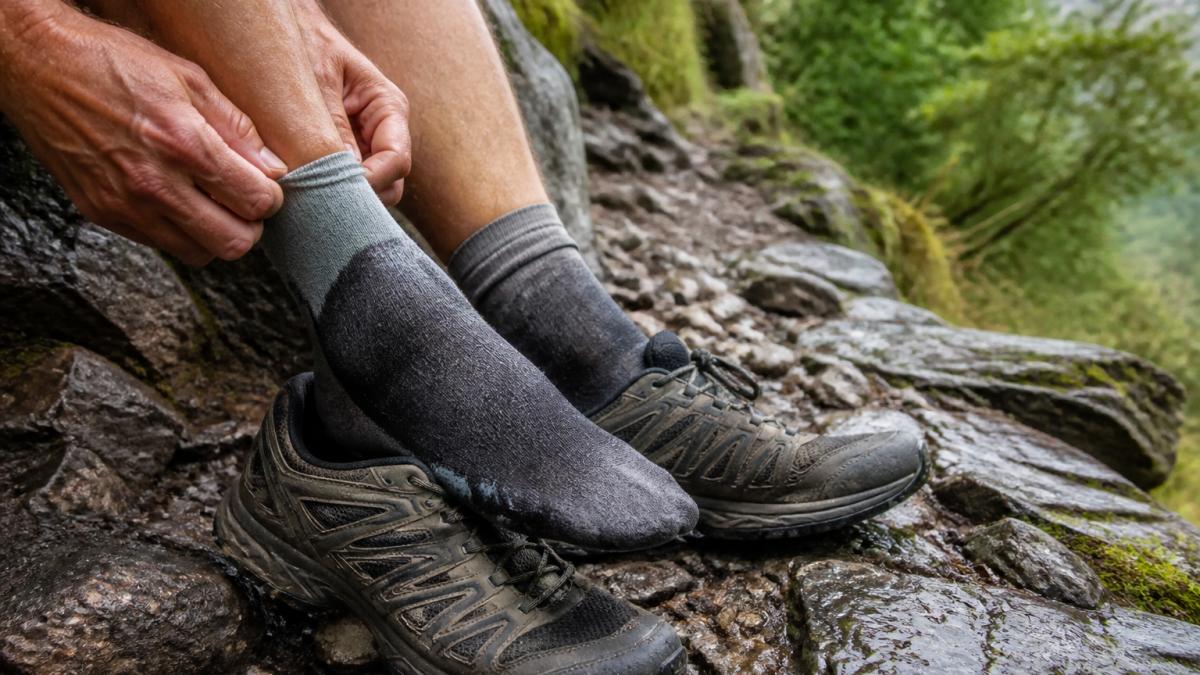
RockResist provides high-performance athletic gear engineered to help runners, climbers, and outdoor enthusiasts conquer the toughest terrain. Here's the honest answer, plus what actually fixes it.

Moisture wicking socks use fibers that move sweat away from your skin toward the outer surface, where it's supposed to evaporate.
Sweat Rate vs. Evaporation Rate: The Real Culprit
Your feet have about 250,000 sweat glands, more per square inch than anywhere else on your body, and hard activity makes them produce sweat fast.
Wicking works in three steps: sweat leaves your skin, fabric channels carry it outward, and airflow and body heat dry it off.
The American Academy of Orthopaedic Surgeons guidance on foot care notes that moisture trapped against the skin softens it and raises blister risk.
Why Are My Feet Sweating So Much?
Your feet sweat more than any other part of your body, and that's normal. Heat, exercise, and tight shoes all push sweat glands into overdrive. Some people just produce more than others.
Common causes of sweaty feet include:
- Intense athletic activity and rising body temperature
- Warm, non-breathing footwear
- Synthetic shoes that trap heat
Plantar Hyperhidrosis and Overactive Sweat Glands
Plantar hyperhidrosis is a medical condition where the sweat glands on the feet produce far more sweat than the body needs for cooling. It's not caused by poor hygiene or bad socks. People with it can soak through socks within an hour, even at rest, no sock on the market will fully solve that.
For everyone else, the fix is usually simpler: better airflow, drier shoes, and the right sock material.
How Shoe Ventilation and Humidity Trap Moisture
Your shoe is a closed box and your foot is a heater inside it.
This is the part most guides skip. You can wear the best wicking sock made and still finish a run drenched if your shoes hold water vapor.
Why Waterproof Membranes Backfire in Heat
Waterproof, breathable membranes block liquid water from outside while letting vapor escape. They work reasonably well in cool, dry conditions, but in hot, humid conditions the vapor pressure difference across the membrane shrinks, so vapor moves out slowly while your foot keeps sweating.
A common pattern among runners in warm, wet climates: they buy a waterproof shoe for puddle protection, then wonder why their socks are soaked on a dry day. The membrane isn't leaking.
The Humidity Gradient: Where Drying Actually Happens
Evaporation depends on a gradient, moisture moves from wetter air to drier air. Inside a shoe, that gradient collapses fast:
- Fresh shoe, dry air: the sock surface is much wetter than the surrounding air, so vapor moves out quickly
- Mid-run, warm shoe: the air inside is already humid, so the gradient shrinks and drying slows
- Saturated shoe: the air can't hold more moisture, so sweat stays in the sock and against your skin
On humid days, even a well-ventilated shoe can't dry your socks efficiently. That's physics, not a product flaw.
What Actually Improves Drying
- Mesh uppers let vapor escape instead of trapping it
- Rotating between two pairs of shoes gives each pair 24+ hours to dry fully between runs
- Removing insoles after a run exposes the footbed, which is often the wettest, least-ventilated part of the shoe
A Quick Diagnostic
If your socks are damp after a run, check the shoe first:
- Pull the insole, is the footbed wet?
- Smell the inside, stale, humid shoes hold moisture longer
- Check the upper material, is it mesh or a coated membrane?
- Note the weather, was it humid or dry?
If the insole is soaked and the upper is a membrane, the shoe is the bottleneck. If the insole is dry and the sock is wet, the sock's transport is working but evaporation is stalling, usually a fit or airflow issue.
Best Socks for Sweaty Feet: What to Look For
The best socks for sweaty feet use synthetic fibers or merino wool, fit snugly, and match your activity. Cotton is the one material to avoid, it holds water against your skin instead of releasing it. But "buy synthetic or wool" is where most guides stop, and it's not enough to solve damp feet.
What to check before you buy:
- Material: polyester, nylon, or merino wool blends
- Fit: snug but not tight, with no bunching
- Thickness: thin for heat, cushioned for rough terrain
Fiber Blends: Why 100% Anything Is Rarely Best
Most quality wicking socks are blends, not single fibers, because each fiber does a different job:
- Polyester is the workhorse, it moves moisture fast, dries quickly, and holds its shape
- Nylon adds durability and abrasion resistance, especially at the heel and toe
- Spandex or elastane (usually 1-5%) provides stretch and keeps the sock from sagging
A typical performance blend might be 60-80% polyester, 15-25% nylon, and 5-10% spandex; merino blends often sit around 50-70% merino with nylon and spandex for structure. The exact ratio matters less than whether the sock suits your activity and conditions.
Fabric Channels, Synthetic Fibers, and Moisture Management
Wicking fabrics have tiny channels between fibers. Sweat travels along them by capillary action, the same way a paper towel pulls up water. The tighter and more uniform the channels, the faster moisture moves, but the same structure moves sweat back toward your skin if the outer surface stays wet. Moisture management is about the whole system: fabric, fit, shoe, and airflow.
Fit, Thickness, and Layering: The Trade-Offs
Fit matters as much as fabric. A sock that bunches creates friction points; one that's too tight restricts blood flow and traps heat.
RockResist GEN1 Trail Running Socks, Debris-Blocking Low Cut →
- Thin socks work best in heat and tight shoes, less material means less moisture to hold
- Cushioned socks suit rocky trails and long distances, but the extra material absorbs more sweat and dries slower
- Layering a liner under a thicker sock moves moisture off the skin first, but only if both layers fit without bunching, otherwise you've added friction and insulation
If you're between sizes, size down for a snug fit or up for room for a liner.
Care: How Washing and Drying Affect Performance
Wicking performance degrades over time, mostly from how you wash and dry your socks:
- Skip fabric softener. It coats fibers and blocks the channels that move moisture, the single biggest cause of wicking socks that stop working
- Wash in warm water with mild detergent; hot water can damage spandex and shrink wool
- Turn socks inside out to clean the skin-contact side where oils and dead skin build up
Matching Sock to Activity and Conditions
- Road running in heat: thin, high-polyester blend, low cushion
- Trail running: medium cushion, nylon-reinforced heel and toe, debris-blocking cuff
- Hiking in cool, wet conditions: merino blend for temperature regulation and odor control
- Everyday wear in sweaty shoes: thin synthetic blend, changed daily
The goal isn't the "best" sock in the abstract, it's the sock that matches your sweat rate, your shoe, and your conditions.
How Often to Change Socks When Running
Change your socks every 2 to 3 hours during long runs, or sooner if they feel soaked, for most runners, one fresh pair per 10 to 15 miles on hot days.
Signs it's time to swap:
- Socks feel heavy or squishy
- You notice rubbing at the heel or toes
- Feet feel cold and clammy
Carry a spare pair for ultra distances. A dry pair mid-race can be the difference between finishing and dropping out.
How to Keep Feet Dry While Running
Keeping feet dry while running comes down to three things: the right sock, a breathable shoe, and a fit that doesn't trap sweat.
A simple routine:
- Start with dry, clean feet
- Apply a thin layer of anti-chafe balm if you're prone to blisters
- Wear snug wicking socks
- Choose breathable shoes for the conditions
- Swap socks at the halfway point on long efforts
- Air out shoes and insoles after every run
Sock Fit, Thickness, and Layering
Fit matters as much as fabric. A sock that bunches creates friction points. A sock that's too tight restricts blood flow and traps heat.
- Thin socks work best in heat and tight shoes
- Cushioned socks suit rocky trails and long distances
- Layering a liner under a thicker sock can help, but only if both fit without bunching
- Size should match your shoe size, not stretch to fit
If you're between sizes, size down for a snug fit or up if you want room for a liner.
Distinguishing Sweat from External Wetness
Not all wet feet come from sweat. Before you blame your socks, rule out outside water:
- Sweat builds up gradually and feels warm at first
- External wetness shows up fast and feels cold
- Sweat soaks the whole sock evenly
- Water usually hits the toes and heel first
If your socks are wet only at the toe box, you may have stepped in a puddle or wet grass. If they're soaked through, it's likely sweat plus trapped humidity.
When Persistent Sweating Needs Medical Attention
See a doctor if your feet sweat so much they soak through socks daily, or if sweating disrupts your sleep, work, or training.
Warning signs to take seriously:
- Sweating that happens even at rest
- Night sweats
- Skin that stays white, soft, or cracked
- Repeated infections or non-healing blisters
A doctor can confirm the cause and discuss treatment options. No sock fixes a medical condition.
For everyone else, the fix is gear and habits. That's where we come in.
RockResist GEN1 Trail Running Socks are built with moisture-management fibers and a debris-blocking barrier that keeps grit out at the shoe collar.
If you want fewer wet, gritty miles, start with a pair that's built for the conditions. Add to cart and see the difference on your next run.
Frequently Asked Questions
Why are my feet still wet in moisture-wicking socks?
Moisture-wicking socks move sweat away from your skin, but they don't eliminate it. If your sweat rate exceeds the fabric's evaporation rate, moisture builds up. Shoe ventilation, humidity, and sock fit also affect how quickly sweat dries. In hot, humid conditions or during intense activity, even the best wicking socks can feel damp. The key is managing sweat production and giving moisture a way to escape.
Do moisture-wicking socks keep feet completely dry?
No. Moisture-wicking socks are designed to transport sweat away from your skin, not to keep feet bone dry. They help reduce dampness and prevent blisters by moving moisture to the outer fabric layer where it can evaporate. However, if you sweat heavily or wear non-breathable shoes, some moisture will remain. For best results, pair wicking socks with ventilated footwear and change them when they feel saturated.
Can moisture-wicking socks make your feet feel wetter?
They can feel wetter if the fabric is saturated and can't dry. This happens when sweat production outpaces evaporation, often in humid conditions or during long, intense efforts. Some synthetic wicking socks may also feel clammy against the skin when wet. Choosing socks with a good balance of wicking and breathability, and changing them regularly, helps prevent that soggy sensation.
How often should I change socks during a run or hike?
For runs under an hour, one pair is usually fine. For longer efforts or wet conditions, change socks every 2-3 hours or when they feel saturated. Ultra runners often swap socks at aid stations. Carrying a spare pair in a waterproof bag can save your feet on multi-hour adventures. If you have plantar hyperhidrosis, you may need to change more frequently.
Wet feet in wicking socks usually come down to a mismatch between sweat, airflow, and fit, not a bad product. Fix the ventilation, choose the right material, and swap socks when they soak through. RockResist builds moisture-management socks with debris-shielding cuffs, reinforced seams, and breathable mesh for runners, climbers, and hikers who refuse to quit. Get started with RockResist and keep your feet dry on the toughest terrain.