
Table of Contents
- Why Foot Sweat Hiking Leads to Blisters and Discomfort
- Step 1: Start with the Best Moisture-Wicking Hiking Socks
- Step 2: Use Foot Powder for Hiking to Keep Feet Dry
- Step 3: Apply Antiperspirant to Stop Foot Sweat
- Step 4: Choose Breathable Footwear and Manage Moisture
- How to Prevent Blisters Trail Running with Sock Liners
- Step 5: Change Socks Mid-Hike and Dry Your Boots
- When Sweaty Feet Need Medical Treatment
- Frequently Asked Questions
Last Updated: September 9, 2026
Why Foot Sweat Hiking Leads to Blisters and Discomfort
Sweaty feet are the root cause of most hiking discomfort, yet they rarely get the attention they deserve. When your feet stay wet inside your boots, the skin softens and swells (maceration), then folds and rubs against itself, creating friction that forms blisters. Excessive moisture also disrupts the skin's natural barrier, inviting bacterial growth and odor.
Wet socks lose their insulating properties, making feet colder in alpine conditions and hotter on exposed trails. Trench foot becomes a genuine risk on multi-day trips. The solution is a layered system that manages moisture from your skin outward. At RockResist, we have tested this approach extensively on rugged Colorado trails: keep your skin dry, keep your socks functional, and give your footwear a chance to breathe.
Below, we will walk through seven proven methods to stop foot sweat hiking, starting with the gear that touches your skin first.
Step 1: Start with the Best Moisture-Wicking Hiking Socks
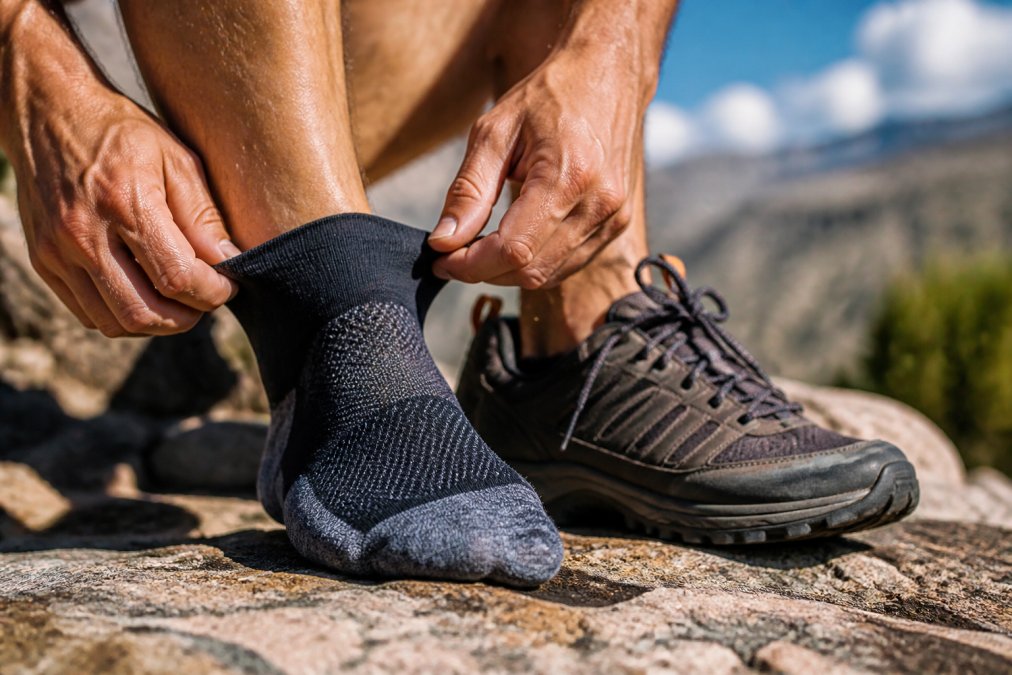
Your first line of defense against foot sweat is the sock itself. The best moisture-wicking hiking socks pull sweat away from your skin and spread it across a larger surface area so it can evaporate. Cotton is the enemy here; it absorbs moisture and holds it against your skin, accelerating the breakdown of skin integrity. Look for technical fabrics that actively transport moisture vapor away from the foot.
Merino Wool vs. Synthetic Fibers: What Actually Works
Merino wool is the gold standard for thermal regulation, managing moisture in both hot and cold conditions, resisting odor, and staying comfortable even when damp. Synthetic fibers like polypropylene and certain nylon blends dry faster and are often more durable, but they tend to hold odor more quickly. Many hikers find a blend of the two offers the best balance. The RockResist GEN1 Road & Trail Low Cut Athletic Socks use moisture-management fibers engineered to keep feet dry, paired with a patented polyurethane debris barrier that blocks dirt and gravel while reducing friction at the heel collar.

Step 2: Use Foot Powder for Hiking to Keep Feet Dry
Foot powder for hiking serves a different purpose than your socks. While socks manage moisture over time, powder absorbs sweat at the moment it appears and reduces friction before it starts. Apply a generous dusting to clean, dry feet before putting on your socks, focusing on the spaces between your toes and the ball of your foot.
Powders containing activated charcoal also absorb odor-causing compounds and keep your boots fresher over a long trek. Reapply at lunch breaks if your feet feel damp. A common mistake is applying powder to already-wet skin, which creates a paste that traps moisture. Always dry your feet thoroughly first, then powder, then sock up.
Step 3: Apply Antiperspirant to Stop Foot Sweat
The same active ingredient that keeps your underarms dry works on your feet. Aluminum-based antiperspirants block sweat ducts, reducing the volume of moisture your feet produce in the first place (the American Academy of Dermatology). This is a clinically proven approach for managing hyperhidrosis, the medical term for excessive sweating. The American Academy of Dermatology guidance on hyperhidrosis notes that antiperspirants are often the first line of treatment for sweaty extremities.
Apply antiperspirant to your feet at night before bed, not right before you hike. The product needs time to form a temporary plug in the sweat ducts. In the morning, wash your feet and apply foot powder as usual. Over time, nightly application reduces overall sweat production. For severe cases, your doctor may recommend prescription-strength formulas or clinical treatments like iontophoresis.
Step 4: Choose Breathable Footwear and Manage Moisture
Your socks can only do so much if your boots trap every drop of sweat inside. Breathability is the key specification in hiking footwear, allowing moisture vapor to escape rather than condensing inside the boot. However, the optimal footwear and sock system depends heavily on the climate and humidity you are hiking in.
Matching Your Footwear to the Environment
- Arid and Desert Climates (e.g., Moab, Utah): In low-humidity environments, sweat evaporates quickly. The primary goal is ventilation. Trail runners or hiking shoes with highly breathable mesh uppers are the best choice. They allow maximum airflow to cool your feet and wick away sweat. Waterproof membranes are unnecessary and will trap heat and moisture, making your feet sweat more.
- Humid and Rainforest Climates (e.g., Olympic National Park, Pacific Northwest): In high-humidity environments, sweat cannot evaporate efficiently because the air is already saturated with water. Here, the focus shifts to rapid moisture transport away from the skin. A sock liner system becomes crucial. The liner wicks moisture from your skin to the outer sock, where it can spread out and have a better chance of evaporating. Breathable, non-waterproof footwear is still preferred unless you are dealing with constant rain or stream crossings.
- Wet and Cold Climates (e.g., Alpine or Shoulder-Season Hikes): When you need waterproof protection for snow, rain, or stream crossings, you must accept the trade-off. Membrane technology like Gore-Tex blocks water from entering but also slows moisture vapor from escaping. In these conditions, your feet will sweat more, so you must aggressively manage moisture from the inside out. A thin liner sock under a merino wool outer sock is the most effective system to pull sweat away from your skin and into the outer layer where it can be managed.
The Sock Layering System: A Deeper Dive
- The Liner Sock (The Climate Regulator): This thin layer, typically made of silk or a hydrophobic synthetic like polypropylene, sits directly against your skin. Its primary job is to wick moisture away instantly and provide a low-friction surface. In hot, dry climates, a liner alone under a very thin outer sock can be sufficient. In cold, wet climates, it is the essential first layer that keeps your skin dry.
-
The Outer Sock (The Climate Buffer): The outer sock's role is to absorb the moisture wicked away by the liner and spread it over a larger area for evaporation. The material choice matters:
- Merino Wool: The best all-around choice for temperature regulation. It absorbs moisture and releases it slowly, keeping your feet warmer in cold conditions. It also retains its insulating properties even when damp.
- Synthetic Blends (Polypropylene, Nylon): These dry much faster than wool, making them a better choice for hot, dry climates where you want sweat to evaporate quickly. They are also more durable. However, they do not provide the same warmth when wet and tend to hold odors more quickly.
Footwear Maintenance for Moisture Control
Footwear maintenance is a direct component of foot sweat management. A boot that is not allowed to dry fully becomes a reservoir of moisture and bacteria.
- The 24-Hour Rule: After a hike, your boots need at least 24 hours to dry completely before their next use. If you hike every day, you need a second pair of boots to rotate.
- The Insole Check: Remove your insoles after every hike. They are often the wettest part of the boot and can take a long time to dry if left inside.
- Deep Cleaning: Periodically, hand-wash your boots with a gentle soap and cool water to remove accumulated salts from sweat. These salts can break down the materials and harbor odor-causing bacteria. Allow them to air dry completely.
How to Prevent Blisters Trail Running with Sock Liners
Sock liners are a thin, lightweight layer worn between your skin and your main hiking sock. They are one of the most effective tools to prevent blisters trail running and hiking, because they redirect friction: instead of your skin rubbing against the thicker sock fabric, the liner and outer sock rub against each other, leaving your skin undisturbed.
For runners, this system is particularly valuable on long descents where feet slide forward in the shoe. The liner adds minimal bulk but significantly reduces shear forces. If you have never used liners, test them on a short hike first; some runners find the extra layer makes their shoes fit tighter, so you may need to size up your footwear. Combined with moisture-wicking outer socks and foot powder, liners create a three-layer defense that keeps skin dry and friction low.
| Layer | Primary Function | Best Material | When to Use |
|---|---|---|---|
| Sock Liner | Redirect friction from skin | Silk or thin synthetic | All hikes, especially long descents |
| Main Sock | Wick moisture and cushion | Merino wool or synthetic blend | Every hike |
| Foot Powder | Absorb sweat and reduce friction | Talc-free with activated charcoal | Warm or wet conditions |
Step 5: Change Socks Mid-Hike and Dry Your Boots
No single sock can handle eight hours of heavy sweating without losing effectiveness. On any hike expected to last more than four hours, or on any high-exertion day, plan a mid-hike sock change. This isn't just about comfort; it's a critical step to prevent maceration, the softening and breakdown of skin from prolonged moisture that leads to blisters.
The Mid-Hike Sock Change Protocol
A proper sock change is more than just swapping one pair for another. Follow this protocol to reset your foot environment:
- Stop and Air Out: Find a dry spot, remove your boots and socks, and let your feet air out for at least 5-10 minutes. This allows trapped moisture to evaporate.
- Dry and Clean: Use a dedicated bandana or a small towel to thoroughly dry your feet, paying special attention to the areas between your toes. If you have access to water, a quick rinse to remove accumulated sweat and salts is even better.
- Apply Foot Powder: Dust your feet with your foot powder to create a fresh, dry buffer zone.
- Don the Clean Pair: Put on your fresh, dry socks. Ensure they are pulled up smoothly with no wrinkles.
- Manage the Wet Pair: Hang your wet socks from the outside of your pack using a carabiner or dedicated clothesline. The combination of sun and wind will help dry them out for the next day. Do not stuff them inside your pack, as they will stay damp and become a breeding ground for bacteria.
The Nightly Boot Drying System for Multi-Day Treks
For multi-day hikes, the nightly boot drying routine prevents bacterial and fungal growth, preserves the integrity of your footwear, and ensures you start each day with a dry, functional boot. Here is a system that works on the trail:
- Remove Insoles: The insoles absorb a significant amount of sweat. Remove them every single night. This is non-negotiable.
- Loosen and Open: Fully loosen the laces and open the boot's collar as wide as possible to maximize air circulation.
- The Newspaper Stuffing Method: This is the most effective low-tech drying method. Crumple dry newspaper and firmly stuff it into each boot, filling the toe box and the shaft. The paper will wick moisture away from the boot's lining. Replace the newspaper once or twice during the night if it becomes saturated. In a pinch, you can use a dry t-shirt or a bandana.
- Airflow is Key: Do not leave your boots in a sealed tent vestibule. Place them outside, under the vestibule's overhang, or in a well-ventilated area. If you are in a humid environment, the airflow is even more critical.
- Avoid Direct Heat: Never place your boots next to a campfire, on a hot rock, or near a portable heater. Direct heat will dry out the leather, causing it to crack, and can melt the adhesives that hold the boot together.
The Two-Pair Rotation Strategy
If you are on a trek longer than three days, consider carrying two pairs of boots or trail runners. This is a heavier option, but it is the ultimate solution for foot health. By rotating your footwear, you allow each pair a full 24 hours to dry completely, dramatically reducing the risk of bacterial buildup. Most thru-hikers on long-distance trails like the Appalachian Trail or the Pacific Crest Trail adopt this strategy.
When Sweaty Feet Need Medical Treatment
Most foot sweat responds well to the strategies above, but some cases require professional help. Hyperhidrosis, or excessive sweating that occurs without heat or exertion, can interfere with daily life, not just hiking. If your feet sweat profusely even when resting, or if you experience recurrent skin infections despite good foot hygiene, it is worth consulting a dermatologist.
Clinical treatment options include prescription antiperspirants with higher aluminum concentrations, iontophoresis treatments performed at home or in a clinic, and in more persistent cases, oral medications or Botox injections that temporarily block the nerves responsible for sweating. The International Hyperhidrosis Society treatment overview provides a detailed breakdown of these options and their effectiveness. For most hikers, however, the combination of moisture-wicking socks, foot powder, nightly antiperspirant, breathable footwear, and mid-hike sock changes will keep feet dry and blister-free on all but the most extreme adventures.
Frequently Asked Questions
How often should you change your socks while hiking?
Swap socks at every rest break longer than 15 minutes, or roughly every 5 to 8 miles on moderate terrain. In wet or hot conditions, change them more frequently. Carry one spare pair in a zip-top bag for easy access. Rotating to dry socks stops foot sweat from soaking through and prevents maceration, which weakens skin and leads to blisters.
Is there a way to stop foot sweat completely?
You cannot stop foot sweat entirely, but you can manage it. Prescription-strength antiperspirants with aluminum chloride, applied at night, reduce sweating for days. Iontophoresis, a clinical treatment using water currents, offers longer-term relief for hyperhidrosis. On the trail, combine antiperspirant with moisture-wicking socks and foot powder to keep sweat from pooling.
What is the best sock material to prevent foot sweat?
Merino wool and synthetic fibers like polyester and nylon are the best materials to prevent foot sweat. Both manage moisture vapor and dry quickly, unlike cotton, which holds sweat against your skin. Merino wool regulates temperature well, while synthetics offer durability. Look for a sock with mesh ventilation panels and a snug fit to reduce friction.
Does putting foot powder in your socks actually help with sweat?
Yes, foot powder helps absorb moisture and reduce friction. Apply a light dusting to clean, dry feet before putting on socks. Powders with talc or cornstarch absorb sweat, while those with antifungal agents like miconazole also control odor and bacterial growth. Reapply at lunch breaks on long hikes to maintain dryness and prevent blisters.
Sweaty feet do not have to ruin your time on the trail. The system we have outlined, built around the best moisture-wicking hiking socks, strategic use of foot powder, and consistent foot care routines, addresses the problem at every stage. RockResist gear is engineered with moisture-management fibers and debris-shielding cuffs, tested on rugged Colorado terrain to keep your feet dry and protected mile after mile. Get started with RockResist and keep your focus on the trail ahead.