
Table of Contents
- What Separates High Performance Socks for Athletes From Regular Socks
- Preventing Debris in Running Shoes: Why Cuff Technology Matters
- Best Socks for Blister Prevention: Materials and Construction
- How to Choose Trail Running Socks for Rugged Terrain
- Moisture-Wicking Technology and Thermal Regulation in Performance Socks
- Sizing, Fit, and Durability: What Most Athletes Get Wrong
- Conclusion: Gear That Keeps You Moving
- Frequently Asked Questions
Last Updated: September 10, 2026
What Separates High Performance Socks for Athletes From Regular Socks
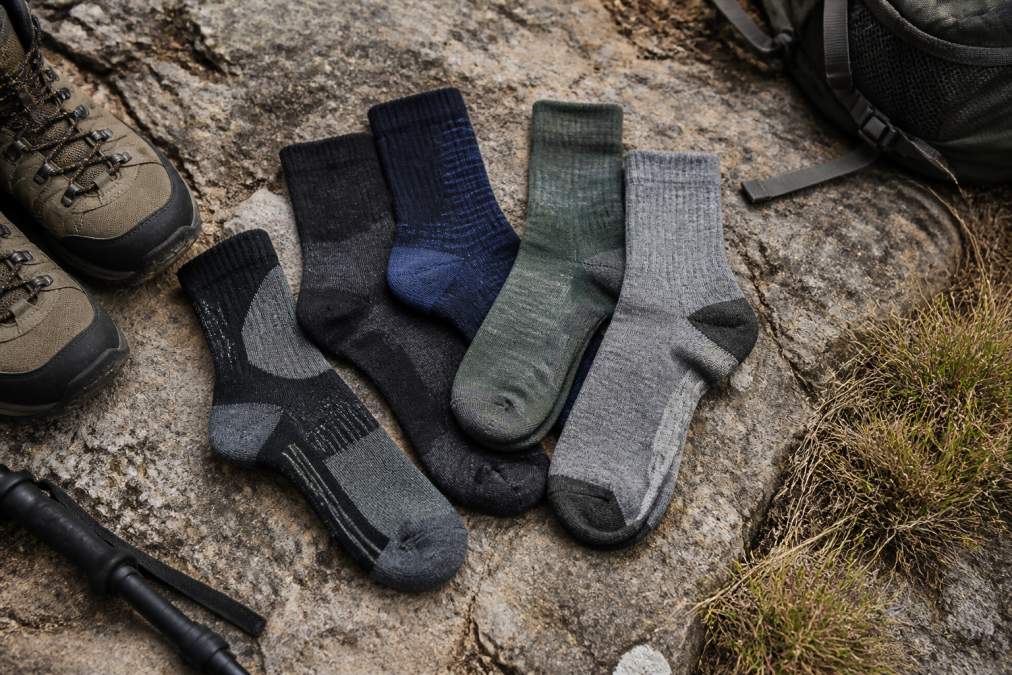
High performance socks for athletes are engineered with anatomical fit, moisture-wicking fibers, and targeted cushioning to reduce friction, manage sweat, and protect against blisters on rugged terrain. Regular cotton socks absorb moisture, lose shape, and create the friction that causes hot spots.
The difference shows up mile ten, not mile one. A cotton sock holds sweat against your skin, softens, and bunches. A performance sock moves moisture to the surface where it evaporates, keeps its structure, and holds your foot in place inside the shoe. This guide from RockResist breaks down what actually matters when you're choosing socks for trail running, climbing, and long-distance efforts.
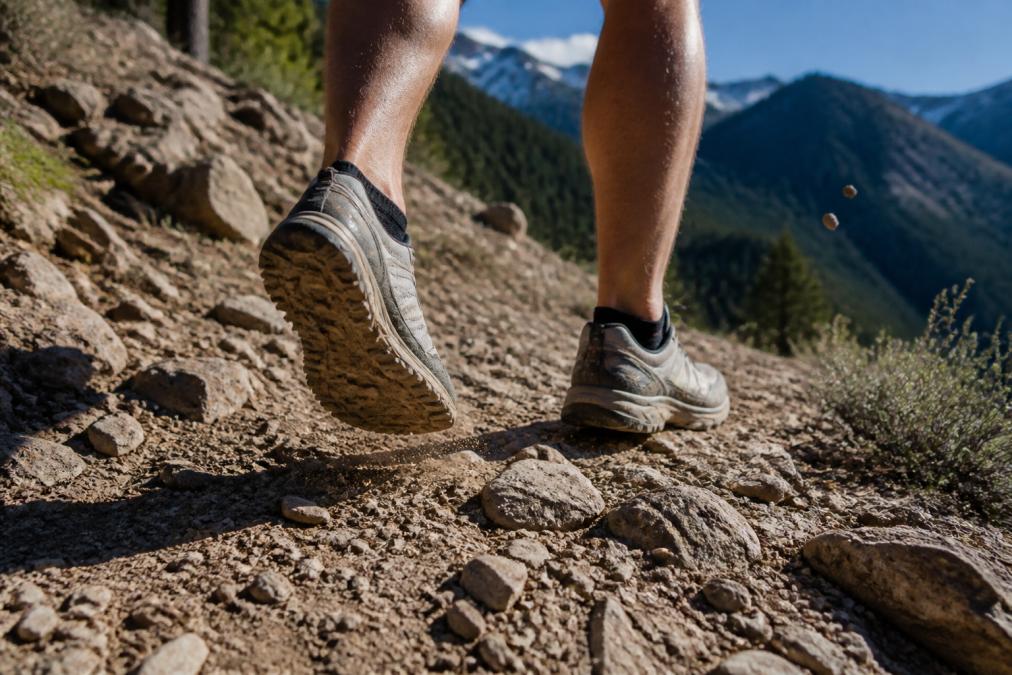
That's the theory. Here's where most athletes get it wrong: they treat socks as an afterthought, then blame their shoes when blisters show up.
Preventing Debris in Running Shoes: Why Cuff Technology Matters
Debris enters a running shoe through the collar gap, and a debris-shielding cuff is the most effective way to block it. Sand, gravel, and small rocks work their way in with every foot strike, then grind against your heel and toes for the rest of the run.
RockResist builds its GEN1 Road & Trail Low Cut Athletic Socks around a patented polyurethane debris barrier that creates a physical shield at the heel collar. That same barrier reduces friction at the collar, which is one of the primary causes of blisters. For runners who train on loose, technical terrain, this is the difference between finishing clean and stopping to shake out your shoes.

Best Socks for Blister Prevention: Materials and Construction
The best socks for blister prevention combine moisture-wicking fibers, a seamless toe, and a heel lock that stops the foot from sliding. Blisters come from friction plus moisture, so a sock that manages both removes the conditions they need to form.
Look for:
- Moisture-management fibers that pull sweat away from skin
- A seamless toe to eliminate the ridge that rubs
- Midfoot compression to hold the sock in place
- Reinforced heel and toe for durability where it counts
What most guides miss is that construction matters as much as material. A merino wool or synthetic blend sock with a sloppy fit will still blister you.
How to Choose Trail Running Socks for Rugged Terrain
Choosing trail running socks for rugged terrain comes down to four decisions: cuff height, cushioning, material, and fit. Get those right and the rest follows.
| Decision | Options | Best For |
|---|---|---|
| Cuff height | No-show tab, quarter crew, mid-crew | Debris protection on loose trails |
| Cushioning | Light, medium, targeted | Impact absorption on technical descents |
| Material | Merino wool, synthetic blend | Thermal regulation vs. fast drying |
| Fit | Anatomical left/right | Reduced slipping and friction |
A no-show tab keeps a low profile on smooth pavement. On scree and dust, a quarter crew or mid-crew with a debris barrier does more for you than any cushioning upgrade.
Moisture-Wicking Technology and Thermal Regulation in Performance Socks
Moisture-wicking technology moves sweat from your skin to the fabric's outer surface, where it evaporates. Breathable mesh zones and ventilation panels speed that process, while merino wool adds thermal regulation for cold starts and hot finishes. That's the one-line version every guide gives you. Here's what's actually happening at the fiber level, because the difference between a sock that works and one that doesn't lives in the yarn, not the marketing copy.
How wicking actually works
Synthetic performance yarns, polyester, nylon, and polypropylene, are hydrophobic, meaning they don't absorb water. Instead, capillary action pulls liquid along the spaces between individual filaments and carries it to the outer face of the fabric, where a larger surface area and moving air evaporate it. Merino wool works differently: the fiber's scaly outer layer is naturally water-repellent, but its core is hydrophilic, so it absorbs vapor and releases it slowly. That's why merino feels dry against skin even when it's holding moisture, and why it keeps insulating when damp, a property synthetics lose once they're saturated.
Why wet skin blisters
Here's the part that changes everything: moisture management isn't about staying dry. It's about staying warm and friction-free. Wet skin softens, and soft skin tears. When skin is hydrated, the outer layer swells and its coefficient of friction against fabric rises, so every foot strike shears the skin a little more (PubMed). A sock that moves moisture away keeps that outer layer intact over hours of high-intensity interval training, long climbs, and unpredictable weather. This is why a podiatrist will tell you that a wet cotton sock on a 10-mile run is a blister waiting to happen, while the same cotton sock on a 2-mile walk is fine.
Mesh zones, ventilation, and where they sit
Not all mesh is equal. Look for mesh panels over the instep and along the sides of the arch, those are the highest-sweat zones on the foot. Mesh under the heel or across the toes usually signals a cosmetic design choice rather than a functional one, because those areas need cushioning, not airflow. A well-built sock uses mesh where you sweat and terry-loop knit where you strike.
Thermal regulation: cold starts, hot finishes
Merino's edge is its temperature range. A midweight merino blend regulates across roughly a 40-degree swing, comfortable on a 35°F dawn start and still breathable when the afternoon hits 75°F (peer-reviewed research). Synthetics dry faster but offer almost no insulation when wet, which is why they dominate warm-weather and high-output use. Many athletes split the difference: synthetic blend for summer road and interval work, merino blend for shoulder-season trails and anything with elevation gain where temperatures drop.
How moisture and friction combine to cause blisters
A quick material cheat sheet
| Fiber | Dries fast? | Insulates when wet? | Odor resistance | Best for |
|---|---|---|---|---|
| Polyester / nylon blend | Yes | No | Low, needs antimicrobial treatment | Summer road, intervals, high sweat |
| Merino wool | Moderate | Yes | High, naturally antimicrobial | Trails, shoulder season, multi-day |
| Merino-synthetic blend | Moderate-fast | Partial | Moderate-high | Most athletes, most conditions |
| Cotton | No | No | Low | Not recommended for training |
If you only remember one thing: match the fiber to the conditions, not to the label. A sock that wicks well but insulates poorly will still leave you miserable on a cold, wet trail, and a sock that insulates well but dries slowly will chafe on a hot, humid road run.
Sizing, Fit, and Durability: What Most Athletes Get Wrong
Sizing and fit cause more blisters than bad materials. A sock that's too large bunches and slides; one that's too small stretches thin and loses its cushioning. Most performance socks run true to size, so measure your foot and match the chart rather than guessing. But here's where nearly every guide stops, and where the athletes who actually get years out of a pair start paying attention.
Sizing for non-standard foot shapes
Standard sock charts assume a standard foot. If yours isn't, the chart is a starting point, not an answer.
- Wide feet: Look for socks labeled with a wide or roomy toe box, or size up one half-size and accept slightly more length. A sock that's tight across the metatarsals restricts toe splay and increases friction at the ball of the foot, the single most common blister site for wide-footed runners.
- High arches: You need arch compression that actually contacts the arch. A flat sock with a decorative arch band does nothing. Look for a contoured arch panel or a graduated compression zone that wraps the midfoot.
- Bunions: Seamless toe construction and a stretchy, non-compressive forefoot are non-negotiable. Any seam or tight knit across the bunion joint will rub it raw within a few miles.
- Narrow or low-volume feet: A sock that's slightly too loose will slide. Midfoot compression and a snug heel pocket matter more than cushioning here.
A common pattern among podiatrists is to recommend that athletes with structural foot differences treat socks as part of the fit system, not an accessory, the same way they'd treat an orthotic or a shoe last.
Durability: what actually wears out first
Socks rarely fail everywhere at once. The failure points, in order:
- The heel pocket, the first place to thin, because it takes the most shear.
- The cuff elastic, loses grip after repeated hot washes, which lets debris in and the sock slide down.
- The toe seam, the first place a hole appears if the seam isn't reinforced.
- The arch band, stretches out and stops compressing.
Reinforced heels and toes, flat-lock or seamless toe construction, and high-abrasion yarns (often nylon or a nylon-copolyester blend) at those four points are what separate a sock that lasts 300 miles from one that lasts 80.
Care: how to make technical fibers last
Technical fibers are expensive, and most of their lifespan is lost in the laundry. A care routine that actually extends life:
- Wash cold, heat breaks down elastane and merino's crimp structure.
- Turn them inside out before washing to protect the outer face and flush skin cells and salts out of the knit.
- Skip fabric softener, it coats fibers and blocks wicking.
- Skip the dryer, air-dry flat or hang. A hot dryer is the single fastest way to kill a cuff.
- Rotate at least three pairs so no single sock takes every long run. Elastic needs 24 hours to recover its shape.
- Wash after every run, salts and bacteria left in the fiber degrade elastane and cause odor that no antimicrobial treatment can fully undo.
When to replace
Retire a pair when the heel pocket thins enough to see light through it, the cuff no longer stays up on its own, or the arch band has visibly relaxed. Most athletes replace too late, they keep wearing a sock that's already lost its compression and cushioning, then blame the shoe for the blisters that follow.
If you're between sizes, size up for cushioning and down for compression. And if a pair doesn't work for you, check the return policy before you commit, because a sock that ends up in a drawer helps no one.
Conclusion: Gear That Keeps You Moving
Blisters and debris end more long runs than fitness does, and the fix usually costs less than a new pair of shoes. Start with a sock built for the terrain you actually run: a debris-shielding cuff, moisture-management fibers, and a fit that holds your foot in place. RockResist makes the GEN1 Road & Trail Low Cut Athletic Socks with a patented polyurethane debris barrier, engineered insulation, and reinforced seams tested on rugged Colorado trails. Add to cart and stop letting your feet decide how far you go.
Frequently Asked Questions
What are the best athletic performance socks?
The best performance socks for athletes combine moisture-wicking fibers, targeted cushioning, and a fit that stays locked to the foot. Look for merino wool or synthetic blends that move sweat away from skin, arch compression for stability, and reinforced heels and toes for durability. For trail runners and climbers, debris-shielding cuffs add another layer of protection. RockResist GEN1 Road & Trail Low Cut Athletic Socks ($25.99) use a patented polyurethane debris barrier and moisture-management fibers to keep feet dry and debris-free on rugged terrain.
Do moisture-wicking socks actually prevent blisters?
Yes, moisture-wicking socks reduce blister risk by pulling sweat away from the skin, which lowers friction and softens the skin less. When skin stays dry, the repetitive rubbing that causes blisters is significantly reduced. However, wicking alone is not enough on technical trails. You also need a snug anatomical fit, seamless toes, and debris-blocking cuffs. RockResist socks pair moisture management with a physical debris barrier at the heel collar, addressing both moisture and friction, the two main blister drivers.
How do you prevent debris from getting into running shoes?
Debris enters running shoes mainly through the collar and around the ankle. A debris-shielding cuff creates a physical seal that blocks dirt, sand, and gravel from entering. RockResist GEN1 socks use a patented polyurethane barrier at the cuff that also reduces friction at the heel collar, one of the primary causes of blisters. Choosing socks with a taller cuff for trail use and ensuring a snug fit around the ankle further minimizes gaps where debris can slip in.
How should high performance socks for athletes fit?
Performance socks should fit snugly with no bunching or excess fabric. The heel pocket should sit exactly on your heel, and the arch should feel supported without pinching. If you are between sizes, size up for trail running to accommodate foot swelling over long distances. RockResist socks are designed with an anatomical fit that locks the heel and supports the midfoot. A proper fit reduces friction, prevents blisters, and keeps debris out during high-intensity activity.