
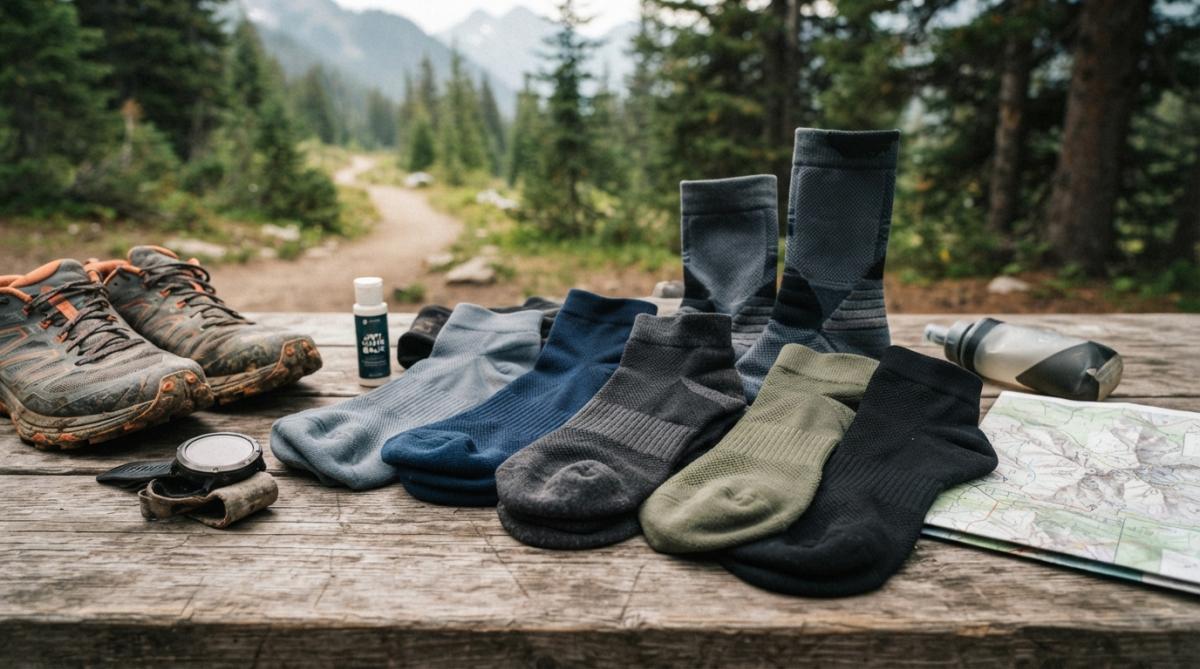
Table of Contents
- What Defines the Best Socks for Endurance Racing?
- Synthetic vs Merino Wool Running Socks: Which Material Wins?
- Preventing Debris in Running Shoes: The First Line of Defense
- How to Prevent Blisters During Ultra Marathons
- Key Features to Prioritize in Endurance Racing Socks
- RockResist GEN1: A Grit-Tested Option for Racers
- Final Thoughts on Choosing Your Next Race Sock
- Frequently Asked Questions
Last Updated: September 6, 2026
Endurance racing punishes everything below the knee. Over a 50-mile ultra or a multi-day stage race, your feet strike the ground tens of thousands of times, accumulate hours of moisture, and get pelted with trail grit. The best socks for endurance racing disappear from your awareness entirely, letting you focus on pacing, nutrition, and the miles ahead. At RockResist, we design and test gear on rugged Colorado trails, and we have learned that the difference between a personal record and a DNF often comes down to what is on your feet.
What Defines the Best Socks for Endurance Racing?
The best socks for endurance racing combine debris protection, moisture management, and friction reduction into a single cohesive system. A sock that excels in only one area will fail you over 12-plus hours of continuous movement. The benchmark is whether your feet emerge from a hard effort free of hot spots, blisters, and embedded trail grit.
Cushioning density matters, but it is not the whole story. Ultrarunners often prefer a midweight sock that provides impact absorption without feeling bulky inside a snug race shoe. The sock should also maintain its structure when wet, since wrinkles create friction.
Look for a seamless toe construction to eliminate the most common friction point, plus a heel tab that prevents the sock from slipping down into your shoe. The cuff is equally critical. A standard crew sock allows debris to funnel in over the ankle, while a properly designed barrier keeps sand and gravel out in the first place.
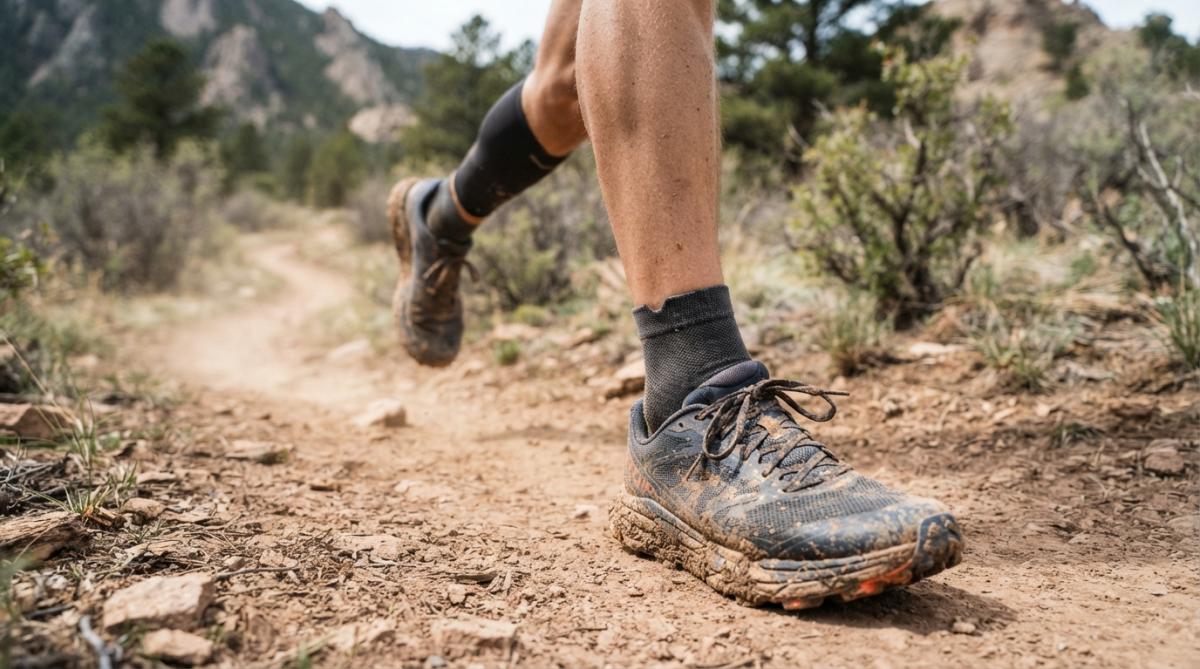
Synthetic vs Merino Wool Running Socks: Which Material Wins?
Merino wool earns its reputation for thermal regulation and odor control, but synthetics dominate when the priority is durability and rapid drying. For endurance racing, the argument is not about picking a single "best" fiber; it is about matching the material to the conditions.
The case for Merino in cold, wet conditions
Merino wool's advantage is its ability to retain insulating properties when wet. A 100% Merino sock at 200-250 gsm will keep your feet warmer than any synthetic at the same weight when crossing snowmelt streams or running in sustained rain (peer-reviewed research). The trade-off is structural: pure wool has lower abrasion resistance than nylon.
The case for synthetics in hot, dry conditions
Synthetic fibers like nylon and polypropylene are hydrophobic, meaning they repel water rather than absorbing it. This property keeps the sock lighter when wet and speeds up drying. For summer ultras or desert races where heat and sweat are the primary enemies, a synthetic sock with ventilation mesh across the instep moves moisture away from the skin more effectively than wool. The American Council on Exercise guidance on athletic sock materials notes that moisture management is a primary factor in preventing maceration and skin breakdown during prolonged activity.
The overlooked variable: compression and fabric recovery
What is often overlooked is how a sock's elastic recovery affects blister formation in the later stages of a race. After hours of continuous wear, both wool and synthetic fibers can lose some elasticity, and a sock that has stretched out at the arch or heel creates fabric bunching, a direct cause of shear blisters. High-quality endurance socks use a graduated compression knit around the midfoot to maintain structural integrity even as fibers fatigue.
A layering strategy for extreme conditions
For events exceeding 50 miles or those with dramatic temperature swings, consider a layering approach. A thin nylon liner sock at 80-100 gsm worn under a midweight Merino blend at 200 gsm creates a friction interface between the two sock layers rather than between the sock and your skin. The liner wicks moisture from the skin and transfers it to the outer sock, where it can evaporate. The trade-off is fit: you may need to size up half a shoe size to accommodate the extra volume.
The decision framework for race day
| Condition | Recommended Fiber | Why |
|---|---|---|
| Cold and wet (below 50°F, rain/snow) | 60-70% Merino blend | Retains warmth when saturated |
| Hot and dry (above 70°F, low humidity) | High-denier nylon/polypropylene | Faster drying, higher abrasion resistance |
| Mixed conditions (mountain races) | Merino-synthetic hybrid (50/50) | Balances warmth and drying speed |
| Multi-day stage races | Synthetic with antimicrobial treatment | Dries overnight, resists odor buildup |
Preventing Debris in Running Shoes: The First Line of Defense
Preventing debris in running shoes is the most underrated aspect of endurance foot care. A single pebble trapped against the sole of your foot can create a blister within a few miles, and on a 100-mile course, stopping to empty your shoes a dozen times adds up to significant lost time.
Gaiters are the traditional solution, but they add bulk and another point of failure. The modern alternative is a sock with an integrated debris barrier at the cuff. RockResist engineered the GEN1 with a patented polyurethane barrier that creates a physical shield, preventing dirt, sand, and gravel from entering the shoe while also reducing friction at the heel collar.
A common mistake is assuming that a snug fit prevents debris entry. The reality is that the ankle opening moves with every stride, and even a small gap invites trail grit. Test your socks on a dusty section of trail before race day. If you feel particles migrating toward your toes within the first hour, that sock is not doing its job.
How to Prevent Blisters During Ultra Marathons
Blisters during ultra marathons form when friction, heat, and moisture combine to separate the layers of skin. The prevention strategy is to disrupt at least one of those variables, and the most controllable is friction. Top finishers in 100-mile events treat blister prevention as an integrated foot-care system combining sock selection, proactive taping, and precise lubricant application.
Step 1: Identify your personal hot spots before race day
Most runners develop blisters in predictable locations: the heel, the lateral edge of the big toe, the tops of the toes, and the ball of the foot. Take note of where you have blistered in past races. A sock with an anatomical fit and compression zones around the midfoot locks the sock in place, preventing fabric from sliding against your foot with each stride. But even the best sock cannot eliminate friction entirely at your specific hot spots.
Step 2: Apply the right lubricant at the right time
Lubrication is the second line of defense. Apply an anti-chafe balm to known hot spots before you put on your socks, at least 10 minutes before socking up so it can absorb partially into the skin rather than sitting as a greasy layer that washes away with the first sweat. For races over 50 miles, carry a single-use sachet of balm in your drop bag and reapply at the halfway point, since feet swell during ultras and a sock that fit at mile 1 can become restrictive by mile 40.
Step 3: Use targeted taping for known problem areas
For runners with chronic blister locations, taping is the most effective intervention. Use a thin, adhesive kinesiology tape or specialized blister tape cut to the exact shape of the hot spot, applied directly to clean, dry skin before lubrication. The goal is to create a smooth, continuous surface that eliminates the skin fold or ridge causing the friction. Do not wrap tape around the entire toe, as this can restrict circulation; instead, apply a small patch covering only the affected area.
Step 4: Manage moisture as a system, not a single event
Sweat softens the skin and makes it far more susceptible to damage. A sock with engineered insulation and breathable mesh allows moisture to escape while keeping the foot at a stable temperature. According to the American Academy of Dermatology's guidance on blister prevention, keeping the area dry and reducing friction are the two most effective steps to avoid blisters during physical activity. However, in humid conditions or during heavy rain, no sock can wick moisture fast enough to keep feet completely dry. In these conditions, plan for a sock change at a designated aid station. A dry pair of socks at mile 50 of a 100-miler is often more effective at preventing blisters than any lubricant or tape applied at the start.
Step 5: Know the difference between a hot spot and a blister
A hot spot is a warning sign, not a sentence. When you feel one developing during a race, stop immediately. Remove your shoe and sock, dry the area, apply fresh lubricant, and cover the spot with a small piece of tape if you have it. This 60-second intervention can save you hours of pain later, since most runners who DNF from blisters report that they ignored the initial hot spot for 5-10 miles before it became unbearable.
The integrated protocol for race day
| Time | Action |
|---|---|
| Night before | Trim toenails straight across; file any rough edges |
| 30 minutes before start | Apply tape to known hot spots; allow 10 minutes for adhesion |
| 10 minutes before start | Apply lubricant to heels, toes, and ball of foot |
| Mile 25-30 | Reapply lubricant from a drop bag or handheld sachet |
| Mile 50-60 | Change into fresh socks if conditions are wet or sweaty |
| Finish | Inspect feet immediately; treat any hot spots before they worsen |
Key Features to Prioritize in Endurance Racing Socks
When you compare options, focus on the features that directly impact performance over long distances. The table below summarizes what to look for and why it matters.
| Feature | What to Look For | Why It Matters |
|---|---|---|
| Debris Protection | Integrated barrier or tight-knit cuff | Prevents grit from entering the shoe |
| Moisture Management | Synthetic fibers with ventilation mesh | Keeps feet dry, reduces maceration |
| Friction Reduction | Seamless toe, anatomical fit | Eliminates hot spots and shear forces |
| Durability | Reinforced seams, high-denier nylon | Withstands abrasion from shoes and terrain |
| Cushioning | Midweight density under heel and forefoot | Absorbs impact without adding bulk |
| Odor Control | Antimicrobial treatment | Stays fresher over multi-day events |
Durability is the feature that most racers underestimate. A sock that develops a hole at mile 40 of a race is a disaster, and thin spots usually appear first at the heel and toe, where the sock rubs against the shoe. Reinforced seams and a dense knit in these high-wear zones extend the sock's usable life significantly.
RockResist GEN1: A Grit-Tested Option for Racers
For racers who want a single pair of socks that handles debris, moisture, and blisters without compromise, the RockResist GEN1 Road & Trail Low Cut Athletic Socks are our top recommendation. Priced at $25.99, they are built for the specific demands of endurance racing on rugged terrain.

The defining feature is the patented polyurethane debris barrier. Unlike a simple tight cuff, this barrier physically blocks trail debris from entering the shoe and reduces friction at the heel collar, a frequent source of blisters for runners who log high weekly mileage.
The GEN1 sock also incorporates a two-component construction that balances protection with breathability. The debris-blocking cuff is paired with moisture-management fibers that wick sweat away from the skin, keeping your feet dry even during sustained efforts in warm conditions. Reinforced seams throughout ensure the structure holds up to the repeated abrasion of a race shoe.
These socks are tested on the same Colorado trails where we develop all RockResist products. They are designed for trail runners dealing with debris, climbers facing abrasive rock contact, and anyone who wants to prevent foot irritation during long-distance efforts.
Final Thoughts on Choosing Your Next Race Sock
Choosing the best socks for endurance racing comes down to identifying the failure point that has ended your races in the past. If you constantly stop to empty gravel from your shoes, prioritize a debris barrier. If your feet emerge from every long run with raw spots, focus on friction reduction and a seamless toe. If you run in wet conditions, make moisture management your top criterion.
The best socks for endurance racing are an investment in finishing strong. A $25 pair of socks is cheap insurance compared to the cost of a race entry, the months of training, and the physical toll of a DNF caused by preventable foot damage.
Racing is about outsmarting the terrain, not just outlasting it. RockResist builds gear for athletes who refuse to let the elements dictate their performance. The GEN1 sock delivers debris protection, blister prevention, and sweat-wicking comfort in a single package, proven across the punishing trails of Colorado.
Get started with RockResist and put the grit in its place, so you can focus on the miles ahead.
Frequently Asked Questions
What features should I look for in endurance racing socks?
Focus on moisture-wicking materials, a seamless toe construction, and a secure fit without wrinkles. For endurance racing, debris protection is critical: look for a sock with a barrier or cuff that seals out dirt and grit. Cushioning density should match your terrain and distance, and arch support helps reduce fatigue over long miles. Prioritize durability in high-wear zones like the heel and toe.
Are wool or synthetic socks better for long-distance running?
Both work, but they solve different problems. Merino wool offers excellent thermal regulation and natural odor control, making it a strong choice for varied conditions. Synthetic fibers like nylon and polyester dry faster and often provide a more precise, snug fit. For endurance racing, a blend often performs best, combining wool's comfort with synthetics' durability and moisture management.
How do I prevent debris from getting into my running shoes?
The most effective method is using a sock with an integrated debris shield. A physical barrier, often made of polyurethane, sits at the heel collar and blocks dirt, sand, and gravel from entering the shoe. This reduces friction and the need to stop and clear your shoes. Gaiters are an alternative, but a sock with a built-in shield offers a simpler, more comfortable solution.
How often should I replace my running socks?
Plan to replace performance socks every 300 to 500 miles, or roughly every six months if you run regularly. Check for signs of wear like thinning fabric, loss of elasticity, or developing holes, which can lead to friction and blisters. Once the cushioning flattens or the fit becomes loose, the sock's protective qualities are compromised.