

Table of Contents
- Why Moisture Management Matters for Endurance Running
- How to Prevent Blisters Trail Running: The Moisture-Friction Connection
- Best Moisture-Wicking Socks for Runners: Fabric Science Explained
- Preventing Chafing During Long Distance Runs: Moisture and Skin Barrier
- Hydration Strategy and Electrolyte Balance for Endurance Exercise
- Running in Heat and Humidity: Environmental Adaptation and Thermoregulation
- Selecting Moisture-Management Gear: Vests, Bottles, and Technical Fabrics
- Post-Exercise Recovery and Rehydration
- Frequently Asked Questions
Last Updated: September 4, 2026
Why Moisture Management Matters for Endurance Running
Moisture management for endurance running is the systematic control of sweat and environmental water across your skin and gear to maintain thermoregulation and prevent tissue damage over hours of effort. It is the difference between finishing a 20-mile training block with intact feet and pulling off a soaked sock to find the white, wrinkled skin that tears at the first mile of the next run. When sweat sits against the skin, the stratum corneum absorbs water, softens, and loses structural integrity, which directly increases friction damage.
At RockResist, we have tested gear across rugged Colorado trails where summer afternoons combine high solar load with sudden downpours, and the pattern is consistent: runners who control moisture at the skin level finish stronger and recover faster. Most runners focus on hydration and pacing, but the microclimate inside your shoe and under your layers dictates comfort more than any other controllable variable. The physiology is straightforward: evaporative cooling only works when sweat can move away from the skin and reach the air, and skin integrity depends on keeping that interface dry.
Below, we'll show you exactly how to build a complete moisture strategy, from fabric science to hydration timing, so you can run longer without the blisters, chafing, and energy drain that wet gear causes.
How to Prevent Blisters Trail Running: The Moisture-Friction Connection
Blisters form when shear forces repeatedly stress the skin, and moisture dramatically lowers the force threshold required to cause separation between the epidermal layers. A dry foot can tolerate significant rubbing; a wet foot begins to delaminate after far less mechanical stress. This is why how to prevent blisters trail running starts with moisture control, not just sock thickness or shoe fit.
Sweat Rate and Blister Formation
Your feet contain a high density of eccrine glands, and during endurance exercise, foot sweat production rises alongside core temperature. As sweat accumulates, it saturates the sock fibers and creates a liquid film at the skin-sock interface. This film increases the coefficient of friction against the sock while simultaneously softening the skin, a combination that accelerates blister formation at every pressure point.
Friction Points and Moisture Buildup
The heel collar, the ball of the foot, and the toes are the primary friction zones because they bear weight and move against the shoe during each stride. When moisture builds in these areas, the sock fabric loses its ability to glide against the skin, and the shear force transfers directly to the epidermis. Trail running adds another variable: debris that enters the shoe abrades the skin and traps moisture against it, compounding the problem.
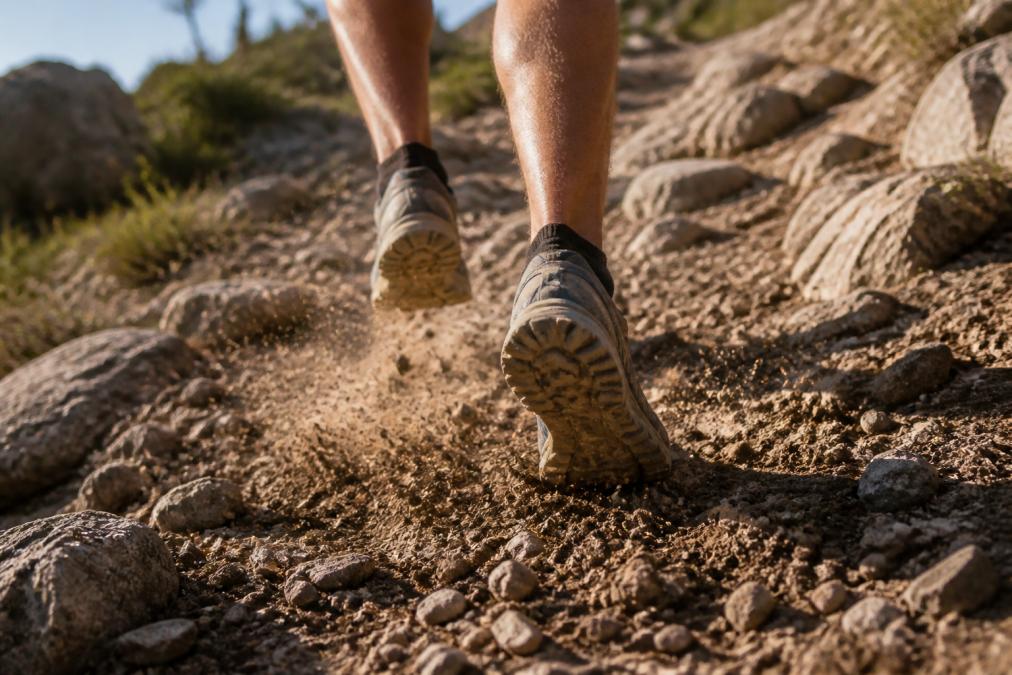
Best Moisture-Wicking Socks for Runners: Fabric Science Explained
The best moisture-wicking socks for runners do not absorb sweat; they transport it away from the skin and spread it across a larger surface area for evaporation. The mechanism is capillary action, the same physical process that pulls water up through narrow tubes. In fabric, this depends on the fiber structure and the yarn's ability to create channels that move moisture outward.
Capillary Action and Fiber Structure
Synthetic fibers such as polypropylene and certain nylon blends are hydrophobic, meaning they repel water at the fiber surface. When engineered into a knit with a specific cross-section, these fibers create continuous channels that draw moisture away from the skin through capillary action. The moisture moves from the inner surface of the sock, where it contacts your foot, to the outer surface, where it can evaporate into the shoe's interior and exit through breathable mesh.
Synthetic Fibers vs. Natural Materials
Merino wool has natural moisture-wicking properties and remains a popular choice because it manages odor and temperature well. However, wool absorbs up to 30 percent of its weight in moisture before it feels wet, which means it holds water against the skin longer than purely hydrophobic synthetics. Cotton is the worst option for endurance running: it absorbs sweat, loses all insulating value when wet, and increases friction against the skin.
| Fabric Type | Moisture Behavior | Best Use Case |
|---|---|---|
| Polypropylene | Hydrophobic, transports moisture outward | High-output running, hot conditions |
| Merino Wool | Absorbs up to 30% before feeling wet | Cool-weather hiking, low-intensity |
| Cotton | Absorbs and holds moisture | Casual wear only, not for running |
| Nylon Blends | Durable, quick-drying, good wicking | Trail running, abrasive terrain |
Preventing Chafing During Long Distance Runs: Moisture and Skin Barrier
Chafing during long distance runs happens when repetitive motion combines with moisture to erode the skin's outer layer, leading to redness, rawness, and open wounds. The skin barrier relies on a balance of oils and dead cells that slough off naturally; sweat disrupts this balance by washing away natural oils and leaving salt crystals that abrade the skin with each movement. Preventing chafing during long distance runs requires managing both the moisture and the friction at every contact point.
Moisture Transport and Skin Health
When sweat evaporates efficiently, it leaves salt behind on the skin surface. As you continue to move, those salt crystals act like fine sandpaper against your skin, particularly where clothing presses tightly. A base layer that transports moisture away from the skin reduces this salt buildup and preserves the skin barrier's integrity over hours of movement.

Base Layer Selection and Microclimate Regulation
The microclimate between your base layer and your skin is a narrow band of air that your body heats and humidifies. A well-designed base layer regulates this microclimate by wicking moisture outward while trapping a thin layer of warm, dry air against the skin. Look for flat seams that do not create pressure points and a snug but not restrictive fit that keeps the fabric in contact with the skin so capillary action can work continuously.
Hydration Strategy and Electrolyte Balance for Endurance Exercise
A hydration strategy for endurance exercise must account for both fluid volume and electrolyte concentration, because drinking plain water in excess can dilute blood sodium to dangerous levels. This condition, hyponatremia, occurs when fluid intake outpaces sodium replacement, and it can be more dangerous than dehydration in endurance events lasting over four hours.
Fluid Replacement Timing
Start every run hydrated, then drink to thirst during the effort rather than forcing a fixed volume per hour. Thirst is a reliable indicator of fluid need for most runners, and over-drinking creates the dual problem of gastric discomfort and sodium dilution. For runs over 90 minutes, carry fluid and take small sips every 15 to 20 minutes rather than consuming large volumes at once.
Sodium Loss and Osmolarity
Sweat contains sodium, and heavy sweaters can lose significant amounts during long efforts. Osmolarity, the concentration of dissolved particles in your blood, regulates fluid movement between compartments. When you lose sodium through sweat and replace it only with water, osmolarity drops and fluid shifts into cells, causing swelling and, in severe cases, neurological symptoms. For runs over two hours in heat, include an electrolyte supplement with sodium to maintain balance.
Running in Heat and Humidity: Environmental Adaptation and Thermoregulation
Running in heat and humidity challenges your thermoregulatory system because high humidity reduces the vapor pressure gradient between your skin and the air, slowing evaporative cooling. When sweat cannot evaporate, it pools on your skin, and your body continues to produce it, accelerating fluid and electrolyte losses without the cooling benefit.
Evaporative Cooling and Breathability
Your cooling system depends entirely on evaporation: each gram of sweat that evaporates removes a fixed amount of heat from your skin. When humidity is high, the air is already saturated with water vapor, so evaporation slows and your body must produce more sweat to achieve the same cooling effect. This is why breathable fabrics matter more in humid conditions: they move sweat away from the skin to the outer surface, where the air movement from running can still drive evaporation.

Heat Acclimatization Protocols
Heat acclimatization takes 10 to 14 days of progressive exposure to hot conditions, and it improves your sweat rate, plasma volume, and sodium conservation. During this period, your body learns to sweat earlier and more efficiently, with lower sodium concentration in the sweat. Acclimatized runners also experience lower core temperatures at the same workload, which reduces overall cardiovascular strain.
Selecting Moisture-Management Gear: Vests, Bottles, and Technical Fabrics
Selecting moisture-management gear requires balancing hydration access, weight distribution, and fabric performance across the duration of your run. A hydration vest that bounces or shifts creates friction points, while a bottle that is difficult to reach disrupts your stride and discourages regular fluid intake.
Hydration Vest Design and Weight Distribution
A well-designed hydration vest distributes water weight across your upper back and chest, keeping the load close to your center of mass. Look for vests with multiple adjustment points so you can tighten the fit without restricting breathing, and choose models with breathable mesh panels that allow sweat to evaporate from your back rather than pooling against the vest.
RockResist Socks: Debris-Shielding and Moisture Control
For the foot, RockResist GEN1 Road & Trail Low Cut Athletic Socks combine moisture-management fibers with a patented polyurethane debris barrier that prevents dirt, sand, and gravel from entering the shoe. The barrier also reduces friction at the heel collar, one of the primary blister zones, while the moisture-wicking knit keeps sweat moving away from the skin. These socks are engineered for the conditions where debris and moisture compound: technical trail runs, ultra-marathon training, and any effort where foot integrity determines whether you finish. At $25.99, they deliver protection that standard athletic socks cannot match.
Post-Exercise Recovery and Rehydration
Post-exercise recovery begins with replacing fluid and electrolyte losses, then shifts to restoring skin integrity and preparing your gear for the next session. Within the first hour after a run, drink 16 to 24 ounces of fluid for every pound of body weight lost during the effort, and include sodium to help your body retain the fluid.
Your skin needs attention after hours of moisture exposure. Wash the affected areas gently to remove salt residue, then apply a moisturizer to restore the skin barrier. Check your feet for hot spots or early blister formation, and address them before they become open wounds. Finally, wash your technical gear with a sports detergent that removes sweat salts without degrading the moisture-wicking treatment, and air dry it completely before your next run.
According to American Council on Exercise hydration guidelines, proper fluid replacement after exercise should match the volume lost during the session to maintain performance across subsequent training days. The National Athletic Trainers' Association position statement on fluid replacement similarly emphasizes individualized hydration plans based on sweat rate rather than generic recommendations. For runners training in hot conditions, the CDC guidance on heat stress and physical activity recommends gradual heat acclimatization and careful monitoring of fluid intake to prevent both dehydration and overhydration.
Managing moisture across a multi-hour effort is the quiet variable that separates strong finishes from early exits. Most runners underinvest in fabric technology and overinvest in training volume, then wonder why blisters and chafing sideline them. RockResist builds gear for the conditions where moisture management is non-negotiable, with socks that block debris and wick sweat, and apparel that regulates your microclimate through the hardest miles. Our GEN1 socks combine a patented debris barrier with moisture-management fibers tested on rugged Colorado trails, and the full RockResist line covers your base layer, compression, and running tops at prices that respect your training budget. Get started with RockResist and keep your feet dry, protected, and moving forward.

Frequently Asked Questions
How do you prevent foot blisters during long-distance runs?
Prevent blisters by managing three factors: moisture control, friction reduction, and proper sock selection. Moisture-wicking socks move sweat away from skin, reducing the maceration that softens tissue and creates blister conditions. Pair technical socks with a debris-shielding cuff design that prevents friction at the heel collar, a primary blister site. Apply anti-chafe products to high-friction zones before long runs, and ensure your shoes fit snugly without pressure points. Start with shorter distances to build foot resilience, then gradually increase mileage as your skin adapts.
What are the best moisture-wicking materials for endurance running?
Synthetic fibers like polyester, nylon, and specialized blends outperform natural materials for endurance running moisture management. These fibers use capillary action to pull sweat away from skin and transport it to the outer surface for evaporation. Look for socks with reinforced, hydrophobic outer layers and hydrophilic inner layers that actively manage moisture transport. RockResist socks combine moisture-wicking fibers with a polyurethane debris barrier, engineered to keep feet dry while blocking dirt and reducing friction that causes blisters on technical terrain.
Does humidity affect running performance and blister risk?
High humidity significantly increases blister risk because it prevents sweat evaporation, creating a wet microclimate inside your shoe. When sweat cannot evaporate, skin becomes macerated (softened and weakened), making it more vulnerable to friction damage. Humidity also reduces the effectiveness of some moisture-wicking fabrics. To adapt, prioritize breathable base layers, increase hydration intake, and choose socks with superior capillary action. Heat acclimatization over 10-14 days helps your body regulate sweat more efficiently, reducing overall moisture buildup even in humid conditions.
How does proper moisture management impact running recovery?
Effective moisture management during running reduces skin damage, inflammation, and recovery time. By preventing blisters and chafing through proper wicking and friction control, you avoid open wounds that extend recovery and increase infection risk. Post-run rehydration is equally critical: replenish fluids and electrolytes within 30 minutes to restore osmolarity balance and support muscle repair. Proper hydration status accelerates glycogen replenishment and reduces delayed-onset muscle soreness. Keeping feet dry during activity also prevents fungal growth and maceration-related infections that can sideline training for weeks.
What role do debris-shielding cuffs play in foot health?
Debris-shielding cuffs create a physical barrier that prevents dirt, sand, gravel, and sharp debris from entering the shoe and rubbing against skin. This protection reduces friction at the heel collar and along the midfoot, two primary blister sites during trail running. By blocking debris, these cuffs also protect the skin barrier from microabrasions that weaken tissue and increase susceptibility to blisters. RockResist socks feature a patented polyurethane debris barrier that works alongside moisture-wicking fibers, addressing both moisture and mechanical friction, the two main causes of foot damage in endurance running.
How should I hydrate during endurance runs longer than 90 minutes?
For runs over 90 minutes, drink 4-8 ounces of fluid every 15-20 minutes, totaling 26-30 ounces per hour depending on your sweat rate and environmental conditions. Include electrolytes (sodium and potassium) to maintain osmolarity balance and support fluid absorption. Sodium also reduces sodium loss through sweat, lowering hyponatremia risk during ultra-endurance efforts. Start hydration early, before thirst signals appear, to maintain consistent fluid intake. In high humidity or heat, increase intake slightly and prioritize electrolyte replacement. Post-run, consume 16-24 ounces of fluid per pound of body weight lost, with carbohydrates and protein to support recovery.
What's the difference between dehydration and overhydration during endurance running?
Dehydration occurs when fluid loss exceeds intake, reducing blood volume and thermoregulation capacity, leading to heat stress and performance decline. Overhydration (hyponatremia) happens when you drink excessive fluids without adequate electrolyte replacement, diluting blood sodium levels dangerously. Both impair performance and recovery. Maintain hydration status by drinking to thirst, not beyond it, and including electrolytes in your fluid. Monitor urine color (pale yellow indicates adequate hydration) and body weight (should not fluctuate more than 2% during activity). Adjust intake based on sweat rate, which varies with intensity, humidity, and individual physiology.
This article was written using GrandRanker