
Table of Contents
- Injinji vs Debris Shield Socks: Core Differences
- How Debris Shield Socks Work
- How to Prevent Blisters on Long Hikes
- Trail Running Gaiters vs Debris Shield Socks
- Durability and Long-Term Cost Analysis
- Injinji Toe Socks: Strengths and Limitations
- RockResist Debris Shield Socks: The Alternative
- Which Sock Type Should You Choose
- Frequently Asked Questions
Last Updated: September 2, 2026
Injinji vs Debris Shield Socks: Core Differences
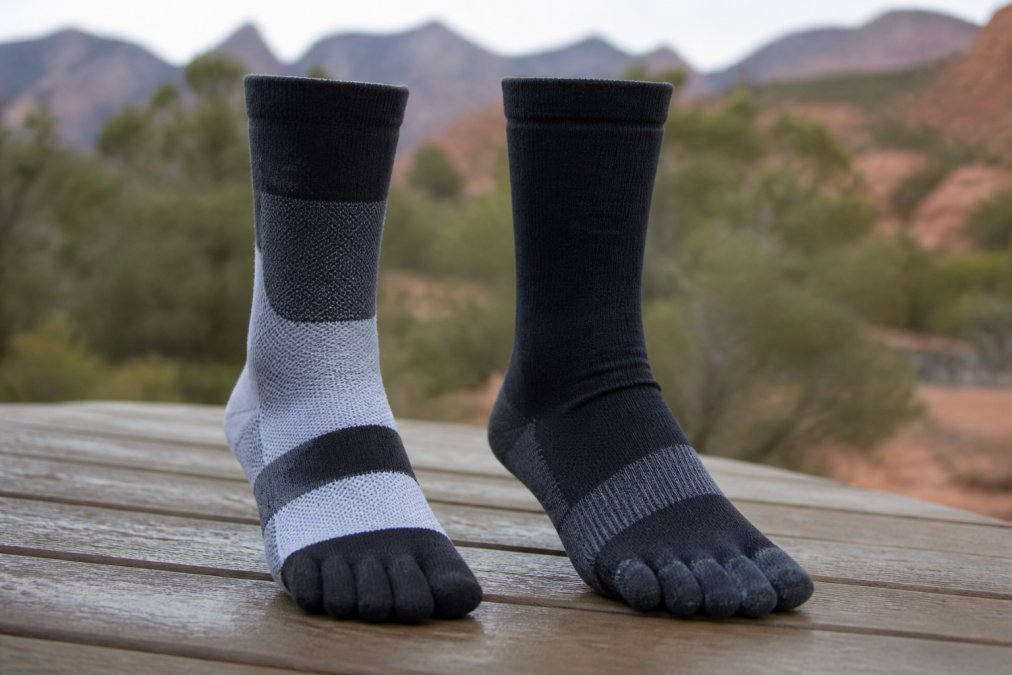
When running technical trails or climbing sharp rock, the right sock makes the difference between comfort and hours of regret. Injinji and debris shield socks represent two fundamentally different approaches to blister prevention.
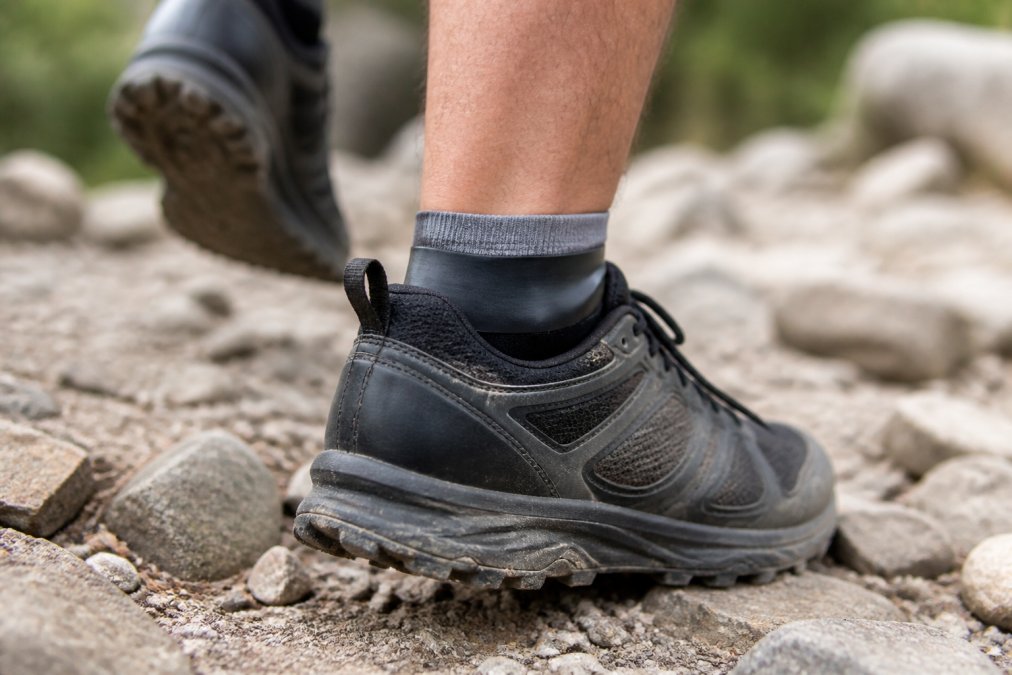
Injinji socks use a distinctive toe-separation design that isolates each toe in its own compartment, reducing friction between toes. Debris shield socks feature a reinforced polyurethane cuff that creates a physical barrier at the ankle collar and heel, where trail debris enters your shoe and friction causes the most damage on long-distance efforts.
The choice depends on your blister patterns. If blisters form between toes, Injinji's architecture makes sense. If debris and heel-collar friction are your primary problems, more common on technical terrain, debris shield socks solve the root cause directly. RockResist engineered its debris shield design specifically for runners and climbers dealing with sharp rock and gravel.
Both systems use moisture-wicking synthetic fibers, but the protection mechanism differs completely. That distinction matters more than any material choice when you're eight miles into a climb with nowhere to turn back.
How Debris Shield Socks Work
Debris shield socks prevent blisters by combining two mechanisms: a polyurethane barrier that blocks debris from entering the shoe, and friction reduction at the heel collar where most blister formation occurs during extended effort.
The polyurethane barrier explained
The polyurethane cuff sits at the top of the sock, creating a seal that extends slightly into the shoe collar. This flexible material maintains structural integrity while preventing debris from sliding past the sock line and grinding against your skin.
Once debris enters your shoe, it acts like sandpaper against your foot. Over 10, 20, or 30 miles, that friction generates heat and pressure that breaks the skin barrier. A polyurethane shield eliminates that failure mode entirely.
RockResist debris shield socks extend the barrier approximately 1.5 inches above the standard sock line, covering the vulnerable zone where most trail runners experience debris entry. This height balances protection with breathability, tall enough to work, short enough that your shoe doesn't compress it and negate the benefit.
Friction reduction at pressure points
Even with debris kept out, friction at the heel collar remains a blister trigger during high-mileage efforts. The polyurethane material is engineered with a smooth surface finish that reduces friction against your shoe's collar edge. This matters because your heel experiences continuous rubbing as your foot moves inside the shoe.
Moisture-wicking synthetic fibers pull sweat away from the skin, but the cuff's smooth polyurethane surface prevents moisture from creating adhesion between your skin and the shoe collar. Dry skin slides more easily than wet skin, and a smooth surface requires less force to move across. The combination keeps pressure and heat from accumulating in the exact zone where blisters form most often.
Debris shield socks outperform standard athletic socks on technical terrain by solving two problems simultaneously: blocking debris while reducing friction.

How to Prevent Blisters on Long Hikes
Blister prevention requires a system. Your sock choice is one component, but fit, moisture management, and proper break-in matter equally.
Moisture management and sweat wicking
Your foot generates significant moisture during long efforts from metabolic heat and sweat gland activity (peer-reviewed research). Moisture trapped against your skin softens it, reduces structural integrity, and increases friction. Sweat-wicking socks pull moisture away from the skin toward the outer layers where it can evaporate.
Synthetic fibers like polyester and nylon excel at wicking (peer-reviewed research). They move moisture along the fiber surface toward areas with lower humidity, keeping your skin relatively dry during intense effort. RockResist socks use engineered synthetic blends specifically selected for wicking performance under high-sweat conditions.
For most trail runners and climbers, synthetic moisture-wicking performance outweighs alternatives. Choose socks designed for moisture management, not general athletic use.
Fit, sizing, and arch support
A blister-free sock must fit your foot precisely. Too loose and your foot slides inside the sock, creating friction. Too tight and compression restricts blood flow and increases pressure at contact points.
Sizing matters more than most runners realize. If you wear a men's size 10 shoe, you likely wear a size 10 sock, but that assumes a medium-width foot. Wide-footed runners often need a full size up in socks to achieve proper fit without pressure points.
Arch support in hiking socks provides structural reinforcement that reduces foot fatigue and pressure concentration (peer-reviewed research). Socks with engineered arch support distribute pressure across a larger surface area, preventing hot spots from developing. RockResist socks include reinforced arch zones that align with the foot's natural load-bearing structure.
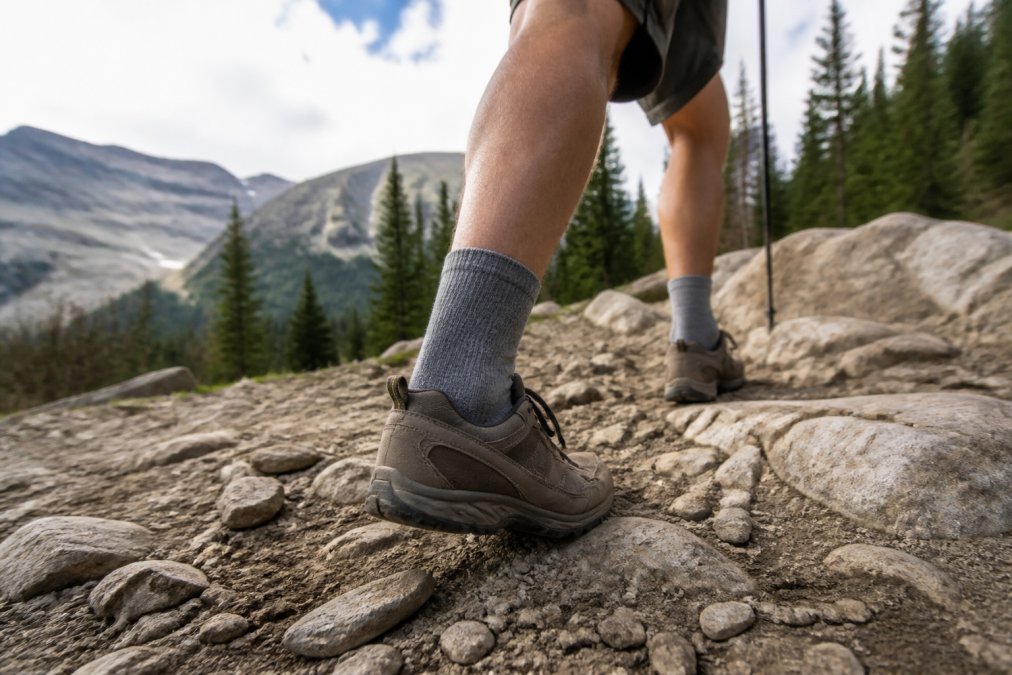
Break-in your socks before committing them to long efforts. Wear them on shorter hikes first, 5 to 10 miles, to ensure the fit works for your foot shape. This test period allows the sock materials to settle and conform to your foot's contours.
Trail Running Gaiters vs Debris Shield Socks
Gaiters and debris shield socks solve the debris problem using different strategies.
When to use each protection method
Gaiters are external shells that wrap around your lower leg and shoe, creating a barrier between your shoe opening and the environment. They're effective for preventing debris entry but add weight, bulk, and heat retention. On short trail runs or technical rock scrambles where debris is extreme, gaiters excel.
Debris shield socks are integrated into the sock itself, eliminating the need for external gear. You gain debris protection without adding weight or bulk. For runners covering 10+ miles, the cumulative burden of gaiters becomes noticeable. Debris shield socks deliver comparable protection with less mass and no additional setup required.
Gaiters protect your entire shoe opening, while debris shield socks protect the specific zone where most debris enters: the ankle collar and heel area. Many athletes use both systems on different efforts. Gaiters work well for winter hiking or extreme scrambling. Debris shield socks are your daily-use solution for trail running and moderate hiking.
Gaiter integration with sock design
If you wear gaiters, your sock design matters for comfort and effectiveness. A gaiter compresses the top of your sock against your leg, which can create pressure points if the sock's cuff is too thick or rigid. Debris shield socks integrate smoothly with gaiters because the polyurethane cuff is thin and flexible.
Some runners layer a debris shield sock with a gaiter for maximum protection on extreme terrain. The sock handles routine debris and friction, while the gaiter provides additional coverage for aggressive conditions.
Durability and Long-Term Cost Analysis
The real cost of a sock is the cost-per-mile over its lifespan. A $25 sock lasting 200 miles costs $0.125 per mile. A $15 sock lasting 100 miles costs $0.15 per mile.
Debris shield socks with polyurethane barriers and reinforced synthetic construction typically last 150-200 miles before the cuff material degrades. Injinji toe socks experience wear primarily at the toe compartment seams, typically lasting 100-150 miles before seam integrity compromises.
The polyurethane barrier in debris shield socks is the durability advantage. It's engineered to withstand repeated friction and compression without breaking down. Reinforced arch and heel zones add longevity by distributing impact stress across a larger surface area.
For serious trail runners and climbers logging 20+ miles per week, buying premium socks with extended durability makes financial sense. The cost-per-mile calculation favors socks lasting 200 miles over cheaper alternatives that fail at 100 miles.
Injinji Toe Socks: Strengths and Limitations
Injinji's toe-separation design addresses friction between adjacent toes during high-impact activity. For runners with blisters forming between toes or on toe surfaces, this approach delivers measurable relief.
The strength lies in specificity. Individual toe compartments prevent toe-to-toe friction completely. Athletes whose blister patterns show damage between toes report significant improvement after switching to toe socks.
The limitations are clear. Toe socks require a break-in period because the toe compartments feel unusual initially. The complex seam structure creates more potential failure points, seams can separate at the toe compartments, reducing lifespan compared to conventional designs. Manufacturing complexity contributes to higher pricing.
Injinji socks don't address debris entry or heel-collar friction, which are more common blister triggers on technical terrain. For climbers dealing with sharp rock and trail runners encountering gravel, Injinji's benefit doesn't solve the primary problem.
RockResist Debris Shield Socks: The Alternative
RockResist debris shield socks target the most common blister mechanism on technical terrain: debris entry and heel-collar friction. The polyurethane barrier prevents gravel, sand, and trail detritus from entering your shoe while the smooth cuff surface reduces friction during high-mileage efforts.
The RockResist GEN1 Road & Trail Low Cut Athletic Socks ($25.99) deliver debris protection without the bulk of external gaiters or the complexity of toe-separation designs. The low-cut profile works with any shoe type. Reinforced arch and heel zones provide structural support that reduces pressure-point formation during extended efforts.
The engineering advantage is integration. Debris-blocking and friction-reduction technology is incorporated directly into the sock construction. You get protection as a function of the sock itself, not as an add-on system. This approach scales across different activities: trail running, rock climbing, hiking, and mixed-terrain efforts all benefit from the same core protection mechanism.
The moisture-wicking synthetic blend pulls sweat away from your skin while the polyurethane cuff maintains a smooth surface that reduces friction. The combination addresses the two primary blister mechanisms: moisture accumulation and mechanical friction.
For athletes whose blister patterns show damage at the heel collar or whose primary concern is debris entry, RockResist delivers superior protection compared to both conventional socks and toe-separation designs.
Which Sock Type Should You Choose
Your blister history determines your best choice. If blisters consistently form between toes or on toe surfaces, Injinji toe socks address your specific problem. If blisters develop at the heel collar, on the heel itself, or result from debris entering your shoe, debris shield socks solve the actual cause.
Most trail runners and climbers experience heel-collar and debris-related blisters more frequently than toe-to-toe friction. This prevalence explains why debris shield technology has gained adoption among serious endurance athletes.
Consider your activity type. Trail runners benefit most from debris shield protection because trails introduce consistent debris exposure. Rock climbers dealing with sharp, abrasive surfaces gain protection from the polyurethane barrier and reinforced construction. Hikers on mixed terrain benefit from both debris blocking and friction reduction.
Start with RockResist debris shield socks if you're uncertain about your specific blister cause. The design addresses the most common failure modes while remaining compatible with any shoe type or gaiter system. Test your choice on a shorter effort before committing to a long run or climb. A 5-10 mile test hike reveals whether the sock design works for your foot shape and biomechanics.
The difference between finishing strong and struggling through the final miles often comes down to details most athletes overlook. Your sock choice compounds across every mile. RockResist debris shield socks eliminate the most common blister triggers on technical terrain while delivering the durability and moisture management that serious athletes demand. Get started with RockResist and experience the difference that engineered debris protection and friction reduction deliver to your performance.
Frequently Asked Questions
Do debris shield socks actually prevent blisters better than standard socks?
Debris shield socks reduce blister formation through two mechanisms: they block dirt, sand, and gravel from entering the shoe, which eliminates friction from debris particles, and they create a protective barrier at the heel collar, a primary hot spot for blister development. The physical polyurethane shield works continuously during your run or hike, whereas standard socks rely solely on material properties. For long-distance activities on rugged terrain, the debris barrier addresses a root cause that moisture-wicking alone cannot solve.
How do Injinji toe socks compare to debris shield socks for long-distance hiking?
Injinji toe socks use toe separation to reduce friction between individual toes, addressing blister risk in that specific zone. Debris shield socks, like RockResist's design, focus on preventing debris entry and protecting the heel collar. For long-distance hiking over 10 miles, both address different pressure points. Injinji excels if toe friction is your primary issue; debris shield socks win if you're dealing with rocky, sandy, or gravelly terrain where debris intrusion is the real problem. Many hikers find debris shield protection more critical on technical mountain trails.
Can you wear trail running gaiters with debris shield socks?
Yes. Debris shield socks are designed to work alongside gaiters. The sock's cuff sits at the ankle collar, and a gaiter wraps over it, creating a layered defense system. This combination is particularly effective on ultra-technical terrain where both debris entry and ankle protection matter. RockResist socks are engineered for gaiter compatibility, so the cuff height and material don't interfere with standard gaiter attachment. For multi-pitch climbing or long mountain races, pairing both offers redundant protection.
Why are debris shield socks more expensive than regular athletic socks?
Debris shield socks require specialized engineering: a durable polyurethane barrier, reinforced seams to withstand abrasion, and moisture-wicking synthetic fibers rated for high-impact zones. RockResist socks at $25.99 are priced for the materials and durability testing on Colorado terrain that goes into preventing premature failure. Standard socks lack the barrier technology and durability testing. The cost difference reflects the engineering required to deliver consistent blister prevention and longevity over multiple ultramarathons or climbing seasons, not just comfort.
This article was written using GrandRanker