
Table of Contents
- Why Socks Matter for Granite Climbing
- How to Choose Socks for Multi-Pitch Climbing
- Thin Socks for Climbing Shoes: Performance and Fit
- Preventing Blisters While Climbing
Last Updated: August 29, 2026
Why Socks Matter for Granite Climbing
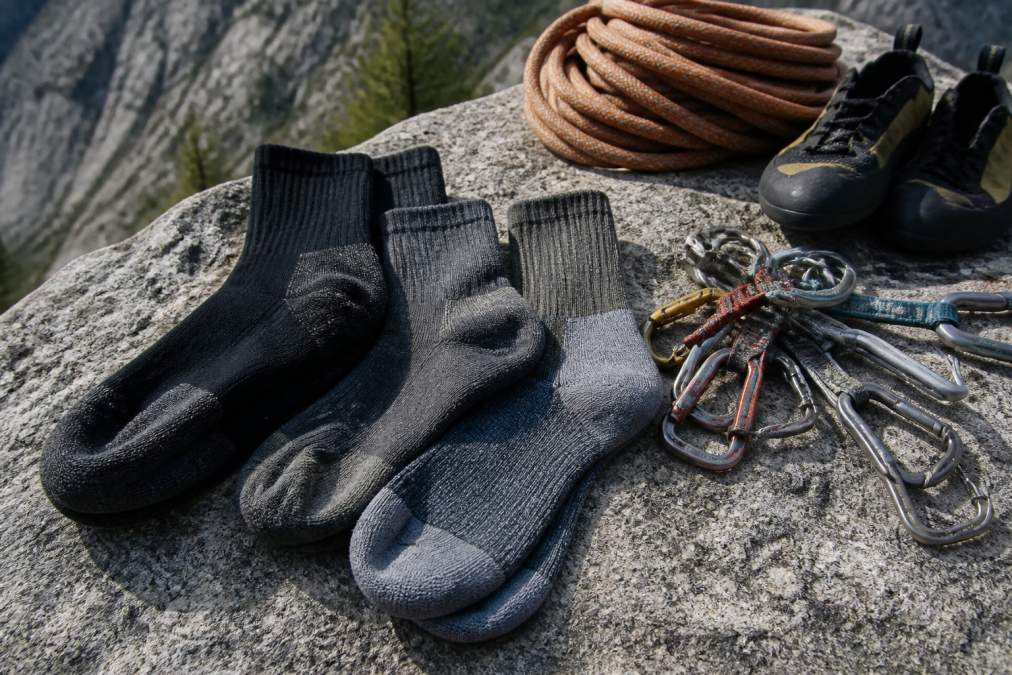
The right socks are critical for granite climbing. Granite's sharp, crystalline surface creates unique abrasion patterns that ordinary athletic socks can't handle. Foot blisters are the most common reason climbers abandon routes, a single blister destabilizes footwork and forces compensation patterns that increase injury risk (peer-reviewed research). The problem isn't just moisture; it's the combination of moisture, friction at pressure points, and constant micro-movements inside your shoe. RockResist socks address all three factors. Our GEN1 Road & Trail Low Cut Athletic Socks feature a patented polyurethane debris-blocking barrier that shields your feet from sharp granite particles while reducing friction at the heel collar, one of the primary blister trigger points.

How to Choose Socks for Multi-Pitch Climbing
Selecting the right socks requires understanding three core variables: material composition, fit precision, and thickness.
Material selection is your first decision. Merino wool excels at temperature regulation and naturally resists odor (peer-reviewed research). Synthetic blends offer superior durability against granite's abrasive surface and faster drying times, though pure merino can pill under intense friction while synthetics sometimes bunch in tight climbing shoes.
Fit matters more than most climbers realize. A snug fit prevents the foot from sliding inside the shoe, which creates the friction that causes blisters. Look for anatomical fit designs with seamless toe construction, the toe seam is one of the primary blister sources.
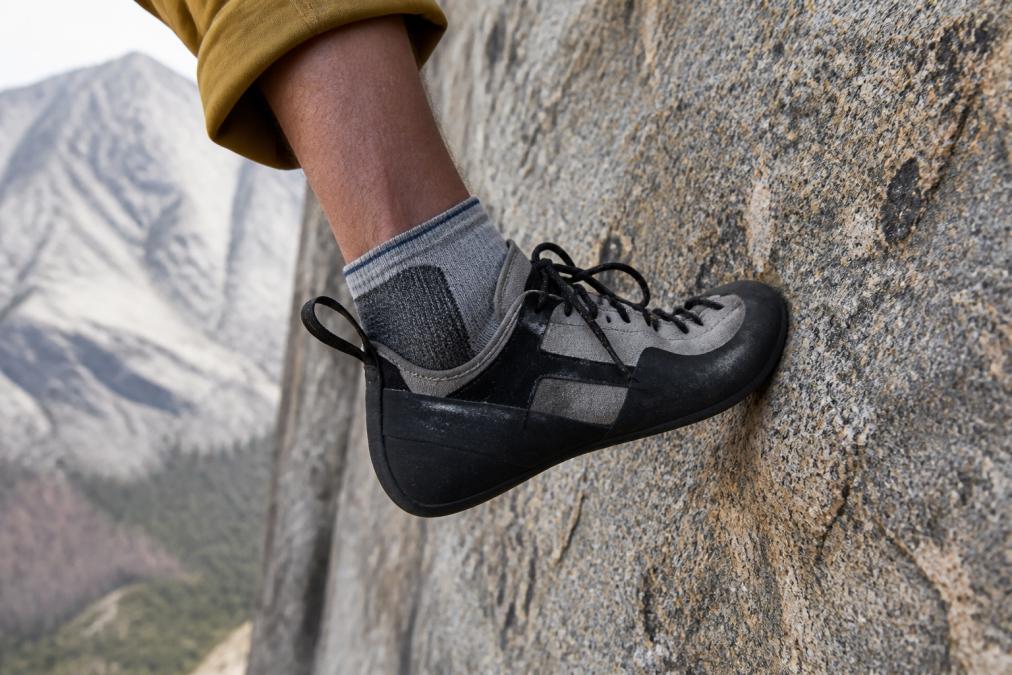
Thickness determines your shoe volume adjustment. Thin socks work best with precisely sized climbing shoes. Thicker socks provide a buffer but require going up half a size. For multi-pitch granite climbing where foot swelling occurs over 4-6 hours, a medium-thickness sock with compression properties offers the best balance (peer-reviewed research).
Thin Socks for Climbing Shoes: Performance and Fit
Thin socks deliver superior tactile sensitivity and allow precise foot positioning on small granite features. Climbers report better edging precision, improved confidence on slab sections, and reduced foot fatigue during crux sequences. The downside is reduced cushioning, making fit and moisture management critical.
Thin socks work best when your climbing shoes fit snugly with minimal excess volume. Test your fit by checking for heel movement when you flex your foot, your heel should stay locked in place. Look for split yarn or high-friction microfiber construction that wicks sweat while maintaining grip and preventing internal sliding even when wet.
Preventing Blisters While Climbing
Blister prevention requires a three-layer approach: material selection, fit precision, and active foot management during climbing.
Your sock material must wick moisture while maintaining structural integrity under friction. Merino wool naturally manages moisture and reduces bacterial growth but requires careful washing to prevent pilling. Synthetic blends with microfiber offer superior abrasion resistance and maintain anti-slip properties when saturated with sweat.
Seamless toe construction eliminates the largest blister source in climbing shoes. Adjust your foot position every 15-20 minutes to distribute pressure across different areas. On long routes, take brief breaks to check for early signs of rubbing or heat buildup.
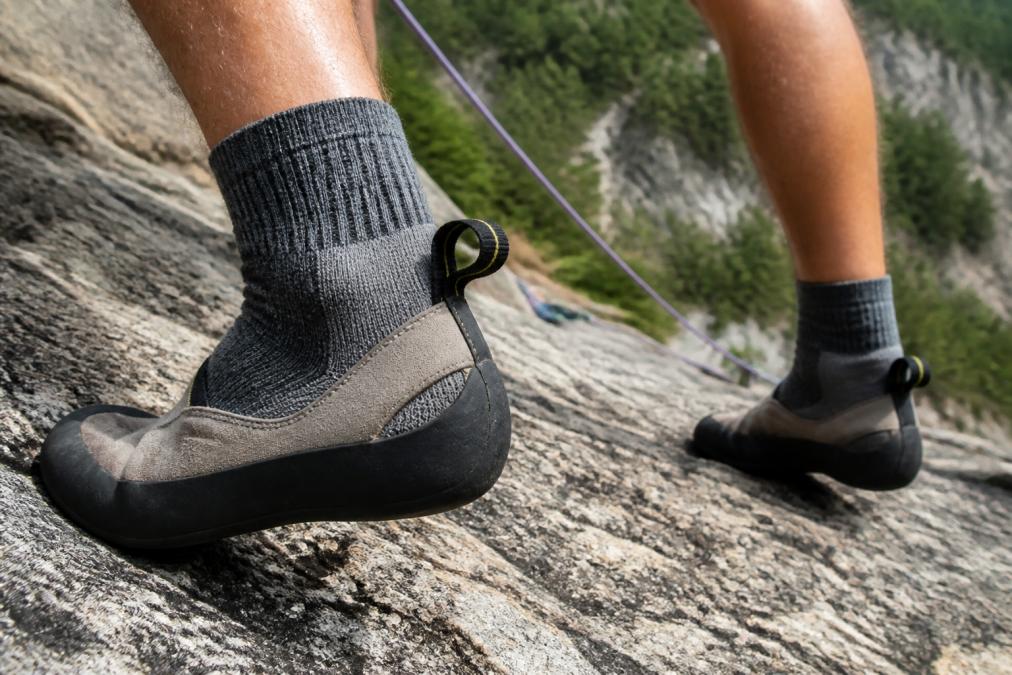
Compression properties reduce foot swelling during extended climbing sessions. Swelling increases internal pressure and friction, accelerating blister formation. Socks with graduated compression maintain consistent foot volume throughout your climb, preventing the pressure point migration that occurs as your foot swells.
Granite climbing demands footwear that handles extreme friction, moisture, and pressure simultaneously. RockResist GEN1 Road & Trail Low Cut Athletic Socks deliver the debris-blocking protection and moisture-wicking performance you need to stay blister-free on technical terrain. With our patented polyurethane barrier and seamless toe construction, your feet stay protected through multi-pitch routes and challenging conditions. Get started with the RockResist Sock Bundle and experience the difference specialized footwear makes, plus enjoy free shipping and 25% savings when you bundle three pairs.

Frequently Asked Questions
Do you wear socks with climbing shoes for granite climbing?
Yes, wearing socks for granite climbing protects your feet from sharp rock edges, reduces friction-related blisters, and improves moisture management during long pitches. Thin, snug-fitting socks with moisture-wicking properties work best. They prevent bunching inside tight climbing shoes while providing the abrasion resistance granite demands. Without socks, your skin contacts rough granite directly, increasing blister risk and foot fatigue on multi-pitch routes.
What are the benefits of wearing thin socks while climbing?
Thin socks maintain the precise foot-to-shoe contact climbers need for sensitivity and edging on small holds, while still providing blister protection and moisture management. Thicker socks can cause bunching in tight climbing shoes, reducing tactile feedback and comfort. Thin construction with high-friction materials like merino wool or synthetic blends delivers abrasion resistance without sacrificing the snug fit required for granite climbing performance.
Are synthetic or wool socks better for granite climbing?
Merino wool excels at moisture-wicking, temperature regulation, and natural anti-slip properties on rock. Synthetic blends offer superior durability against granite's sharp abrasion and faster drying times. For granite climbing, a merino-synthetic blend combines the best of both: elasticity and breathability from merino, durability and split-yarn grip from synthetics. Choose based on your climbing duration and granite conditions, merino for comfort, synthetic for extreme durability.
This article was written using GrandRanker