
Table of Contents
- Why Durable Socks Matter on Rocky Terrain
- What Makes Socks Durable for Rocky Trails
- Preventing Debris in Running Shoes
- How to Prevent Blisters on Rocky Trails
- Best Moisture-Wicking Socks for Trail Running
- Durability vs. Sustainability: What Lasts Longest
- Choosing the Right Sock for Your Terrain
- Conclusion
- Frequently Asked Questions
Last Updated: September 1, 2026
Why Durable Socks Matter on Rocky Terrain
Rocky terrain creates friction patterns that force your foot to shift constantly inside your shoe (peer-reviewed research). Each micro-movement generates heat at pressure points, your heel, ball of your foot, and toes, developing blisters within miles without proper protection. Standard socks lack the structural integrity to handle this punishment. Durable socks for rocky terrain are engineered with reinforced zones, abrasion-resistant materials, and strategic cushioning that absorbs impact while preventing bunching or sliding.
A blister that forms at mile 3 of a 20-mile mountain run derails your entire day. For competitive endurance athletes and ultra-marathon runners training on technical terrain, sock durability directly impacts race outcomes. Beyond blister prevention, durable socks keep debris out. Quality socks feature engineered cuffs and moisture-wicking materials that shed debris while keeping your foot dry.
What Makes Socks Durable for Rocky Trails
Durable socks for rocky terrain share specific characteristics that standard running socks lack. Understanding these features helps you make an informed choice.
Reinforced Heel and Toe Construction
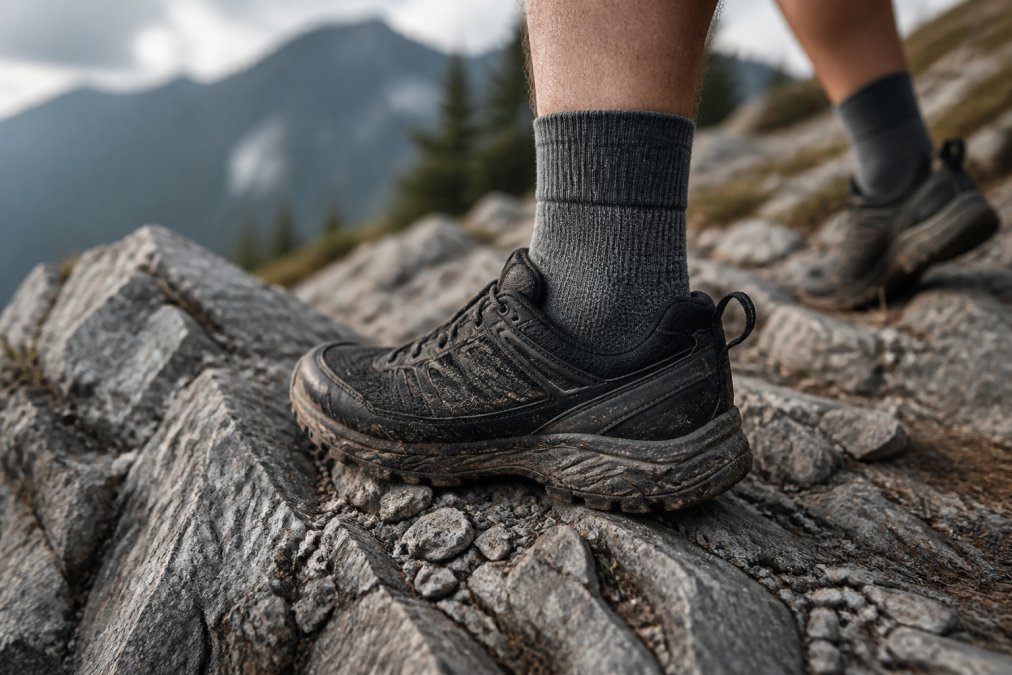
The heel and toe experience the most impact and friction on rocky terrain. Durable socks feature double or triple-layered construction in these zones, creating a barrier between your skin and abrasive forces. This reinforcement absorbs impact energy and prevents the sock material from compressing and bunching, which creates hot spots and friction.
The best designs use anatomical shaping that mirrors your foot's natural contours, preventing the sock from shifting inside your shoe. When a sock stays in place, friction decreases dramatically. RockResist socks use targeted reinforcement that stabilizes the heel collar, one of the primary causes of blisters during technical running.
Material Composition: Merino Wool vs. Synthetic Blends
Merino wool excels at temperature regulation and natural moisture management. It wicks sweat away from your skin and maintains comfort across temperature ranges. However, merino wool socks wear out faster on rocky terrain because the fibers are softer and more susceptible to abrasion.
Synthetic blends, typically combining nylon, polyester, and spandex, prioritize durability and abrasion resistance. These materials withstand repeated friction and impact better than merino. The trade-off is that pure synthetics don't manage moisture as effectively.
The optimal approach for durable socks for rocky terrain is a blend combining 50-60% merino wool and 30-40% synthetic fibers. The synthetic content provides abrasion resistance where you need it most, while merino handles moisture and comfort in the arch and mid-foot.
Abrasion-Resistant Weaves and Seams
Durable socks for rocky terrain use tighter, more complex weave patterns that create denser fabric structures. A denser weave resists abrasion better because there's less space between fibers for separation or fraying when rubbed against rough surfaces.
The seamless toe is critical. A traditional flat seam across the toe creates a ridge that rubs directly against your toes with every step. On rocky terrain, this constant friction becomes a blister waiting to happen. Seamless toe construction eliminates this pressure point entirely.
Seam placement matters everywhere on the sock. The best durable socks minimize seams in high-friction areas. Seams on the sides and top of the foot are acceptable; seams on the bottom or heel are problematic because they're in the direct line of impact and friction.
Preventing Debris in Running Shoes
A single grain of sand or small pebble inside your shoe creates constant irritation that builds into blisters over time. Preventing debris starts with sock design, specifically cuff height and material.
A higher cuff creates a physical barrier that extends above the shoe collar, preventing debris from entering during impact. The cuff material should be firm enough to maintain its shape but flexible enough to move with your ankle. Textured or slightly grippy cuff materials stay in place and maintain their protective function throughout your run.
RockResist's debris-shielding cuff technology uses a patented polyurethane barrier that creates a physical shield preventing dirt, sand, gravel, and trail debris from entering the shoe while reducing friction at the heel collar. When your sock cuff aligns properly with your shoe collar, gaps don't form where debris enters.
How to Prevent Blisters on Rocky Trails
Blister prevention on rocky terrain requires a multi-layered approach.
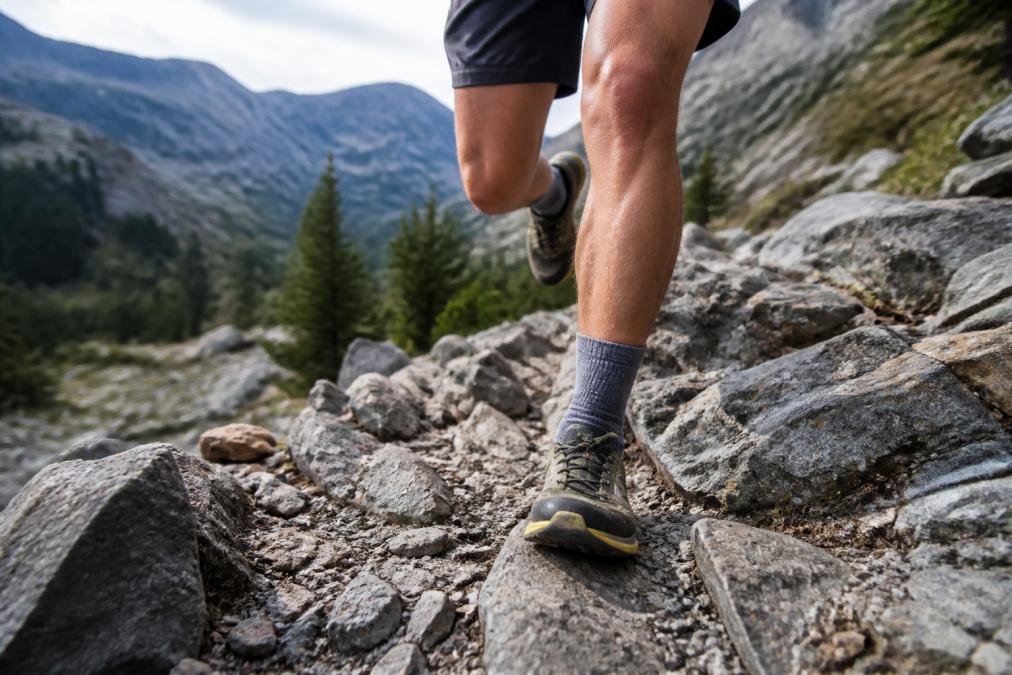
Start with moisture management. Moisture is the primary driver of blister formation. When your foot stays wet, the skin softens and becomes more susceptible to friction. Durable socks must feature moisture-wicking properties that pull sweat away from your skin and move it to outer layers where it can evaporate. Look for socks that dry quickly, within 30-45 minutes of removing them after activity (acsm.org).
Prioritize friction reduction at pressure points. Blisters form where friction exceeds your skin's tolerance. Durable socks use extra cushioning and reinforcement in the heel, ball of the foot, and toes to absorb impact energy and reduce relative motion between your skin and the sock. This cushioning should feel firm, not soft.
Ensure proper fit. An oversized sock bunches and creates folds that rub against your skin. An undersized sock compresses your foot and restricts blood flow. The ideal fit is snug without being tight. Wear socks with the shoes you'll actually use on the trail, as fit varies dramatically between shoe models.
Use technical socks designed for long distances. Generic athletic socks aren't engineered for rocky terrain's specific demands. Technical socks incorporate anatomical shaping, targeted reinforcement, and abrasion-resistant materials that address exact friction patterns.
Consider sock height strategically. Low-cut socks leave your ankle exposed to debris. Mid-cut socks (reaching just above the ankle) provide better protection while remaining lightweight. High-cut socks offer maximum protection but can feel restrictive. Choose based on your specific terrain.
Best Moisture-Wicking Socks for Trail Running
Moisture-wicking performance directly determines how long your feet stay comfortable on the trail. Merino wool is the gold standard because it can absorb up to 30% of its weight in moisture while still feeling dry (peer-reviewed research). Sweat moves away from your skin into the sock fiber, where it evaporates gradually. Merino doesn't retain odor even when damp.
Synthetic moisture-wicking fibers like polyester and nylon channel moisture away from your skin to outer layers where it evaporates quickly. Synthetic wicking is faster than merino in very wet conditions, but doesn't maintain comfort as well during extended efforts. For best moisture-wicking socks for trail running, a merino-synthetic blend outperforms either material alone.
Strategic ventilation zones with mesh panels in the arch and top of the foot enhance moisture-wicking by allowing air circulation. These zones dry faster and prevent moisture accumulation in low-airflow areas. The heel and toe use denser construction that sacrifices some breathability for protection.
Gentle compression in the arch and calf improves blood flow without restricting movement. Better circulation means better temperature regulation and more efficient sweat management.
Durability vs. Sustainability: What Lasts Longest
A sock that lasts three times longer than competitors creates less waste over time. True durability requires sustained performance across hundreds of miles. The best approach is to prioritize socks engineered for longevity with reinforced construction, abrasion-resistant materials, and proven field testing on actual technical terrain.
Buying one pair of durable socks for rocky terrain that lasts 500 miles is more sustainable than buying five pairs of cheaper socks that each last 100 miles. The manufacturing footprint, shipping, and packaging are amortized across a longer lifespan.
Some brands now use recycled materials in their socks, such as recycled polyester from plastic bottles. Recycled materials reduce demand for virgin petroleum and divert waste from landfills. The difference in performance is usually minimal.
The most sustainable choice is often the most durable choice. Buy socks designed to last, take care of them properly, and replace them only when they truly wear out. Washing socks in cool water, air-drying them, and avoiding excessive heat extends their lifespan significantly.
Choosing the Right Sock for Your Terrain
Not all rocky terrain is the same. Choosing the right sock for your specific terrain requires understanding what stresses your feet experience.
Technical rock scrambles and climbing. Prioritize maximum abrasion resistance with the densest weaves, thickest reinforcement in the heel and toe, and the most durable synthetic fiber content. Climbing-specific socks often use extra cushioning on the ball of the foot. Fit should be snug to prevent slipping inside climbing shoes.
Loose, sandy, debris-filled trails. Focus on cuff design and height. A taller cuff with a textured, grippy surface that stays in place is more important than maximum heel reinforcement. Moisture-wicking becomes more critical because sandy trails often have stream crossings or wet sections.
Long-distance trail running. Balance durability with comfort. You need enough reinforcement to prevent blisters over 50+ miles, but excessive cushioning becomes uncomfortable during high-speed running. Choose durable socks with moderate cushioning, excellent moisture-wicking, and anatomical shaping that keeps the sock stable during movement.
Mixed terrain with variable elevation. Balanced merino-synthetic blends excel in diverse conditions. They're durable enough for rocky sections, moisture-wicking enough for elevation changes, and comfortable enough for all-day wear.
A sock that fits perfectly in one shoe model might feel loose or tight in another. When you find a sock that works for your primary running shoe, try that same sock in any new shoes you purchase. Some runners maintain multiple sock options for different shoes to ensure optimal performance.
Conclusion
Durable socks for rocky terrain aren't luxury items, they're essential performance gear that directly impacts your comfort, safety, and ability to push yourself on technical terrain. The difference between a blister-free 20-mile mountain run and a painful limp home comes down to sock engineering: reinforced heel and toe construction, moisture-wicking materials, and abrasion-resistant weaves that hold up under sustained friction.
RockResist's GEN1 Road & Trail Low Cut Athletic Socks are engineered specifically for this challenge. The patented polyurethane debris barrier prevents dirt and gravel from entering your shoe while reducing friction at the heel collar. The merino-synthetic blend delivers durability without sacrificing moisture management, and the reinforced construction stabilizes your foot during technical movement. Get started with the RockResist Sock Bundle and experience the difference engineered durability makes, three pairs for $58.48 with free shipping, saving you $19.49 compared to buying individually.


Frequently Asked Questions
What features make socks more durable for rocky terrain?
Durable socks for rocky terrain combine reinforced heel and toe construction with abrasion-resistant materials like nylon and polyester blends. Look for seamless toe designs, compression support, and moisture-wicking fabrics that manage sweat without breaking down. Merino wool or synthetic blends with high-density weaves resist punctures and friction better than standard cotton socks. A debris-blocking barrier at the cuff prevents rocks and gravel from entering the shoe, reducing friction points that cause premature wear.
How can I prevent debris from getting into my running shoes?
Preventing debris in running shoes starts with sock design. Choose socks with reinforced cuffs or debris-shielding barriers that create a physical block against dirt, sand, and gravel. The sock height matters too, mid-calf or crew-length socks provide better coverage than low-cut options on technical terrain. Pair protective socks with gaiters or shoe closures if you're running on extremely rocky trails. RockResist GEN1 socks feature a patented polyurethane debris barrier specifically engineered to keep trail debris out while reducing friction at the heel collar.
What is the best way to prevent blisters on uneven, rocky ground?
Blister prevention on rocky trails requires three elements: moisture management, friction reduction, and proper fit. Moisture-wicking socks pull sweat away from your skin, eliminating the wet environment where blisters form. Seamless toe construction and reinforced seams minimize hot spots caused by repeated friction against sharp terrain. Arch support and compression reduce foot fatigue and movement inside the shoe. Technical fabrics with anatomical fit keep your foot stable on uneven surfaces. Test socks during shorter runs before committing to long-distance efforts to ensure they work for your specific foot shape.
Are merino wool socks better than synthetic blends for rocky hikes?
Both merino wool and synthetic blends offer advantages for rocky terrain. Merino wool provides natural temperature regulation and moisture management, making it ideal for variable conditions. Synthetic blends like nylon and polyester offer superior abrasion resistance and durability against sharp rocks, with faster drying times. For pure durability on extremely rocky, technical terrain, synthetic blends often outperform merino because they resist punctures and maintain integrity longer under repeated friction. Many high-performance socks combine both, merino wool for comfort and moisture management with synthetic reinforcement in high-wear zones like the heel and toe.
This article was written using GrandRanker