
Table of Contents
- How to Measure Your Foot for Socks
- Understanding Sock Sizing Charts and Fit
- Sock Fit and Blister Prevention
- Best Socks for Long Distance Hiking
- What to Do If You're Between Sizes
- Sock Length Variations and Calf Fit
- Troubleshooting Common Fit Problems
- Frequently Asked Questions
Last Updated: August 31, 2026
How to Measure Your Foot for Socks
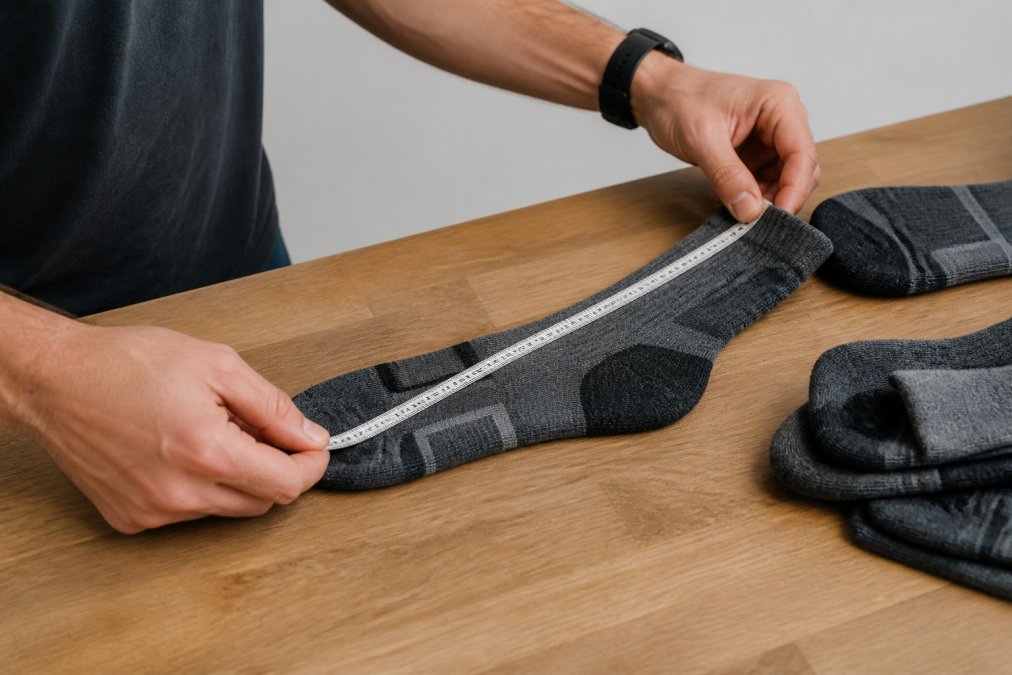
Getting the right sock size starts with accurate foot measurement. Your shoe size alone doesn't determine sock fit, foot volume, arch position, and calf circumference all matter. This guide from RockResist walks you through the exact process to size performance socks correctly and prevent blisters, bunching, and discomfort on the trail.
What You'll Need
Gather these simple tools:
- A soft measuring tape (fabric, not metal)
- A piece of white paper or a ruler
- A pen or pencil
- A flat, hard surface (tile floor or wooden table)
- Socks you normally wear (optional, for reference)
Step-by-Step Measurement Process
Step 1: Prepare Your Foot [Time: 2 minutes]
Stand barefoot on a hard, flat surface wearing the socks you plan to use during your activity, since sock thickness affects how your foot sits in your shoe. Measure in the afternoon or evening when your foot is at its largest (the American Academy of Dermatology).
Step 2: Measure Heel-to-Toe Length [Time: 3 minutes]
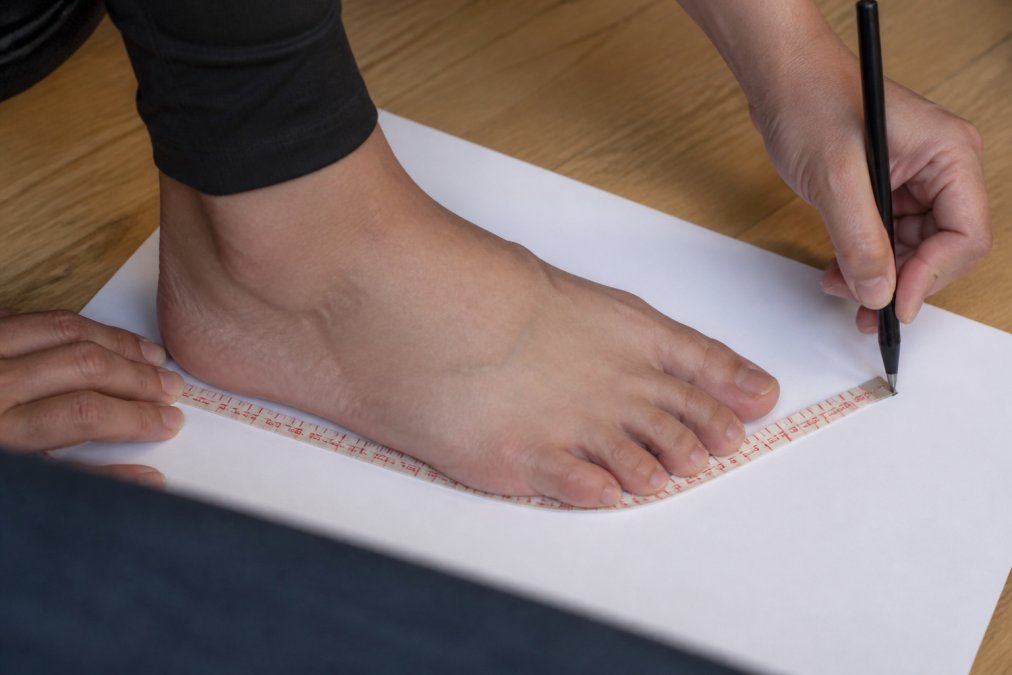
Place the paper on the floor and stand on it with your heel against a wall. Mark where your longest toe ends with a pen. Measure from the wall to your mark in inches. Round to the nearest half inch if needed (9.3 inches becomes 9.5 inches). This is your primary sizing number.
Step 3: Measure Calf Circumference [Time: 2 minutes]
Measure around the widest part of your calf, typically about 2 inches below the back of your knee. Keep the tape snug but not tight, you should fit one finger under it comfortably. This measurement is especially important for crew or knee-high socks.
Step 4: Note Your Foot Volume [Time: 1 minute]
Wrap your measuring tape around the ball of your foot (the widest part across your toes). If this measurement is proportionally large compared to your foot length, you have higher volume. This affects how snugly the sock fits without restricting circulation.
Expected Result: You now have three measurements: heel-to-toe length, calf circumference, and foot volume. These guide your sock selection far better than shoe size alone.
Understanding Sock Sizing Charts and Fit
A size 10 shoe doesn't guarantee a size 10 sock will fit well, especially in performance socks where elasticity, cuff height, and material compression matter. The best charts use heel-to-toe measurement as the primary variable, then adjust for calf circumference and foot volume.
Sizing by Gender and Age
Most performance sock manufacturers offer unisex sizing based on foot length rather than gender-specific cuts. Men's feet tend to have slightly lower volume on average, while women's feet often have higher volume relative to length. Use your heel-to-toe measurement as your primary guide.
Age affects arch support intensity. Younger athletes often prefer lighter cushioning for better ground feel. Older athletes frequently benefit from more substantial arch support to reduce plantar fascia strain.
Performance Fit vs. Standard Fit
Standard fit socks have loose elasticity and generous fabric for everyday wear. Performance fit socks use tighter elasticity, reinforced seams, and engineered compression to keep your foot stable during high-impact activity. A performance fit sock should feel snug around your arch and heel without restricting blood flow.
Performance socks manage moisture differently than standard socks. Moisture-wicking fibers pull sweat away from your skin to keep your foot dry. Standard socks absorb moisture, leading to blisters and fungal growth on long activities.
Sock Fit and Blister Prevention
Blisters form when friction exceeds your skin's tolerance. A properly sized performance sock stays locked to your foot, moving as one unit with your shoe.
Why Proper Fit Prevents Blisters
When your sock moves independently of your foot, friction accumulates with every step. A dry foot with proper sock fit almost never blisters, even on ultramarathons (peer-reviewed research). A wet foot in a loose sock will blister within a few miles.
Material elasticity plays a critical role. A sock made from synthetic fibers with high elasticity returns to its original shape after compression, maintaining consistent pressure throughout your activity. Cotton or low-elasticity materials stretch out during activity, losing compression and allowing your foot to shift inside the sock.
Identifying Pressure Points and Bunching
Pressure points feel like concentrated tightness, usually at the arch, heel, or across the top of your foot. Bunching appears as wrinkles or folds in the sock fabric, typically at the toe box or heel. Both indicate sizing problems.
If you experience pressure points, your sock is too tight, go up a half size. If bunching occurs, your sock is too loose, go down a half size.
Test your fit before committing to long activities. Wear new socks on a 3-5 mile run or hike. This distance is short enough to avoid serious blisters if something goes wrong, but long enough to reveal fit problems.
Best Socks for Long Distance Hiking
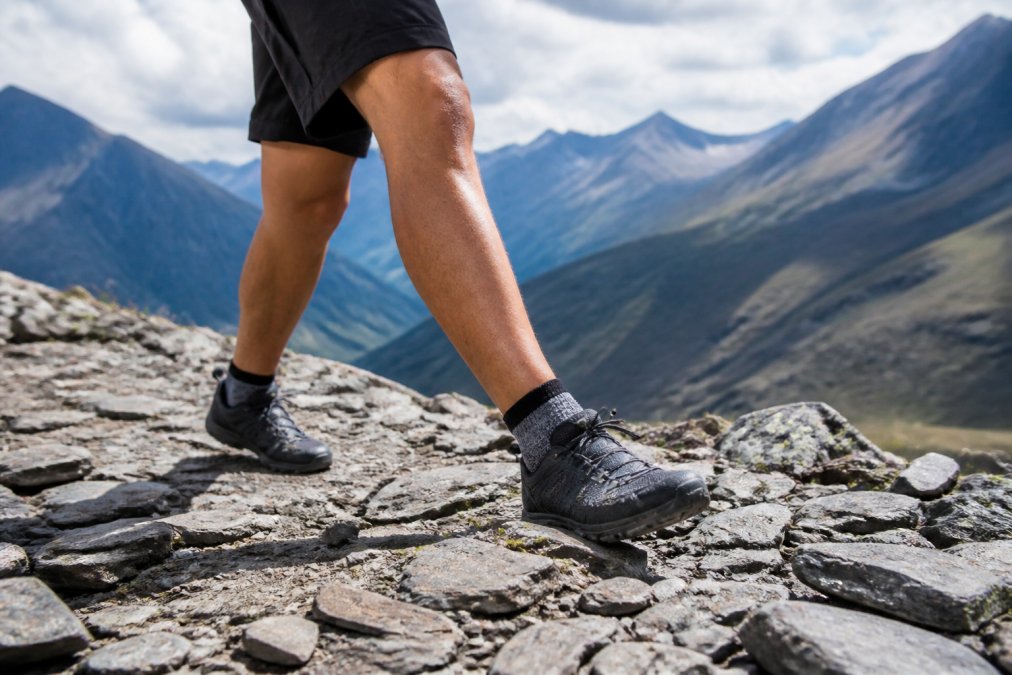
Long-distance hiking demands socks that handle sustained moisture, repeated impact, and debris exposure. The best socks combine moisture management to keep your foot dry, cushioning density to absorb impact, and durable construction to survive rocky terrain.
Key Features for Trail and Hiking Performance
Moisture-wicking fibers are non-negotiable for hiking. Merino wool and synthetic blends (polyester, nylon, acrylic) both wick moisture effectively. Merino wool offers natural temperature regulation and antimicrobial properties (peer-reviewed research). Synthetic blends dry faster and cost less.
Cushioning density determines impact absorption. Medium cushioning is the sweet spot for most hikers, enough to reduce fatigue on long days without creating fit problems in your boots.
Arch support prevents plantar fascia strain during miles of uphill and downhill work. Heel and toe reinforcement extends sock life in these high-friction zones. Debris resistance separates hiking socks from road-running socks through a well-designed cuff and snug fit.
RockResist GEN1 for Rugged Terrain
The RockResist GEN1 Road & Trail Low Cut Athletic Socks are engineered specifically for conditions that destroy ordinary hiking socks. The patented polyurethane debris barrier creates a physical shield at the heel collar, preventing dirt, sand, gravel, and small rocks from entering your sock while reducing friction at the heel collar, a primary cause of blisters.

The reinforced seams handle abrasion of rocky terrain without degrading, and the moisture-wicking fibers keep your foot dry during sustained climbing.
At $25.99 per pair, RockResist socks represent a genuine investment. For hikers and trail runners who've struggled with blisters, bunching, or socks wearing through after a season, the durability and debris protection justify the cost. The RockResist Sock Bundle offers three pairs for $58.48, bringing the per-pair cost to about $19.50 and including free shipping.

What to Do If You're Between Sizes
Sizing between two options is common, especially for people with unusual foot proportions. The decision to size up or size down depends on your foot volume, the specific sock's elasticity, and your activity type.
Sizing Up vs. Sizing Down
Size up if you have higher foot volume (wider feet relative to length) or if you're prone to pressure point sensitivity. Sizing up gives your foot more room, reducing compression-related discomfort.
Size down if you have lower foot volume (narrower feet relative to length) or if you prioritize stability over maximum comfort. Sizing down creates a snugger fit that locks your foot in place, reducing movement and friction.
For performance socks specifically, lean toward sizing up if you're truly between sizes. Performance socks use tighter elasticity than casual socks, so a half size of extra room actually feels like the right fit.
Foot Volume and Material Elasticity
Foot volume is the variable most people overlook. Two people with identical foot length can have very different foot volume. A sock that fits the narrow foot perfectly will bunch on the wide foot, and vice versa.
Material elasticity determines how much the sock stretches and how much pressure it exerts. High-elasticity materials (common in performance socks) compress your foot firmly and return to shape quickly. Synthetic blends typically offer higher elasticity than wool.
Test this before committing. Order both sizes if possible, or ask the retailer about their return policy.
Sock Length Variations and Calf Fit
Sock length determines where the sock ends on your leg. The three main options are no-show, crew, and knee-high. Each serves different purposes and requires different calf circumference considerations.
No-Show, Crew, and Knee-High Options
No-show socks end just above your ankle, ideal for road running and activities where you want minimal sock visibility. They work well for people with average calf circumference.
Crew socks end mid-calf, covering the area where most people experience chafing from shoe collars. They're the most versatile option for hiking and trail running because they provide protection against debris without being overly warm. Crew socks accommodate a wider range of calf sizes because the elastic band sits lower on the leg.
Knee-high socks extend to just below the knee, providing maximum protection against debris and sun exposure. They require careful sizing because the calf band sits at the widest part of your calf. If your calf circumference is larger than average, standard knee-high sizing may cut off circulation.
Wide Calf Considerations
Wide calf sizing is essential if your calf circumference exceeds the standard range. Standard crew socks typically accommodate calf circumferences up to about 13-14 inches. If your measurement exceeds this, standard socks will feel uncomfortably tight, restricting blood flow.
Wide-calf socks use deeper elastic bands and more relaxed compression to accommodate larger calf sizes without restricting circulation. Measure your calf circumference accurately before ordering. If you're between standard and wide-calf sizing, order wide-calf. Circulation and comfort are more important than a perfect fit around the foot.
Troubleshooting Common Fit Problems
Even with accurate measurements, fit problems sometimes emerge during activity. Understanding the cause helps you fix it quickly.
Addressing Slipping, Bunching, and Tension Issues
Slipping occurs when your sock moves independently of your foot inside your shoe. Size down your sock or tighten your shoe laces. If sizing down doesn't help, your shoe may be too loose.
Bunching appears as wrinkles or folds in the sock fabric, usually at the toe box or heel. Size down a half size. If bunching persists, your foot volume may be lower than average, and you need socks with tighter elasticity or a narrower fit profile.
Tension or pressure point sensations mean your sock is too tight. Size up a half size. If pressure points persist, check your shoe fit, sometimes a shoe that's too tight forces your sock to compress your foot.
Tingling or numbness in your foot during activity indicates restricted circulation. Size up immediately. If you have a wide calf, switch to wide-calf sizing.
Testing Your Fit Before Long Activities
Never debut new socks on a long activity. Always test on a short activity first, 3-5 miles for running, 2-3 miles for hiking, or 30 minutes for climbing. This distance is long enough to reveal fit problems but short enough to avoid serious blisters if something goes wrong.
During your test activity, pay attention to where the sock sits on your foot, whether any spots feel uncomfortable, how your foot feels after the activity, and whether the sock bunches noticeably. If you notice any problems, adjust before your next long activity. Keep detailed notes on fit for different sock models, your ideal size in one brand's performance socks might differ from another brand's sizing.
Proper sock sizing transforms long-distance hiking and trail running from a blister-prone struggle into an activity where your feet stay comfortable and protected for hours. The measurement process takes 10 minutes. The testing process takes one short activity. The payoff is season after season of pain-free performance on terrain that would destroy poorly fitted socks.
RockResist GEN1 socks are engineered for exactly this scenario, rugged terrain, long distances, and the debris exposure that destroys standard socks. The patented debris barrier and reinforced construction handle the abuse that trail running and hiking demand. Start with accurate measurements using the process outlined here, test on a short activity to confirm fit, then commit to the socks that keep your feet stable and dry when it matters most. The RockResist Sock Bundle gives you three pairs to rotate across different activities. Get started with RockResist and experience the difference that engineered sock fit makes on the trail.
Frequently Asked Questions
Should I size up or down in performance socks?
Performance socks should fit snugly without restricting circulation. If you're between sizes, size up for compression socks or socks with high elasticity, since the material will conform to your foot. For standard performance socks, sizing down prevents bunching and blisters during high-impact activities. Test your choice on a short run or hike before committing to long-distance use.
How do I know what size socks to get based on my shoe size?
Sock sizing typically follows shoe size, but foot length is more accurate than shoe size alone. Measure your foot from heel to toe in inches and consult the manufacturer's sizing chart. Shoe size can vary by brand and style, but foot length is consistent. Many performance sock brands offer unisex sizing that accommodates wider ranges, so always reference the specific sock fit guide rather than assuming your shoe size directly translates.
Why does sock fit matter for long-distance hiking and trail running?
Proper sock fit prevents blisters, reduces friction at pressure points, and maintains moisture-wicking performance. Socks that are too loose cause bunching and excess movement inside your shoe; too tight socks restrict circulation and create hot spots. During long-distance hikes or runs, even small fit issues compound over hours, leading to blisters and discomfort. RockResist socks feature a snug performance fit with moisture-management fibers and a debris-shielding cuff designed to maintain comfort on rugged terrain.
Do performance socks stretch over time, and does that affect sizing?
Most performance socks experience minimal stretch during normal use, especially those made with synthetic fibers and merino wool blends. However, socks with lower elasticity or poor quality seams may lose shape after repeated washing. High-quality performance socks maintain their anatomical fit through multiple wears. Choose socks with reinforced seams and quality materials to ensure your initial sizing remains accurate throughout the sock's lifespan.
This article was written using GrandRanker