
Table of Contents
- Why Trail Socks Slip During Running and Hiking
- Signs Your Hiking Boots Are Too Big
- How to Prevent Blisters on Long Hikes
- Best Socks for Trail Running
- Practical Steps to Stop Sock Slippage
- Best Practices for Trail Running Sock Selection
- Frequently Asked Questions
Last Updated: September 3, 2026
Why Trail Socks Slip During Running and Hiking
Trail socks slip due to improper boot fit, moisture buildup, degraded elastic, and inadequate friction between sock and shoe. When socks migrate inside your boot, your foot slides against the interior with each step, creating heat and pooling moisture that leads to blisters within hours on long hikes.
At RockResist, we've tested countless sock-and-boot combinations on Colorado's most technical terrain, and the pattern is consistent: slippage happens when one or more of these conditions align. A sock that stays locked in place requires the right fit, the right material, and the right construction.
Improper Boot or Shoe Fit
Oversized boots are the single most common cause of sock slippage. Even a half-size too large creates enough room for your heel to lift slightly on each stride, where slippage begins. The boot's ankle collar is critical, if it sits too high or the cuff elastic has degraded, your sock loses its anchor point and bunches within a few miles.
Width matters as much as length. A boot that's too wide allows lateral movement and sock shifting; one that's too narrow compresses the sock and creates pressure points that lead to blisters.
Moisture Buildup and Sweat
Sweat reduces friction between sock and skin, making the sock slippery. Once slippage begins, moisture gets trapped in bunched areas, creating an environment where blisters develop rapidly. Technical fabrics help, but only if the sock stays in place long enough to move sweat away from your skin.
Degraded Cuff Elastic and Heel Pocket Design
The cuff elastic anchors your sock to your leg. Over time, elastic loses tension, after dozens of washes or months of use, the cuff no longer grips your ankle. A well-engineered heel pocket wraps snugly around your heel bone and prevents lift. Compression in the arch and heel area also matters; inadequate compression allows your foot to shift during impact.
Signs Your Hiking Boots Are Too Big
If you can fit a full finger between your heel and the back of the boot when standing, your boots are too big. Your heel should touch the back with minimal space. Another telltale sign is heel lift on each step, if your heel rises noticeably inside the boot, the volume is too great. If your toes have more than a thumb's width of space in front, the boot is too long.
How to Prevent Blisters on Long Hikes
Blister prevention starts with addressing the root causes of sock slippage through proper boot fit, quality socks, and deliberate lacing and layering strategies.
Lacing Techniques to Lock the Heel
A heel-lock lacing technique creates extra tension around the ankle collar, preventing heel lift and sock migration. To execute it:
- Lace your boot normally through the first four or five eyelets, keeping tension even.
- At the next eyelet above the ankle, create a loop by running the lace through the eyelet and back through itself.
- Do the same on the opposite side.
- Cross your laces over and thread each lace through the opposite loop.
- Pull tight. This creates a mechanical lock that prevents heel lift.
This technique is especially valuable on long hikes where fatigue increases the risk of sloppy footwork.
Sock Layering Systems for Extended Endurance
Instead of relying on a single thick sock, use two thinner socks in a deliberate system. The inner sock should be thin, moisture-wicking synthetic or merino wool blend. The outer sock should be thicker, compression-focused. This two-layer approach moves moisture away from your skin while the outer sock absorbs it and provides stability. The two layers create friction between themselves, reducing the likelihood that either sock slides independently.
The key is ensuring that both socks fit snugly without compression that restricts blood flow.
Best Socks for Trail Running
Trail running demands socks that handle impact, moisture, and debris simultaneously.
Material Composition and Friction Reduction
Merino wool is prized for its natural friction properties and doesn't slide as easily as synthetics alone. A blend combining merino wool with synthetics gives you the friction and temperature regulation of merino with the moisture-wicking speed of synthetics. Polyurethane in the cuff and heel areas adds durability and helps the sock maintain its shape after repeated washing.
Socks with a slightly textured or grippy sole surface stay more stable inside boots than smooth, slippery soles.
American Podiatric Medical Association guidance on athletic footwear emphasizes that material choice directly impacts blister prevention and foot health during extended activity.
Cuff Height and Debris Protection
For trail running, a mid-calf height (reaching to just below the calf muscle) is ideal. This height keeps debris out while remaining light enough for running. The cuff should be snug but not restrictive.
RockResist socks feature a patented polyurethane debris barrier that creates a physical shield against dirt and gravel while reducing friction at the heel collar, one of the primary causes of blisters. The cuff elastic should have tension that matches your leg size, firm without restricting circulation.
Practical Steps to Stop Sock Slippage
Preventing sock slippage requires action on multiple fronts: proper sizing, material selection, and technique.
Sock Fit and Sizing Fundamentals
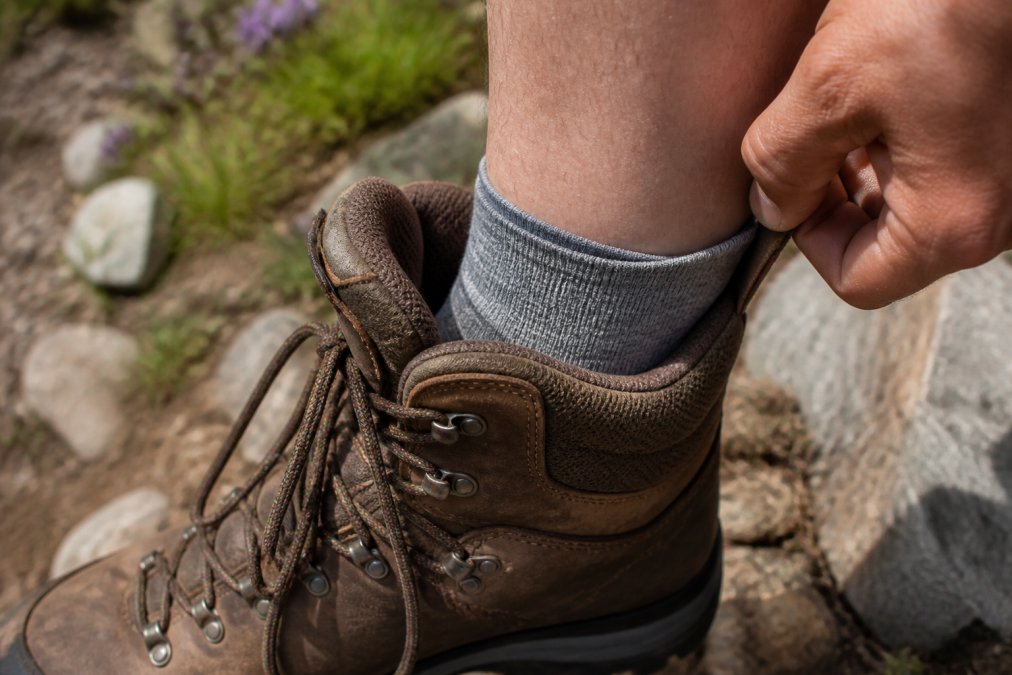
Start with the right size. Socks should fit snugly without compression that restricts blood flow. If you wear a size 10 shoe, wear a size 10 sock. Measure your foot length and arch width, then match those dimensions to sock sizing charts. Try socks on with the boots you'll be wearing them with, including your insoles.
Consider your foot width. If you have wide feet, look for socks specifically designed for wider feet.
Compression and Anatomical Support
Compression in the arch and heel areas keeps your foot stable inside your sock. Anatomical fit means the sock is shaped to match your foot's actual structure. The heel cup should wrap around your heel bone, the arch band should support your foot's natural curve, and the cuff should follow your ankle's contour.
Graduated compression, where compression is strongest in the heel and arch and gradually decreases toward the calf, provides optimal support without restricting circulation.
Best Practices for Trail Running Sock Selection
Quality matters more than price when it comes to blister prevention. Look for socks with reinforced seams, especially at the heel and toe. Flat seams reduce friction points that can lead to blisters. The heel pocket should be noticeably thicker than the rest of the sock.
Check the cuff elastic, quality socks have elastic that snaps back immediately. Consider the sock's intended use. Trail running socks need more protection against debris and more aggressive grip inside the boot. Using the right sock for your activity makes a measurable difference.
RockResist GEN1 Road & Trail Low Cut Athletic Socks ($25.99) are engineered specifically for this problem. The patented polyurethane debris barrier prevents dirt and gravel from entering your boot while reducing friction at the heel collar. The socks combine merino wool with synthetic fibers for moisture-wicking performance, and graduated compression keeps your foot locked in place throughout your run or hike. They're true-to-size and tested on Colorado trails.

Sock slippage isn't inevitable, it's the result of specific, fixable problems. The right boot fit, quality socks with proper compression and material composition, and deliberate lacing techniques work together to keep your foot stable and blister-free.
| Problem | Root Cause | Solution |
|---|---|---|
| Heel lift on each step | Boot too large | Downsize or use heel-lock lacing |
| Sock bunching at toes | Loose cuff elastic | Replace with socks featuring firm, graduated compression |
| Moisture pooling | Slippage preventing wicking | Use moisture-wicking material + proper fit + sock layering |
| Blisters forming quickly | Friction from sock movement | Combine proper sizing + compression + debris-shielding design |
| Debris entering boot | Low cuff height or loose fit | Use mid-calf socks with reinforced cuff elastic |
Frequently Asked Questions
How do I stop my trail socks from slipping down during long runs?
Slippage happens when socks lack compression, moisture accumulates, or your boot fit is too loose. Start by ensuring your socks fit snugly without bunching, compression socks with reinforced heel pockets and breathable mesh keep feet locked in place. Use the heel-lock lacing technique: thread laces through the heel tab on each side before tightening across the arch. Finally, choose moisture-wicking technical fabrics like merino wool blends that maintain grip even when damp. RockResist GEN1 socks combine a patented debris-blocking cuff with compression fibers to eliminate excess movement.
What material prevents socks from slipping best during trail running?
Technical fabrics with moisture-wicking properties prevent slippage far better than cotton. Merino wool, synthetic fibers, and blended materials pull sweat away from skin, reducing the dampness that causes friction loss. Look for socks with elasticity that maintains anatomical fit and padding density that absorbs impact without loosening. Avoid no-show socks on technical terrain, crew-height designs with reinforced cuffs provide the ankle box support needed to lock your heel in place and prevent bunching at the toes.
Can foot swelling during long hikes cause socks to slip?
Yes. Feet naturally swell during extended activity, especially on steep descents or in heat. This swelling reduces contact between sock and skin, creating space for slippage. Prevent this by using sock layering systems: wear a thin moisture-wicking liner sock under a thicker cushioned sock. This dual-layer approach accommodates swelling while maintaining compression. Start hikes with socks fitted to your morning foot size, not your swollen afternoon size. If you're prone to swelling, choose socks with slightly higher compression and breathable mesh panels to manage both volume changes and moisture.
Do worn-out socks cause more slipping than new ones?
Absolutely. Cuff elastic degradation is one of the primary causes of slippage in older socks. As elastic loses its stretch, the sock can't maintain tension around your ankle and heel pocket. The padding density also compresses over time, reducing the friction that keeps socks in place. Replace socks when you notice loose elastic, thinning heel areas, or visible wear at the cuff. High-performance trail socks should be refreshed every 6-12 months depending on use frequency, especially if you're running or hiking more than 10 miles per week.
This article was written using GrandRanker