
Table of Contents
- Why Your Hiking Sock Choice Matters More Than Your Boots
- Hiking Sock Cushioning Levels Explained: From Ultralight to Mountaineering
- Merino Wool vs Synthetic Hiking Socks: The Material Showdown
- The 4-Step Fit Test: How to Prevent Blisters While Hiking
- Matching Socks to Your Hike and Shoe Type
- The Best Socks for Long Distance Hiking vs. Day Trips
- Common Sock Mistakes and How to Avoid Them
- Final Checklist for Your Next Purchase
- Frequently Asked Questions
Last Updated: September 5, 2026
Why Your Hiking Sock Choice Matters More Than Your Boots
Most hikers agonize over boots and grab whatever socks are on sale. That's backwards. Your feet transfer every ounce of force through a thin layer of fabric, and when that layer fails, blisters and hot spots end the day early.
At RockResist, we've tested gear across rugged Colorado trails, and the pattern is consistent: footwear problems are usually sock problems in disguise. A boot that fits perfectly will still wreck your feet inside a poor sock, while a quality sock can rescue an average boot.
Hiking Sock Cushioning Levels Explained: From Ultralight to Mountaineering
Cushioning refers to the density and thickness of padding in specific zones of the sock, ranging from ultralight to mountaineering weight.
Here's how the main categories break down:
- Ultralight (1-2 on most scales): Minimal padding, maximum ground feel. Best for warm weather, well-groomed trails, and approach shoes.
- Light (2-3): Thin cushioning in the heel and toe. Suits day hikes on smooth trails and summer conditions.
- Medium (3-4): The most versatile option. Moderate padding density throughout the footbed with extra protection at the heel and toe. Works for most three-season hiking.
- Heavy (4-5): Substantial padding for rugged terrain, heavy packs, and cooler weather. Common in backpacking and mountaineering socks.
- Mountaineering (5+): Maximum padding density, often with reinforced zones for extreme loads and frigid temperatures.
Merino Wool vs Synthetic Hiking Socks: The Material Showdown
The merino wool vs synthetic hiking socks debate comes down to a trade-off between temperature regulation and durability. Merino wool excels at thermal regulation and odor resistance, while synthetic blends of nylon, polyester, and elastane offer superior abrasion resistance and faster drying times.
Merino Wool: The Performance Natural
Merino's advantage lies in the physics of its fibers. Microscopic scales and crimp create tiny air pockets that trap still air, creating an insulating layer that works even when wet. Merino can also absorb up to 30% of its weight in moisture vapor before it feels wet (peer-reviewed research).
Its odor resistance is also chemical. Merino fibers are composed of keratin, a protein that odor-causing bacteria prefer not to feed on.
The primary weakness of pure merino is its lower abrasion resistance; the same delicate scales that make it soft break down under friction. This is why you will almost never find a 100% merino hiking sock.
Synthetics: The Engineered Workhorses
- Nylon (Polyamide): This is the workhorse of durability. It provides abrasion resistance and tensile strength, allowing the sock to hold its shape and resist tearing. High-quality socks will use a higher percentage of nylon in high-wear zones like the heel and toe. Look for nylon content of 15-30% in a general hiking sock.
- Polyester: This fiber is excellent at wicking moisture away from the skin and drying extremely quickly. It is often used in the body of the sock to move sweat to the outer surface where it can evaporate. However, polyester is more prone to retaining odors than merino.
- Elastane/Spandex: This provides the crucial stretch and recovery that keeps the sock snug against your foot without sagging or bunching. A small percentage (2-5%) is essential for a secure fit that prevents friction.
- Polypropylene: A less common but highly effective synthetic, polypropylene is hydrophobic, meaning it absorbs almost no water. It is exceptionally good at wicking and drying but offers less thermal regulation than merino and can be less comfortable against the skin for some.
The Rise of Branded Fiber Technologies
Top-tier sock manufacturers are moving beyond generic blends and using proprietary fiber technologies. Understanding them can help you make a more informed choice.
- Coolmax: A brand of polyester fiber with a unique cross-section that creates channels for moisture to travel along, improving wicking and drying speed.
- Tencel (Lyocell): A fiber made from sustainably sourced wood pulp. It is highly breathable, moisture-wicking, and has a soft, smooth feel. It is often blended with merino to improve breathability in warmer conditions.
- Cocona: A polyester fiber infused with activated carbon derived from coconut shells. It is designed to enhance moisture management and odor control.
The Winning Formula: A Hybrid Approach
The best hiking socks are carefully engineered composites. A typical high-performance sock blends approximately 60-70% merino for comfort, 20-30% nylon for durability, and 5-10% elastane for fit. Advanced designs use a 'terry loop' construction for cushioning and place denser yarns in the heel and toe while using a lighter knit on top for ventilation.
The 4-Step Fit Test: How to Prevent Blisters While Hiking
How to prevent blisters while hiking starts with a proper fit. Blisters form from friction and moisture, so a sock that moves against your skin or traps sweat is a blister machine regardless of material quality.
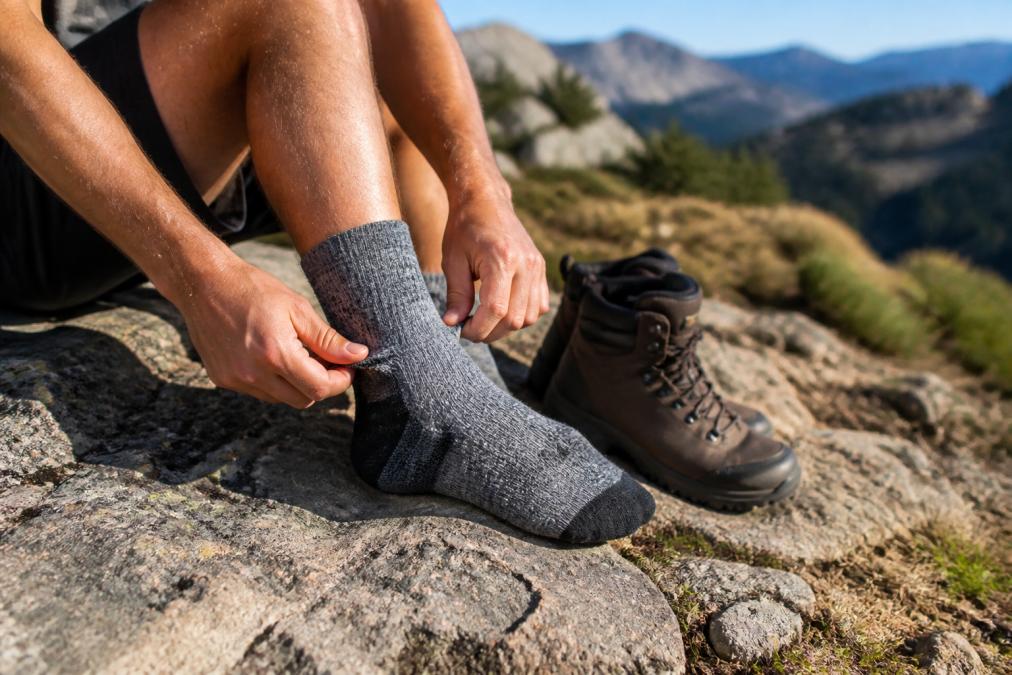
- Check the heel. Pull the sock on and feel for excess fabric at the heel. The heel pocket should hug your heel snugly. Extra material here bunches inside your boot and rubs with every step.
- Verify the toe box. Your toes should reach the end of the sock without pressure, but there should be no loose fabric at the tips. A seamless toe construction reduces friction points that cause hot spots.
- Test the arch. The sock's arch support should sit firmly against the arch of your foot, not stretched across your instep or bunched under your heel. A secure arch zone keeps the sock from shifting.
- Walk and re-check. Take a few steps in your boots. If the sock bunches, wrinkles, or slides, it's the wrong size or cut for your foot. A heel lock design helps hold the sock in place.
Matching Socks to Your Hike and Shoe Type
Choosing hiking socks requires matching them to both your footwear and your activity. The sock-to-shoe relationship matters more than most hikers realize.
Low-cut trail shoes and approach shoes need lower-profile socks. Ankle or low-cut styles with light cushioning keep you agile on rocky scrambles while allowing maximum ankle mobility.
Traditional mid-height hiking boots pair best with crew height socks. The taller cut protects your Achilles tendon from the boot collar and keeps debris out. Medium cushioning suits most boot designs and trail conditions.
Heavy backpacking boots and mountaineering footwear demand the most from your socks. High-cushion crew or over-the-calf socks provide the padding needed for heavy loads, and the taller cut adds warmth in cold conditions.
The terrain matters too. Trail running on smooth singletrack calls for lighter socks with ventilation zones. Backpacking over rocky, rooty trails with a heavy pack requires more protection underfoot.
The Best Socks for Long Distance Hiking vs. Day Trips
The best socks for long distance hiking prioritize durability, moisture management, and blister prevention above all else, while day trip socks can trade some toughness for lighter weight and breathability.
For long distance hiking, you need a sock that maintains its structure over consecutive days. Reinforced seams, higher nylon content, and medium-to-heavy cushioning protect against the repetitive friction of thousands of steps. Moisture management is critical because wet feet soften skin and accelerate blister formation.
Day hiking allows more flexibility. A lighter sock with good breathability keeps your feet cool on a few hours of moderate exertion, and you can prioritize comfort over maximum durability.
This is where RockResist's GEN1 Road & Trail Low Cut Athletic Socks earn their place in your rotation. Their patented polyurethane debris barrier physically blocks dirt, sand, and gravel from entering your shoe, addressing a primary cause of friction and blisters on rugged terrain. The two-layer construction reduces friction at the heel collar, one of the most common blister zones, while moisture-management fibers keep your feet dry through long efforts. At $25.99, they deliver the debris protection and blister resistance that multi-hour hikes demand.
Common Sock Mistakes and How to Avoid Them
Most sock failures trace back to a handful of predictable errors, and fixing them prevents the majority of foot problems on the trail.
Wearing cotton. Cotton absorbs sweat, holds it against your skin, and loses all insulation value when wet (the CDC). This single mistake causes more blisters than any other factor.
Choosing the wrong size. Socks that are too large bunch up and create friction. Socks that are too small compress your foot and restrict circulation. Always match the sock size to your foot measurement, not your shoe size, because brands vary.
Ignoring the boot volume. A thick sock in a tight boot creates pressure points. A thin sock in a loose boot lets your foot slide. Match sock cushioning to the space available in your footwear.
Neglecting sock maintenance. Worn socks lose their cushioning and develop thin spots that offer no protection. Replace socks when the heel or toe padding compresses noticeably or holes appear. Most hikers keep socks far past their useful life.
Skipping the break-in. New socks, like new boots, need a few short trips to settle into your feet. Take new socks on a short day hike before committing to a multi-day trek.
Troubleshooting Specific Foot Issues
Your sock choice can also manage chronic foot conditions:
- Plantar Fasciitis: This condition involves inflammation of the thick band of tissue across the bottom of your foot. The primary sock-related mistake is wearing socks with inadequate or misaligned arch support. Look for socks with a distinct, reinforced arch compression zone to provide gentle lift and support, reducing strain during push-off. Avoid socks that bunch under the arch, as this creates a pressure point on the inflamed tissue.
- Bunions: A bunion is a bony bump at the base of the big toe. Avoid any sock that compresses the forefoot. Look for socks with a wider, more anatomical toe box that allows your toes to splay naturally. Seamless toe closures are non-negotiable, as a thick seam can rub directly against the bunion. Consider a 'toe sock' style to further reduce friction.
- Hot Spots and Blister Prone Feet: If you consistently get blisters in the same spot, you need a targeted solution. For heel blisters, look for a 'heel lock' design that grips the Achilles area. For blisters on the ball of the foot, a smooth, low-friction outer surface can help. Some hikers find a two-layer sock system, where an inner liner moves against the outer sock rather than your skin, most effective.
- Poor Circulation or Swelling: For hikers who experience foot swelling on long descents, consider socks with graduated compression. These are tighter at the ankle and gradually loosen toward the calf, promoting venous return and reducing fluid buildup (PubMed). This medical-grade feature requires careful sizing; consult a podiatrist before use if you have vascular conditions.
The Sock-to-Shoe Compatibility Matrix
A final, often-overlooked mistake is treating socks and shoes as independent purchases. They are a system:
| Sock Cushioning | Best Matched Footwear | Rationale |
|---|---|---|
| Ultralight/Light | Trail runners, approach shoes, low-cut hiking shoes | Minimal bulk fits snugly in low-volume shoes; maximizes ground feel and agility. |
| Medium | Mid-height hiking boots, light backpacking boots | Provides a balance of protection and fit for moderate loads and varied terrain. |
| Heavy | Heavy-duty backpacking boots, mountaineering boots | Fills the larger volume of these boots, providing essential impact protection for heavy packs and rough terrain. |
Getting sock selection right transforms your time on the trail. Your feet carry the entire load, and the right sock keeps them comfortable, dry, and blister-free from the first mile to the last.
Final Checklist for Your Next Purchase
Before you buy your next pair of hiking socks, run through this checklist to confirm you're making the right choice for your feet and your trails.
- Material: Merino wool or a merino-synthetic blend for moisture management and durability
- Cushioning: Matched to your pack weight, boot volume, and trail conditions
- Height: Crew height for boots, low cut for trail shoes, over-the-calf for mountaineering
- Fit: Snug heel pocket, no excess fabric at the toes, secure arch support
- Construction: Seamless toe, reinforced heel and toe zones, quality nylon content
- Special features: Debris protection for rocky terrain, ventilation zones for warm weather
- Rotation plan: At least two pairs so you can alternate and let socks fully dry between hikes
Getting sock selection right transforms your time on the trail. Your feet carry the entire load, and the right sock keeps them comfortable, dry, and blister-free from the first mile to the last.

Choosing hiking socks requires attention to materials, cushioning, and fit. The wrong pair turns a beautiful trail into a painful ordeal, while the right pair disappears from your awareness entirely. RockResist builds socks for exactly that outcome: debris-shielding cuffs, moisture-management fibers, and reinforced seams tested across rugged Colorado terrain.
Frequently Asked Questions
Should you wear thin or thick socks for hiking?
Thin socks suit warm weather, technical trails, and snug-fitting shoes where you need maximum ground feel. Thick socks provide more cushioning and insulation for cold conditions, heavy packs, and roomier boots. The right choice depends on your hike duration, season, and shoe volume. For most day hikes in moderate conditions, a medium-weight sock with targeted cushioning offers the best balance of comfort and performance.
Are cotton socks bad for hiking?
Yes, cotton socks are a poor choice for hiking. Cotton absorbs sweat and stays wet against your skin, which increases friction and causes blisters. It also loses insulation when wet, making your feet cold. Choose merino wool or synthetic blends like nylon and polyester instead. These materials wick moisture away, dry quickly, and maintain warmth even when damp, keeping your feet comfortable on the trail.
Should I size up or down in hiking socks?
Hiking socks should fit snugly without being tight. A sock that is too small bunches up and creates friction, while one that is too large wrinkles and causes hot spots. Follow the manufacturer's size chart based on your shoe size. If you are between sizes, size up slightly, as socks tend to shrink a little after washing. The heel of the sock should sit firmly at your heel with no excess fabric.
How many pairs of socks should I bring on a backpacking trip?
For a multi-day backpacking trip, bring one pair for hiking each day plus one dedicated pair for camp. This means a 3-day trip requires 4 pairs total. Rotate socks daily to let used pairs dry thoroughly. In wet conditions, bring an extra pair sealed in a dry bag. Wearing clean, dry socks each morning is one of the simplest ways to prevent blisters and keep your feet healthy on long expeditions.
What is the difference between crew and ankle hiking socks?
Crew socks rise above the ankle and offer more protection against debris, brush, and boot tops. They also provide additional warmth and can help prevent friction from the boot collar. Ankle socks sit below the ankle and are lighter, making them ideal for warm-weather day hikes or trail running. Your choice depends on trail conditions, boot height, and personal preference for coverage and breathability.
How do I stop my hiking socks from slipping down?
Slipping socks indicate a poor fit or inadequate design. Look for socks with elastic arch support, which helps anchor the sock to your foot and prevents bunching. Ensure you have the correct size, as oversized socks lose tension. Some socks feature a heel lock construction that keeps the heel pocket in place. If the problem persists, switch to a crew height style that stays secured by your boot.
This article was written using GrandRanker