

Table of Contents
- Why Trail Debris Socks Matter More Than You Think
- Best Trail Running Socks: What Separates Protection From Hype
- Trail Running Socks That Keep Dirt Out: Height, Collar, and Terrain
- Moisture-Wicking Running Socks: Materials That Dry Fast
- Socks for Preventing Blisters While Hiking: Fit and Friction Control
- The Trade-Offs of Sealing Out Debris
- How to Choose Your Pair: A Decision Framework
- Frequently Asked Questions
Last Updated: October 6, 2026
Why Trail Debris Socks Matter More Than You Think
Grit in your shoe is a friction problem, and the best socks for preventing trail debris turn a good long run into a limping walk home.
A small stone slips past your shoe collar in the first mile.
That is why sock choice matters: the right cuff blocks debris at the entry point, the wrong one holds it against you.
This guide covers how debris enters a shoe, which designs stop it, and how to match height and material to your terrain.
Best Trail Running Socks: What Separates Protection From Hype
The best trail running socks combine a snug, gap-free fit with a cuff that physically blocks debris at the shoe collar.

Most trail socks are just thicker athletic socks, but thickness does not stop grit, fit and coverage do. A loose sock creates folds where dirt collects and rubs; a snug sock with a high enough cuff leaves debris nowhere to enter.
Debris-Blocking Cuff Designs Compared
Three cuff approaches show up in trail socks, and they behave very differently.
- Standard low-cut cuff: Sits below the shoe collar. No debris protection. Fine for road, poor for loose terrain.
- Extended or tab cuff: Rises slightly above the collar. Blocks some debris, but grit still works in from the sides on long runs.
- Integrated barrier cuff: A taller, structured cuff above the collar that can be worn up or tucked down. This is the design in our GEN1 socks, and the most effective at keeping grit out where it usually sneaks in.
It comes down to where the fabric meets the shoe: end below the collar and debris enters freely; extend above and seal against the ankle and entry points close.
How to Test Whether a Sock Actually Blocks Debris
You cannot judge debris protection from a product photo. Here is a simple test.
- Put the sock on with your trail shoes and lace them normally.
- Look for any gap between cuff and shoe collar. If you can see skin, debris can reach it.
- Walk a few steps on loose gravel or sand.
- Remove the shoe and check inside, especially the heel and outer forefoot, where grit collects first.
- Repeat after a longer run in wet conditions, when debris sticks and travels further.
A sock that passes on loose terrain will hold up on most trails; one that fails will fail you at mile ten.
Trail Running Socks That Keep Dirt Out: Height, Collar, and Terrain
Trail running socks that keep dirt out match their height to both the shoe collar and the terrain. There is no single correct height, it depends on what you run through and in.

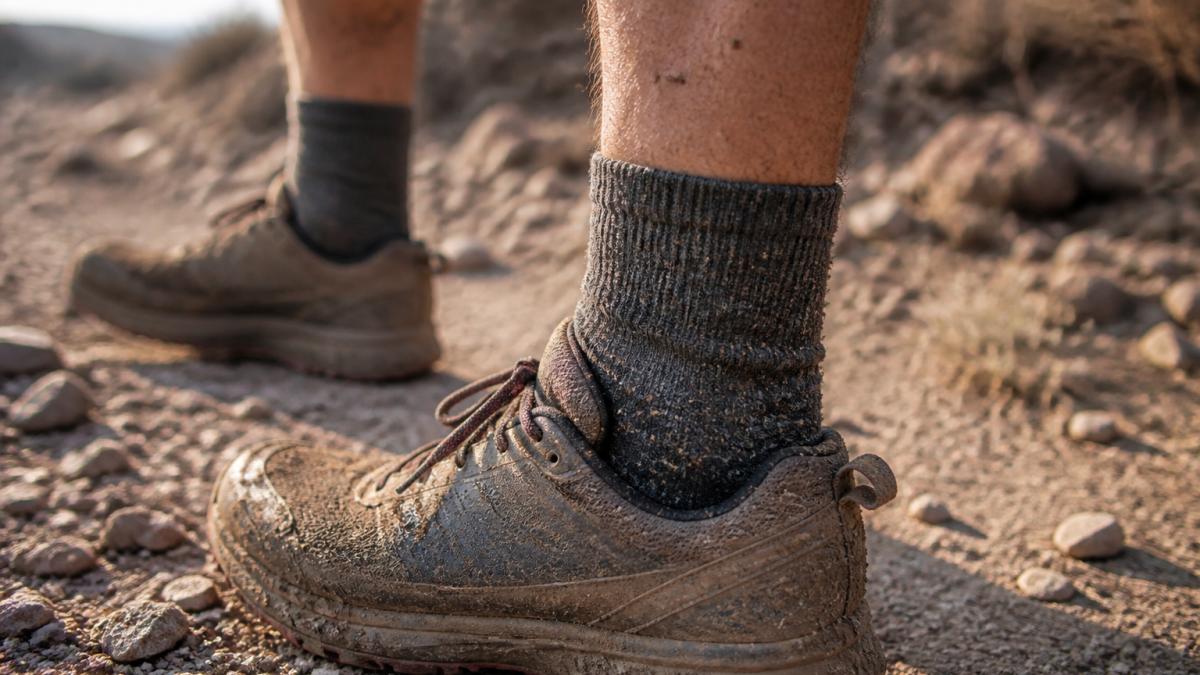
The variable most runners miss is the shoe itself. A low-collar trail shoe leaves more ankle exposed and needs a taller sock; a high-collar shoe does more of the work.
Sock Height Matched to Shoe Collar
Think of the sock cuff and shoe collar as two halves of one seal: whichever is taller determines how much debris reaches skin.
- Low-cut shoe collar (below the ankle bone): Pair with a quarter or crew sock. An ankle sock leaves a band of skin where grit enters first; a quarter sock closes most of that gap on packed dirt, a crew sock closes it fully on loose rock.
- Mid-cut shoe collar (at or just above the ankle bone): A quarter sock sits flush with the collar and blocks most grit. A crew sock adds a second barrier for scree and brush.
- High-cut shoe collar (well above the ankle bone): An ankle or quarter sock can work on hardpack since the shoe shields the entry point. On loose terrain, step up to a crew so the fabric still overlaps the collar when your foot flexes.
Quick field check: lace up and flex your ankle forward and back. If skin shows at any point, debris can reach it; if the cuff stays in contact through the whole range, the seal holds.
Sock Height Matched to Terrain
Terrain decides how much debris is available to enter, which changes how much coverage you need.
- Groomed paths, road miles, hardpack: Minimal debris risk. Ankle-length is fine; save taller socks for rougher days.
- Packed dirt and light gravel: Quarter-length covers the collar on most trail shoes and blocks most grit, the practical middle ground for mixed-surface runs.
- Loose gravel and sandy trails: Sand and pea gravel work in from the sides and over a short cuff. A snug quarter sock handles short efforts; a crew sock handles long ones.
Gaiter Integration and the Sealed System
Gaiters are the other half of debris protection and change what sock height you need.
If you run gaiters, you can often drop one sock height and still keep debris out; if you do not, sock height is your only barrier, so err taller on loose terrain. The two stack: a crew sock under a low gaiter beats either alone.
Moisture-Wicking Running Socks: Materials That Dry Fast
Moisture-wicking running socks move sweat away from the skin and dry quickly, keeping friction low and debris from sticking to a damp foot. Material choice drives how well that works.
Wet skin is softer and more vulnerable to rubbing, and wet fabric holds grit against the skin instead of letting it slide off, which is why so many blisters happen on wet runs.
Fiber choices break down into a few practical categories:
- Wool blends: Regulate temperature well and stay warm when damp. Slower to dry than synthetics in heavy rain.
- Synthetic fibers: Dry fast and manage sweat effectively. Common in performance socks for exactly this reason.
- Cotton: Comfortable and breathable, but holds water and dries slowly. Best kept to dry conditions and shorter efforts.
Our GEN1 socks use a 75% cotton and 25% terylene blend, balancing everyday comfort with trail durability.
Socks for Preventing Blisters While Hiking: Fit and Friction Control
Socks for preventing blisters while hiking work by eliminating movement between foot, sock, and shoe.
RockResist GEN1 Trail Running Socks, Debris-Blocking Low Cut →
Three things create that motion, and all three are fixable.
Entry gaps. A gap at the collar lets debris in, and debris is a friction source that never stops.
Collar friction. Even a good sock can rub at the heel and ankle where the shoe collar presses.
The Trade-Offs of Sealing Out Debris
Sealing out debris always costs something. The goal is not maximum coverage but the right balance for your conditions, which shifts with temperature, effort length, and how much grit your trails throw at you.
Heat and Sweat Retention
A taller cuff covers more skin, and the fabric that blocks grit also blocks airflow around the ankle, so sweat soaks into the sock instead of evaporating. A damp sock is heavier and holds grit against the skin instead of letting it slide off.
The effect compounds on long efforts: a crew sock that feels fine at mile two can feel clammy by mile fifteen, and clammy fabric plus trapped grit produces blisters.
Pressure Points and Reduced Ventilation
A tight seal concentrates pressure where the cuff meets the ankle. If the sock fits well, that pressure spreads evenly; if it fits poorly, the same tightness creates a hot spot at the ankle bone or Achilles, moving the friction problem from the collar to the cuff.
Reduced ventilation works the same way: a snug cuff limits the air exchange that carries moisture away from the ankle. Some runners tolerate it, others do not, which is why fit has to be solved before the seal.
How to Test Whether a Seal Is Too Tight
You can check this before a long run.
- Put the sock and shoe on and lace normally.
- Press a finger under the cuff at the front, back, and both sides of the ankle. You should feel firm contact, not a hard band.
- Flex your ankle through its full range. The cuff should stay in contact without digging in.
- Walk five minutes, then check for red marks at the ankle bone or Achilles. Faint marks that fade quickly are normal. Deep marks or tenderness mean the seal is too tight or the size is wrong.
- Repeat after a sweaty run. Heat and moisture change how fabric behaves against skin.
Matching the Seal to the Conditions
Here is how the main design choices compare:
| Design Choice | Debris Protection | Breathability | Best For |
|---|---|---|---|
| Low-cut, standard cuff | Low | High | Road miles, hardpack |
| Extended tab cuff | Moderate | Moderate | Packed dirt, light gravel |
| Integrated barrier, worn up | High | Moderate | Loose rock, scree, overgrowth |
| Integrated barrier, tucked down | Moderate | High | Mixed terrain, warmer days |
The GEN1 design addresses the trade-off by letting you wear the barrier up for loose terrain or tuck it down for a lower profile. On a cool morning in scree, wear it up; on a hot afternoon on hardpack, tuck it down. The sock adapts to the day instead of forcing you to own two pairs.
How to Choose Your Pair: A Decision Framework
Choosing the right pair comes down to four questions. Answer them in order and the decision makes itself.
1. What is the terrain? Groomed paths need less coverage.
2. How high is your shoe collar? Low collar means more sock height to close the gap.
3. What are the conditions? Dry and dusty favors a comfortable blend.
4. How long are your efforts? Short runs tolerate compromise; long runs punish every gap, fold, and loose thread.
If you want a starting point, our RockResist GEN1 Trail Running Socks, Debris-Blocking Low Cut are built around the integrated barrier design, with a non-slip fit and added heel material to cut collar friction. For runners who go through pairs quickly, the RockResist Trail Running Sock Bundle, 3 Pairs covers three pairs at a lower per-pair cost and includes a wrist band at no extra charge.
Frequently Asked Questions
What socks keep dirt and debris out of trail running shoes?
Socks with an integrated debris-blocking cuff or barrier that sits above the shoe collar work best. The barrier creates a seal where grit, sand, and small stones normally enter. Look for a snug fit around the ankle and a cuff height that matches your shoe collar. RockResist GEN1 Trail Running Socks use a debris-blocking barrier that can be worn up for loose terrain or tucked in for a lower profile.
Are crew socks better than ankle socks for trail running?
Crew-length socks offer more ankle coverage and a taller barrier against debris, which helps on loose, rocky trails. Ankle-length socks are lighter and cooler but leave more exposed skin where grit can enter. If you run technical terrain with lots of small stones, a crew or quarter-length sock with a debris-blocking cuff reduces how often you stop to shake out your shoes.
What sock materials help prevent blisters on long trail runs?
Moisture-wicking blends that move sweat away from the skin and dry quickly reduce friction, which is the main cause of blisters. Wool blends and synthetic fibers like terylene work well. Cotton holds moisture and should be avoided for long efforts. A snug, non-slip fit also matters more than any single material, because a sock that bunches or slides creates the rubbing that leads to blisters.
How should trail running socks fit to prevent rubbing?
They should fit snugly with no wrinkles or excess fabric, especially at the heel and arch. The cuff should sit smoothly against your ankle without digging in. RockResist offers unisex sizing from S to L, and a secure non-slip construction helps keep the sock in place during high-movement activity.
Trail debris is a solvable problem, but it takes the right combination of height, fit, and material rather than any single feature. RockResist builds socks for exactly this: a debris-shielding cuff that seals at the shoe collar, moisture-management fibers that keep feet dry, and reinforced construction that holds its shape over rugged miles. Get started with RockResist and run your next trail with less grit and fewer blisters.