
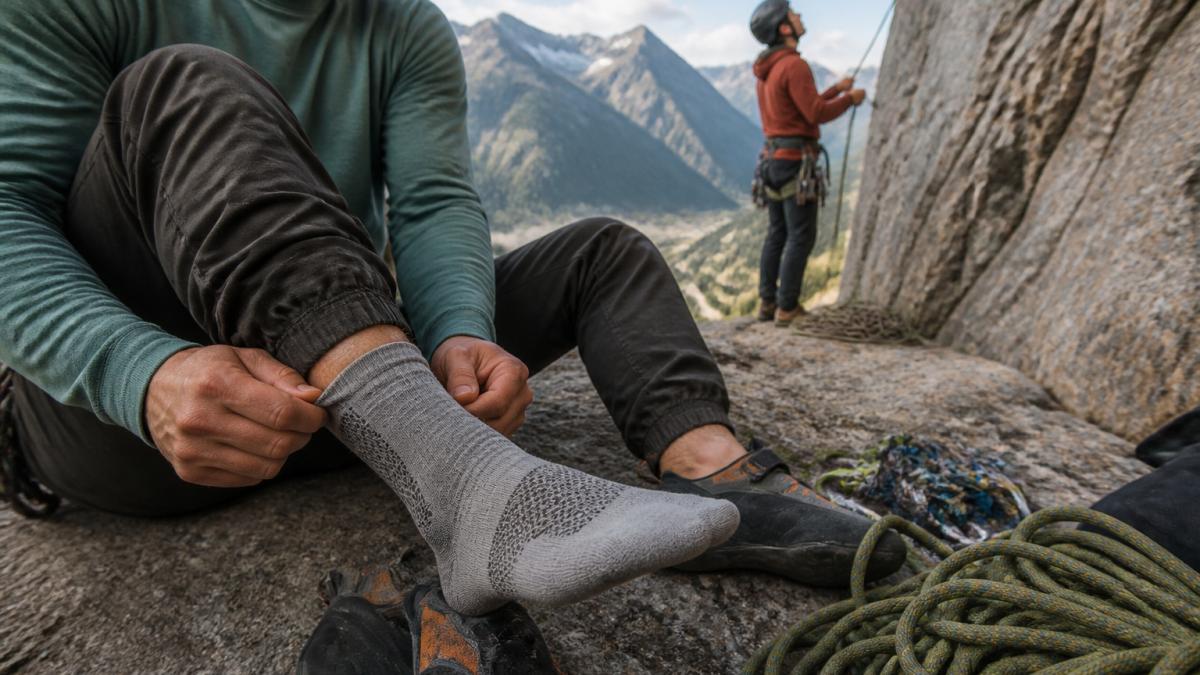
Table of Contents
- Why Foot Protection for Multi-Pitch Climbing Is Different
- What You'll Need Before You Choose
- Step 1: Match Foot Protection to Your Multi-Pitch Terrain
- Step 2: How to Prevent Blisters in Climbing Shoes
- Step 3: Best Socks for Climbing Shoes and How to Choose Them
- Step 4: Climbing Foot Care Tips for Long Routes
- Common Mistakes to Avoid on Multi-Pitch Routes
- Conclusion
- Frequently Asked Questions
Last Updated: October 2, 2026
Why Foot Protection for Multi-Pitch Climbing Is Different
Foot protection for multi-pitch climbing is the combination of footwear, socks, and skin care that keeps your feet functional across hours of continuous climbing and standing. It is not the same problem as single-pitch cragging.
At RockResist, we build gear for exactly this kind of long, abrasive day. Here is the core issue: most climbers treat their feet as an afterthought until the damage is done.
Multi-pitch climbing changes the math in three ways:
- Time. You may be in your shoes for six to ten hours, not forty minutes.
- Weight. You carry a pack, a rack, and a partner's needs on your feet all day.
- Consequence. A hot spot at pitch two becomes a raw blister by pitch six.
The American Alpine Club's accident and incident reporting consistently shows that retreats and epics often trace back to small, preventable problems. Feet are one of the most common.
This guide walks through terrain matching, blister prevention, sock choice, and foot care. Below, we'll show you exactly how to build a system that holds up from the approach to the last rappel.
What You'll Need Before You Choose
Before you buy anything, get honest about four variables. Most bad gear decisions come from skipping this step.
Terrain type. Granite slabs, limestone pockets, desert sandstone, and alpine rock all wear shoes and feet differently.
Route length and style. A three-pitch sport route and a twelve-pitch alpine rock route demand different levels of protection.
Foot shape. Wide forefoot, narrow heel, high arch, or a bunion changes what fits.
Shoe fit tolerance. Climbing shoes should be snug, not painful.
Here is a quick reference for matching your setup to the day:
| Route Type | Shoe Fit | Sock Choice | Priority |
|---|---|---|---|
| Short sport multi-pitch | Snug, performance | Thin or none | Precision |
| Long trad multi-pitch | Snug, comfortable | Thin cushion | All-day comfort |
| Alpine rock | Slightly roomy | Light cushion | Warmth and dryness |
| Desert sandstone | Snug, durable | Thin, debris-blocking | Abrasion resistance |
Step 1: Match Foot Protection to Your Multi-Pitch Terrain
Start with the rock, not the shoe. Terrain decides what your feet actually endure.
On sharp granite and volcanic rock, abrasion is the main threat. Edges cut into rand rubber and sock fabric.
On limestone and sandstone, friction and heat matter more.
On alpine rock, cold and moisture dominate. Wet feet lose grip inside the shoe and blister faster.
A common mistake is buying one shoe and one sock for every route. In practice, most experienced climbers keep two setups:
- Performance setup: tight shoes, minimal sock, for hard pitches
- Endurance setup: roomier shoes, cushioned sock, for long days
The endurance setup is where foot protection for multi-pitch climbing actually earns its keep.
Step 2: How to Prevent Blisters in Climbing Shoes
Blisters come from three things working together: friction, moisture, and heat. Remove one and you usually stop the blister.
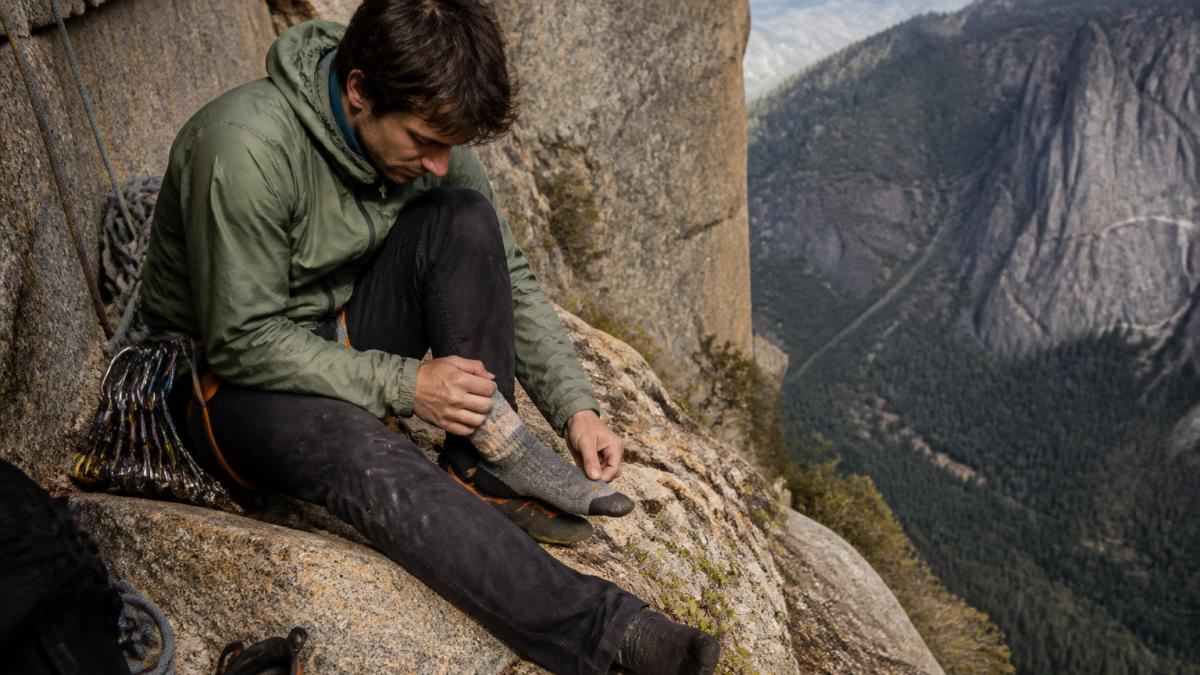
Most guides blame friction alone. That's incomplete. A dry, cool foot can handle a surprising amount of rubbing. A wet, hot foot blisters fast.
Moisture Is the Multiplier
Sweat softens the skin. Soft skin tears under shear stress. Climbing shoes don't breathe well, so sweat has nowhere to go.
That makes moisture management the highest-use fix. A sock that moves sweat away from skin keeps the outer layer dry and tough.
The mechanics are simple:
RockResist Trail Running Sock Bundle, 3 Pairs →
- Wicking fibers pull sweat off the skin
- Breathable mesh zones let vapor escape
- Reinforced heel and toe reduce shear at high-friction points
RockResist socks use moisture-management fibers and breathable mesh built for exactly this problem. The debris-shielding cuff also keeps grit out of the shoe, which is a hidden blister source on sandy routes.
Step 3: Best Socks for Climbing Shoes and How to Choose Them
The best socks for climbing shoes are thin, seam-free, and made from moisture-wicking material. Thickness should match your route length, not your personal preference alone.
Here's how to decide:
- Very thin liner socks: Best for tight performance shoes and short pitches
- Light cushion socks: Best for long multi-pitch and trad routes
- Light cushion with debris cuff: Best for desert and sandy terrain
- Wool blends: Good for cold alpine starts, but check the fit inside a snug shoe
Sock height matters too. Low-cut socks disappear under the shoe. Some climbers prefer a slightly higher cuff to stop grit and rope drag from irritating the ankle.
RockResist's product catalog lists a 3-pair bundle at $58.48, a 25% savings versus buying singles. Each bundle includes a free wrist band.

Sizing When You Plan to Wear Socks
This is where most people get it wrong. If you normally climb in bare feet and switch to socks, your shoes will feel tighter.
Sizing rules that work:
- Try shoes on with the exact sock you plan to wear
- Size up half a size if adding a cushioned sock
- Your toes should lie flat, not curl
- Heel should not lift when you stand on a small edge
RockResist sizes run S through L, covering women's 7-15 and men's 5-13. Check the size chart before ordering to avoid a return.
Step 4: Climbing Foot Care Tips for Long Routes
Climbing foot care tips matter most before and after the route, not during it. Prevention happens at the trailhead.
Build these habits into your routine:
- Trim toenails short and straight the night before
- Tape known hot spots before you start
- Apply a thin layer of skin lubricant on high-friction zones
- Carry a small roll of athletic tape for mid-route fixes
- Change into dry socks at the car
- Air shoes out between climbs
- Moisturize feet after long days, but not before
A common mistake is taping too late. Tape sticks poorly to sweaty skin. Apply it dry, at the car, before the approach.
What most guides miss is the shoe rotation habit. Alternating two pairs of climbing shoes lets each dry fully between outings. Damp shoes stay damp, and damp shoes cause blisters.
Common Mistakes to Avoid on Multi-Pitch Routes
The biggest mistake is treating foot protection as a one-time purchase. It's a system you maintain.
Watch for these:
- Wearing the same socks for the approach and the climb. Wet approach socks ruin the climb.
- Ignoring early hot spots. A hot spot is a warning, not a minor inconvenience.
- Buying shoes too tight for long routes. Performance fit is for redpoints, not ten-pitch days.
- Skipping the size check on socks. Socks that bunch create folds, and folds create blisters.
- Never replacing worn socks. Thinning fabric loses its cushioning and wicking ability.
RockResist socks are tested on rugged Colorado trails, so the durability holds up to sharp rock and long approaches. Trusted by athletes who put in serious mileage, the reinforced seams and debris-shielding cuff are built for the abrasion multi-pitch climbing throws at them.
Conclusion
Long routes punish small oversights. A sock that bunches, a shoe that pinches, or grit you ignored at the belay can end a day you spent months planning.
RockResist builds gear for those days. Our socks combine debris-shielding cuff technology, moisture-management fibers, and reinforced seams to keep your feet dry, clean, and comfortable from the approach to the summit. Add a 3-pair bundle to your kit and stop thinking about your feet so you can focus on the climbing.
Frequently Asked Questions
What socks do you wear when climbing?
For multi-pitch routes, wear thin, snug-fitting socks made with moisture-wicking fibers and reinforced seams. The sock should sit smooth against the skin with no folds that can rub under load. Low-cut designs with a debris-shielding cuff keep grit out at the shoe collar, which matters on long routes where you cannot stop to shake out sand. Cotton is the one material to skip: it holds sweat against the skin and multiplies friction.
How do you prevent blisters during long days of climbing?
Preventing blisters in climbing shoes comes down to three things: moisture, friction, and fit. Choose socks that move sweat away from the skin, make sure your shoes and socks fit without pressure points or loose folds, and keep debris out of the shoe. On long multi-pitch days, switch to a dry pair at the belay if your feet are soaked. Small habits, like tightening laces before a hard pitch, also reduce sliding that causes hot spots.
Should I size my climbing shoes differently if I plan to wear socks?
Yes. If you normally climb barefoot in your shoes and plan to add socks, go up roughly a half size, or try the shoe on with the exact sock you will wear on the route. The goal is a snug fit with no dead space at the heel and no pressure across the toes. Shoes that are already tight barefoot will feel painful with any sock added, so test the combination before a long multi-pitch day.
How do debris-shielding cuffs help in outdoor climbing environments?
A debris-shielding cuff sits at the shoe collar and blocks dirt, sand, and small rock fragments from entering the shoe. On multi-pitch routes, that grit works like sandpaper against your skin with every step and smear. Cuffs can be worn up in loose terrain or tucked down for a lower profile. Fewer particles inside the shoe means less friction, fewer hot spots, and a much more comfortable descent.
Your feet carry every pitch, every approach, and every rappel. When they fail, the route ends early. RockResist socks are engineered with debris-shielding cuffs, breathable mesh, and reinforced seams to keep you blister-free on the longest days. Get started with RockResist and add a 3-pair bundle to your rack today.