
Table of Contents
- Why Standard Climbing Socks Fall Short
- Going Sockless: Is Barefoot in Climbing Shoes a Real Option?
- Best Thin Socks for Climbing Shoes: Materials That Actually Work
- How to Prevent Blisters in Climbing Shoes
- Climbing Shoe Hygiene Tips for Odor and Moisture Control
- Sock Maintenance, Longevity, and Temperature Regulation
- Conclusion
- Frequently Asked Questions
Last Updated: October 1, 2026
Why Standard Climbing Socks Fall Short
Standard climbing socks fail because they were designed for running, hiking, or everyday wear, not for the specific demands of rock. Most athletic socks prioritize cushioning and arch support, two features that work against you on the wall.
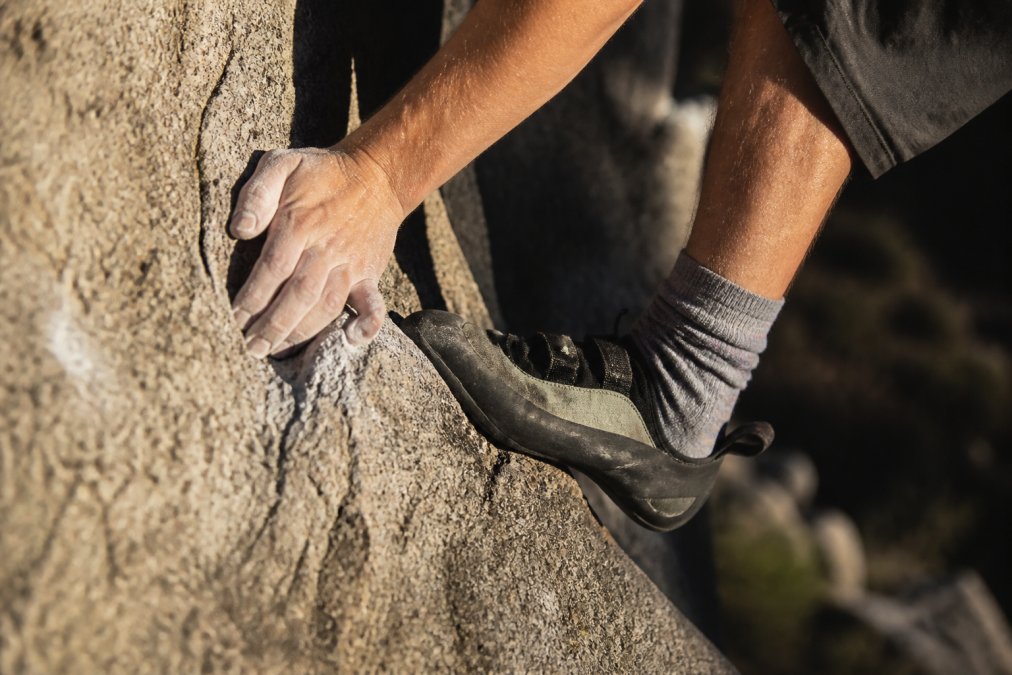
The problem comes down to foot volume. A cushioned sock takes up space inside a shoe that was sized for a bare foot. That extra material shifts your weight, reduces tactile feedback, and creates pressure points on small footholds. Climbing shoes are meant to fit like a second skin, and a thick sock breaks that connection.
There's also the sensitivity issue. When you're standing on a foothold the size of a coin, you need to feel exactly where the edge of the rubber sits. Padding dulls that signal. According to REI's guide to climbing shoe fit, a snug, precise fit is the single biggest factor in edging performance, and extra sock bulk directly undermines it.
Then there's grip.
Going Sockless: Is Barefoot in Climbing Shoes a Real Option?
Going barefoot in climbing shoes is a legitimate choice, and many experienced climbers swear by it for maximum sensitivity and tactile feedback. Without a sock layer, your foot connects directly to the rubber, which sharpens your feel for tiny edges and smears. On micro-edges and thin cracks, that extra signal can be the difference between sticking and slipping.
- Odor control collapses because there is no absorbent layer to pull sweat away from the shoe lining. Bacteria feed on that trapped moisture, and the resulting smell is difficult to remove once it sets into the synthetic leather or microfiber.
- Blister prevention gets harder. Skin-on-rubber contact creates higher shear forces at the heel and toes, especially on long approaches or multi-pitch routes where your foot slides inside the shoe with every step.
- Foot hygiene suffers when you cannot swap or wash a sock between sessions. Sweat, dead skin cells, and chalk dust accumulate inside the shoe.
- Temperature regulation is nonexistent in cold conditions. Without an insulating layer, your toes lose heat fast on shaded rock or early-morning starts.
The Skin-Sensitivity Angle Most Guides Skip
A less-discussed reason some climbers avoid sockless climbing is contact dermatitis. Synthetic shoe liners, adhesives, and rubber compounds can trigger irritation in people with sensitive skin, and the reaction often shows up as redness, itching, or small bumps along the top of the foot and around the heel. A thin natural-fiber sock, merino or a merino-cotton blend, creates a barrier between skin and liner without adding meaningful volume.
When Sockless Actually Works
The honest answer: sockless works for short, hard bouldering sessions where feel matters most and you can air your shoes out immediately afterward. For long days, cold rock, abrasive multi-pitch terrain, or any shared-shoe situation, a thin sock is the smarter call. The performance cost of a sub-1 mm liner is small; the hygiene and comfort cost of going barefoot for six hours is not.
Best Thin Socks for Climbing Shoes: Materials That Actually Work
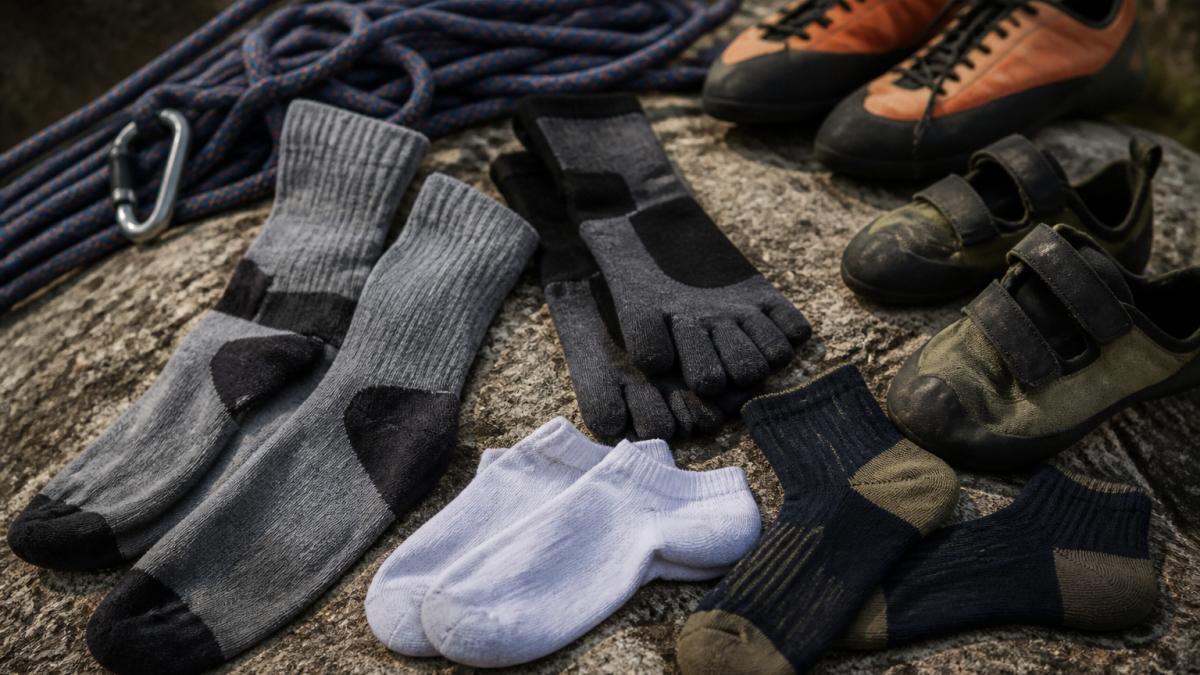
The best thin socks for climbing shoes are ultralight, moisture-wicking, and built with minimal seams. They add almost no volume while still managing sweat and reducing friction.

A few categories dominate the market:
- Toe socks separate each toe, which reduces friction between them and can help with blister prevention on long routes
- Compression socks offer a snug, supportive fit that stays put inside the shoe
- Ankle socks and low-cut designs work for climbers who want coverage without bulk
- Minimalist liners are the thinnest option, often under 1 mm thick
Synthetic Fibers vs. Natural Fibers
Synthetic fibers like polyester, nylon, and spandex dominate performance climbing socks. They wick moisture, dry fast, and hold their shape through repeated washing. Synthetic resin treatments and split yarn constructions improve durability and breathability.
| Fiber Type | Moisture-Wicking | Durability | Odor Control | Best For |
|---|---|---|---|---|
| Synthetic (polyester, nylon) | High | High | Moderate | Most climbing |
| Merino wool | Moderate | Moderate | High | Cold weather |
| Cotton | Low | Low | Low | Everyday wear only |
| Blends | High | High | High | All-around use |
How to Prevent Blisters in Climbing Shoes
Blisters in climbing shoes come from three things: friction, moisture, and pressure. Fix all three and you'll cut most blisters before they start.
Seam Placement and Fit Adjustments
If you're getting blisters despite a good sock, adjust the shoe, not just the sock.
RockResist GEN1 Trail Running Socks →
- Downsizing too aggressively is the most common mistake. A shoe that hurts in the store will hurt worse on the wall
- Try a thinner sock before you size up, since foot volume changes with sock thickness
- Lace or strap adjustments can relieve pressure over the instep and heel cup
- If you're between sizes, size for your larger foot
Climbing Shoe Hygiene Tips for Odor and Moisture Control
Climbing shoe odor comes from bacteria feeding on trapped sweat. Control the moisture and you control the smell.
A few habits make the biggest difference:
- Let shoes air out fully after every session, never leave them sealed in a bag
- Rotate between two pairs if you climb often, so each pair dries completely
- Use moisture-absorbing inserts or cedar shoe trees between sessions
- Wash your climbing socks regularly in cold water and air dry them
- Never wear the same pair of socks two sessions in a row
Sock Maintenance, Longevity, and Temperature Regulation
Climbing socks take abuse, and how you care for them decides how long they last. Most performance socks last longest when washed cold and air dried, since heat breaks down elastic fibers and compression properties. But the details matter more than the headline advice, and almost no climbing guide covers them.
Washing Thin Socks Without Destroying Them
Thin climbing socks are delicate by design. A few habits extend their life significantly:
- Turn them inside out before washing. Most wear happens on the interior, where dead skin and salt crystals abrade the fibers.
- Wash cold, around 86°F or lower, on a gentle cycle. Hot water accelerates elastic breakdown and shrinks wool blends.
- Skip fabric softener. It coats moisture-wicking fibers and reduces their ability to move sweat away from your skin.
- Use a mesh laundry bag if you wash socks with other gear. Zippers, buckles, and velcro from climbing packs and harnesses snag thin knits.
- Air dry flat or line dry. Dryer heat is the single fastest way to turn a snug compression sock into a loose tube.
Repairing Holes Before They Spread
Thin socks develop holes at predictable spots: the big toe, the heel, and the ball of the foot. A small hole caught early can be darned with a needle and matching thread in a few minutes. A hole left alone will run, and a run in a 1 mm sock means the sock is done.
Temperature Regulation by Condition
For temperature regulation, match the sock to the conditions:
- Warm gym sessions: ultralight synthetic liners under 1 mm. They wick fast and dry between climbs.
- Cold outdoor rock: merino blends or a slightly thicker minimalist sock. Wool insulates even when damp, which synthetics do not.
- Multi-pitch routes with long approaches: compression socks that stay put and manage sweat over hours of walking and climbing.
- High-heat indoor sessions: avoid wool. It runs warmer than synthetics and holds more moisture against the skin.
Where a Purpose-Built Sock Fits
This is where a purpose-built option earns its place. RockResist builds its climbing and trail socks around moisture-management fibers and reinforced seams, with a debris-shielding cuff that keeps grit out of the shoe on abrasive terrain. The GEN1 low-cut design is thin enough to preserve tactile feedback while still handling sweat and friction on long days.
Conclusion
Getting your sock choice right is one of the cheapest upgrades you can make to your climbing performance, and it's the one most climbers ignore. The wrong sock steals feel, causes blisters, and stinks up your shoes. The right one disappears into the background and lets you focus on the moves.
Frequently Asked Questions
What socks do you wear when climbing?
Many climbers choose thin, synthetic socks made from materials like polyester or nylon blends. These moisture-wicking fabrics reduce friction and keep feet drier than cotton. Some prefer toe socks for blister prevention between toes, while others go sockless for maximum sensitivity. The best choice depends on shoe fit, route length, and personal comfort. For multi-pitch routes, a thin liner or minimalist sock works well under climbing shoes.
Why not wear socks in climbing shoes?
Socks can reduce tactile feedback and alter shoe fit, which matters for precise footwork on small holds. Many climbers downsize shoes for a tight fit, and socks add volume that changes sensitivity. However, going sockless increases blister risk and odor. Alternatives like thin liners or moisture-wicking socks balance sensitivity with protection. For abrasive rock or long approaches, a low-profile sock can prevent irritation without sacrificing performance.
What are the benefits of wearing thin liners instead of standard climbing socks?
Thin liners reduce friction and wick moisture while adding minimal bulk inside climbing shoes. They help prevent blisters on long routes or approaches where feet sweat. Unlike standard socks, liners preserve sensitivity and fit. Some liners feature seamless toes and arch support. For climbers who normally go sockless but want blister prevention, liners are a practical alternative. They also help manage foot odor by absorbing sweat.
Are there specific materials that perform better than cotton socks for climbing?
Synthetic fibers like polyester, nylon, and spandex blends outperform cotton for climbing. They wick moisture, dry faster, and reduce friction. Cotton holds sweat, which softens skin and increases blister risk. Merino wool offers breathability and odor control but can be warmer. For hot conditions, ultralight synthetic socks work best. Look for flat seams and a snug fit to avoid bunching inside tight climbing shoes.