
Table of Contents
- Why Cotton Fails on the Trail
- How Durable Running Socks Prevent Blisters
- Moisture-Wicking vs Moisture Retention
- Preventing Debris in Running Shoes
- Material Comparison: Synthetic, Wool, and Cotton
- Durability and Long-Term Foot Health
- Care and Maintenance for Maximum Lifespan
- Frequently Asked Questions
Last Updated: September 30, 2026
Why Cotton Fails on the Trail
Cotton absorbs moisture instead of wicking it away. When your feet sweat during a run, cotton holds that dampness against your skin, creating the perfect environment for blisters, friction, and discomfort. This is the core problem that separates casual socks from durable running socks designed for performance.

The issue goes deeper than just wetness. Cotton fibers swell when wet, increasing friction at the heel and toe box. This friction is what causes blisters during long runs. Additionally, wet cotton loses its insulating properties and takes hours to dry, leaving your feet cold and vulnerable to chafing on extended efforts.
Here's what most runners discover too late: cotton socks feel fine for the first mile. By mile five, they've already started working against you. Durable running socks use synthetic fibers and technical fabrics engineered to move moisture away from your skin and toward the outer layers where it can evaporate. The difference isn't subtle, it's the gap between finishing a trail run comfortable and limping home with raw feet.
How Durable Running Socks Prevent Blisters
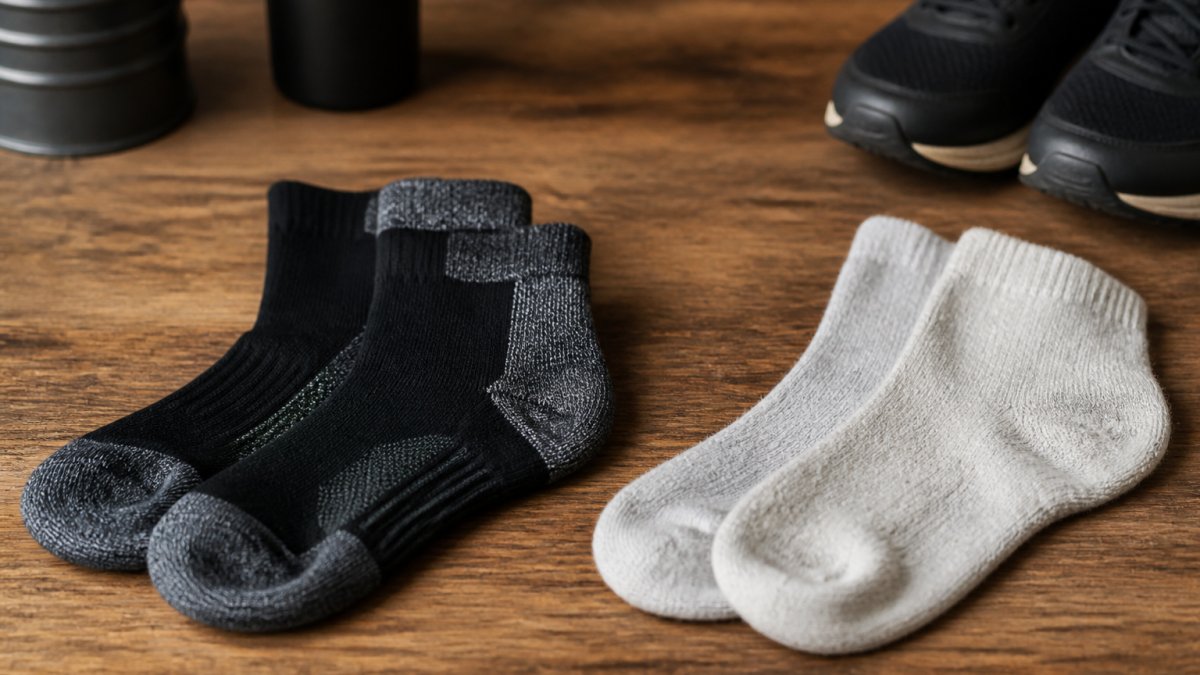
Blister prevention starts with reducing friction and managing moisture. Durable running socks achieve this through three mechanisms: moisture-wicking fibers that pull sweat away from skin, cushioning in high-impact areas like the heel and ball of the foot, and seamless or flat-seam construction that eliminates pressure points.
The heel is where most blisters form during running. Durable socks add reinforced material in this zone to absorb impact and reduce the repetitive friction that creates hot spots. Many runners don't realize a blister doesn't appear instantly, it develops gradually as friction heat builds. By the time you feel pain, the damage is already done. Socks designed for trail running address this by distributing pressure more evenly across the foot.
Arch support matters too. A sock that stays in place prevents bunching and shifting inside your shoe, which eliminates a major friction source. RockResist durable running socks feature non-slip construction that keeps the sock stable during high-movement activity, preventing the micro-movements that generate heat and lead to blisters.
Seamless toe construction is often overlooked but critical. The toe seam is a natural pressure point where blisters frequently form. Durable running socks either eliminate this seam or flatten it completely, reducing irritation during the push-off phase of your stride.
Moisture-Wicking vs Moisture Retention
Moisture-wicking and moisture retention are opposite functions, and they determine how your feet feel during and after a run. Moisture-wicking fabrics pull sweat away from your skin toward the outer layers of the sock where it can evaporate. Moisture retention means the fabric absorbs and holds that sweat against your skin.
Cotton is a moisture-retention fabric. It can absorb up to 27% of its own weight in water before feeling wet. This sounds like a benefit until you're mid-run and that moisture is trapped against your skin. Synthetic fibers used in durable running socks, like polyester and nylon, are hydrophobic, meaning they repel water. They don't absorb moisture; they shed it.
The practical difference is significant. A runner in cotton socks experiences progressive dampness that builds throughout the run. A runner in durable running socks stays relatively dry because moisture moves through the sock layers rather than accumulating. This keeps skin temperature stable, reduces friction, and prevents the maceration (softening and breakdown) of skin that leads to blisters.
Merino wool is a hybrid option. Unlike synthetic fibers, wool fibers are hydrophilic, they absorb moisture, but they manage it differently than cotton. Wool can absorb up to 30% of its weight in water while still feeling dry and maintaining its insulating properties. This is why merino wool socks are popular for cold-weather running. However, they're typically more expensive and require careful washing to prevent shrinking.
Preventing Debris in Running Shoes
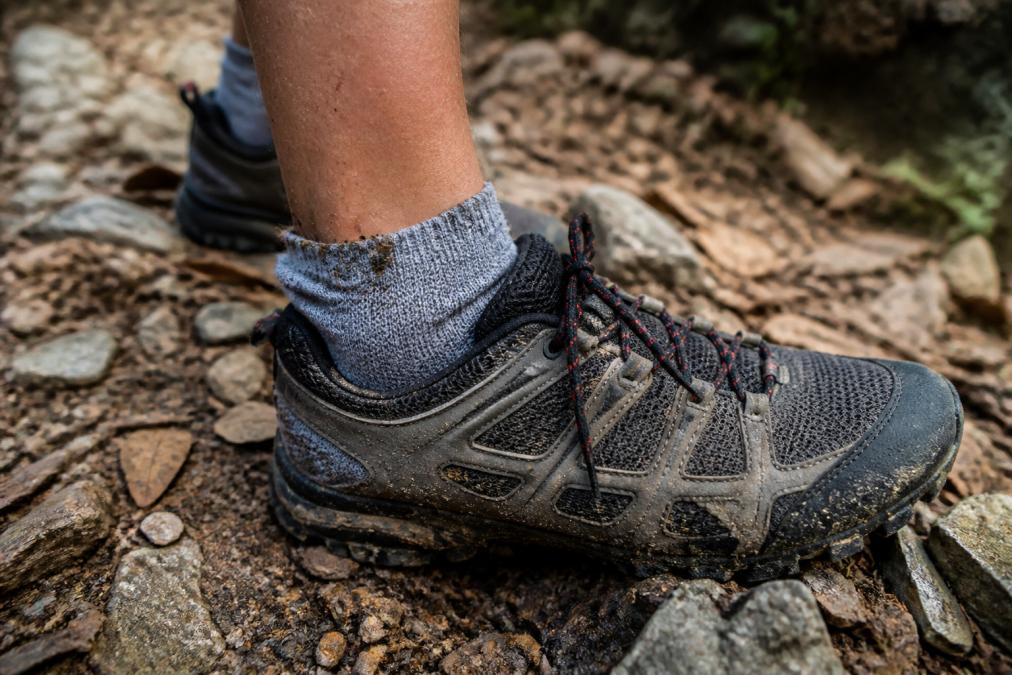
Trail running introduces a problem road running doesn't: debris. Sand, dirt, small rocks, and pine needles find their way into your shoe during every run. This debris creates friction against your sock and foot, accelerating blister formation and causing discomfort that builds with each mile.
Most runners try to manage this by stopping to shake out their shoes or wearing gaiters. A better solution is a sock designed with debris-blocking features. Durable running socks engineered for trail use include integrated barriers or cuffs that extend higher on the ankle, creating a shield at the shoe collar where debris typically enters.
RockResist GEN1 Trail Running Socks feature an integrated debris-blocking barrier that helps keep grit out where it usually sneaks in. The barrier can be worn up for loose terrain or tucked in for a lower-profile look depending on conditions. This two-way design gives you flexibility without requiring multiple sock purchases.
The mechanics are straightforward: a taller, structured cuff creates a physical barrier that debris has to pass through. Combined with a secure, non-slip fit that keeps the sock from sliding down during movement, this design significantly reduces the amount of foreign material that reaches your foot. Over a 10-mile trail run, this prevents dozens of micro-irritations that would otherwise accumulate into blisters or general foot discomfort.
Material Comparison: Synthetic, Wool, and Cotton
Understanding sock materials helps you choose the right option for your running style and conditions. Each material has distinct properties that affect moisture management, durability, temperature regulation, and cost.
RockResist GEN1 Trail Running Socks →
Synthetic Fibers (Polyester, Nylon, Terylene)
Synthetic fibers dominate performance running socks because they excel at moisture-wicking and durability. Polyester and nylon don't absorb water, they shed it. This keeps your feet dry during high-sweat efforts and prevents the progressive dampness that causes blisters. Synthetics also dry quickly, making them practical for runners who do back-to-back training days.
Durability is another synthetic advantage. These fibers resist degradation from repeated washing and high-friction use. A quality synthetic sock maintains its shape and elastic properties through dozens of wash cycles. The RockResist GEN1 socks use 75% cotton and 25% terylene.
Merino Wool
Merino wool is a premium natural fiber with unique properties that make it valuable for specific conditions. Merino fibers are finer and softer than regular wool, eliminating the itchiness associated with traditional wool socks. The fiber structure allows wool to absorb moisture while maintaining thermal regulation, it keeps your feet warm even when damp, which is why wool is preferred for cold-weather and alpine running.
Merino wool also has natural antimicrobial properties, reducing odor buildup compared to synthetics. However, merino socks cost significantly more than synthetic options and require gentle washing to prevent shrinking. They're best suited for runners prioritizing comfort and temperature management over pure durability and quick drying.
Cotton
Cotton is the baseline material for casual socks, and it's inadequate for running. Cotton absorbs moisture instead of wicking it, loses insulating properties when wet, and takes hours to dry. The fibers swell when saturated, increasing friction and blister risk. Cotton also degrades faster under the stress of running and repeated washing.
The only advantage cotton offers is comfort in the store, it feels soft initially. This initial feel is misleading because cotton's performance deteriorates quickly once you start sweating.
| Material | Moisture-Wicking | Drying Speed | Durability | Temperature Regulation | Cost | Best For |
|---|---|---|---|---|---|---|
| Synthetic (Polyester/Nylon) | Excellent | Fast | High | Neutral | Low-Moderate | Trail running, warm conditions, frequent washing |
| Merino Wool | Good | Moderate | Moderate | Excellent | High | Cold-weather running, temperature extremes |
| Cotton | Poor | Slow | Low | Poor | Low | Casual wear only, not recommended for running |
Durability and Long-Term Foot Health
Durability in running socks means two things: the sock maintains its structural integrity through repeated use, and it protects your feet from injury over time. A durable running sock resists degradation, maintains elastic support, and preserves its moisture-wicking properties through dozens of wash cycles.
Cheap socks, whether cotton or low-quality synthetics, lose their shape after 5-10 wears. The elastic weakens, the cushioning flattens, and the fibers begin to pill and degrade. This degradation directly impacts foot health. A sock that no longer fits securely allows shifting and movement inside your shoe, creating friction and blisters.
Care and Maintenance for Maximum Lifespan
How you care for your running socks directly impacts how long they perform. Proper maintenance extends the lifespan of durable socks and preserves their moisture-wicking and cushioning properties.
Frequently Asked Questions
Why are cotton socks bad for running?
Cotton absorbs moisture instead of wicking it away, leaving your feet damp and creating friction that leads to blisters. Wet cotton also loses its cushioning properties and takes hours to dry, increasing chafing risk during long runs. Durable running socks made from synthetic fibers or merino wool pull sweat away from your skin, keeping feet dry and reducing the conditions that cause skin irritation and foot fatigue.
How do durable running socks prevent blisters?
Durable running socks prevent blisters through moisture management, friction reduction, and reinforced construction in high-impact areas. Synthetic fabrics and merino wool wick sweat away from your skin, reducing dampness that causes blisters. Seamless toe construction and added cushioning at the heel eliminate friction points.
What material should running socks be made of?
The best running sock materials are synthetic fibers like polyester and nylon, or merino wool. These are hydrophobic or hydrophilic in ways that manage sweat effectively, unlike cotton which absorbs moisture. Synthetic blends offer durability and quick-drying properties, while merino wool provides natural thermal regulation and odor resistance. Many performance socks combine multiple fibers, for example, RockResist GEN1 socks use 75% cotton and 25% terylene.
Do running socks actually make a difference in performance?
Yes. The right running socks reduce blister formation, improve moisture management, and decrease foot fatigue, all of which impact race times and training consistency. Durable socks with proper arch support and cushioning in high-impact areas reduce the risk of injury and allow longer training sessions without discomfort. Poor sock choice forces you to stop runs early or skip training days due to foot pain, directly affecting your endurance gains.