
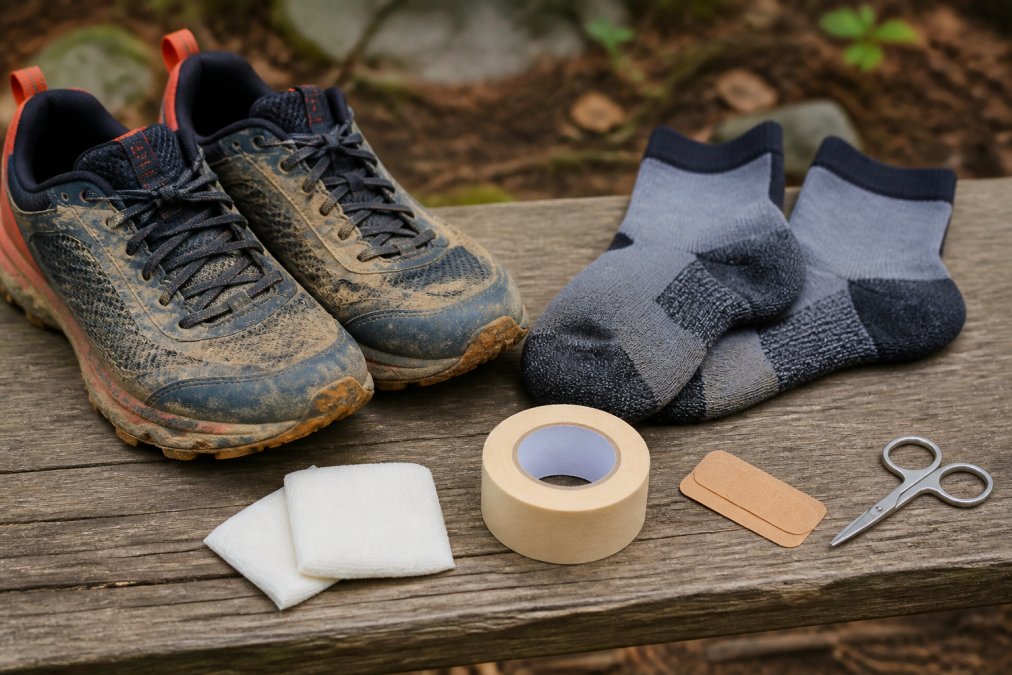
Table of Contents
- The Real Trade-Off: Debris Control vs. Moisture Management
- How to Prevent Blisters Trail Running: The Friction Foundation
- Moisture-Wicking Socks for Blister Prevention: Material Matters
- Debris Accumulation: The Hidden Friction Multiplier
- Footwear Fit and Gait Analysis: Where Prevention Starts
- Integrated Solutions: Combining Debris-Blocking and Moisture Control
- Practical Strategies for Long-Distance Trail Running
- Frequently Asked Questions
Last Updated: September 26, 2026
The Real Trade-Off: Debris Control vs. Moisture Management
When you're grinding out miles on technical terrain, your feet face two enemies that seem to fight each other. One is debris, sand, gravel, dirt particles that work their way into your shoe and create friction points. The other is moisture. Sweat builds up, softens your skin, and makes blisters more likely to form. Most trail runners think they have to choose between keeping feet debris-free vs prevents blisters for moisture management, but that's not quite right.
The truth is simpler. Both matter, but they matter in different ways depending on your terrain and how long you're running. Understanding which one poses the bigger threat in YOUR situation changes everything about how you gear up.
RockResist was built on this exact insight. After testing on Colorado's most demanding trails, we learned that debris and moisture aren't competing problems, they're connected. Debris creates friction points. Moisture softens the skin around those points. Together, they're the one-two punch that ends runs early.
The question isn't which one to fix. It's how to address both without one solution undermining the other.
How to Prevent Blisters Trail Running: The Friction Foundation
To prevent blisters trail running, start with understanding what actually causes them. Blisters don't form from running itself. They form from friction, specifically, the shear forces between your skin and the inside of your shoe.

When your foot moves inside your shoe, it creates heat and pressure. That friction breaks down the outer layer of skin. Add moisture to the equation, and that damaged skin separates from the layer underneath, filling with fluid. That's a blister.
On trails, the problem intensifies. Technical terrain forces your foot to shift and adjust constantly. Each micro-movement creates friction. Without proper protection, you're looking at hot spots forming within the first few miles.
Friction and Shear Forces on Technical Terrain
Rocky, uneven ground demands more from your feet. Your arch works harder. Your toes grip tighter. The constant micro-adjustments mean constant friction against your sock and shoe.
Here's what happens: as your foot moves side to side on loose terrain, the sock material rubs against your skin. If that sock is thin or poorly fitted, the friction multiplies. On smooth roads, you might get away with cheap socks. On technical trails, you won't.
The coefficient of friction between your skin and the sock material matters enormously. A rough, low-quality synthetic creates more friction than a smooth, engineered fiber. That's why material choice isn't just comfort, it's blister prevention.
Skin Maceration and Moisture's Role
Skin maceration is what happens when your skin stays wet too long. The outer layer softens and breaks down. Your skin becomes fragile.
When your feet sweat inside a shoe, that moisture doesn't evaporate, it gets trapped. Your skin absorbs water and becomes vulnerable. A blister that might never form on dry skin forms easily on macerated skin.
This is where moisture-wicking becomes non-negotiable. You need a sock that pulls sweat away from your skin and moves it outward, where it can evaporate. If your sock holds moisture against your skin, you're setting yourself up for blisters no matter how good the friction protection is.
Moisture-Wicking Socks for Blister Prevention: Material Matters
Moisture-wicking socks for blister prevention aren't just a nice feature, they're essential on trails where your feet will sweat for hours. The right material makes the difference between finishing strong and limping off the trail.
The key is understanding what "moisture-wicking" actually means. It's not about absorbing sweat. It's about moving sweat away from your skin and toward the outer layers of the sock where it can evaporate.
Cotton absorbs moisture and holds it against your skin. That's the opposite of what you need. Engineered synthetics and merino wool pull moisture away. They dry faster. Your skin stays drier longer.
Synthetic vs. Natural Fibers: Performance on the Trail
Synthetic fibers like polyester and terylene excel at moisture management. They pull sweat away from skin quickly and dry fast when exposed to air.
Natural fibers like merino wool also wick moisture, but they work differently. Merino can absorb up to 30% of its weight in moisture while still feeling dry. It regulates temperature and resists odor naturally.
RockResist GEN1 Trail Running Socks →
On the trail, synthetics tend to outperform in pure moisture-wicking speed. They're also more durable against the abrasion of rock and debris. Natural fibers offer comfort and temperature regulation that some runners prefer, but they wear faster on technical terrain.
RockResist GEN1 Trail Running Socks use a 75% cotton and 25% terylene blend. The integrated debris-blocking barrier adds another layer of protection by keeping grit out where it usually sneaks in, at the shoe collar.

Debris Accumulation: The Hidden Friction Multiplier
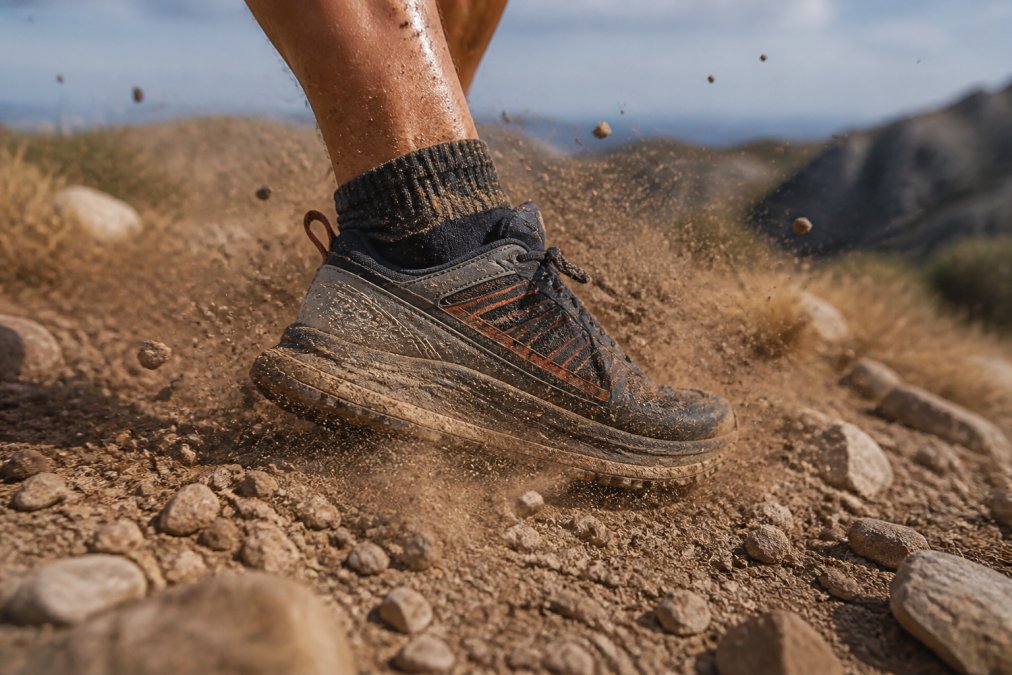
Debris inside your shoe isn't just annoying, it's a friction multiplier that becomes exponentially more damaging when combined with moisture. A single grain of sand or gravel creates a localized pressure point. That point rubs your skin with every step, generating heat and friction. Over hours of running, that becomes a blister. But here's what most runners miss: debris and moisture don't just coexist, they accelerate each other's damage.
When debris is dry, it creates friction and pressure. When that same debris mixes with sweat (which is inevitable on trails), it becomes an abrasive paste. Wet sand and grit particles embed themselves into the sock fibers and press harder against your skin. Simultaneously, the moisture surrounding the debris softens your skin through maceration, making it more vulnerable to the friction the debris creates. This one-two punch, mechanical abrasion plus skin softening, is why runners often develop blisters at debris-prone areas (typically the ball of the foot and heel) even when their socks are technically moisture-wicking.
The location where debris accumulates matters enormously. Sand and grit naturally migrate to the lowest points in your shoe: the heel pocket and the ball of the foot. These are already high-friction zones during running. Adding debris to these areas concentrates the damage. In sandy or desert environments, debris accumulation can begin within the first mile.
The solution isn't just wearing tight socks or changing socks frequently. It's preventing debris from entering in the first place through a physical barrier at the sock cuff and shoe collar, the primary entry point for grit. A debris-blocking design (a reinforced, slightly extended cuff or integrated gaitering) stops sand and gravel before they get inside. You're not managing the problem after it starts; you're preventing it from starting. This is especially critical on loose terrain (sand, gravel, scree) where debris load is highest. On packed trails, debris prevention is less critical, but on technical terrain with exposed rock and loose soil, it becomes as important as moisture management itself.
Footwear Fit and Gait Analysis: Where Prevention Starts
Even the best socks can't overcome poor footwear fit. If your shoe is too loose, your foot moves inside it constantly. That movement creates friction. If your shoe is too tight, you're creating pressure points that lead directly to blisters.
Proper fit means your heel stays locked in place during the push-off phase. Your midfoot stays stable through the turn. Your toes have room to splay slightly without the shoe pressing down.
Gait analysis helps you understand how YOUR foot moves. Some runners overpronate. Others supinate. Some have high arches. Others are flat-footed. Your gait affects where pressure points form. Understanding your gait helps you choose shoes and socks that work with your running pattern, not against it.
On technical terrain, this becomes critical. Loose terrain forces your foot to make micro-adjustments. If your shoe doesn't fit properly, those adjustments create extra friction. If your socks aren't engineered to handle that friction, blisters follow.
Integrated Solutions: Combining Debris-Blocking and Moisture Control
The best approach combines both strategies. You need socks that wick moisture AND block debris. You need shoes that fit properly AND allow your foot to move naturally on uneven ground.
Start with footwear fit. Get properly fitted for trail shoes.
Practical Strategies for Long-Distance Trail Running
For runs over 10 miles, prevention becomes exponentially more important. Small friction points that don't blister in 5 miles will blister in 15.
Frequently Asked Questions
What causes blisters on trail runs, and how does debris make them worse?
Blisters form when friction and shear forces damage the epidermis, especially when skin is already softened by sweat and moisture (skin maceration). Debris, sand, grit, and small rocks, amplifies friction by creating uneven pressure points inside your shoe. A single grain of sand trapped between your sock and skin multiplies the coefficient of friction, turning normal movement into sustained abrasion. This is why many runners experience blisters on rocky trails even when they stay dry.
How do moisture-wicking socks for blister prevention actually work differently from regular socks?
Moisture-wicking socks pull sweat away from your skin toward the outer surface where it evaporates, preventing the skin maceration that softens the epidermis and makes it vulnerable to blistering. Synthetic fibers actively transport moisture, while natural fibers absorb it and hold it. By managing sweat, moisture-wicking materials reduce the time your skin spends in a weakened, macerated state, which dramatically decreases blister risk even during high-intensity trail running.
Should I prioritize keeping debris out or keeping moisture away during a long trail run?
Both matter, but moisture management is the foundation. Skin maceration from sweat creates the vulnerability; debris exploits it. Socks with integrated debris-blocking barriers and moisture-wicking fibers address both simultaneously. On technical terrain with loose rock and sand, a barrier that prevents debris from entering at the collar becomes critical. However, if sweat is trapped against your skin, even the best debris protection won't prevent blisters. The most effective approach combines moisture management with debris control.
How often should I change socks during a trail run to prevent blisters?
For runs under 2 hours on moderate terrain, one pair of high-performance moisture-wicking socks is usually sufficient. For ultra-marathon or multi-hour efforts, consider changing socks at the halfway point or when you notice significant moisture buildup. Fresh socks restore the moisture-wicking capacity and eliminate accumulated debris that may have penetrated the barrier. Preventative taping on high-pressure areas can extend sock life between changes, but on extremely technical terrain, a fresh pair with intact debris-blocking features is worth the weight.