
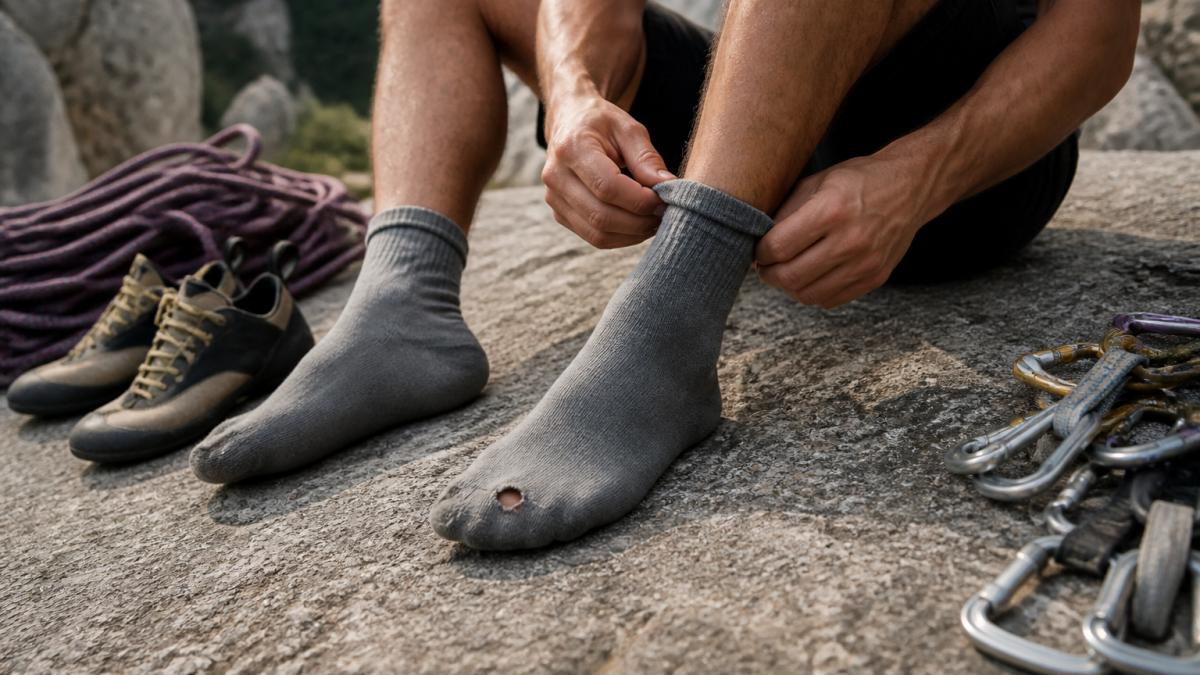
Table of Contents
- How Long Do Climbing Socks Last: Real-World Lifespan
- Do You Wear Socks With Climbing Shoes
- Key Factors That Shorten Sock Lifespan
- Best Socks for Climbing Shoes: Material and Construction
- How to Prevent Holes in Climbing Socks
- Signs of Wear and When to Replace
- Maximizing Durability for Your Climbing Discipline
- Frequently Asked Questions
Last Updated: September 27, 2026
How Long Do Climbing Socks Last: Real-World Lifespan
How long climbing socks last depends on several factors, but climbing socks don't last forever. Most climbers get between 50 to 100 days of active use before they need replacement. But that number depends on how hard you push them, what terrain you're climbing, and whether you're taking care of them properly.
RockResist socks have been tested on rugged Colorado trails. The socks that last longest share one thing in common: they're built for abuse and maintained like gear that matters. The ones that fall apart fast? They usually fail because climbers treat them like regular socks.

This guide walks you through how long climbing socks actually last, what destroys them fastest, and how to extend their life. If you're tired of replacing socks every few weeks, there's a better way.
Do You Wear Socks With Climbing Shoes
Yes, you should wear socks with climbing shoes. This is the first decision that affects how long your socks will last.
Climbing shoes are tight by design. They need to be. That pressure and friction creates heat and moisture. Without socks, your skin contacts rough shoe interiors directly. Blisters form faster. Fungal infections become more likely. Your feet smell worse after a session.
Socks create a barrier between your foot and the shoe. They absorb sweat. They reduce friction at pressure points. They keep debris out. The right socks make climbing more comfortable and protect your skin from damage.
Why climbers skip socks (and why they shouldn't):
- Belief that socks reduce sensitivity, they don't, if you choose the right ones
- Assumption that tighter fit without socks improves performance, false
- Habit from years of climbing barefoot in shoes, old patterns die hard
The trade-off is real: socks add volume inside an already-tight shoe. You might need to downsize your shoe by half a size. But that's a one-time adjustment. The foot health benefits last every single session.
Key Factors That Shorten Sock Lifespan
Several forces work against your socks every time you climb. Understanding these factors helps you pick socks that survive longer and care for them better.
Abrasion and Friction Inside the Shoe
The biggest killer of climbing socks is simple friction. Your foot moves inside the shoe. The sock rubs against rough rubber edges, textured insoles, and sharp seams. Over time, fibers break down.
Climbing shoes have high-wear areas. The heel collar grinds against sock fabric constantly. The ball of your foot, where you stand on small holds, takes repeated pressure. The toe box compresses your toes against abrasive rubber.
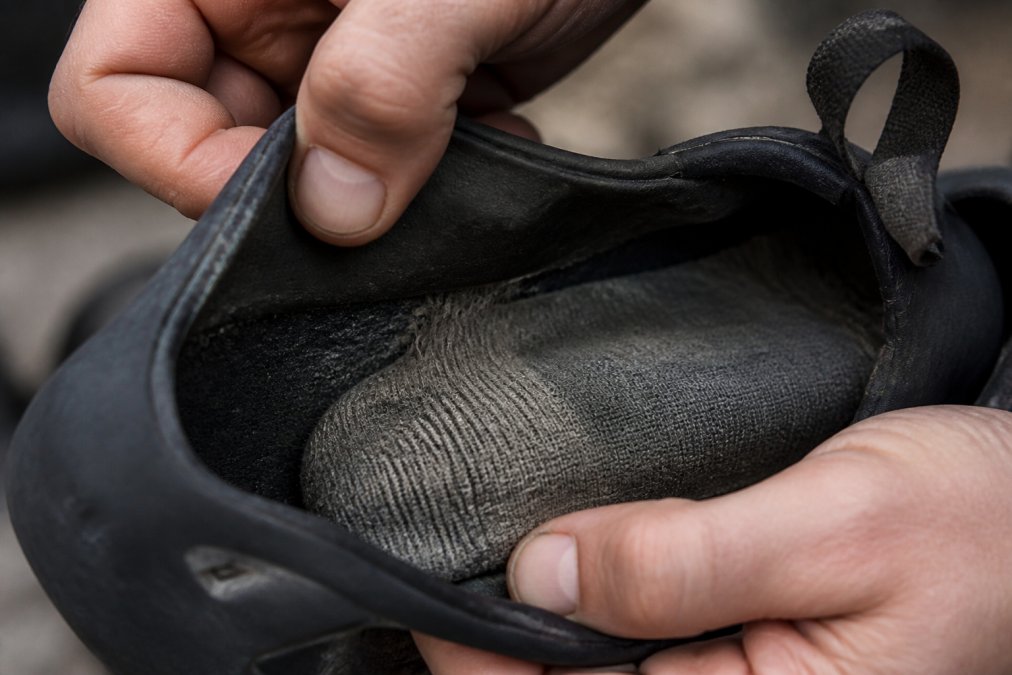
This is where material choice matters. Synthetic fibers like polyester and nylon resist abrasion better than merino wool. They don't pill as easily. They don't thin out as fast. Cotton, common in cheaper socks, shreds under this kind of punishment.
High-wear zones in climbing shoes:
- Heel collar (constant rubbing during foot movement)
- Ball of foot (pressure from small hold contact)
- Toe box (compression and friction)
- Inside ankle (seam contact during tight fit)
RockResist socks are built for this. The reinforced heel material reduces friction at the collar. The synthetic blend resists pilling and degradation. You get more climbing days before holes appear.
Moisture, Sweat Acidity, and Fiber Degradation
Your feet sweat during climbing. That sweat is acidic. Acid breaks down fibers over time.
This is the factor most climbers don't think about. It's not just about staying dry. Sweat creates a chemical environment that degrades certain materials faster than others. Cotton absorbs sweat and holds it against the fiber, accelerating breakdown. Merino wool is naturally antimicrobial but can still degrade under constant acidic exposure.
Synthetic fibers handle moisture better. They dry faster. They resist the chemical breakdown that acid causes. A good moisture-wicking sock moves sweat away from your foot and lets it evaporate through the shoe.
The more you climb, the more sweat exposure your socks take. A climber doing three sessions per week loads their socks with moisture stress that a casual climber avoids. Your sock lifespan shrinks proportionally.
Downsizing and Foot Volume Pressure
Most climbers downsize their shoes when they add socks. That's necessary for fit. It's also hard on sock fabric.
Smaller shoes mean tighter pressure everywhere. The sock compresses against your foot and the shoe interior. This constant compression accelerates fiber fatigue. It's like bending a piece of metal back and forth until it breaks. Eventually the material gives.
The worse your downsize choice, the faster your socks fail. If you drop two full sizes instead of half a size, you're crushing the sock material. It won't last long.
This is why fit precision matters. RockResist recommends true-to-size selection. You downsize the shoe, not the sock. The sock stays at your actual foot size, giving you the compression durability you need.
Best Socks for Climbing Shoes: Material and Construction
Not all climbing socks are created equal. Material and construction determine how long they'll last.
RockResist Trail Running Sock Bundle, 3 →
Synthetic blends (polyester, nylon, terylene) outperform natural fibers for climbing. They resist abrasion better. They dry faster. They don't degrade as quickly under acidic sweat exposure. They maintain their shape through repeated compression.
Merino wool is popular for temperature regulation and odor control. But it's not ideal for climbing. Merino pills under abrasion. It degrades faster in acidic moisture. It's better suited to approach shoes and hiking than technical climbing.
Cotton should be avoided entirely for climbing. It absorbs sweat and holds it. It degrades quickly under pressure. It develops holes faster than any other material.
Construction details that extend lifespan:
- Reinforced heel and toe: Extra material in high-wear zones
- Seamless or flat-seam construction: Reduces friction points
- Moisture-wicking fibers throughout: Not just on the surface
- Tight knit density: Prevents pilling and fiber separation
- Arch support: Reduces foot movement inside the shoe
The RockResist Trail Running Sock Bundle ($58.48 for three pairs) is engineered for this. The integrated barrier helps block dirt, sand, and small trail debris at the shoe collar. The added heel material helps reduce friction at the collar. The secure, non-slip construction helps keep the sock in place. You get three pairs, which means you can rotate them and let each pair recover between climbs.

How to Prevent Holes in Climbing Socks
Holes are inevitable if you climb enough. But you can slow them down significantly with the right practices.
Rotate your socks. Don't wear the same pair two days in a row. Fibers need time to recover from compression. Moisture needs time to evaporate completely. A pair that rests for two days lasts longer than one worn back-to-back.
Wash them properly. Use cold water and gentle detergent. Hot water accelerates fiber degradation. Aggressive washing damages the knit. Air dry them. Dryers create heat that weakens fibers. Hang them in a cool, dry place.
Trim your toenails. Long nails pierce socks from the inside.
Repair vs. Replace: When to Extend Life
Small holes can be repaired. Large holes or multiple holes mean replacement time.
Repair makes sense when:
- You have one small hole (less than half an inch)
- The rest of the sock is intact
- The hole is not in a high-wear zone (heel, ball of foot, toe)
- You have a needle and thread or a patch kit
How to repair a climbing sock:
- Turn the sock inside out
- Use a needle and thread that matches the sock color
- Sew around the hole in a small cross-stitch pattern
- Keep stitches tight but not so tight they pucker the fabric
- Turn the sock right-side out and inspect the repair
Replace when:
- You have multiple holes
- The hole is in a high-wear zone
- The sock is thin or pilled throughout
- The repair would be larger than the original hole
- The sock is more than 100 days old
Signs of Wear and When to Replace
Knowing when to replace your socks prevents mid-climb failures and foot damage.
Visual signs of wear:
- Pilling: Small balls of fiber forming on the surface, especially the heel
- Thinning: Fabric looks translucent or feels paper-thin
- Discoloration: Permanent staining or color fading that won't wash out
- Seam separation: Threads pulling away from the main fabric
- Holes: Any size hole in high-wear zones
Performance signs of wear:
- Loss of cushioning: The sock feels flat and offers no padding
- Slipping: The sock slides down inside your shoe during climbing
- Moisture retention: Your foot feels wet even after the sock dries
- Odor that won't wash out: Bacteria has compromised the fibers
Timeline for replacement:
- Light climbers (1-2 sessions per week): 6-8 months
- Regular climbers (3-4 sessions per week): 3-4 months
- Intense climbers (5+ sessions per week): 1-2 months
Maximizing Durability for Your Climbing Discipline
Different climbing styles stress socks differently. Optimize your approach based on what you climb.
Frequently Asked Questions
Why do many rock climbers prefer not to wear socks?
Some climbers skip socks for maximum sensitivity and direct foot-to-shoe contact, believing it improves friction and tactile feedback on rock. However, socks designed for climbing, especially those with abrasion resistance and moisture-wicking properties, can extend shoe life and prevent blisters without sacrificing performance. The choice depends on your climbing discipline and personal comfort preference.
How can you tell when climbing socks are worn out?
Look for visible holes or thinning in high-wear areas like the heel, toe box, and ball of the foot. Socks that no longer provide cushioning, show signs of fiber degradation, or allow increased friction inside your shoe are past their effective lifespan. If you notice blisters forming or enhanced sensitivity to rough rubber, your socks need replacement.
Do specialized climbing socks last longer than standard athletic socks?
Yes. Climbing socks engineered with reinforced seams, synthetic fibers, and abrasion-resistant construction outlast generic athletic socks significantly. Materials designed to handle repeated rock contact and moisture management resist fiber degradation better. RockResist socks, for example, feature reinforced construction and moisture-wicking fibers that extend durability through high-wear activities.
What is the impact of downsizing climbing shoes on sock lifespan?
Downsizing for performance fit increases foot volume pressure and friction inside the shoe, accelerating sock wear. Tighter fit creates more abrasion on the toe box and heel areas. If you downsize, expect socks to wear faster and plan to replace them more frequently. Proper sock selection becomes even more critical in downsized shoes to manage friction and prevent blister formation.