
Table of Contents
- Socks vs. No Socks: What Beginners Should Know
- How Sock Thickness Affects Climbing Shoe Performance
- Choosing the Best Socks for Climbing Shoes
- How to Prevent Blisters in Climbing Shoes
- Climbing Shoe Fit Guide for Beginners
- Sock Care and Long-Term Shoe Maintenance
- Conclusion
- Frequently Asked Questions
Last Updated: September 14, 2026
Socks vs. No Socks: What Beginners Should Know
Most climbing gyms are full of barefoot climbers, and that tradition has convinced a generation of beginners that socks are optional. The truth is simpler: whether to wear climbing socks comes down to your shoe, your discipline, and how much you hate blisters.
Climbing shoes are designed to be worn tight, and a bare foot inside that tightness creates direct skin-to-rubber contact. That contact generates friction, and friction generates blisters. This guide from RockResist breaks down how to choose climbing socks for beginners, from fabric selection to fit, so your first season on the wall doesn't end with bandaged heels.
Here's the part most gym regulars won't tell you: bouldering sessions are short, so going barefoot works fine. Sport climbing routes and multi-pitch days are a different story. Hours of repeated foot placements inside a stiff shoe will punish bare skin.
How Sock Thickness Affects Climbing Shoe Performance
Sock thickness directly changes how a climbing shoe fits and performs. A thin climbing sock preserves the snug fit your shoe was designed around, while a thick sock can push your toes into a cramped position and dull the sensitivity you need for precise footwork.
Climbing shoes are sized with almost no extra room. Adding a bulky sock is like adding a half size to the shoe, and that changes everything:
- Sensitivity drops. You feel the rock through the rubber, and thick cushioning muffles that feedback.
- Toe box pressure increases. Cramped toes lose circulation on long routes.
- Heel tension changes. A thicker sock can make the heel cup slip during heel hooks.
Thin profile socks, usually under 2 millimeters, keep the shoe's intended fit intact (rei.com). If you already sized your shoes tight, stick with minimal cushioning.
Choosing the Best Socks for Climbing Shoes
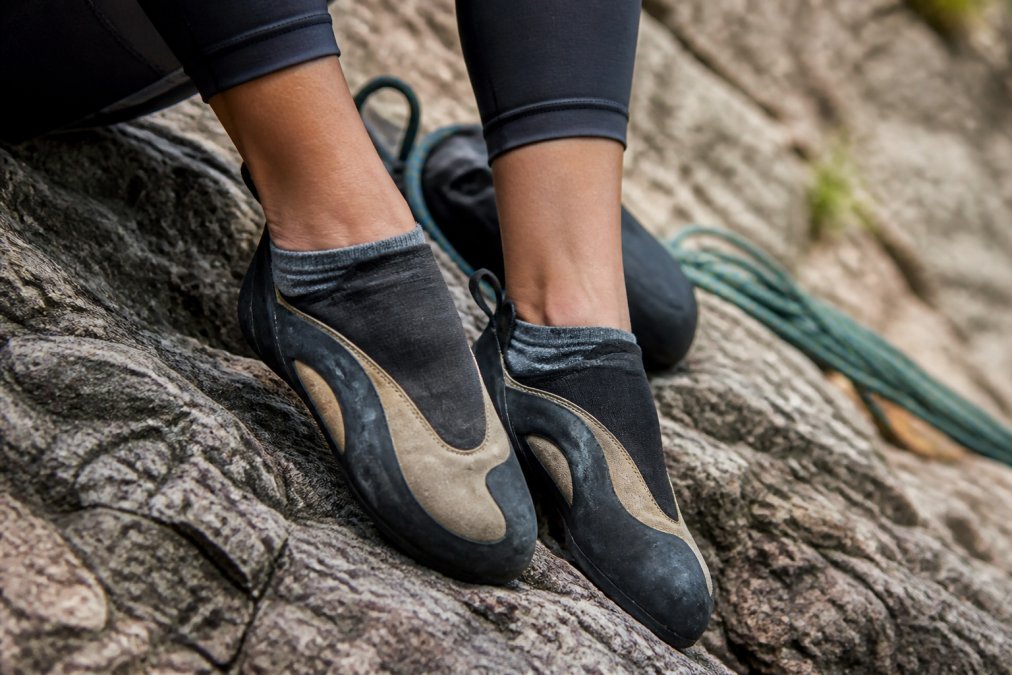
The best socks for climbing shoes are thin, seamless, and made from moisture-wicking material that hugs the foot without bunching. Merino wool and quality synthetics both work, but the construction matters as much as the fiber. A climbing sock is not a running sock with a different label, it is engineered around the unique demands of a shoe that is sized to fit like a second skin.
Merino Wool vs. Synthetic Fabrics
The fiber you choose determines how the sock behaves when your foot sweats, when the temperature drops, and when the sock gets wet. Here is how the two main options actually differ:
- Merino wool fibers have a natural crimp that traps air, which is why merino regulates temperature across a wide range. The fiber's outer layer is hydrophobic and its core is hydrophilic, so it pulls moisture off your skin and holds it away from the surface. Merino also resists odor because the fiber's structure makes it inhospitable to the bacteria that produce smell (pubmed.ncbi.nlm.nih.gov). The trade-off is durability: fine merino wears through faster than synthetic at the heel and toe, and it costs more.
- Synthetic fibers like polyester, nylon, and spandex dry faster than wool and hold up better to repeated abrasion inside a tight shoe. Polyester wicks moisture through capillary action along the fiber surface, and nylon adds strength and shape retention. The trade-off is odor: synthetics harbor bacteria more readily and need more frequent washing.
- Blends combine a merino or synthetic base with spandex or elastane for stretch. A common blend is around 60-75% merino or polyester with 20-30% nylon and 5-10% spandex (textileschool.com). The spandex is what lets the sock conform to your foot instead of sliding around inside the shoe.
For hot gym sessions, synthetics win on drying speed and durability. For cold-weather outdoor climbing, merino holds warmth even when damp, which matters on multi-pitch routes where your feet stay in the shoe for hours.
Seamless Construction and Snug Fit
Seams are where blisters start. A seam rubbing against your heel or toes under load creates a pressure point within minutes. Seamless construction removes that risk entirely by knitting the sock as a continuous tube rather than stitching panels together.
Look for a snug fit with stretchy material that moves with your foot. The sock should feel like a second skin, not a loose layer. Two construction details separate a climbing sock from a general athletic sock:
- A contoured heel pocket that cups the heel bone instead of sitting flat. A flat heel lets the sock shift during heel hooks and edging, which is where bunching begins.
- A graduated or arch band that hugs the midfoot. This keeps the sock from migrating forward into the toe box when you point your toes on small holds.
Why Sock Height Matters in a Climbing Shoe
Cuff height is not just a style choice. A low-cut sock sits below the shoe's collar, which keeps it out of the way but leaves the ankle exposed to the shoe's edge and to debris on outdoor routes. A crew or mid-calf sock covers the ankle and can protect against the shoe's upper digging in during heel hooks, but it adds a layer of fabric that can bunch at the collar if the fit is loose. For most beginners, a low-cut or quarter-height sock is the right starting point; move to a crew height only if you are climbing outdoors in cold weather or on routes with a lot of debris.
How to Prevent Blisters in Climbing Shoes
Blisters in climbing shoes come from three sources: friction, moisture, and pressure. Control all three and you eliminate most blister risk before it starts.
Moisture-wicking fibers pull sweat away from skin, so your foot stays drier and friction drops. A snug fit stops the sock from shifting, which removes the rubbing that causes hot spots. This is exactly why sock choice matters more than most beginners expect.
Moisture Management and Foot Hygiene
Foot sweat softens skin and makes it far more vulnerable to blistering. Change socks after heavy sessions, let your climbing shoes air out between uses, and rotate pairs so each one dries completely.
For climbers dealing with debris on outdoor routes, a sock with a debris-shielding cuff keeps grit from working its way into the shoe. RockResist builds this into its RockResist GEN1 Road & Trail Low Cut Athletic Socks, which use a polyurethane debris barrier to block sand and gravel while reducing friction at the heel collar.

Climbing Shoe Fit Guide for Beginners
Getting the shoe fit right is half the battle. Climbing shoes should feel snug but not painful, with toes flat or slightly curled depending on the shoe's shape. A neutral fit suits beginners; aggressive downturned shoes are for advanced terrain.
| Shoe Type | Toe Position | Best For | Sock Recommendation |
|---|---|---|---|
| Neutral | Flat | Beginners, all-day comfort | Thin sock or barefoot |
| Moderate | Slight curl | Sport climbing | Thin climbing sock |
| Downturned | Strong curl | Steep bouldering | Barefoot or liner sock |
Sizing runs small by design. Try shoes on with the socks you plan to wear, ideally later in the day when feet are slightly swollen. If your toes curl painfully, size up.
How Socks Interact with Shoe Volume and Stretch
This is the part most beginner guides skip, and it is where sock choice quietly changes your gear's lifespan. A climbing shoe is built around a specific internal volume, the amount of space inside the shoe. When you add a sock, you are filling part of that volume. A thin liner sock (under 2 millimeters) takes up almost no volume, so the shoe fits as designed. A thicker sock can consume enough volume to make a correctly sized shoe feel a half size too small.
The bigger long-term issue is stretch. Leather climbing shoes stretch more than synthetic ones, and they stretch most in the direction of force, usually lengthwise and across the toe box. Here is how socks change that:
- Wearing a thick sock during break-in can stretch the shoe around the sock's bulk. Once the sock compresses or you switch to a thinner sock, the shoe feels loose and you lose precision.
- Wearing a thin sock or going barefoot during break-in lets the shoe stretch to your actual foot shape. This is the fit you want to keep.
- Synthetic shoes stretch less than leather, so the sock you break them in with matters less, but they also do not conform to your foot as much, so getting the volume right from the start is more important.
A common pattern among experienced climbers is to size shoes with the exact sock (or no sock) they plan to climb in, and to break the shoe in that way. If you plan to climb barefoot in the gym and with a thin sock outdoors, size for the barefoot fit and accept that the outdoor fit will be slightly tighter.
Matching Socks to Specific Shoe Types
Shoe shape changes what a sock does inside it:
- Neutral, flat shoes have a roomier toe box and less tension across the top of the foot. A thin or medium sock fits comfortably here without cramping your toes. These are the most forgiving shoes for beginners who want to wear socks.
- Moderate, slightly downturned shoes put more pressure on the toes and the top of the foot. A thin sock is the safe choice; a medium sock can create pressure points over the knuckles of your toes.
- Aggressive, strongly downturned shoes are built for steep terrain and are sized very tight. Adding any sock beyond a liner changes the fit enough to reduce sensitivity and cause toe pain. Most climbers in this category go barefoot or wear the thinnest liner available.
A Practical Fitting Routine
- Bring the socks you plan to climb in to the shoe try-on. Do not guess.
- Try shoes on late in the day, when your feet are at their largest.
- Stand on a small edge or the edge of a step to simulate weighting the toe. Your toes should be flat or slightly curled, not jammed.
- Walk around for a few minutes. If the sock bunches at the heel or the shoe's collar digs into your ankle, the fit or the sock is wrong.
- If you are between sizes, size for the tighter fit only if the shoe is synthetic; leather will stretch to accommodate. If the shoe is leather and already snug, do not size down further.
Sock Care and Long-Term Shoe Maintenance
How you wash and store your socks affects both their lifespan and your shoe's. Machine wash cold and air dry to preserve elasticity and moisture-management fibers. Heat destroys stretchy material fast.
For shoes, let them dry fully between sessions and avoid leaving them in a hot car, which breaks down rubber and adhesives. Rotating two pairs of socks extends both the socks and the shoe's interior.
A common mistake is tossing sweaty socks into a gym bag and forgetting them. That trapped moisture breeds odor and breaks down fibers. Wash after every few sessions.
Conclusion
The right climbing socks solve a problem most beginners don't see coming until their first long route. Thin profile, seamless construction, and moisture-wicking fibers keep your feet dry and your footwork precise.
RockResist designs gear for exactly this kind of punishment, with debris-shielding cuffs, reinforced seams, and moisture-management fibers tested on rugged terrain. If you want socks built to prevent blisters and keep debris out of your shoes, add the GEN1 to your cart and focus on the climb instead of your feet.
Frequently Asked Questions
Do you actually need to wear socks with climbing shoes?
It depends on your priorities. Many experienced climbers go sockless for maximum sensitivity and a precise fit, especially in downturned shoes for bouldering. However, beginners often benefit from wearing thin climbing socks to reduce friction, manage moisture, and prevent blisters. If you are prone to foot sweat or odor, socks help. Try both ways during your first few sessions and see which feels better for your climbing style.
What material is best for climbing socks to prevent blisters?
Merino wool and synthetic fibers like polyester and nylon are the top choices. Merino wool offers natural moisture-wicking, breathability, and odor resistance. Synthetics dry faster and are more durable for abrasive rock contact. Look for seamless construction and a snug fit to reduce pressure points and friction. Avoid cotton, which holds sweat and causes blisters. RockResist socks use moisture-management fibers and reinforced seams to keep feet dry and comfortable.
How do climbing socks affect the fit of my shoes?
Sock thickness changes how your shoe fits. A thin, minimal-cushion sock keeps the shoe snug and sensitive, ideal for precise footwork. A thicker sock adds volume, which can make tight shoes uncomfortable and cause pressure points. For beginners, start with a thin profile sock that matches your shoe's intended fit. If your shoes feel too loose, a slightly thicker sock can help, but avoid bunching, which leads to blisters and reduced performance.
Should beginners prioritize comfort or sensitivity when choosing socks?
Comfort should come first for beginners. Sensitivity matters for advanced footwork, but early on you need to build foot strength and avoid blisters that sideline your sessions. Choose a thin, snug sock with moisture-wicking properties and seamless construction. RockResist GEN1 Road & Trail Low Cut Athletic Socks, priced at $25.99, offer a debris barrier and friction reduction at the heel collar, which helps prevent blisters while you focus on climbing.