
Table of Contents
- How Injinji and Standard Hiking Socks Compare at a Glance
- Blister Prevention for Hikers: Toe Socks vs Traditional Construction
- Merino Wool Hiking Socks Benefits and Where Synthetics Fit In
- Toe Alignment, Foot Dexterity, and Putting Socks On
- Durability and Wear Patterns on Rugged Terrain
- Sizing, Fit, and Compatibility With Different Footwear
- Activity-Specific Picks: Thru-Hiking, Trail Running, and Climbing
- Conclusion
- Frequently Asked Questions
Last Updated: September 13, 2026
How Injinji and Standard Hiking Socks Compare at a Glance
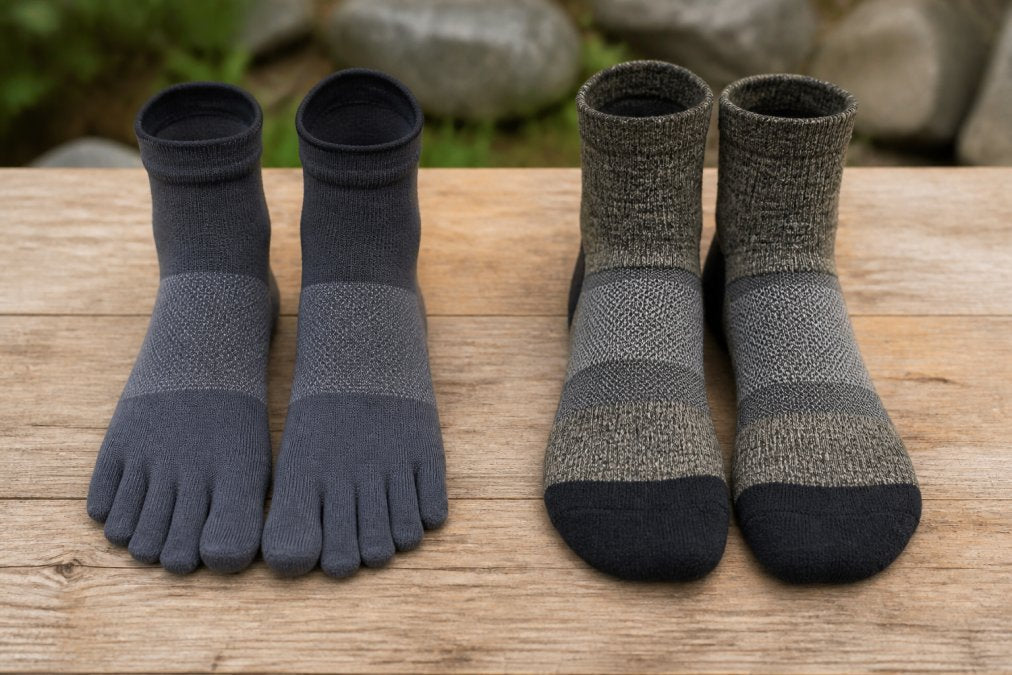
Blister prevention for hikers comes down to one mechanical problem: friction between skin surfaces and the inside of your boot. Injinji toe socks wrap each toe individually to eliminate skin-on-skin rubbing, while standard hiking socks rely on a single tube of fabric and cushioning to manage the same forces. RockResist builds its line around a different solution entirely, a debris-shielding cuff that keeps grit out of the shoe before friction ever starts.
The table below summarizes the core differences before we dig into each one.
| Feature | Toe Socks (Injinji) | Standard Hiking Socks | RockResist GEN1 |
|---|---|---|---|
| Toe separation | Yes, five individual sleeves | No | No |
| Debris blocking | Minimal | Minimal | Patented polyurethane barrier |
| Moisture-wicking | Synthetic or merino blend | Varies by fiber | Moisture-management fibers |
| Best for | Toe-blister-prone hikers | General trail use | Debris-heavy, rugged terrain |
| Price | Mid to high | Low to mid | $25.99 |
Blister Prevention for Hikers: Toe Socks vs Traditional Construction
Blister prevention for hikers depends on reducing three things: friction, moisture, and debris inside the shoe (peer-reviewed research). Toe socks attack friction directly by separating each toe. Standard hiking socks attack it through cushioning and fit. Neither approach addresses debris, which is where most blister guides stop short.

Friction Reduction and Hot Spots
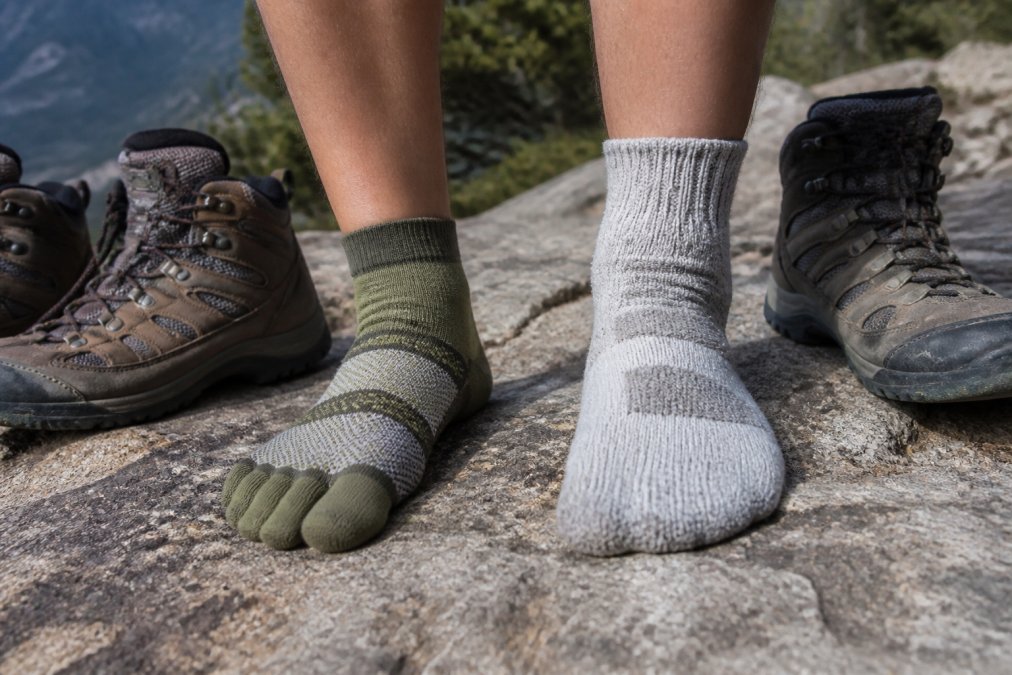
Hot spots form where repeated shear force breaks down the skin's outer layer. Toe socks reduce this by eliminating skin-on-skin friction between adjacent toes, which is where many hikers develop blisters first. Standard socks reduce friction through cushioning at the heel and ball, but they cannot stop toes from rubbing together.
A common mistake is assuming thicker cushioning solves friction. It reduces pressure, not shear. If your blisters cluster between toes, cushioning will not fix the underlying cause.
Moisture Control and Sweat Management
Sweat softens skin and makes it more vulnerable to friction damage (peer-reviewed research). Toe socks made from merino wool or synthetic blends wick moisture away from each toe individually. Standard socks wick across the whole foot but can trap moisture between toes where airflow is limited.
The material matters more than the construction here. A poorly chosen fiber will underperform regardless of whether it separates toes.
Merino Wool Hiking Socks Benefits and Where Synthetics Fit In
Merino wool hiking socks benefits center on thermal regulation, odor resistance, and moisture handling across a wide temperature range (peer-reviewed research). Synthetics dry faster and cost less, but they hold odor and feel cooler when wet. Most quality hiking socks now use a synthetic blend to balance both.
Thermal Regulation and Breathability
Merino regulates temperature by trapping air in its crimped fibers while still breathing. That makes it effective in cold mornings and warm afternoons on the same trail. Synthetics move moisture faster but offer less insulation when temperatures drop.
For thru-hiking and multi-day trips, many hikers find a merino-synthetic blend outperforms either fiber alone. It dries quickly, resists odor, and holds up to repeated washing.
Toe Alignment, Foot Dexterity, and Putting Socks On
Toe socks take longer to put on because each toe has to be seated in its own sleeve. That extra 30 seconds per foot is the tradeoff for toe separation and improved foot dexterity on technical terrain. Standard socks slide on in seconds but offer no alignment benefit.
For climbers and trail runners who rely on toe splay for balance and grip, that dexterity matters. For most day hikers, it does not.
Durability and Wear Patterns on Rugged Terrain
Durability is where the toe-sock versus standard-sock debate gets the least honest treatment. Most reviews say "they held up great" or "they wore out fast" without saying how many miles, on what surface, or at which failure point. A structured wear log tells a more useful story.
Where Each Construction Fails First
Toe socks concentrate independent abrasion on five separate sleeves. The first failures typically show up at the tip of the big-toe and pinky-toe sleeves, where the fabric wraps a narrow, high-contact surface and rubs against the adjacent sleeve. The second failure zone is the seam between the toes, where repeated flexing stresses the knit.
Standard hiking socks fail differently. Because the fabric is a single tube, pressure and shear concentrate at the heel pocket and the ball of the foot. Heel blowouts and thin spots under the metatarsal heads are the classic end-of-life markers. On abrasive granite, scree, and talus, both constructions lose yarn mass at roughly similar rates, but the failure points differ.
A Mileage-Based Wear Log
A useful way to compare is to track the same pair across a defined mileage block and inspect at fixed intervals. A common pattern among long-distance hikers:
- 0-150 miles: Minimal visible wear on either style. Light pilling on merino blends, slight fuzz on synthetic toe sleeves.
- 150-350 miles: Toe socks show thinning at the big-toe and pinky sleeves. Standard socks show compression at the heel pocket and a softening arch band.
- 350-500 miles: Toe-sock sleeves may develop small holes at the tips. Standard socks often develop heel thin spots and lose cushioning rebound.
- 500+ miles: Both styles are usually retired. Toe socks fail at the sleeves; standard socks fail at the heel and ball.
These ranges assume midweight construction, regular washing, and rotation between at least two pairs. A lightweight sock will hit each threshold sooner; a heavyweight reinforced sock will push them later.
What Actually Extends Sock Life
Fiber composition and knit density matter more than toe construction. Nylon and spandex content in the 15-25 percent range adds abrasion resistance without killing breathability. Reinforced heel and toe panels, the kind found on many midweight hiking socks, add miles regardless of whether the sock has toe sleeves. Merino blends in the 50-70 percent range balance odor resistance with durability better than 100 percent merino, which pills and abrades faster.
If you want a single durability rule: pick a midweight sock with reinforced heel and toe panels, rotate at least two pairs, and wash in cold water. Toe construction changes where the sock fails, not how long it lasts.
The Unique Angle: Test, Don't Trust
Most published comparisons rely on memory and impressions. A simple mileage log, date, miles, surface type, and a photo of the heel, ball, and toe area every 100 miles, gives you a personal durability dataset that no review can match. It also tells you whether your blisters and your wear patterns are happening in the same place, which is the real question when you are choosing between toe socks and standard hiking socks.
Sizing, Fit, and Compatibility With Different Footwear
Sock sizing should match your foot length, not your shoe size. That is the easy part. The harder question, and the one almost no comparison answers, is how toe socks and standard socks behave inside different toe-box shapes.
Measuring for the Right Size
Measure your foot length in inches or centimeters at the end of the day, when feet are at their largest. Match that number to the sock manufacturer's size chart, not to your boot size. Toe socks run true to size in most cases but feel tighter across the toes until broken in, usually after two or three wears. Standard socks are more forgiving but can slip inside loose-fitting boots, which creates its own friction problem.
Toe-Box Width: The Compatibility Question Nobody Covers
Toe socks need room for each toe to sit in its own sleeve without compression. That makes them a natural match for footwear with a wide, anatomical toe box, the kind found on many modern trail runners and zero-drop or low-drop hiking shoes. In a wide toe box, the sleeves lie flat, toes can splay, and the separation benefit is fully realized.
In a traditional narrow or tapered boot, the story changes. The toe box compresses the sleeves against each other, which can reintroduce the skin-on-skin friction the sock was designed to eliminate. The sock still works, but the benefit shrinks. If your boots have a snug, tapered toe box, a standard sock with a smooth toe seam may actually create fewer pressure points than a toe sock squeezed into the same space.
Standard hiking socks are less sensitive to toe-box shape because they have no internal structure to compress. They fit the same in a wide toe box and a narrow one. The trade-off is that they cannot separate toes in either.
Matching Sock Height to Footwear
Sock height should follow the footwear, not the other way around:
- Low-cut (no-show or ankle): Trail runners, approach shoes, and low hiking shoes. Keeps debris out of the collar area and reduces heat buildup.
- Mini-crew: Light hikers and fastpacking shoes. Covers the ankle bone without adding bulk.
- Crew: Traditional hiking boots with a defined heel cup. Protects the Achilles and shin from boot-collar rub.
- Over-the-calf: Mountaineering and cold-weather boots. Adds insulation and prevents snow entry.
A Practical Fit Check
Before committing to a long hike, do a short walk in the exact sock-and-boot combination you plan to use. Check three things: no wrinkles under the arch, no compression at the toe tips, and no heel slip. If any of those show up, change the sock size or the sock height before you change the boot.
If you are between sizes on a toe sock, size up. A slightly loose sleeve is more comfortable than a compressed one, and the fabric will relax into your foot shape after a few wears.
Activity-Specific Picks: Thru-Hiking, Trail Running, and Climbing
Thru-hiking rewards merino blends and midweight cushioning for long days under load. Trail running favors lighter, moisture-wicking socks with minimal cushioning for ground feel. Climbing demands durability over cushioning because abrasive rock destroys soft knits fast.
RockResist approaches this differently. Our GEN1 Road & Trail Low Cut socks use a patented polyurethane debris barrier to block sand, gravel, and trail grit from entering the shoe, which is one of the leading causes of blisters on loose terrain. The reinforced seams and moisture-management fibers are tested on Colorado trails, and the design targets the debris problem that toe separation and cushioning both leave unsolved.
RockResist GEN1 Road & Trail Low Cut Athletic Socks cost $25.99 and are built for runners, climbers, and hikers who deal with grit, not just friction.
Conclusion
Choosing between toe socks and standard hiking socks comes down to what causes your blisters. If they form between your toes, toe separation helps. If they form from debris grinding inside your boot, you need a sock that blocks grit at the source. RockResist engineered the GEN1 around a debris-shielding cuff, reinforced seams, and moisture-management fibers for exactly that problem, tested on rugged Colorado terrain. Add a pair to your kit and stop guessing which sock will hold up.
Frequently Asked Questions
Are Injinji socks actually better for preventing blisters than standard hiking socks?
Toe socks like Injinji separate each toe, which eliminates skin-on-skin friction between toes, a common cause of blisters. Standard hiking socks rely on cushioning and moisture-wicking fabric to reduce friction across the whole foot. Neither design guarantees zero blisters. Blister prevention for hikers depends on fit, moisture management, and reducing hot spots. If you blister between toes, toe separation helps. If you blister on heels or arches, a sock with targeted cushioning and a secure heel cup may work better.
Do toe socks feel weird when hiking, and do they slow you down?
Most hikers notice the toe separation for the first few miles, then forget about it. The fabric between toes is thin and designed to move with your foot. Putting them on takes a few extra seconds because you align each toe, but the payoff is less rubbing. Some people with wide toe-box boots or very close-set toes find the fit awkward. Try a pair on a short hike before committing to a long thru-hiking section.
What are the merino wool hiking socks benefits compared with synthetic blends?
Merino wool regulates temperature, wicks moisture, and resists odor naturally. It stays warm when damp, which matters on cold, wet trails. Synthetic fibers like polyester and nylon dry faster and hold up better to abrasion, which is why many hiking socks use a synthetic blend for durability. The trade-off is odor retention and a slightly cooler feel when wet. For sweaty feet or humid conditions, a synthetic blend with mesh zones can outperform pure merino.
How do I choose the right sock height and cushioning for different activities?
Low-cut socks suit trail running and road running where debris entry is the main concern. Crew or mid-calf height protects against brush, ticks, and boot rub on backpacking trips. Lightweight cushioning works for warm-weather day hikes and technical terrain where feel matters. Midweight cushioning absorbs impact on long descents and rocky ground. If you size between two options, go with the larger size for toe socks so your toes are not compressed.