
Table of Contents
- Key Differences Between Hiking and Running Socks
- Material Composition and Fabric Technology
- Cushioning, Padding, and Impact Absorption
- Moisture Management and Breathability
- Best Socks for Long Distance Hiking
- How to Prevent Blisters While Hiking
- Fit, Compression, and Arch Support
- Durability and Friction Resistance
- Frequently Asked Questions
Last Updated: September 24, 2026
Key Differences Between Hiking and Running Socks
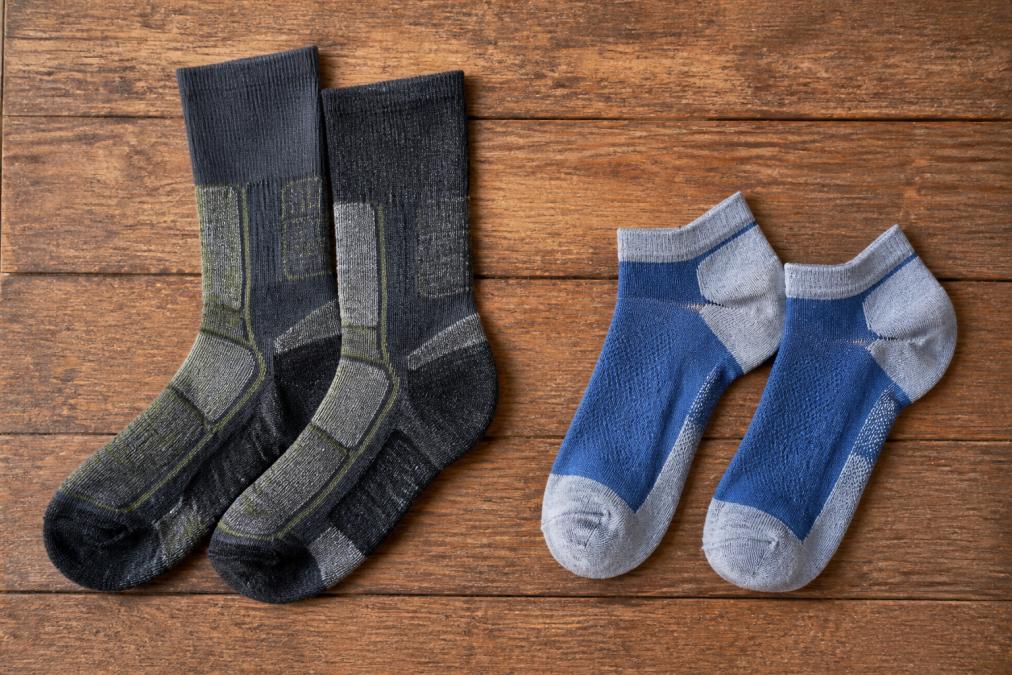
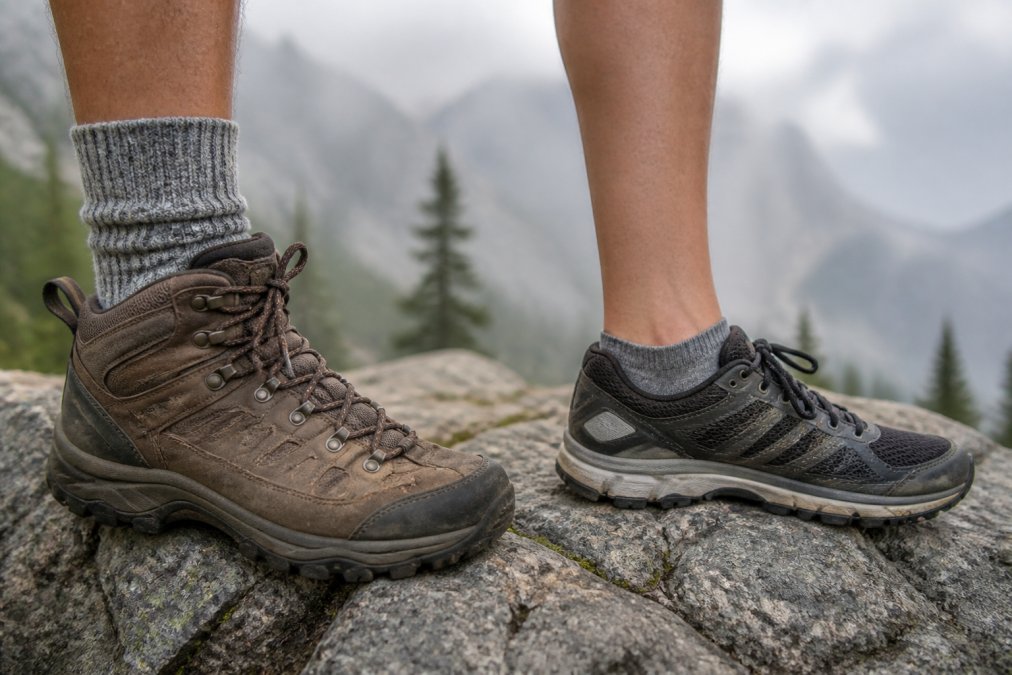
When comparing hiking vs running socks, the differences go far deeper than thickness. Hiking socks prioritize cushioning, blister prevention, and protection against trail debris, while running socks emphasize lightweight performance, moisture-wicking speed, and minimal bulk inside tight-fitting shoes. Understanding these distinctions helps you choose the right sock for your activity, and prevents the blisters and discomfort that come from wearing the wrong type.

At RockResist, we've tested both sock types across Colorado's most challenging terrain, and the performance gap becomes obvious within the first few miles. A hiking sock that feels perfect on a two-hour trail run becomes a liability on a 10-mile road race. A running sock that works great for speed lacks the protection needed for rocky mountain passes.
The core difference lies in design philosophy. Running socks are engineered for repetitive, high-impact motion on predictable surfaces. Hiking socks must handle variable terrain, longer durations, and constant threat of trail debris entering at the collar. This shapes every material choice, cushioning strategy, and structural detail.
Material Composition and Fabric Technology
Hiking socks and running socks use fundamentally different fiber blends to meet their distinct demands. The materials you choose directly impact moisture management, durability, and how your feet feel after hours on the trail.
Running socks typically use high-performance synthetic blends or merino wool in minimal quantities. These materials prioritize speed of moisture removal and lightweight feel. The sock needs to dry quickly because running generates intense, sustained sweat in a short timeframe. Synthetic fibers like polyester and nylon move moisture away from skin rapidly, keeping feet dry during the effort.
Hiking socks lean toward thicker merino wool blends or hybrid constructions that balance moisture management with thermal regulation. Merino wool excels at managing moisture without feeling wet, a critical advantage when you're hiking for hours in variable conditions. Unlike cotton, which absorbs sweat and stays damp, merino wicks moisture while maintaining insulation properties even when damp.
Merino Wool vs Synthetic Socks
Merino wool offers natural odor resistance and temperature regulation that synthetic fibers cannot match. A wool hiking sock keeps your feet warmer in cold conditions and cooler in heat. The fiber structure naturally resists bacterial growth, meaning your socks stay fresher longer without washing.
Synthetic socks dry faster and cost less, making them ideal for runners who prioritize speed and quick turnaround between workouts. However, synthetics don't regulate temperature as effectively and require more frequent washing to control odor. For hiking, where you're wearing the same socks for extended periods, merino's natural properties provide real advantages.
RockResist GEN1 Trail Running Socks blend 75% cotton with 25% terylene for durability and moisture management. This approach delivers breathability and structural integrity.

Cushioning, Padding, and Impact Absorption
Cushioning strategy reveals the core difference in how these socks handle impact. Running socks use minimal, targeted cushioning in the heel and ball of the foot, areas that absorb the most impact during repetitive footfalls. Extra padding would feel bulky inside running shoes and slow you down.
Hiking socks feature substantially more cushioning throughout the foot, with reinforced padding in high-impact areas. The extra material absorbs shock from uneven terrain and reduces foot fatigue during long days carrying a pack. Hikers also benefit from cushioning that protects against sharp rocks and trail debris that running shoes rarely encounter.
The padding density matters significantly. Hiking socks typically offer 1.5 to 2 times more cushioning than running socks. This difference becomes critical on technical trails where your foot strikes rocks, roots, and irregular surfaces repeatedly. Running socks assume a relatively flat, predictable surface, the road or track.
Consider the cumulative effect: a 10-mile road run generates impact in a controlled environment. A 10-mile mountain hike involves constant micro-adjustments to uneven ground, lateral forces, and unpredictable obstacles. The cushioning demands are completely different.
Moisture Management and Breathability
Both sock types prioritize moisture-wicking, but they solve the problem differently. Running socks focus on rapid moisture removal because runners generate intense sweat in short bursts. The sock must dry quickly to prevent blisters from friction between wet skin and shoe.
Hiking socks prioritize sustained moisture management over speed. You're generating sweat steadily over hours, not in intense bursts. The sock needs to move sweat away from skin continuously without becoming saturated. Ventilation zones in hiking socks allow air circulation even when the foot is enclosed in a boot.
Breathability in hiking socks comes from strategic mesh panels and looser weave patterns that allow air to reach the foot. Running socks use tighter, more efficient weaves optimized for compression and support. The difference reflects the environments: trails have variable air movement and temperature changes, while roads provide consistent conditions.
Moisture-wicking performance determines whether your feet stay comfortable or develop blisters. A sock that fails to move sweat away from skin creates the friction that causes blisters. This is why material choice and weave pattern matter so much, they directly impact foot health on long efforts.
RockResist GEN1 Trail Running Socks →
Best Socks for Long Distance Hiking
Long-distance hiking demands socks engineered specifically for sustained wear over many hours. The best hiking socks combine thick cushioning, reliable moisture management, and durable construction that resists friction and abrasion.
Look for socks with reinforced heel and toe areas, the zones that experience the most friction and wear. A quality hiking sock should feature seamless toe construction to eliminate the pressure point that causes blisters on long days. Arch support becomes increasingly important as fatigue accumulates; compression in the arch helps reduce foot fatigue during the later miles.
Material matters for long distances. Merino wool or merino blends provide temperature regulation and natural odor resistance, meaning you can wear the same pair for multiple days if needed. Synthetic blends work but require more frequent washing and don't regulate temperature as effectively.
The RockResist GEN1 Trail Running Socks combine cushioning with a secure fit that prevents slipping. The integrated debris-blocking barrier helps keep trail grit out where it usually sneaks in. You can wear the barrier up for loose terrain or tuck it in for a lower-profile look.
For serious long-distance hiking, consider stocking multiple pairs. Rotating between pairs allows each sock to dry fully between uses, extending lifespan and maintaining moisture-wicking performance. A three-pair bundle like the RockResist Trail Running Sock Bundle at $58.48 provides the redundancy serious hikers need without the cost of buying individual pairs.
How to Prevent Blisters While Hiking
Blister prevention starts with sock choice but extends to fit, moisture management, and foot care throughout the day. The most common mistake is assuming any athletic sock will work, it won't. Blister formation requires three elements: friction, moisture, and pressure. The right sock eliminates or minimizes all three.
Start by understanding hiking vs running socks and choosing one designed for your specific activity. A hiking sock provides cushioning and moisture management that running socks cannot match. Fit is equally critical, a sock that slips inside your boot creates friction with every step. Look for compression and secure fit that keeps the sock stable against your foot.
Moisture management prevents the skin breakdown that enables blisters. A sock that wicks sweat away from skin reduces friction significantly. Change socks immediately if they become damp; don't try to push through wet socks hoping they'll dry. Fresh, dry socks take minutes to change and prevent hours of blister pain.
Proper boot fit prevents pressure points that combine with friction to create blisters. Your boot should be snug enough to prevent foot slipping but loose enough to accommodate a quality hiking sock without compression. Many hikers go up a half size in boots specifically to accommodate thicker socks.
Apply blister prevention strategies during the hike. Stop and dry your feet if they feel damp. Adjust your socks if you feel a pressure point developing. Taping high-friction areas, the heel, ball of foot, and toes, before blisters form prevents problems entirely. A small piece of athletic tape or blister prevention tape stops friction before damage occurs.
Fit, Compression, and Arch Support
Fit precision determines whether a sock prevents or causes problems. Running socks use snug compression that keeps the sock in place during high-movement activity. This compression reduces foot fatigue and improves blood flow, but it also requires precise sizing.
Hiking socks offer more generous fit with targeted compression in the arch and heel.
Durability and Friction Resistance
Durability separates good hiking socks from socks that fall apart after a few uses. The friction forces on trails are intense, rocky surfaces, sharp debris, and constant movement against boot material wear socks quickly if they're not engineered for durability.
| Feature | Running Socks | Hiking Socks |
|---|---|---|
| Cushioning | Minimal, targeted | Thick, distributed |
| Moisture-wicking | Fast drying | Sustained management |
| Arch support | Light compression | Moderate compression |
| Heel padding | Moderate | Heavy |
| Breathability | High | Moderate to high |
| Durability | Standard | Reinforced |
| Best for | Road/track running | Long-distance hiking |
Frequently Asked Questions
Can I use running socks for hiking?
Running socks are designed for forward motion and repetitive impact, while hiking socks prioritize stability and protection from debris. Running socks have minimal cushioning to reduce weight, whereas hiking socks offer thicker padding in high-impact areas. Using running socks on rough terrain can lead to blisters and discomfort since they lack the ankle protection and friction reduction hiking demands. For best results, match your sock to the activity.
What are the key material differences between hiking and running socks?
Running socks emphasize synthetic fibers and moisture-wicking materials to manage sweat during high-intensity activity. Merino wool excels in temperature control across climates, while synthetics dry faster.
How does sock thickness affect foot fatigue on long trails?
Thicker cushioning in hiking socks absorbs impact from uneven terrain, reducing foot fatigue during long-distance treks. However, excessive thickness can restrict blood flow and cause overheating. Running socks use thinner, strategically placed padding to support high-impact zones without adding bulk. The right thickness depends on terrain: rocky, technical trails benefit from moderate cushioning, while road running favors minimal padding. RockResist GEN1 socks balance cushioning with secure fit to reduce fatigue without sacrificing responsiveness.
Do hiking socks really make a difference in preventing blisters?
Yes. Hiking socks prevent blisters through seamless toe construction, friction-reducing heel material, and moisture management. RockResist's debris-blocking barrier also keeps grit out, a major blister trigger on trails. Proper fit and material choice are more effective than any single feature in blister prevention.