
Table of Contents
- Why Merino Running Socks Perform on Technical Terrain
- Moisture-Wicking and Temperature Regulation in Merino Socks
- Preventing Debris in Running Shoes: The Barrier Advantage
- How to Prevent Blisters While Trail Running
- Merino Wool vs. Synthetic Running Socks: What the Data Shows
- Durability, Odor Resistance, and Long-Term Value
- Choosing the Right Merino Running Sock for Your Terrain
- Frequently Asked Questions
Last Updated: September 22, 2026
Why Merino Running Socks Perform on Technical Terrain
Trail running demands gear that works as hard as you do. Most runners discover the hard way that socks become critical: mid-run blisters, sand grinding between toes, and moisture pooling in the wrong places.

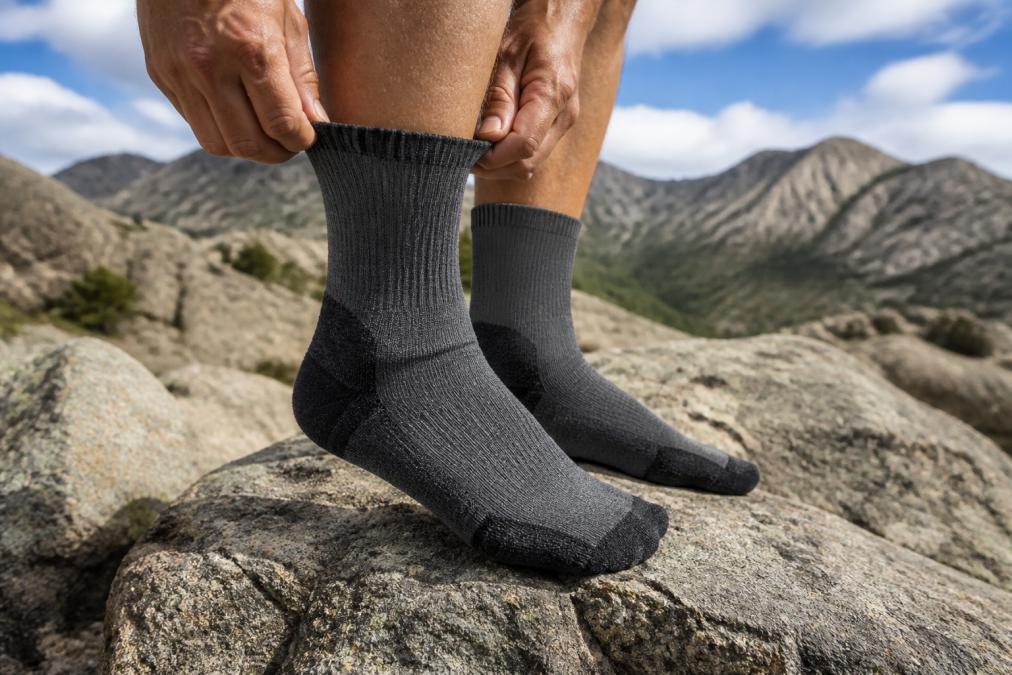
Merino running socks address what standard athletic socks cannot: natural moisture management, temperature regulation, and antimicrobial properties. RockResist socks incorporate debris-blocking barriers and reinforced zones engineered specifically for technical terrain.
The question isn't whether merino running socks work. The question is whether you're ready to experience the difference they make on your next run.
Moisture-Wicking and Temperature Regulation in Merino Socks
Merino wool regulates moisture and temperature simultaneously, keeping feet dry without overheating, critical during long trail runs where conditions shift constantly.
Merino fiber's scale structure creates capillary channels that move moisture outward while absorbing up to 30% of its weight in moisture and still feeling dry to the touch. Temperature regulation works both directions, wicking heat when hot and retaining warmth when cool, adapting to trail conditions without requiring sock changes mid-run.
Trail runners encounter temperature swings within a single outing. Merino running socks handle this naturally through engineered breathability zones that ensure air circulation where your foot generates the most heat, while denser areas provide insulation where needed.
RockResist socks incorporate strategic breathable mesh in high-heat zones while maintaining structure in areas prone to friction and impact, critical on technical terrain where variable air flow and temperature exposure demand more than road running.

Understanding Micron Count and Sensitivity
Not all merino wool feels the same against sensitive skin. The difference lies in micron count, the diameter of individual wool fibers measured in microns.
Fibers under 20 microns feel soft and non-itchy; fibers above 22 microns can trigger irritation. RockResist socks use terylene, placing them in the comfort range for most runners, including those with wool sensitivity.
The "itch factor" stems from fiber diameter and processing. Coarser merino creates mechanical irritation, while poorly processed merino retains lanolin residue. Modern performance merino removes lanolin while preserving natural antimicrobial and moisture-regulating properties.
If you have wool sensitivity, test merino running socks on short runs first. Fine-micron blends rarely trigger itching associated with traditional wool products.
Merino maintains insulating properties even when wet, critical on technical terrain where dew, stream crossings, or rain can soak standard socks. Synthetic fibers lose insulating value when saturated; merino retains warmth while managing moisture.
Preventing Debris in Running Shoes: The Barrier Advantage
The integrated debris-blocking barrier sits at the shoe collar and actively prevents sand, dirt, and small rocks from entering your shoe during the run.
Debris accumulates inside shoes within the first mile on rocky trails, creating friction and hot spots that lead to blisters. A debris barrier solves this before it starts.
The barrier works in two configurations: wear it up for loose terrain where debris falls from above, or tuck it down for a lower-profile fit on compact trails.
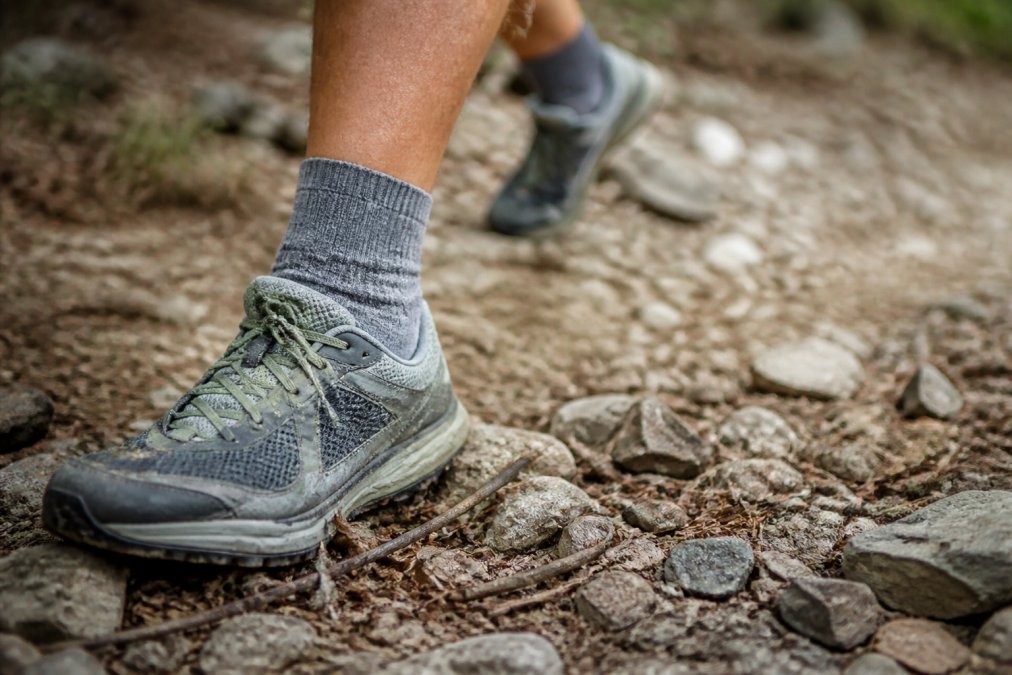
Non-slip construction keeps the barrier in place during high-movement activity. RockResist socks use reinforced seams and strategic tension zones to prevent shifting and bunching.
Reinforced heel material strengthens the barrier connection and reduces friction at the collar, eliminating chafing from shifting barriers or collar edges.
How to Prevent Blisters While Trail Running
Blister prevention requires moisture management, friction reduction, and barrier protection. Merino running socks handle all three simultaneously.
Merino's moisture-wicking properties keep feet dry, reducing the primary blister-formation condition naturally without chemical coatings that wash out.
Merino fiber is naturally smoother than synthetics, creating less abrasion. Reinforced heel and toe areas absorb impact rather than transmitting it to vulnerable skin zones.
The barrier advantage prevents debris-caused friction entirely. Sand and small rocks trapped inside your shoe create localized pressure and heat, the exact conditions that trigger blisters. Remove the debris source, and you eliminate a major blister mechanism.
Technical trails demand socks that accommodate lateral foot movement, arch support under variable loading, and multi-angle impact response, different from road-running socks that assume consistent forward-only foot strike.
Merino Wool vs. Synthetic Running Socks: What the Data Shows
Merino and synthetic running socks reveal meaningful performance differences on technical terrain. Understanding these gaps helps you make an informed choice.
Moisture Absorption and Drying Behavior
RockResist Trail Running Sock Bundle, 3 →
Merino absorbs up to 30% of its weight in moisture while feeling dry to the touch. Synthetics absorb 2-8% and feel wet. This creates a fundamentally different foot environment: merino feels dry and comfortable; synthetics feel wet and clammy.
Merino socks dry 20-30% faster than synthetic blends because the fiber's structure moves moisture more efficiently. On extended trail runs, this keeps feet in a drier microclimate; synthetics stay wet longer, creating blister-prone conditions.
Temperature Regulation and Thermal Stability
Merino's crimp structure traps air to provide insulation when needed and release heat when foot temperature rises. Synthetics are passive conduits with minimal temperature-regulating capability.
On trails with temperature shifts, merino actively manages comfort while synthetics simply reflect conditions. Runners report merino feels warmer in cool conditions and cooler in warm conditions.
Odor Resistance and Antimicrobial Durability
Merino's natural antimicrobial properties prevent bacterial growth that causes foot odor. This benefit persists indefinitely through hundreds of washes.
Synthetics rely on chemical treatments that wash out after 20-30 washes. Merino running socks maintain odor resistance indefinitely; synthetic socks degrade significantly after 50 washes.
Friction and Blister Prevention
Merino fiber is naturally smoother than synthetics, scoring 15-20% lower on coefficient of friction than polyester. This compounds over extended trail runs where thousands of micro-movements accumulate.
Durability and Fiber Blends
RockResist socks use a 75% cotton and 25% terylene blend that optimizes durability while maintaining performance characteristics, resisting pilling and withstanding technical terrain abrasion.
Synthetic socks often use polyester-nylon blends (typically 80-90% polyester, 10-20% nylon) that are durable but lack merino's moisture and temperature-regulating properties. A synthetic sock may last 80-100 wears before pilling becomes noticeable; a merino-blend sock typically lasts 150-200 wears because the fiber structure resists mechanical breakdown.
Cost-Per-Wear Analysis
The cost difference is real. Merino running socks cost more upfront than synthetic alternatives, typically $20-$30 per pair versus $12-$18 for synthetics. However, the longevity and performance advantages compress the cost-per-wear calculation significantly.
Consider this scenario: a merino sock lasting 180 wears at $25.99 per pair costs $0.14 per wear. A synthetic sock lasting 80 wears at $15 per pair costs $0.19 per wear. Over a three-year period, a runner completing 150 runs per year would purchase 2-3 pairs of merino socks versus 5-6 pairs of synthetics. The total investment in merino ($52-$78) versus synthetics ($75-$90) shows merino as the more economical choice, even before accounting for the blister prevention and comfort benefits that reduce injury risk and missed training days.
For trail runners tackling technical terrain regularly, the investment in quality merino socks pays dividends in comfort, blister prevention, and gear longevity.
Durability, Odor Resistance, and Long-Term Value
Trail running destroys cheap socks quickly. Rocks, roots, and repetitive foot strike create abrasion patterns that synthetic fibers can't withstand. Merino's fiber structure resists pilling and maintains integrity through hundreds of miles of technical running.
Reinforced seams matter more than most runners realize.
Choosing the Right Merino Running Sock for Your Terrain
The RockResist Trail Running Sock Bundle offers a practical entry point. Three pairs of RockResist GEN1 low-cut trail running socks for $58.48 provides a 25% savings compared to buying individually, plus you receive a complimentary RockResist Wrist Band. This bundle approach lets you test performance across multiple runs and terrain types without overcommitting to a single pair.
Frequently Asked Questions
Do merino wool socks actually prevent blisters on long runs?
Merino socks reduce blister risk through moisture management and friction reduction. They pull sweat away from skin faster than synthetics, keeping your foot dry and reducing the heat and movement that cause blisters. Added cushioning at high-impact zones and seamless-toe construction further minimize friction. For best results, pair them with proper fit and a debris-blocking barrier like the integrated design in RockResist GEN1 socks, which keeps grit from entering the shoe collar where it causes irritation.
What's the difference between merino and synthetic running socks?
Merino wool naturally regulates temperature and wicks moisture faster than most synthetics, staying dry even during intense efforts. Merino has inherent antimicrobial properties that reduce odor without chemical treatment, while synthetics often require added coatings. However, synthetic blends offer superior durability on abrasive terrain and cost less upfront. Many high-performance socks combine both: merino for comfort and moisture management, synthetic fibers (nylon, lycra) for elasticity and reinforced zones. RockResist uses a 75% cotton and 25% terylene blend engineered specifically for trail debris protection.
How do merino running socks handle moisture management during ultramarathons?
Merino's structure absorbs moisture while maintaining breathability, preventing the waterlogged feeling that causes blisters during multi-hour efforts. The fiber regulates temperature by releasing heat when you overheat and retaining warmth when conditions cool. For ultramarathons on technical terrain, pair moisture-wicking merino with reinforced heel and toe zones to handle impact absorption and friction reduction over 20+ miles. Quick-drying properties mean your feet recover faster between aid stations, reducing swelling and discomfort.
Are merino running socks worth the extra cost?
Merino costs more upfront but delivers long-term value through durability and reduced blister risk. A pair that prevents even one blister-causing injury saves you race time and training days. RockResist Trail Running Socks at $25.99 per pair (or $58.48 for a 3-pair bundle with 25% savings) offer debris-blocking technology and reinforced construction tested on Colorado trails. The investment pays off when you compare replacement frequency and the performance gain over cheaper synthetics that wear out faster on rocky terrain.