
Table of Contents
- What Makes the Best Mountain Biking Socks
- Merino Wool vs. Synthetic Bike Socks: Which Performs Better
- How to Prevent Blisters Mountain Biking
- Best Sock Height for Mountain Biking
- Waterproof vs. Breathable: All-Weather Performance
- Durability Features That Matter on Technical Terrain
- RockResist Trail Running Socks: Built for Serious Riders
- Frequently Asked Questions
Last Updated: September 21, 2026
What Makes the Best Mountain Biking Socks
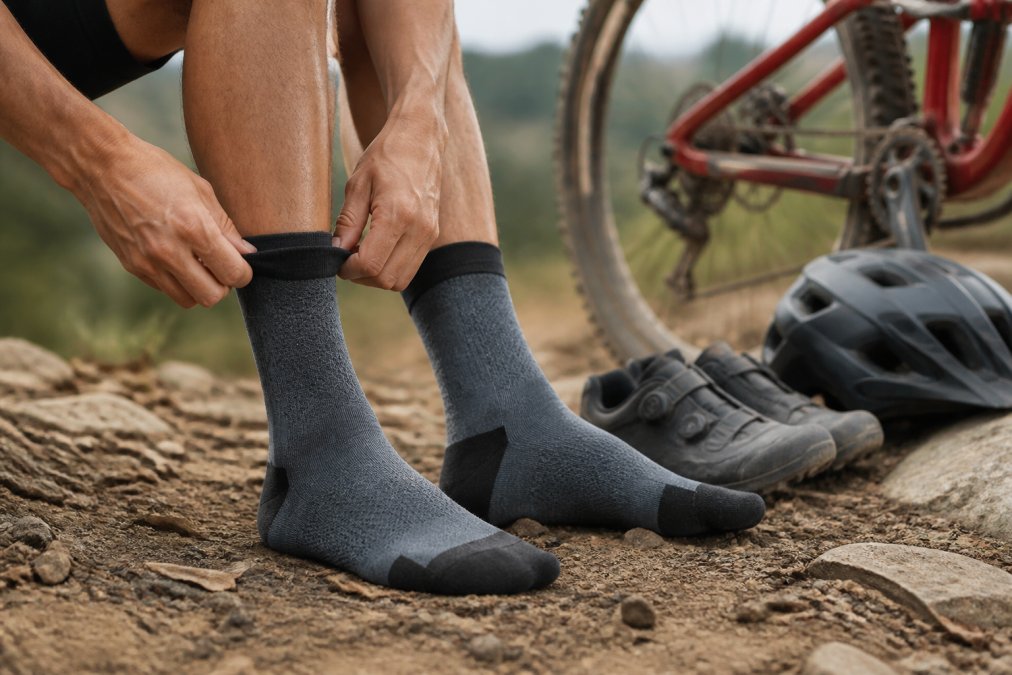
The right pair of mountain biking socks transforms a painful ride into a focused performance. Most riders overlook this detail, treating socks as an afterthought until blisters force them to pay attention.
What separates a good mountain biking sock from a mediocre one comes down to three core elements: moisture management, debris protection, and durability under friction. When you're grinding through technical terrain for hours, your feet face constant threats, sweat pooling in tight shoes, sand and grit sneaking past the collar, and repeated impact that breaks down cheaper materials.
The best mountain biking socks address all three simultaneously. They use moisture-wicking fibers that pull sweat away from skin, integrated barriers that block trail debris before it causes problems, and reinforced heel and toe sections that withstand the punishment of rocky ground and aggressive pedal strikes. This isn't luxury, it's the difference between finishing strong and limping home early.
RockResist has engineered their trail running socks specifically for this environment. The integrated debris-blocking barrier sits at the shoe collar where grit typically sneaks in, with the flexibility to wear it up for loose terrain or tucked down for a lower profile. The reinforced heel material reduces friction exactly where blisters form first. That combination of targeted protection and practical design is what makes a sock worth the investment.

Merino Wool vs. Synthetic Bike Socks: Which Performs Better
Merino wool and synthetic blends each bring different strengths to the trail. Understanding which works better for your conditions requires looking beyond marketing claims.
Merino wool excels at thermal regulation and odor resistance. The natural fiber maintains warmth even when damp, making it ideal for cool-weather riding or variable conditions where temperature swings throughout the day. It naturally resists bacterial growth, so your socks stay fresher longer between washes.
Synthetic blends, typically cotton and terylene combinations, prioritize durability and quick-dry performance. They're more resistant to abrasion from sharp rock and aggressive terrain. They dry faster after water crossings or heavy sweat, which matters if you're riding in hot conditions or pushing hard enough to generate significant moisture.
The practical difference: merino wool is your choice for fall and winter riding where comfort matters as much as performance. Synthetic blends are your trail workhorse for summer rides and technical terrain where durability and quick-dry properties prevent the breakdown that causes blisters. Many serious riders keep both types in rotation, matching them to the season and expected conditions.
For most mountain biking situations, especially aggressive trail work, synthetic blends deliver better all-around performance. The moisture-wicking properties of terylene keep feet drier longer, and the reinforced construction handles repeated friction without degrading. This is why RockResist's GEN1 Trail Running Socks use a 75% cotton and 25% terylene blend, it's engineered for the specific demands of technical terrain where durability and quick-dry capability prevent the breakdown that leads to blisters.

How to Prevent Blisters Mountain Biking
Blisters aren't inevitable. They're the result of friction, moisture, and poor fit working together. Control those three factors and you eliminate most blister problems.
Start with fit. A sock that bunches or shifts during your ride creates friction hotspots. Your sock should sit snug against your foot without compression that cuts off circulation. The non-slip construction of quality mountain biking socks keeps them anchored in place, preventing the micro-movements that generate heat and break down skin.
Moisture management is your second line of defense. Sweat creates the slippery environment where skin abrades against fabric. Moisture-wicking fibers pull sweat away from your foot surface, maintaining the grip that prevents friction. This is why synthetic blends with quick-dry properties outperform traditional cotton for technical riding, they actively reduce the moisture that enables blisters to form.
Third, address friction directly at high-risk zones. Your heel and toe box take the most punishment during pedal strokes and technical descents. Reinforced material in these zones absorbs impact and reduces the repetitive friction that breaks down skin. Many riders don't realize that added heel material isn't just for comfort, it's blister prevention engineered into the sock design.
The debris-blocking barrier on RockResist socks adds a fourth layer of protection. Sand and small rocks inside your shoe create pressure points and friction spots that accelerate blister formation. By keeping trail debris out, you eliminate one of the most common blister triggers. Wear the barrier up for loose terrain where debris is heaviest, or tuck it down when you want a lower profile on smoother sections.
Best Sock Height for Mountain Biking
Sock height directly impacts how much protection you get from debris and how well your sock stays in place during aggressive riding.
Low-cut socks sit just above the shoe collar. They offer a minimalist profile and work well on warm days when ventilation matters. The tradeoff: they provide less coverage against debris sneaking in from the sides, and they're more prone to slipping if your foot shifts in the shoe during hard pedaling.
Mid-cuff socks cover the lower leg and provide more surface area for the sock to grip your foot, which means better stability during technical riding. They also create a larger barrier against debris entering from the top of the shoe. For most mountain biking, mid-cuff is the practical sweet spot, you get protection without the overheating that comes from full-length options.
Full-length socks extend higher up the leg. They're best reserved for winter riding or specific conditions like water crossings where you need maximum coverage. On warm-weather trail rides, they create too much heat and don't offer enough ventilation benefit to justify the extra material.
The RockResist GEN1 Trail Running Socks come in low-cut design. The integrated debris-blocking barrier compensates for the lower height by creating a protective zone right where debris typically enters. This design choice lets you maintain airflow and comfort while still getting the protection you need. The barrier can be worn up for maximum coverage on loose terrain or tucked down when you want a cleaner look.
Waterproof vs. Breathable: All-Weather Performance
This choice often gets framed as either-or, but the reality is more nuanced. True waterproof socks are rare and usually problematic for mountain biking. A fully sealed sock traps moisture inside, which defeats the purpose of moisture-wicking and creates the exact environment where blisters form.
What you actually want is water-resistant breathability. The sock material repels light water contact while still allowing sweat vapor to escape. This keeps your foot dry from external moisture, water crossings, rain splash, while preventing the internal sweat buildup that causes blisters.
Breathable construction uses ventilation zones and mesh panels that allow airflow without sacrificing durability. The material still provides cushioning and impact protection, but it prioritizes air circulation over total water sealing. For mountain biking, this is the right tradeoff. You're not looking for a waterproof boot; you're looking for a sock that handles variable conditions without overheating your foot.
Seasonal riding changes the priority slightly.
Durability Features That Matter on Technical Terrain
Technical terrain demands socks built to withstand repeated abrasion. The difference between a sock that lasts one season and one that lasts years comes down to specific durability features.
RockResist Trail Running Socks: Built for Serious Riders
RockResist has built their mountain biking socks around the specific problems that derail serious riders. The GEN1 Trail Running Socks address the three biggest pain points: debris getting into your shoe, blisters forming from friction, and socks that slip during hard efforts.
| Feature | Benefit | Best For |
|---|---|---|
| Debris-blocking barrier | Keeps grit out of shoe | Loose, sandy terrain |
| Reinforced heel material | Reduces friction-based blisters | Long climbs and technical descents |
| Moisture-wicking blend | Prevents sweat buildup | Hot weather and hard efforts |
| Non-slip construction | Keeps sock anchored during rides | Technical terrain and aggressive pedaling |
| Quick-dry terylene | Handles water crossings and sweat | All-weather riding conditions |
Frequently Asked Questions
What makes mountain biking socks different from regular socks?
Mountain biking socks are engineered with moisture-wicking fabrics, reinforced heel and toe sections, and often include debris-blocking features to keep dirt and sand out. These design elements reduce friction, prevent blisters, and protect your feet during long rides on technical terrain. Regular socks lack the durability and specialized cushioning needed for off-road performance.
How do I prevent blisters mountain biking with the right socks?
Blister prevention relies on three factors: moisture management, friction reduction, and proper fit. Choose socks with strong moisture-wicking properties to keep sweat away from your skin, select ones with reinforced heel material to reduce collar friction, and ensure a snug fit that prevents slipping inside your shoe. Seamless toe construction also minimizes irritation on longer rides.
Should I choose merino wool or synthetic socks for mountain biking?
Merino wool excels at thermal regulation and odor control but can be pricier. Synthetic blends offer superior moisture-wicking, faster drying times, and durability under abrasive conditions, making them ideal for technical trail work. For serious mountain biking, synthetic blends or synthetic-dominant constructions offer strong performance in wet, debris-heavy environments.
Why are RockResist socks worth the investment compared to cheaper alternatives?
RockResist socks feature an integrated debris-blocking barrier that keeps grit out at the shoe collar, reinforced heel material to reduce friction, and non-slip construction for secure fit on technical terrain. The RockResist Trail Running Sock Bundle at $58.48 for three pairs offers 25% savings and includes a bonus wrist band. Colorado-tested durability and blister-prevention engineering justify the cost for serious riders.
Most riders spend hours optimizing their bike setup and overlook the one piece of gear their feet depend on for eight or more hours per week. RockResist makes that mistake impossible. Get the RockResist Trail Running Sock Bundle and eliminate the debris, friction, and moisture problems that slow you down. Your feet will thank you on mile five when other riders are dealing with blisters and discomfort.