Last Updated: October 26, 2026
Quick Summary
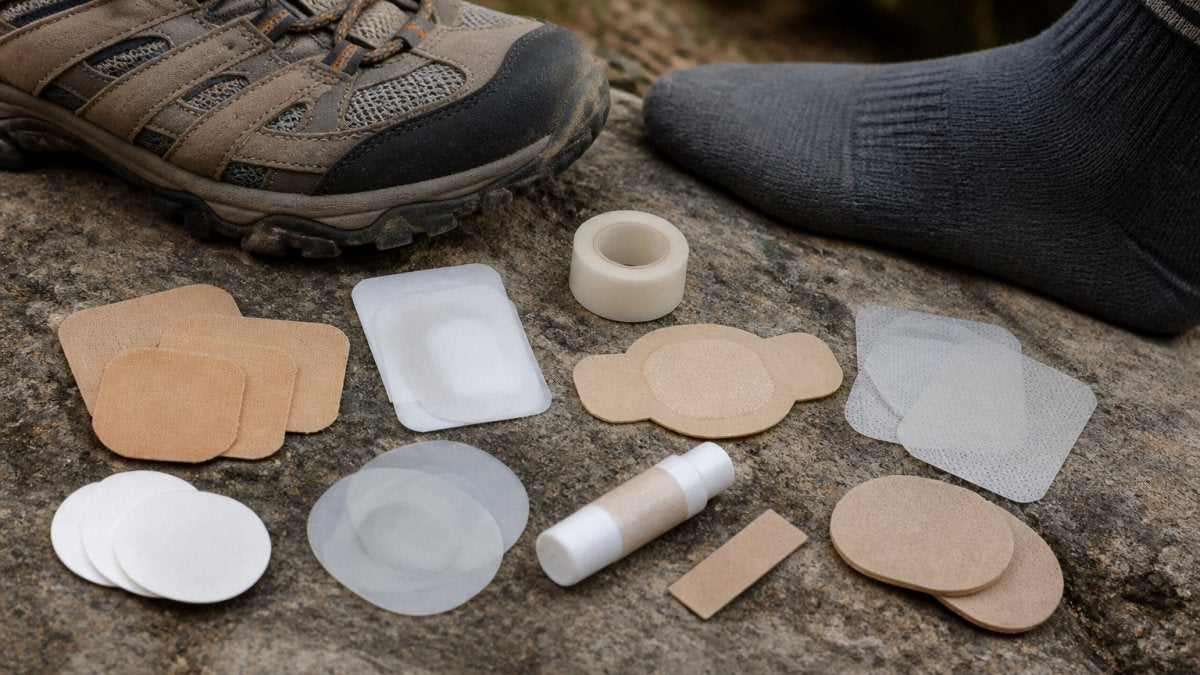
The best moleskin alternatives depend on whether skin is intact or broken: blister prevention tape for friction on intact skin, hydrocolloid bandages to seal a formed blister, and moisture-wicking socks to fix the cause. Use the comparison table as a filter, not a ranking, and match the product to your conditions.
- Blisters form from friction combined with moisture and heat, so a fix must handle all three.
- Tape is for intact skin only; taping an open blister traps moisture and dirt against broken skin.
- Hydrogel and second-skin pads shift more than hydrocolloid dressings, suiting shorter efforts.
- Moleskin pads offer only weak moisture handling and work on dry, flat areas only.
- RockResist GEN1 Trail Running Socks cost $30.00, with a second pair free when you add two pairs.
Table of Contents
- Why Runners and Hikers Look for Moleskin Alternatives
- Moleskin Alternatives Compared: Tape, Bandages, Pads, and Socks
- Blister Prevention Tape: Thin, Sticky, and Built for Friction
- Hydrocolloid Blister Bandages: Seal, Cushion, and Protect
- How to Treat a Foot Hot Spot Before It Blisters
- Moisture-Wicking Running Socks: The Layer Under Everything
- Matching the Alternative to Your Blister Location and Activity
- Sensitive Skin, Adhesives, and Safe Removal
- Frequently Asked Questions
Why Runners and Hikers Look for Moleskin Alternatives
Moleskin has been the default blister fix for decades, but it fails predictably off smooth pavement.
Where Moleskin Falls Short on Rugged Terrain
Most guides treat moleskin as prevention when it is really damage control.
What a Good Replacement Needs to Do
Cleveland Clinic overview of blister causes and care notes that blisters form from friction combined with moisture and heat, which tells you the fix has to handle all three. A pad that only cushions misses two of them.
Moleskin Alternatives Compared: Tape, Bandages, Pads, and Socks
| Alternative | Protection | Comfort | Durability | Best Use Case | Thin Under Sock | Handles Moisture | Reusable |
|---|---|---|---|---|---|---|---|
| Blister prevention tape | High on intact skin; low once skin is broken | High, minimal bulk | Moderate; adhesion fades with sweat and grit | Friction barriers on intact skin, hot-spot defense | Yes | Moderate | No |
| Hydrocolloid blister bandages | Low as prevention; high as a seal over broken skin | Moderate, gel cushion adds some bulk | High, stays put for hours under a sock | Sealing a formed blister, post-blister protection | Moderate | Yes | No |
| Hydrogel or second-skin pads | Low, pain relief, not friction defense | Moderate, cooling but can shift | Low to moderate, edges lift with movement | Immediate pain relief on an intact or recently drained blister | Moderate | Moderate | No |
| Moleskin pads and tape | Moderate on dry, flat areas; low once wet | Low, felt adds bulk and can bunch | Low, adhesive loosens with moisture | Dry, flat areas only; short efforts | No | Weak | No |
| Moisture-wicking socks | High as a cause-level fix; no direct barrier | High, replaces the need for bulk | High, reusable across many efforts | Preventing the conditions that create blisters | Yes | Yes | Yes |
Blister Prevention Tape: Thin, Sticky, and Built for Friction
Watch out: taping over an already-open blister traps moisture and dirt against broken skin, which is exactly the wrong move. Tape is for intact skin only.
Hydrocolloid Blister Bandages: Seal, Cushion, and Protect
Hydrogel and second-skin pads offer immediate cooling relief and a low-friction surface, which helps when a blister is painful but still intact. They shift more than hydrocolloid dressings, so they suit shorter efforts or a mid-run patch-up better than a full day on technical terrain.
How to Treat a Foot Hot Spot Before It Blisters
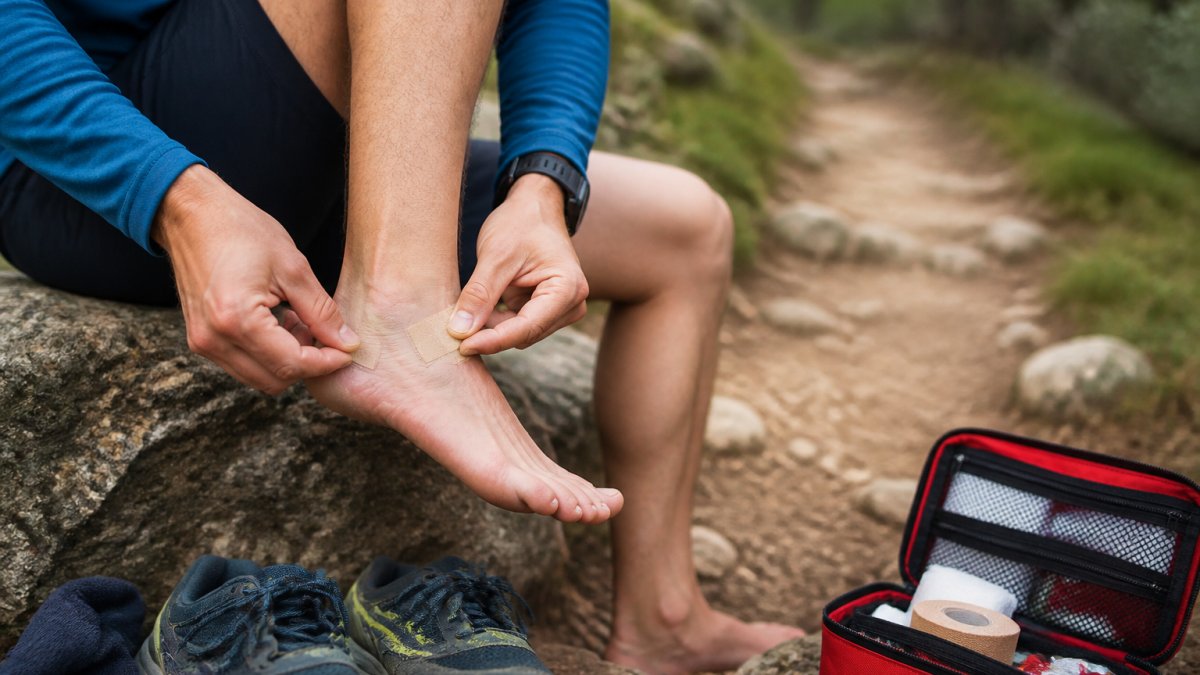
For a full step-by-step routine, see our guide on how to prevent blisters trail running.
RockResist GEN1 Trail Running Socks, Debris-Blocking Low Cut →
Moisture-Wicking Running Socks: The Layer Under Everything
Our RockResist GEN1 Trail Running Socks, Debris-Blocking Low Cut have an integrated barrier that helps block dirt, sand, and small trail debris at the shoe collar, plus added heel material to help reduce friction at the collar. They are $30.00, and the current offer adds a second pair free when you add two pairs to your cart.

Matching the Alternative to Your Blister Location and Activity
When a hot spot spans two zones. A hot spot crossing the heel and Achilles, or the ball and toes, is where most pairing guides break down. For an overview of common foot ailments in trail running prevention and treatment, see our guide. For sensitive skin, our thin climbing socks sensitivity guide covers low-irritation sock and material choices. Choose the product that handles the wetter or higher-load zone and extend it slightly past the boundary rather than layering two products that can lift against each other.
Sensitive Skin, Adhesives, and Safe Removal
RockResist builds socks with debris-shielding cuffs, moisture-management fibers, and reinforced seams. Trusted by athletes and proven across Colorado trails.
Get started with RockResist.
Frequently Asked Questions
What can I use instead of moleskin to prevent blisters?
Blister prevention tape, hydrocolloid blister bandages, hydrogel second-skin pads, and moisture-wicking socks all work as moleskin alternatives. Tape suits flat areas like the heel and toes, hydrocolloid bandages seal hot spots and cushion them, and technical socks reduce friction at the source. Many runners combine a thin tape layer with a moisture-wicking sock so the barrier stays put through sweat and long mileage.
Are blister bandages or moleskin better for preventing blisters?
Hydrocolloid blister bandages stick better than moleskin once sweat builds up and they cushion without bulk, which makes them a stronger pick for hot spots that have already formed. Moleskin is thicker and cheaper per sheet but tends to roll at the edges during long efforts. For pure prevention on intact skin, blister prevention tape or a well-fitted sock often outperforms both.
Do moisture-wicking running socks help prevent blisters?
RockResist GEN1 Trail Running Socks have an integrated barrier that helps block dirt, sand, and small trail debris at the shoe collar, plus added heel material to help reduce friction at the collar.
Should I cover a hot spot before it becomes a blister?
Cover it immediately. A hot spot is the warning stage, and stopping to apply tape or a hydrocolloid bandage takes a minute while running through it can sideline you for days. Clean and dry the skin, apply the patch with no wrinkles, and check it at the next aid station. Learning how to treat a foot hot spot early is the cheapest blister care there is.
