Table of Contents
- Why Runners Question Smartwool for Endurance
- Merino Wool vs Synthetic Running Socks: Material Trade-Offs
- Best Running Socks for Ultramarathons: What the Distance Demands
- Blister-Resistant Running Socks: Fit, Seams, and Friction
- Running Socks for Hot Weather: Moisture Wicking Without the Weight
- Durability and Cost Per Use: Why Price Isn't Everything
- Conclusion: Finding Your Endurance Sock Match
- Frequently Asked Questions
Last Updated: October 13, 2026
Why Runners Question Smartwool for Endurance
Smartwool has dominated the running sock market for years, but endurance athletes increasingly ask whether alternatives to Smartwool running socks perform better for intense, long-distance efforts. Ultramarathons, multi-hour trail runs, and extreme weather push socks to their limits in ways everyday running doesn't.
Covering 50 miles on rocky terrain or running 12+ hours in unpredictable conditions makes blisters, moisture management, and durability race-ending problems. RockResist has spent years testing gear on Colorado's most challenging trails, and different running scenarios demand different sock characteristics.
The question isn't whether Smartwool works, it does, for many runners, but whether it's optimized for YOUR endurance challenge. Some runners need maximum cushioning, others minimal weight; some face extreme heat, others cold and wet. A sock that excels in one scenario may underperform in another.
This guide breaks down the trade-offs between merino wool, synthetic blends, and specialized performance socks, what separates a sock that survives an endurance run from one that enhances performance.

Merino Wool vs Synthetic Running Socks: Material Trade-Offs
Merino wool dominates endurance running conversations, but it isn't automatically best. The differences that matter over 50 miles are fiber diameter, moisture regain, knit density, and how each fiber behaves once saturated and grinding against a shoe.
Merino wool regulates temperature and resists odor thanks to its natural crimp structure, which creates air pockets and capillary channels that move moisture vapor away from skin, while its scaly surface traps odor-causing bacteria. For variable conditions, a cold start turning into a warm afternoon, merino holds a comfortable range.
Synthetic fibers, polyester, nylon, polypropylene, and acrylic blends, are hydrophobic, so moisture travels along the surface and through the knit rather than into the fiber. That's why synthetics dry faster and feel lighter when wet. Nylon adds abrasion resistance, which is why it appears in reinforced heels and toes.
Wool blends, typically 50-80% merino with nylon, polyester, or a little spandex, split the difference: the synthetic portion handles load-bearing and abrasion while wool manages moisture vapor and odor. For most endurance runners, a blend is the practical middle ground, with better longevity than pure merino and better temperature and odor behavior than pure synthetic.
Don't treat merino as universally superior. Match the material to the scenario:
- Cool, dry, variable conditions: merino or a wool-dominant blend.
- Hot, humid, or water-crossing routes: a synthetic-dominant blend that sheds water fast.
- Technical trail with rock and scree contact: nylon-reinforced synthetic blends resist snagging and tearing better than fine merino.
- Multi-day events where socks may not fully dry: synthetic-dominant blends reduce the risk of skin maceration between stages.
Merino manages moisture vapor well; synthetics manage liquid water well. Endurance running produces both, which is why blends dominate.
Best Running Socks for Ultramarathons: What the Distance Demands
Ultramarathon socks face demands regular running socks don't: 50+ miles in mixed terrain and unpredictable weather, swelling feet, and moisture from sweat, water crossings, or rain. They must handle friction at levels most runners never experience.
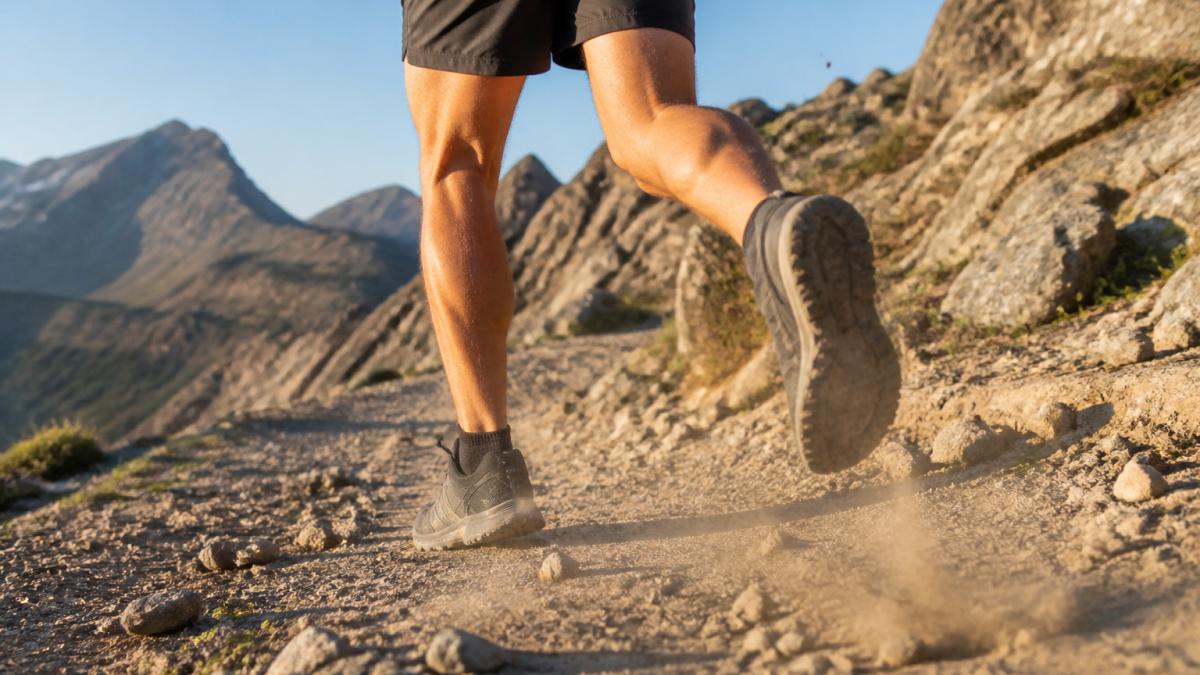
Sock height matters. Low-cut socks (like RockResist GEN1 Trail Running Socks) sit below the ankle, minimizing bulk and pressure points during long hours in the shoe. Crew socks add coverage and debris protection but add weight and can create hot spots if not fitted perfectly.
The key requirement is consistency over distance, a sock that performs well for 10 miles may develop compression issues or friction points by hour 8. Look for reinforced heel and toe areas, which take the most repetitive impact.
RockResist GEN1 low-cut performance socks are built for trail runs, gravel paths, road miles, and outdoor training. Their integrated barrier helps block dirt, sand, and small trail debris from entering at the shoe collar, so you can stay focused on the run.
Blister-Resistant Running Socks: Fit, Seams, and Friction
Blisters end races. During an ultramarathon they're not a minor inconvenience but a race-ending problem, and prevention depends more on fit and seam construction than material choice.
Friction is the enemy. Blisters form when your foot moves inside your sock relative to your shoe, rubbing repeatedly at the heel, ball, and toes. Blister-resistant socks address friction three ways:
-
Seamless or minimal-seam construction reduces friction points. Traditional socks have a seam running across the toe box, exactly where many runners develop blisters. Seamless toe construction eliminates this problem. Some runners prefer toe socks (individual toe compartments), which completely eliminate toe-to-toe friction, though they take adjustment.
-
Snug, non-slip fit keeps your foot stable inside your shoe. If your sock shifts during a run, friction increases dramatically. Look for socks with arch support and heel grips that prevent slippage. RockResist GEN1 socks use non-slip construction specifically to maintain position during high-movement activity.
-
Targeted cushioning in high-friction zones absorbs impact and reduces rubbing. Extra material at the heel and ball of the foot creates a buffer between your foot and shoe. This matters more than overall thickness, strategic cushioning beats uniform padding.
Fit is critical and often overlooked: too loose and the sock shifts, too tight and it restricts blood flow. The right fit feels snug but not constrictive. If you're between sizes, test both before race day.
RockResist GEN1 Trail Running Socks, Debris-Blocking Low Cut →
Running Socks for Hot Weather: Moisture Wicking Without the Weight
Hot-weather endurance running creates a specific problem: feet sweat heavily, but you can't add weight or bulk that increases friction. The sock must move moisture aggressively while staying light and breathable. What separates socks in heat is knit structure, fiber blend, and how fast the fabric releases water once saturated.
Moisture wicking is a knit property as much as a fiber property. Merino moves vapor through its crimp structure; synthetics move liquid water along the fiber surface and between yarns.
For hot weather, look for:
- Mesh panels or open-knit zones over the instep and along the sides, where airflow and evaporation are highest. The trade-off is slightly lower abrasion resistance in those areas, which matters more on rocky trail than on road.
- Thin, low-profile cushioning under the heel and ball rather than uniform padding. Strategic cushioning keeps the sock light while still absorbing impact at the two highest-friction zones.
- A synthetic-dominant or balanced blend if you expect water crossings, heavy sweat, or high humidity. Wool-dominant socks still work in dry heat, but they hold more water once saturated.
Drying time is the metric most runners ignore. Once socks get wet from sweat, rain, or a stream crossing, the clock starts on skin maceration, the softening that precedes blisters.
Weight and thermal load. Heavier socks trap heat and dry slower. Low-cut designs reduce thermal load but offer less debris and sun protection; crew height adds coverage and ankle shade but adds weight and can create hot spots if loose. Match height to terrain and exposure.
A scenario framework for heat:
- Road or smooth trail, dry heat: lightweight synthetic or wool-blend low-cut with mesh zones.
- Humid or water-crossing routes: synthetic-dominant blend, thin cushioning, quick-dry knit.
- Multi-day or stage events: synthetic-dominant blend with reinforced heel and toe, rotated across at least two pairs so each has time to dry.
- High-exposure desert or alpine sun: crew height for ankle coverage, but only if the fit is snug enough to prevent slippage.
This is where alternatives to Smartwool running socks often have an edge: many performance synthetics are engineered for low weight and fast drying, while wool-dominant socks prioritize temperature range and odor control. The conditions decide.
Durability and Cost Per Use: Why Price Isn't Everything
Endurance runners often buy cheaper socks that require frequent replacement.
RockResist GEN1 Trail Running Socks are priced at $30 per pair. The 3-pair bundle costs $67.50 (a 25% savings), and we currently offer a limited-time BOGO promotion: buy one pair and get a second free. The real question isn't the upfront price, it's the durability.

Durability factors:
- Reinforced seams prevent separation at stress points. Cheap socks fail at seams first.
- High-quality yarn resists pilling and maintains structure after 50+ washes.
- Heel and toe reinforcement extends wear life in high-friction zones.
- Proper care (hand-wash, line-dry) dramatically extends lifespan. Machine washing and tumble drying degrade even quality socks.
Most runners underestimate how many runs quality socks deliver. By cost per use, premium socks often beat budget options significantly.
The durability advantage of alternatives to Smartwool running socks varies by material.
Conclusion: Finding Your Endurance Sock Match
The question "are there better alternatives to Smartwool for intense endurance running?" has no single answer, it depends on your conditions, foot shape, and training volume.
For ultramarathon distances, durability and blister prevention matter more than any single material choice.
RockResist GEN1 Trail Running Socks address the challenges endurance athletes face: a debris-blocking barrier keeps grit out on technical terrain, the reinforced heel reduces friction at a critical hot spot, non-slip construction prevents shifting during long runs, and the 75% cotton / 25% terylene blend balances moisture management with durability.
Get started with RockResist and experience the difference engineered protection makes during your next endurance effort. With our current BOGO promotion, build a rotation of multiple pairs and give your socks proper recovery time between runs.
Frequently Asked Questions
Are merino wool or synthetic socks better for endurance running?
Merino wool excels at temperature regulation and odor resistance, making it comfortable for variable conditions. Synthetic fibers offer superior durability under abrasion and dry faster when wet. For intense endurance running, the choice depends on terrain and weather. Rocky trails with sharp rock demand synthetics or blends for abrasion resistance. Cool, wet conditions favor merino. Hybrid options combining both materials balance these strengths, offering moisture wicking, blister prevention, and extended wear life without pure merino's higher cost or synthetics' limited odor control.
What running socks are best for ultramarathons?
Ultramarathon socks must prevent blisters, manage sweat continuously, and withstand repeated friction. Look for seamless toe construction, reinforced heels and arches, snug arch support that resists slipping, and cushioning that doesn't trap moisture. Crew or mid-calf heights protect against debris entering at the collar. Moisture-wicking fibers (merino or synthetic blends) prevent the wet-sock environment where blisters form. Durability matters: socks that lose elasticity mid-race increase friction and blister risk. Test your chosen sock type on training runs matching your race distance and terrain before race day.
How do blister-resistant running socks actually prevent blisters?
Blisters form from repeated friction between skin, moisture, and sock material. Blister-resistant socks prevent this through three mechanisms: seamless or flat toe seams reduce friction hotspots; snug fit and non-slip construction prevent sock bunching and movement inside the shoe; and moisture-wicking fibers keep feet dry rather than wet and slippery. Heel and arch reinforcement reduces friction in high-contact zones. Cushioning absorbs impact-related friction without creating pressure points. No sock prevents blisters alone, proper shoe fit, break-in before racing, and foot care matter equally. Test your sock-and-shoe combination on long training runs to identify any friction points before committing to race day.
Why should I spend more on premium running socks when cheaper options exist?
Premium running socks cost more upfront but deliver lower cost per use through durability and blister prevention. Blisters on a 50-mile ultramarathon can cost hours of lost performance. Premium socks use reinforced seams, quality moisture-wicking fibers, and engineered fit that cheaper options skip. For endurance athletes, the investment in blister prevention and reduced sock replacement frequency typically pays for itself within one season.
| Material Type | Best For | Durability | Moisture Wicking | Cost Per Use |
|---|---|---|---|---|
| Pure Merino | Variable temperature, low abrasion | Moderate | Excellent | Higher |
| Synthetic Blend | Technical terrain, trail running | High | Good | Lower |
| Wool Blend (50-80%) | Mixed conditions, ultramarathon | High | Very Good | Moderate |
| RockResist GEN1 | Debris-heavy terrain, endurance | Very High | Good | Moderate |