
Table of Contents
- Smartwool vs Synthetic Trail Socks: What Actually Matters on the Trail
- Material Showdown: Merino Wool vs Synthetic Fibers
- Moisture Wicking and Sweat Management in Trail Conditions
- Merino Wool vs Synthetic Hiking Socks: Drying Speed and Water Retention
- Blister Prevention and Friction Management on Technical Terrain
- Best Synthetic Socks for Hiking: Why Synthetics Excel in Specific Conditions
- Best Socks for Hot-Weather Hiking: Breathability and Temperature Regulation
- Durability, Odor Resistance, and Long-Term Value
- Frequently Asked Questions
Last Updated: October 12, 2026
Smartwool vs Synthetic Trail Socks: What Actually Matters on the Trail
Eight miles into a technical descent, the sock choice you made that morning becomes very real.
The choice between merino wool and synthetic fibers for Smartwool vs synthetic trail socks comes down to how each handles moisture, temperature swings, and friction.
What separates a sock that works from one that leaves you with preventable blisters: managing sweat without becoming heavy, shedding water without losing insulation, and maintaining grip when wet.
Material Showdown: Merino Wool vs Synthetic Fibers
The fundamental difference comes down to fiber structure and how each responds to moisture and temperature, which explains why one sock excels on a cool, wet trail while another performs better on a hot, dry one.
Merino Wool Construction and Performance
Merino wool is a natural protein fiber with a crimped structure that creates tiny air pockets, providing insulation and absorbing moisture vapor without feeling wet.
Its natural waxy coating adds water and odor resistance, and its elasticity helps socks maintain fit through repeated compression, which is why many runners find merino stays in place during long efforts.
The trade-off: merino socks can pill if not cared for properly. The fiber is also less durable against sharp rock than synthetics engineered for abrasion resistance.
Synthetic Blends: Nylon, Polyester, and Elastane
Synthetic blends typically combine nylon (durability), polyester (wicking speed), and elastane (stretch and recovery).
Nylon provides exceptional abrasion resistance against rough terrain and sharp rock. Polyester wicks sweat quickly, making synthetics excellent for hot-weather hiking or high-intensity running.
The trade-off: synthetics don't insulate as well when wet, hold odor more readily, and may feel less soft initially. But they're built to withstand abrasive surfaces.
Moisture Wicking and Sweat Management in Trail Conditions
How these materials handle sweat directly affects blister risk and foot comfort.
Merino absorbs moisture and distributes it across the fiber, keeping your foot drier in sustained-sweat conditions.
Synthetic materials, especially polyester blends, move moisture away from the skin faster through capillary action.
In practice: merino wins for sustained moisture management on longer trails; synthetics win for rapid evacuation during intense efforts.
Merino Wool vs Synthetic Hiking Socks: Drying Speed and Water Retention
When a stream crossing or sudden rain soaks your feet, what happens next determines whether you finish comfortably or develop blisters.
Merino retains moisture longer, holding absorbed water for hours while still providing some insulation.
Synthetics shed water quickly because they don't absorb it, so a wet synthetic sock dries significantly faster than merino and the friction window closes sooner.
The implication: frequent water crossings in warm temperatures favor synthetics, which reduce blister risk by drying faster.
Blister Prevention and Friction Management on Technical Terrain
Blisters happen when friction combines with moisture and heat over time. Both sock types address this differently.
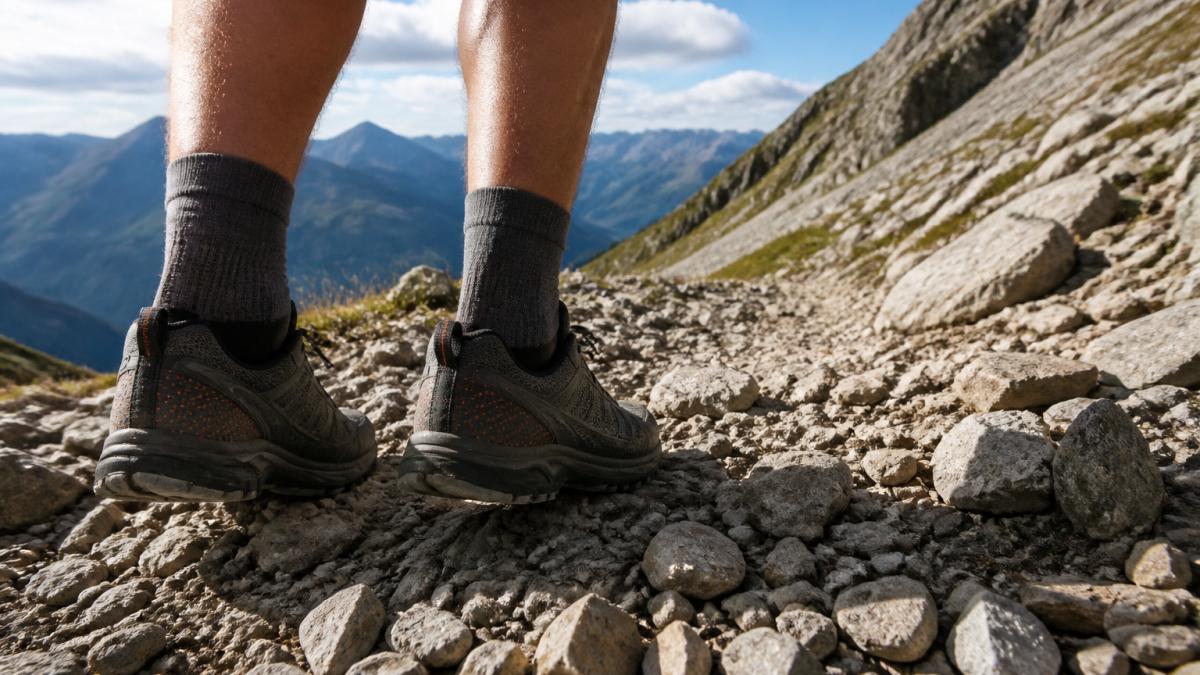
Cushioning, Reinforced Heel, and Hot-Spot Protection
Merino's natural elasticity and crimp structure provide inherent cushioning that absorbs impact and distributes pressure, with many merino socks adding padding in the heel and ball of the foot where hot spots form.
Synthetic blends achieve cushioning through engineered padding and density variation, and nylon's durability keeps that padding intact through repeated compression. RockResist GEN1 Trail Running Socks, for example, include added heel material to reduce friction at the collar, a common blister trigger point.

Both work. The difference is consistency: synthetic cushioning is engineered for specific pressure points and holds its structure through many wash cycles, while merino cushioning can compress over time.
Seam Construction and Sock Fit
Flat-seam or seamless construction prevents friction-induced blisters at seams. Merino often uses flat seams, but the softer fiber is less forgiving if a seam rubs; synthetics tolerate tighter seams because the fiber is more durable.
Fit matters as much as material: a loose sock creates friction, a tight one restricts circulation, and the ideal keeps the sock stable without compression.
Best Synthetic Socks for Hiking: Why Synthetics Excel in Specific Conditions
Synthetic trail socks earn their place in three scenarios: hot-weather hiking, technical terrain with sharp rock, and situations where fast drying is critical. They win because of construction details, not the word "synthetic" on the label.
RockResist GEN1 Trail Running Socks, Debris-Blocking Low Cut →
What "Synthetic" Actually Means in a Trail Sock
Almost no trail sock is 100% synthetic. The best are blends, and the ratio matters more than the category: typically 60-80% nylon or polyester, 15-30% elastane, and small amounts of other fibers.
That ratio is why two socks labeled "synthetic" behave very differently: a high-nylon sock outlasts a high-polyester one against granite scree, while the high-polyester sock feels cooler and dries faster. Neither is wrong; they're tuned for different conditions.
Knit Construction and Reinforcement Zones
Beyond fiber content, knit structure determines where a synthetic sock performs. Look for:
- Terry-loop cushioning under the heel and ball of the foot, where impact and friction concentrate on descents.
- Mesh or open-knit panels across the top of the foot and arch, where heat and sweat build up fastest.
- Ribbed arch bands that lock the sock to the midfoot without compressing the toes.
- Reinforced heel and toe caps, usually a denser nylon knit, that resist the abrasion that wears through cheaper socks first.
The cheapest synthetic socks skip reinforced zones and use a uniform knit. They feel fine in the store and fail on the trail, usually at the heel or toe.
Where Synthetics Win on the Trail
Hot-weather hiking. Above roughly 75°F, foot temperature and sweat volume become limiting.
Technical rock terrain. Scrambles, boulder approaches, and multi-pitch hikes expose socks to sharp edges. Nylon's abrasion resistance resists the punctures and thin spots that damage softer fibers, often the deciding factor for climbers.
Back-to-back trail days and water crossings. Synthetics dry substantially faster than merino after a soak, closing the friction window sooner.
Where Synthetics Give Up Ground
The trade-offs are real. Synthetics don't insulate as well when wet, leaving feet clammy and chilled in cold, wet conditions, and they hold odor more readily, which matters on multi-day trips. Nylon is durable against abrasion but lacks merino's elasticity, so fit depends on the elastane percentage and the knit's recovery.
Best Socks for Hot-Weather Hiking: Breathability and Temperature Regulation
Temperature regulation is where the Smartwool-versus-synthetic decision gets practical. In heat, breathability, letting air circulate and vapor escape, matters more than insulation, but the right pick also depends on pace, trip length, and how much you sweat.
How Each Material Regulates Temperature
Merino's crimped fiber structure traps air in tiny pockets, insulating well in cool conditions. In heat, that same structure holds warmth against the foot unless the knit is thin and open, thin merino blends in the 17-19 micron range breathe far better than the thick cushioned socks people picture.
Synthetics regulate temperature differently: polyester and nylon are hydrophobic, so they don't hold moisture against the skin, and open-knit mesh panels let heat escape through convection.
Behavior After Repeated Wet-Dry Cycles
This is where the trail actually tests socks. After a stream crossing or rainstorm, the two materials diverge over a long day:
- Synthetic socks shed water quickly and dry in a fraction of the time merino takes, a thin synthetic may feel noticeably drier within an hour in warm air and sun.
- Merino socks hold more water and release it slowly, meaning a longer window where the sock is damp against the skin, exactly when friction and hot spots develop.
- After several wet-dry cycles, synthetics keep their shape and cushioning, while merino can feel matted or stretched, especially if machine-washed.
If your route involves repeated crossings, rain, or heavy sweat in warm conditions, the drying-speed advantage of synthetics compounds over the day.
Matching the Sock to Climate, Pace, and Trip Length
A simple decision framework:
- Hot, dry, fast efforts (under 3 hours). Thin synthetic blend with mesh panels. Maximum breathability and wicking speed.
- Hot, humid, sustained efforts (3+ hours). Thin merino blend or a merino-synthetic hybrid. Merino's vapor management keeps the foot from feeling clammy when sweat can't evaporate quickly.
- Hot conditions with frequent water crossings. Synthetic. Drying speed is the deciding factor.
- Warm days with cool mornings and evenings. Merino or a hybrid. Merino's temperature-regulating range handles the swing better than a pure synthetic.
- Multi-day trips in heat. Merino or a hybrid, primarily for odor management. Synthetics will need washing or will become unpleasant.
A Note on "Breathability" Claims
Breathability is often marketed as a single number, but it's really the combination of knit openness, fiber hydrophobicity, and fit. A loose sock with great mesh still allows friction; a tight one still restricts circulation. Fit and knit structure matter as much as the fiber label.
Durability, Odor Resistance, and Long-Term Value
The choice also depends on how many miles you expect from a pair and how each handles repeated use.
Synthetics are more durable overall: nylon resists abrasion and polyester maintains its properties through many wash cycles.
| Factor | Merino Wool | Synthetic Blend |
|---|---|---|
| Moisture absorption | Absorbs up to 30% weight | Hydrophobic, repels water |
| Drying speed | Slow (6-12 hours) | Fast (2-4 hours) |
| Insulation when wet | Maintains warmth | Loses insulation |
| Odor resistance | Natural antimicrobial | Requires frequent washing |
| Abrasion resistance | Moderate | High (nylon-based) |
| Blister prevention | Better for sustained effort | Better for intensity spikes |
| Best conditions | Cool, wet, multi-day | Hot, technical, high-intensity |
| Cost | Higher | Lower |
| Care requirements | Hand-wash, line-dry | Machine-wash friendly |
Long-term value depends on usage. Running 40+ miles per week on technical terrain favors synthetic durability.
The real answer to Smartwool vs synthetic trail socks isn't which is objectively better, it's which matches your conditions.
RockResist GEN1 Trail Running Socks combine synthetic durability with engineered moisture management and a debris-blocking barrier designed for technical terrain. With the BOGO offer, you can build a rotation, giving each pair time to fully dry between wears while maintaining consistent performance for serious trail work.

Frequently Asked Questions
Are Smartwool socks worth the extra cost compared to synthetic trail socks?
Smartwool merino wool excels at temperature regulation and natural odor resistance, making it valuable for multi-day trips and variable conditions. Synthetic socks dry faster, and outperform merino in hot, wet environments. The choice depends on your climate and trip length. For most trail runners on single-day outings, synthetics deliver comparable blister prevention. For alpine hiking with temperature swings, merino's warmth-without-weight justifies the price.
What's the best material for hiking socks to prevent blisters?
Blister prevention depends on moisture management, cushioning, and fit more than material alone. Both merino wool and synthetic fibers wick sweat effectively when blended with nylon for durability. Reinforced heels and toes reduce friction at high-contact points. Proper fit matters most, socks that bunch or slip cause blisters regardless of material. RockResist GEN1 socks combine synthetic blends with added heel material and non-slip construction specifically designed to keep feet stable and friction-free on technical terrain.
Do merino wool or synthetic socks dry faster after getting wet on the trail?
Synthetic socks dry significantly faster, typically 2-4 hours line-dried versus 6-8 hours for merino wool. This matters on multi-day hikes where you're rotating pairs. Synthetic nylon and polyester blends shed water quickly and don't absorb as much moisture as merino. If you're hiking in consistently wet conditions or need socks ready for your next outing the same day, synthetics are the practical choice. Merino's slower drying is offset by superior moisture management during wear.
Will RockResist socks actually prevent blisters on long runs over 10 miles, or do I need to test multiple brands?
RockResist GEN1 socks are engineered with features proven to reduce blister risk: non-slip construction prevents sock slipping inside your shoe, added heel material reduces friction at the collar where blisters form most, and the debris-blocking barrier keeps grit out that causes hot spots. They're tested on rugged Colorado trails under demanding conditions. Start with one pair to test fit and comfort on shorter runs before committing to longer distances. Proper sizing, true to size in S, M, or L, is critical; ill-fitting socks override any material advantage.