
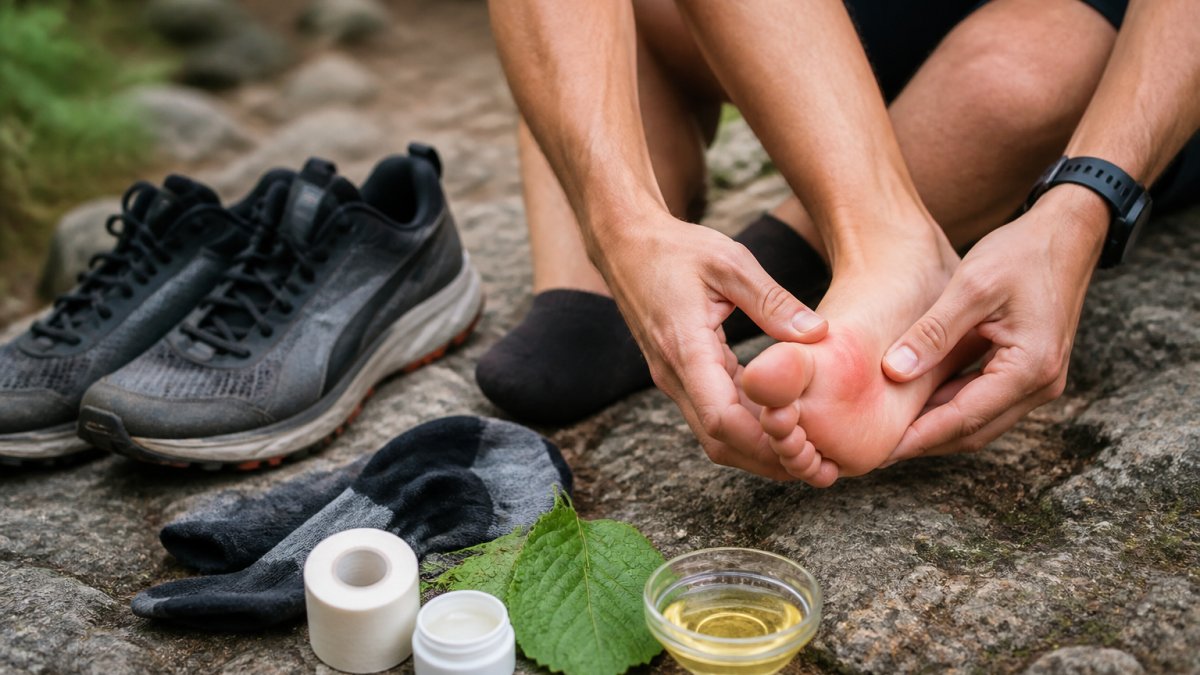
Table of Contents
- What Causes Running Blisters and Why Pain Develops
- How to Treat a Blister on Your Foot: Step-by-Step Care
- How to Relieve Blister Pain with Natural Remedies
- How Long Do Foot Blisters Take to Heal
- Signs of Infection and When to Seek Medical Care
- How to Prevent Blisters When Running: Gear and Technique
- Return-to-Running Guidance After Blister Healing
- Frequently Asked Questions
Last Updated: October 12, 2026
What Causes Running Blisters and Why Pain Develops
A running blister forms when friction rubs the outer layers of skin against the inner layers, creating heat and pressure that separate the skin; fluid then fills the gap.
Blisters develop from friction and moisture. When your foot moves inside your shoe, constant rubbing creates irritation; add sweat, and the skin softens and becomes more vulnerable.
Most runners get blisters at predictable spots: the heel, the ball of the foot, and between the toes.
How to Treat a Blister on Your Foot: Step-by-Step Care
The goal of blister treatment is to protect the wound while it heals. Your approach depends on whether the blister is intact or open.
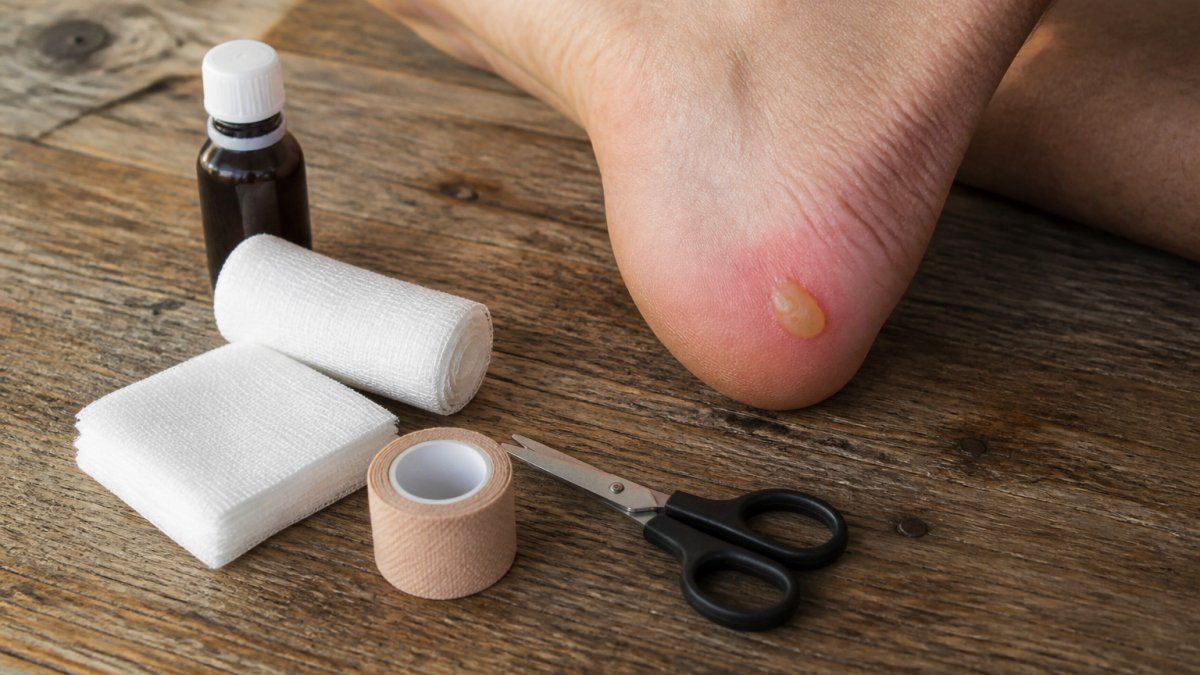
Cleaning and Disinfecting an Intact Blister
Wash your hands and the blistered area with clean water and mild antibacterial soap, then gently pat dry with a clean towel. Do not rub.
If the blister is still intact, leave it that way if possible. The fluid inside protects the raw skin underneath. An intact blister heals faster than one you've drained.
Apply a thin layer of antibiotic ointment around the blister to keep bacteria out, cover with a sterile bandage or blister dressing, and change it daily or whenever it becomes wet or dirty.
When and How to Safely Drain a Blister
Drain a blister only if it's causing severe pain or about to burst on its own. If you do, follow these steps carefully.
Wash your hands and the blister with clean water and soap.
Do not remove the skin covering the blister, it protects the raw area underneath. Apply antibiotic ointment, cover with a sterile bandage, and keep the area clean and dry until new skin forms.
How to Relieve Blister Pain with Natural Remedies
Natural remedies can ease running blister pain, but they are not interchangeable: what works on an intact blister can sting, delay healing, or introduce infection on an open one. Identify which of the four blister states you have, then match the remedy to it.
Match the Remedy to the Blister Type
Intact blister (fluid still under the skin). The roof is a natural bandage, so cooling and cushioning are the priorities.
Open or torn blister. The raw skin underneath is a wound, so anything you apply touches exposed tissue.
Blood-filled blister. A dark blister usually means a small vessel ruptured from shear force.
Infected-looking blister. Increasing pain, spreading redness, warmth, pus, or a red streak moving up the foot means stop all home remedies and seek care.
What the Evidence Actually Supports
Most natural-remedy advice online is folk practice dressed up as fact. A more honest read:
- Aloe vera. Reasonable evidence for soothing minor burns and irritated skin, and generally well tolerated. It is a comfort measure, not an antimicrobial. Use pure gel, not one with added alcohol or fragrance, which will sting an open blister.
- Tea tree oil. Has documented antimicrobial activity in lab settings, but that is not proven wound-healing benefit on a foot blister, and it is a common cause of allergic contact dermatitis. If you use it, dilute it heavily in a carrier oil, patch-test on your forearm first, and never apply it to broken skin.
- Eucalyptus oil. Aromatic, mildly antiseptic, and a known irritant when concentrated. It belongs around the blister, not on it, and only on intact skin.
A useful rule: if a remedy has no established wound-care role and the blister is open, skip it. Save the experimentation for intact skin.
A Practical Sequence for Immediate Pain Relief
When a blister starts hurting mid-run or right after, work through this order:
- Stop and remove the shoe and sock. Continuing to run on a hot spot turns it into a full blister within a mile or two.
- Cool the area. Soak the foot in cool water for 10-15 minutes, or apply an ice pack wrapped in a cloth. Never place ice directly on skin.
- Clean gently. Rinse with clean water and mild soap, then pat dry. Do not rub.
- Cushion, don't coat. A donut-style moleskin or hydrocolloid dressing with a cutout relieves pressure far more reliably than any topical, because padding addresses the mechanical cause of the pain.
- Decide whether to continue. If the pain is sharp, the blister is open, or you are limping, end the run. A small intact blister you have re-cushioned usually allows a short easy finish.
Natural Pain Relief Is Not Blister Prevention
This is the most common mix-up. Anti-friction balms, powders, and lubricants reduce shear and moisture between skin and sock. Used before a run, they can prevent a blister; used on an existing blister, they do not treat it, and some will sting an open wound. Keep the categories separate: prevention before the run, treatment after.
Higher-Risk Readers: When to Skip Self-Treatment
Some runners should not manage a foot blister at home at all. If you have diabetes, peripheral neuropathy, poor circulation, or an immune-suppressing condition, a minor blister can escalate into a serious foot infection quickly, and early warning signs may be muted (the CDC). Get a clinician to look at any blister that is open, worsening, or slow to heal, the same applies if you take immunosuppressants or have had a prior foot infection.
How Long Do Foot Blisters Take to Heal
Most blisters heal within one to two weeks, depending on size and how well you protect them.
Small intact blisters often heal in 3-5 days if kept clean and dry; larger or drained blisters may take 7-14 days.
RockResist GEN1 Trail Running Socks, Debris-Blocking Low Cut →
Keep the blister covered during this time. Change bandages daily. Avoid activities that create friction on the healing area.
Signs of Infection and When to Seek Medical Care
Watch for infection warning signs: increased pain, spreading redness, warmth, or pus.
If you notice any of these signs, stop home treatment and see a doctor, infected blisters need medical care to prevent complications.
Seek immediate care if you have diabetes or poor circulation, since these conditions increase infection risk and even small blisters can become serious.
How to Prevent Blisters When Running: Gear and Technique
Prevention beats treatment: the right gear and technique stop blisters before they start.
Moisture Management and Sock Selection
Moisture is the enemy of blister prevention: wet feet create soft skin that blisters easily. Choose moisture-wicking socks that pull sweat away from your skin.

Cotton socks absorb sweat and hold it against your skin. Avoid them for running. Instead, choose synthetic blends or merino wool that dry quickly.
The RockResist GEN1 Trail Running Socks combine 75% cotton with 25% terylene for moisture management and durability.
Friction Reduction Through Footwear and Anti-Friction Balm
Properly fitting shoes prevent most blisters.
Replace shoes every 300-500 miles, since worn cushioning increases friction and blister risk, and get fitted at a specialty running store to match your foot shape.
Anti-friction balms create a slippery barrier between skin and shoe. Apply balm to blister-prone areas before your run to significantly reduce friction over long distances.
Return-to-Running Guidance After Blister Healing
Most return-to-running advice stops at "take it easy," which is not enough to prevent re-blisters, common because new skin is thinner and more fragile than the skin it replaced. Use the criteria below to decide when you are ready and how to rebuild mileage without reopening the wound.
Readiness Criteria: Are You Cleared to Run?
Do not judge by the calendar alone, a blister can look healed while the tissue underneath is still remodeling. You are ready for a test run when all of these are true:
- The blister is fully closed with no weeping or drainage.
- The new skin is no longer pink, shiny, or tender to light pressure.
- You can press firmly on the spot with a thumb without wincing.
If any fail, you are still healing. Cross-train instead, cycling, swimming, or the elliptical keeps your aerobic base without loading the blister site.
A Staged Mileage Progression
Once you pass the readiness check, rebuild gradually. A workable pattern:
- Days 1-3: 15-20 minute easy runs on smooth pavement or a treadmill. No trails, hills, or speed work.
- Days 4-7: If no irritation returns, extend to 25-30 minutes at easy effort.
- Week 2: Add roughly 10% per run rather than per week, only if the site stays quiet. Reintroduce gentle hills before pace.
If a hot spot or tenderness returns, drop back one step rather than pushing through, reopening a healing blister costs more training time than a cautious extra week.
Protect the Site During the Vulnerable Window
The first two to three weeks after a blister closes carry the highest re-injury risk. During that window:
- Keep the area covered with a thin hydrocolloid or blister dressing, even on short runs.
- Use moisture-wicking socks and change them immediately if wet.
- Reapply anti-friction balm before every run, prevention, not treatment, and it belongs on healed skin.
When to Hold Off Longer
Some situations call for more than a cautious return. If the blister was drained, blood-filled, or infected, treat the recovery window as longer, often three to four weeks before full training. If you have diabetes, poor circulation, or immune compromise, get clinician clearance before resuming, since re-injury carries outsized risk. And if the same spot blisters repeatedly despite good socks, fit, and balm, the problem is likely biomechanical, a podiatrist or running-focused physical therapist can identify the gait or foot-shape issue driving it.
Frequently Asked Questions
Can I put aloe vera on a running blister, and does it actually help with pain?
Aloe vera can soothe mild discomfort and may reduce irritation due to its anti-inflammatory properties, but it's most effective on blisters that are already open or draining. Apply a thin layer directly to the blister after cleaning, or use it under a protective dressing. For intact blisters causing sharp pain, cold therapy or padded protection often works faster. Aloe works best as part of a broader treatment strategy, not as a standalone solution for running blister pain.
Should I pop a blister from running, or is it safer to leave it intact?
Intact blisters protect the raw skin underneath and heal faster when left alone. However, if a blister is painful enough to disrupt your running or daily activities, draining it safely reduces pressure and pain. Use a sterile needle, clean the area thoroughly with antiseptic soap and water, puncture the edge (not the center), and allow fluid to drain naturally. Cover it immediately with an antibiotic ointment and sterile dressing. Never peel away the blister roof, as it protects healing skin underneath.
How long does a running blister take to heal after I drain it?
Most drained blisters heal within 3 to 7 days if kept clean and protected from friction. The skin underneath needs time to toughen and reattach. Healing speed depends on blister size, how much pressure you put on it, and how well you protect it from moisture and rubbing. Keeping the area dry, changing dressings daily, and avoiding friction will accelerate healing. If you must run, use heavy padding or specialized blister dressings to minimize contact with the wound.
What's the fastest way to heal a blister on your foot so I can return to running?
The fastest approach combines protection, moisture management, and reduced friction. Keep the blister clean and dry, apply antibiotic ointment, and cover it with a padded, moisture-wicking dressing that stays in place during activity. Reduce running volume or switch to low-impact cross-training until pain subsides. Wearing moisture-wicking socks with a debris-blocking design like RockResist GEN1 socks helps keep grit out where it usually sneaks in, which can contribute to blister prevention. Most runners return to full training within 5 to 10 days with consistent care.