
Last Updated: October 29, 2026
Quick Summary
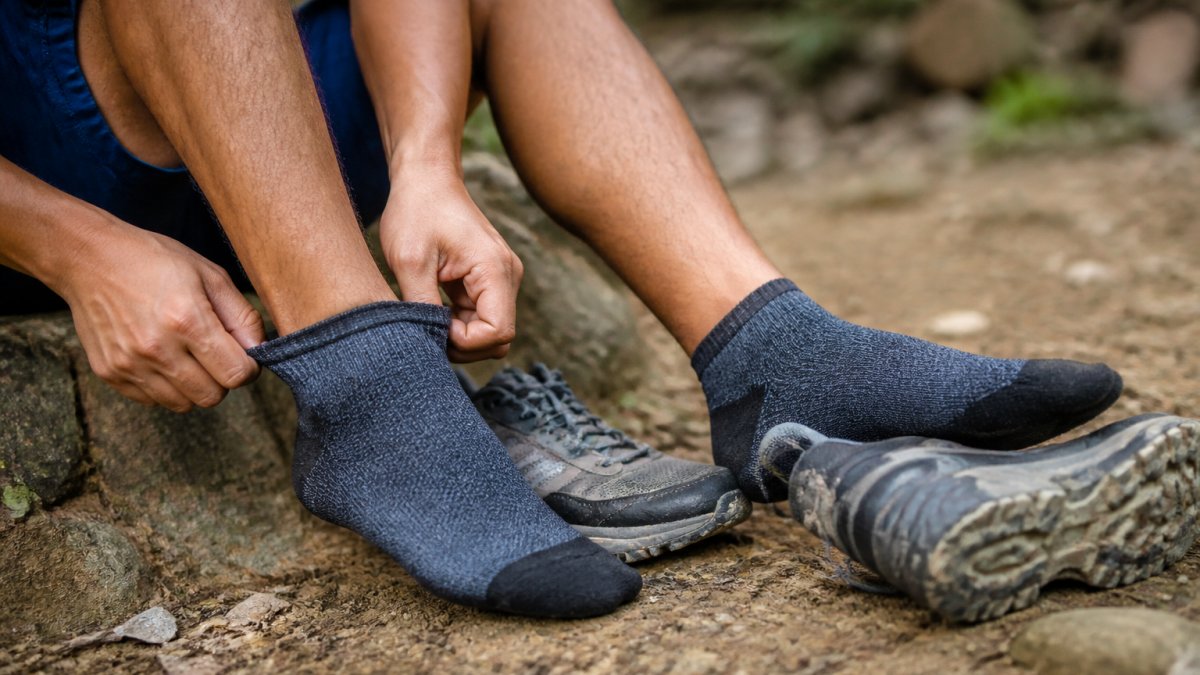
Compression socks support moisture management through fit and contact rather than absorption, keeping wicking fabric pressed against the skin so sweat transfers consistently instead of pooling in loose folds. They do not wick sweat themselves, so choose a moisture-moving fabric first, then use mild compression to keep it working.
- Fabric decides whether sweat leaves the skin; fit decides whether that fabric keeps working.
- Mild compression anchors the sock without squeezing; higher pressure leaves less room for airflow.
- Check cuff, heel pocket and toe seam before trusting a sock's fit on long efforts.
- Wash compression socks in cool water, skip fabric softener, and never use the dryer.
- Doubling up thick socks adds heat and holds moisture, so go thinner and drier.
Table of Contents
- Do Compression Socks Actually Help With Moisture Management?
- How Compression Level and Sock Fit Affect Heat and Sweat
- Compression Socks vs Moisture-Wicking Running Socks
- Choosing Compression Socks for Sweaty Feet
- How to Keep Feet Dry While Running
- How to Wash Compression Socks Without Ruining the Fit
- View RockResist Socks & Sizing for Damp Trail Days
- Frequently Asked Questions
Do Compression Socks Actually Help With Moisture Management?
Compression socks can help with moisture management, but not in the way most people assume. They do not absorb sweat or dry your feet. Their real contribution is fit and contact: a sock that stays snug against the skin moves sweat away more consistently than a loose sock that bunches and slides.
Here is the honest answer: compression socks are a support tool for moisture control, not a replacement for moisture-wicking fabric.
That distinction matters because the two features get marketed as one thing. They are not.
- Fabric decides whether sweat gets pulled off the skin or sits there.
- Fit decides whether that fabric keeps working after mile five or bunches at the heel.
- Compression level decides how much pressure the sock applies, which affects heat and airflow.
The Cleveland Clinic overview of compression therapy is clear that compression is used mainly to support circulation and reduce swelling, not to manage sweat. That is the correct frame. Compression helps blood flow and reduces fluid buildup in the lower leg. Moisture control is a separate job, handled by fiber choice and ventilation.
So the practical takeaway: if sweaty feet are your problem, look at the fabric blend and the fit first. Compression is the supporting act.
How Compression Level and Sock Fit Affect Heat and Sweat
Fit changes everything about how a sock handles sweat. A sock that fits well stays in contact with the skin across the whole foot. A sock that is too loose can rub, bunch, and trap heat. A sock that is too tight can restrict airflow.
Three fit problems drive most damp-feet complaints:
- Heel slip. The sock rotates slightly with each stride, so the heel pocket never sits where it should.
- Collar gap. A loose cuff lets debris and cool air in, and lets warm damp air sit against the ankle.
- Toe bunching. Extra fabric at the toe holds sweat against the skin instead of moving it along.
Compression level interacts with all three. Mild compression keeps the sock anchored without squeezing. Higher compression is designed for circulation support and medical use, and it is not automatically better for running. More pressure means less room for air to move.
A practical way to test fit without guessing: put the sock on and check three points. The cuff should sit flat without rolling. The heel pocket should stay under your heel when you flex your foot. The toe seam should sit at the end of your toes, not on top of them. If any of those fail, the size or shape is wrong for your foot.
Watch out: a sock that is too big can slide, which can leave the foot damp. Measure your foot and follow the manufacturer's size chart exactly. If you are between sizes, follow the manufacturer's guide rather than guessing, and check the sizing chart before you order.
For a deeper look at how fit and fabric work together in trail socks, see View RockResist Socks & Sizing.

Compression Socks vs Moisture-Wicking Running Socks
These two sock types solve different problems, and the smart move is often to combine them rather than pick a side. The confusion starts because both are marketed as "dry feet" products, but they work through different mechanisms.
A moisture-wicking sock relies on fiber physics. Capillary action pulls liquid sweat off the skin and spreads it across the fabric surface, where airflow evaporates it. The fiber has to be able to move water along its surface and release it, which is why merino wool, polyester, and nylon dominate this category. Cotton absorbs well but holds water inside the fiber, which is why an all-cotton sock feels heavy and stays damp.
A compression sock relies on pressure and contact. Graduated pressure keeps the fabric pressed against the skin so sweat transfers into the fabric consistently instead of pooling in loose folds. Compression does not make a fabric wick. It makes a wicking fabric keep working.
| Feature | Compression Socks | Moisture-Wicking Running Socks |
|---|---|---|
| Main job | Support circulation, reduce swelling, maintain skin contact | Move sweat off the skin and spread it for evaporation |
| Mechanism | Graduated pressure and snug fit | Capillary action and fiber surface chemistry |
| Fabric focus | Often synthetic blends for stretch and recovery | Wool, synthetic, or engineered blends |
| Fit | Snug, graduated pressure from ankle to calf | Close fit, no pressure gradient |
| Best for | Long standing, travel, recovery, swelling, long efforts | Running, hiking, hot weather, high sweat output |
| Sweat handling | Indirect, through fit and contact | Direct, through fiber and airflow |
| Failure mode | Too tight restricts airflow; too loose slides and pools sweat | Saturated fabric stops transferring and feels clammy |
A useful way to think about it: wicking fabric is the pump, and compression is the seal that keeps the pump connected to the skin. If the seal is bad, the pump has nothing to move.
Material by material, the moisture story differs:
- Merino wool moves moisture well, resists odor, and stays warm when damp, but it dries slower than thin synthetics and costs more.
- Polyester moves moisture quickly and dries fast, but it can hold odor over time.
- Nylon adds durability and abrasion resistance, and it is often blended with polyester for stretch and recovery.
- Cotton absorbs strongly but releases slowly, so it feels damp longer. In a blend, cotton can add comfort and structure, but a high-cotton sock will hold more water than a synthetic or wool sock.
- Terylene is a polyester variant used for durability and shape retention, and its moisture behavior depends on the overall blend and knit structure.
Our take: if you want both support and sweat control, look for a sock that pairs a wicking blend with a secure, non-slip fit. That is the combination that actually works on the trail. For a deeper look at how wicking construction works, read our guide to moisture wicking trail socks.
RockResist GEN1 Trail Running Socks, Debris-Blocking Low Cut →
Choosing Compression Socks for Sweaty Feet
Start with the fabric blend, then the fit, then the pressure. That order matters.
Fabric. Look for blends that move moisture rather than hold it. Merino wool and synthetic fibers like polyester and nylon are the usual picks. Cotton can work in a blend, but a high-cotton sock will hold more water. RockResist GEN1 uses a 75% cotton and 25% terylene blend. Its integrated barrier helps block dirt, sand, and small trail debris from entering at the shoe collar.
Fit. A compression sock for sweaty feet should feel snug but not tight. You should be able to slide a finger under the cuff. If it leaves deep marks after twenty minutes, it is too small.
Pressure. Mild compression is enough for most runners. Medical-grade compression is a different product with a different purpose, and it is worth talking to a clinician if you need it for a circulation issue.
Seams and toe box. Flat seams reduce friction. A toe box that matches your foot shape stops bunching.
If your feet still feel wet in wicking socks, you are not alone. Our article on why feet get wet in moisture wicking socks explains the usual culprits.
How to Keep Feet Dry While Running
Dry feet come from four habits, not one product. Socks are part of the system, not the whole system.
- Pick the right sock. A wicking blend with a secure fit beats a thick sock every time.
- Manage the shoe. Breathable uppers and mesh panels let heat escape. A waterproof shoe traps sweat in.
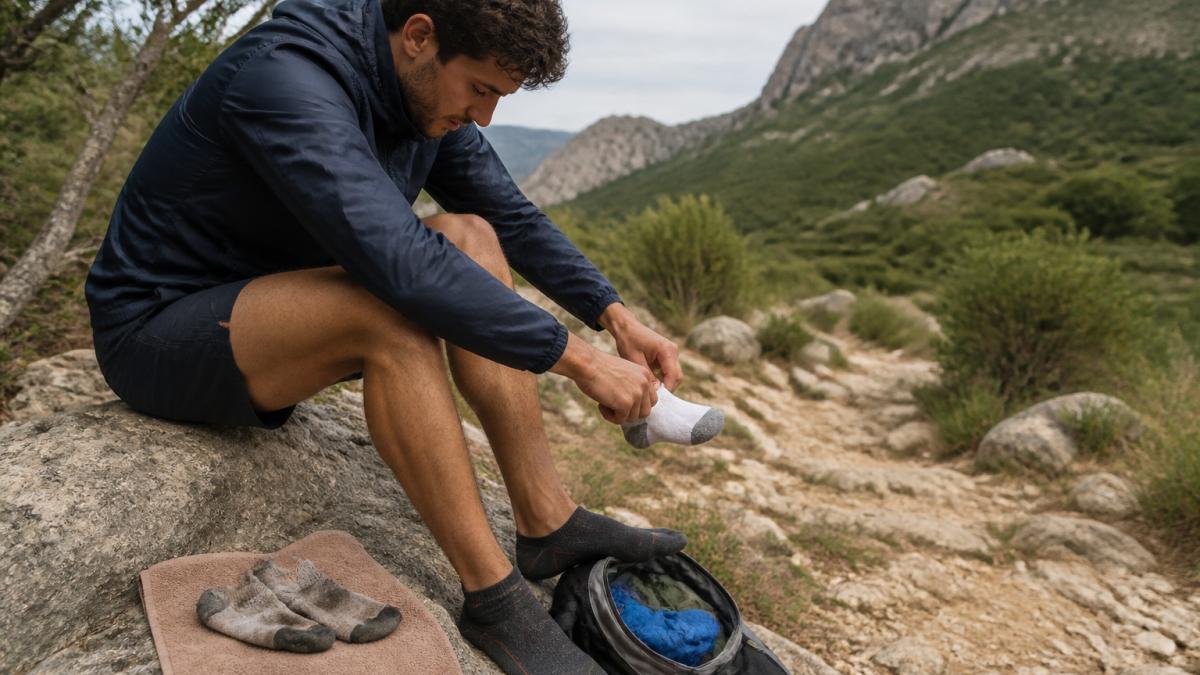
- Use a drying routine. Air shoes out after every run. Rotate two pairs so each dries fully.
- Address sweat at the source. A thin wicking liner, foot powder, or an antiperspirant made for feet can help. For a full set of methods, see how to stop foot sweat hiking.
A common mistake is doubling up on thick socks to "cushion" the foot. Extra thickness adds heat and holds moisture. Go thinner and drier.
How to Wash Compression Socks Without Ruining the Fit
Wash compression socks in cool water and let them air dry. Heat is what kills the stretch, and stretch is what makes compression work.
A simple routine:
- Turn the socks inside out before washing.
- Use cool water and a mild detergent.
- Skip fabric softener, which coats fibers and reduces wicking.
- Never put compression socks in the dryer.
- Lay flat or hang to dry, away from direct heat.
- Wash after every run to keep bacteria and odor down.
Foot hygiene matters for comfort on long days. Damp socks left in a gym bag are a breeding ground for odor and skin irritation. Rotate pairs, wash often, and keep a dry spare in your pack for long days.
View RockResist Socks & Sizing for Damp Trail Days
RockResist GEN1 trail socks are built to help keep grit out at the shoe collar. The integrated barrier helps block dirt, sand, and small trail debris from entering at the shoe collar, and it can be worn up on loose terrain or tucked in for a lower-profile look. The non-slip construction helps keep the sock in place, and added heel material helps reduce friction at the collar.
Sizing is unisex, from small through large, with women's and men's equivalents listed on the size chart. Check the chart before you order, and if you are between sizes, follow the manufacturer's guide.
View RockResist Socks & Sizing for current details. No grit. No quit.
Frequently Asked Questions
Do compression socks keep your feet dry?
Compression alone does not absorb sweat. Moisture handling depends mainly on the fabric a sock is knit from and how well it fits.
What sock material is best for sweaty feet?
Look at the fiber blend on the label rather than the marketing name, and check the fiber content listed for each product.
Can wet feet cause blisters while running?
Yes. Moisture softens the outer layer of skin, and friction then separates that softened layer from the tissue beneath it, which is how a blister forms. Damp feet also stay warmer, and warmth plus friction speeds the process.
Should you wear compression socks overnight?
Follow the guidance that comes with the specific sock and ask a clinician if you have a circulation or vascular condition. Overnight wear is a common use for medical-grade compression stockings, but athletic compression socks are designed for daytime activity and recovery windows. If you wear them to bed, check the skin for marks, numbness, or tingling, and take them off if anything feels wrong.
Damp feet are a gear problem and a habit problem, and both are fixable. If you want a sock that stays put, keeps grit out, and holds up on rough ground, RockResist is built for exactly that. Our GEN1 trail socks pair a debris-blocking barrier with a secure fit and reinforced construction for long days on technical terrain. Get started with RockResist and give your feet one less thing to fight.
