
Last Updated: November 17, 2026
Quick Summary
Wash running socks inside out in cold water on a gentle cycle with mild detergent, then air dry them at room temperature away from direct heat. This protects elastic fibers, removes sweat and salt, and prevents the fiber damage that shortens sock lifespan. Skip bleach, fabric softener, and the dryer.
- Sort socks by fiber into wool, synthetic, and cotton blend piles before washing.
- Soak odorous socks in cool water with mild detergent for 30 minutes before washing.
- Rinse muddy socks the same day and hang them to dry before they go in the wash.
- Inspect socks monthly and retire any pair with two or more failures.
- Give each pair a full day of rest between wears to let elastic fibers recover.
Table of Contents
- Why Running Socks Wear Out Faster Than You Think
- How to Wash Running Socks Without Wrecking Them
- How to Dry Running Socks So Elasticity Survives
- How Long Do Running Socks Last?
- When to Replace Running Socks: An Inspection Routine
- Preventing Damage Before and During the Run
- Building a Rotation and Storage System That Works
- Stock Your Rotation With RockResist Trail Socks
- Frequently Asked Questions
Why Running Socks Wear Out Faster Than You Think
Most runners treat socks as an afterthought. They spend a good amount on shoes, then grab whatever three-pack is on sale. That math is backwards, and the socks pay the price first.
Running socks fail from the inside out. Sweat, salt, and friction break down fibers long before the fabric looks thin. Heat from a dryer can finish the job. So the pair that "suddenly" died at mile 14 was actually dying for months.
At RockResist, we build socks for rugged trails. We also know the biggest killer of sock life isn't the trail. It's the laundry routine.
Here's the good news: a few small habits can stretch a pair well past its expected lifespan. Below, we'll walk through washing, drying, inspection, and rotation so your socks earn their keep.
How to Wash Running Socks Without Wrecking Them
Wash running socks inside out in cold water on a gentle cycle, then air dry them. That routine protects elastic fibers, removes sweat and salt, and prevents the fiber damage that shortens sock lifespan. The details below go beyond the generic steps most guides repeat, because fiber type and soil level change what "gentle" actually means.
Follow these steps:
- Turn socks inside out. This exposes the sweat, salt, and dead skin that collect against your foot. It also keeps abrasion off the outer knit, where pilling and thinning show first.
- Use cold water. Heat weakens elastic fibers and shrinks wool. Cold water also limits dye transfer between pairs.
- Pick a delicate or gentle cycle. Agitation stretches the cuff and thins cushioning. If your machine has a hand-wash or wool cycle, use it for wool blends.
- Choose a mild detergent. Skip bleach and fabric softener. Softener coats performance fibers and traps odor. For synthetic blends, a technical wash designed for athletic fabrics helps lift body oils that ordinary detergent leaves behind.
- Wash after every wearing. Sweat left in the fabric breaks down fibers and breeds odor. A damp sock in a gym bag is the worst-case scenario.
A common mistake is tossing socks in with towels on a hot cycle. Towels need heat. Socks don't.
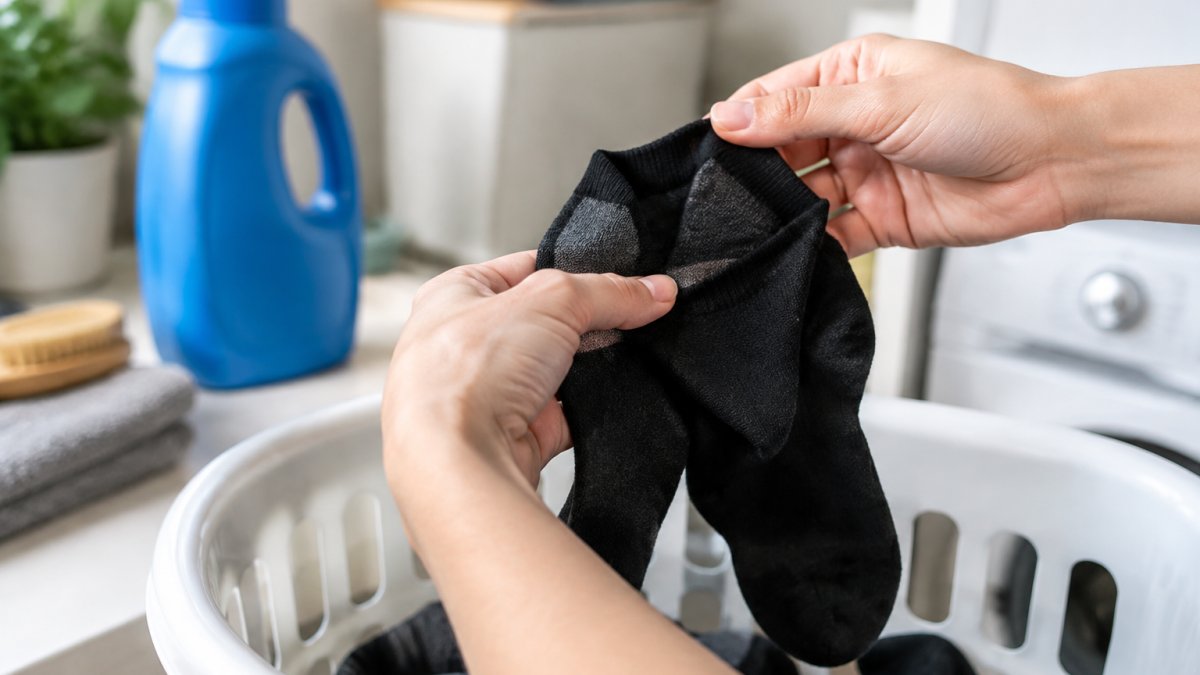
If you want the full routine laid out step by step, see our guide on how to care for and wash hiking socks at home.
Sort by Fiber Before You Sort by Color
Fiber decides how a sock should be washed, not color. Wool blends need cold water and mild soap. Synthetic fibers pick up oil and odor and benefit from a technical wash. Cotton blends, like our RockResist GEN1, which is 75% cotton and 25% terylene, are best handled gently and air dried.
Sort into three piles: wool, synthetic, cotton blend. Wash each pile on its own cycle. This one habit prevents most accidental damage.
Treat Odor, Salt, and Stains Without Damaging Fibers
Sweat odor and salt rings are the two most common sock problems, and both respond to fabric-safe treatment rather than harsh chemistry. For odor, soak socks in cool water with a small amount of mild detergent for 30 minutes before washing. For salt rings and dirt at the heel and toe, pretreat with a dab of mild detergent worked in gently with your fingers, then wash as normal. Avoid chlorine bleach on your socks. Test any bleach on an inconspicuous area first, and start with cold water.
Handle Wet, Muddy, and Back-to-Back Runs
A sock from a rainy or muddy run should not sit in a bag or hamper. Rinse it in cool water the same day, wring it gently without twisting the cuff, and hang it to dry before it goes into the wash. Mud that dries in the fabric abrades fibers from the inside. For back-to-back training days, keep at least one clean dry pair in reserve so a damp sock never goes back on your foot.
How to Dry Running Socks So Elasticity Survives
Air dry running socks at room temperature, laid flat or hung, away from direct heat. Machine drying is the fastest way to kill elasticity, shrink the cuff, and flatten cushioning.
Heat is the enemy. A hot dryer relaxes elastic fibers, and they don't bounce back.
Try these drying habits:
- Roll socks in a dry towel to press out water
- Lay them flat or hang them, shaped normally
- Keep them out of direct sun and off radiators
- Give them a full day to dry before the next run
A dryer sheet won't save a heat-damaged cuff. Skip the machine entirely when you can.
How Long Do Running Socks Last?
Running socks wear out at different rates depending on fiber, fit, and care. Training frequency and weekly mileage matter more than the calendar. A high-mileage runner may retire a pair in months, while a casual runner gets a year or more.
The real signal isn't time. It's condition. A sock with flattened cushioning under the heel is done, even if it looks fine on the outside.
Watch for these signs:
- Thinning at the heel and toe
- Cushioning that feels flat or compressed
- A cuff that slides down mid-run
- Fabric that stays damp longer than it used to
When to Replace Running Socks: An Inspection Routine
Replace running socks when the heel or toe thins, cushioning flattens, the cuff loses grip, or the fabric stays damp. Inspect pairs regularly and retire any sock that shows several of those signs.
Run this check on the first of each month:
- Hold the sock up to light. Can you see through the heel or toe?
- Pinch the cushioning. Does it spring back, or stay flat?
- Pull the cuff. Does it snap back into shape?
- Check the seams for fraying or holes
- Smell test after washing. Lingering odor means buildup
Two or more failures means it's time to retire the pair. Our checklist on the nine signs your hiking socks need replacing walks through each one in detail.
Preventing Damage Before and During the Run
Fit causes more sock damage than any wash cycle. A loose sock slides, rubs, and wears through at the heel. A tight one stretches the cuff and strains the seams. The specific causes of holes and thinning are worth naming so you can check them before every run.
Get the fit right first. Check sizing against the manufacturer's guide before you buy, and match the sock to the shoe and the terrain. A sock that fits well in one shoe may slide in another with a different heel counter or volume.
Then reduce friction during the run:
- Trim toenails. Long nails wear through the toe box from the inside, and the damage often appears before the fabric looks thin. Keep them short and filed smooth.
- Lace shoes snugly so the foot doesn't shift. A sliding foot multiplies friction at the heel and ball of the foot.
- Inspect insoles and shoe liners. Rough, worn, or grit-covered insoles abrade the sock from below. Replace insoles that have lost their surface or trapped sand.
- Use a thin liner under thicker socks on long efforts. The liner takes the friction instead of the outer sock.
- Swap to a dry pair after wet or muddy runs. A damp sock breaks down faster and loses cushioning recovery.
Back-to-back runs are a common problem. A damp sock from yesterday's rain run can break down faster if it sits in a gym bag. Rinse it, wring it, and hang it the same day.
Watch out: a shoe that fits well in the store can still cause heel slip after the midsole compresses, so recheck fit every few hundred miles.
If heat and sweat are your main problem, our guide on choosing running socks for hot weather training covers which builds hold up best.
Building a Rotation and Storage System That Works
A rotation of several pairs can give each sock rest between wears and time to fully dry.
Store socks clean, dry, and loosely folded. Never ball them up tight, because that stretches the cuff over time.
Here's a rotation that works:
| Pair | Status | Next Step |
|---|---|---|
| Pair A | On your feet today | Wash after the run |
| Pair B | Clean, in the drawer | Ready for tomorrow |
| Pair C | Drying after washing | Back in the drawer tonight |
Give each pair a full day of rest between wears. That rest lets elastic fibers recover and lets moisture fully leave the fabric. A three-pair bundle makes this system easy to run from day one.
Stock Your Rotation With RockResist Trail Socks
RockResist GEN1 Trail Running Socks are a low-cut design made from 75% cotton and 25% terylene, with an integrated barrier that helps block dirt, sand, and small trail debris at the shoe collar.
Wear the barrier up for loose terrain or tuck it in for a lower-profile look. Added heel material helps reduce friction at the collar, and non-slip construction keeps the sock in place on high-movement runs.
Care is simple: hand-wash and line-dry, as listed for these socks.
Your socks take more abuse than any other piece of gear you own. Treat them like equipment, not laundry, and they'll return the favor mile after mile. RockResist builds trail socks with a debris-blocking barrier, a secure non-slip fit, and added heel material at the collar. Start with a fresh rotation and give every pair the care it deserves.
View RockResist Socks & Sizing to check current sizing, pricing, and offers before you build your rotation.
Frequently Asked Questions
How long should running socks last?
Running socks vary in how long they last, and lifespan depends on use and care. The number moves with fiber content, how often you wash them, and whether you rotate pairs. Cotton-heavy socks tend to flatten and thin sooner than blends built for abrasion. Judge by condition rather than the calendar: thinning under the heel, a stretched cuff, or flattened cushioning means it is time to swap them out.
Can you put running socks in the dryer?
You can, but dryer heat is the fastest way to shorten sock lifespan. High heat breaks down elastic fibers in the cuff and heel, which is why socks start sliding down mid-run. If you must machine dry, use the lowest heat setting and pull socks out while still slightly damp. Air-drying on a rack at room temperature is gentler and costs nothing. RockResist recommends hand-washing and line-drying its GEN1 socks to avoid machine washing and tumble drying, which can negatively affect the product.
Does washing running socks inside out help them last longer?
Turning socks inside out exposes the inner surface where sweat, salt, and dead skin collect, so the wash cycle reaches those areas more directly. Pair that with cold water, a gentle cycle, and a mesh laundry bag, and you cut both odor buildup and fiber wear. Skip bleach and fabric softener, which coat performance fibers and break down elasticity.
How often should runners replace their socks?
Replace running socks when you spot thinning at the heel or toe, a cuff that no longer grips, or cushioning that feels flat underfoot. For most runners that lands somewhere between 300 and 500 miles, but back-to-back long runs on abrasive terrain speed it up. Keep a written log of when each pair entered rotation and inspect them monthly. A rotation of several pairs lets each pair rest and dry between wears.
