Last Updated: November 11, 2026
Quick Summary
The best running socks for hot weather training use a fiber blend that moves sweat away, a thin open knit for ventilation, and a snug, wrinkle-free fit. Prioritize smooth toe seams, a secure heel cup, and sizing up rather than down, since tight socks bunch and cause blisters in heat.
- Hot spots form when trapped heat, pooled sweat, and repeated friction stack up at the same spot.
- A thin, open knit in a mediocre blend often runs cooler than a dense knit in a premium fiber.
- Elastic content keeps the sock from stretching out when wet, preventing folds that cause hot spots.
- Ultralight socks suit race day and hot, humid runs but offer less padding on rough ground.
- Keep at least three pairs in rotation so each one fully dries between runs.
Table of Contents
- Why Hot Weather Changes What You Need From Running Socks
- What Is the Best Material for Socks in Hot Weather
- Breathability, Ventilation and How Sock Weight Affects Foot Temperature
- Best Running Socks for Long Distance and Marathon Training
- Fit, Compression and Blister Troubleshooting in Hot Weather
- Best Budget Running Socks and the Value of Care and Rotation
- Debris Protection at the Shoe Collar on Trail Runs
- Shop RockResist Trail Socks for Your Next Hot-Weather Block
- Frequently Asked Questions
Why Hot Weather Changes What You Need From Running Socks
Heat changes the job description of a running sock. When the mercury climbs, your feet sweat more, your shoes hold that moisture longer, and every seam and fold becomes a friction point. The best running socks for hot weather training are built to move sweat away, cut friction, and keep the foot cool rather than simply cushion it.
Below, we break down materials, weights, fit, and troubleshooting for a full summer block.
Heat Buildup, Sweat and the Conditions That Cause Hot Spots
Hot spots form when trapped heat, pooled sweat, and repeated friction stack up at the same spot.
Watch out: sizing down to get a "snug" feel is one of the most common causes of summer blisters.
What Is the Best Material for Socks in Hot Weather
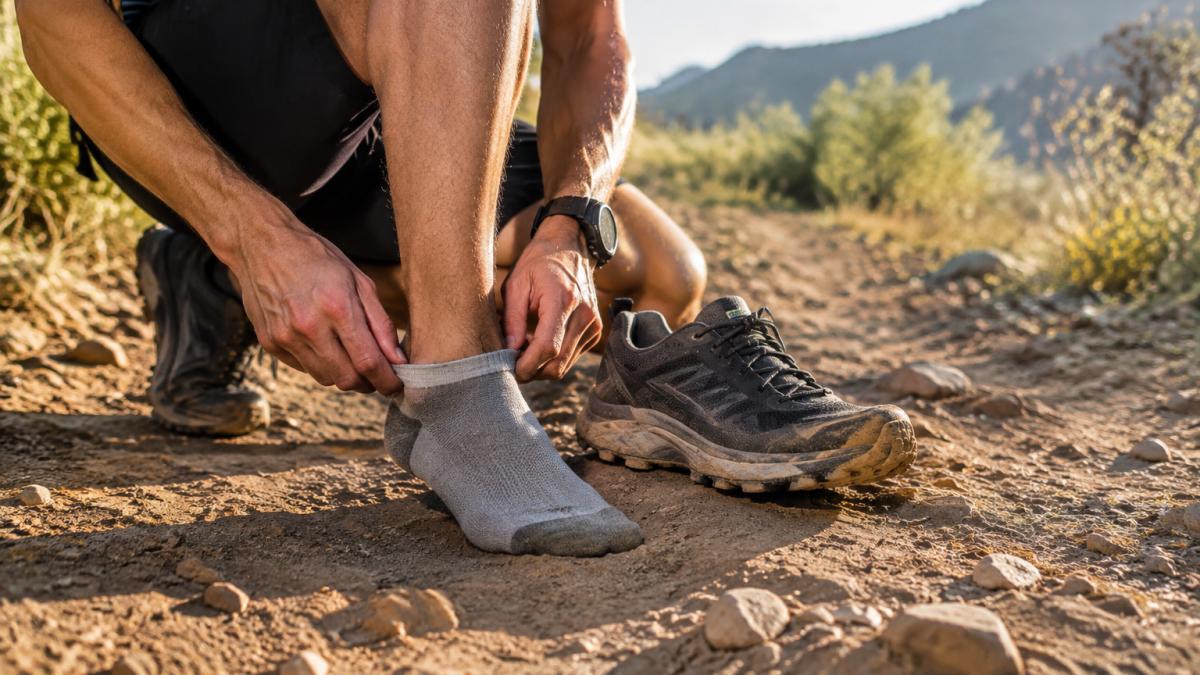
The best material for socks in hot weather manages moisture without trapping heat. In practice, that means a fiber blend: something that absorbs sweat, something that moves it along, and enough structure to keep its shape mile after mile.
No single fiber wins every category. Cotton feels soft but holds water. Synthetics dry faster but can hold odor. What separates a hot-weather sock from a cool-weather one is how the blend behaves once saturated, in summer training, most socks spend part of every run wet.
How Heat and Humidity Change Fiber Behavior
- Dry heat (low humidity, full sun): sweat evaporates quickly, so the sock's job is to spread moisture over a wide surface and let it flash off. Thin, open knits and higher synthetic content shine here. The risk is salt buildup and abrasion at the heel and toes as the sock dries stiff between runs.
- Humid heat (high dew point, shaded trails): evaporation is slow, so sweat pools instead of leaving. A cotton-heavy blend stays heavy and clammy for the whole run. A blend with a moisture-moving component and a snug, wrinkle-free fit matters more than raw thinness.
- Long sun-exposed runs: the top of the foot and ankle get direct radiant heat, and dark or densely knit socks absorb more of it. Lighter colors and thinner zones over the instep run cooler to most runners, though the effect is modest compared with fit and moisture.
Runners often blame the fiber when the real problem is a saturated sock that no longer fits.
Synthetic Fibers, Merino Wool and Cotton Compared
Here is how the three common fibers stack up for hot-weather running:
- Synthetic fibers (polyester, nylon, terylene): light and durable. Odor can build up if the sock isn't washed promptly.
- Merino wool: regulates temperature and resists odor naturally. Fine-gauge merino can feel cool in heat, but it costs more, needs gentler care, and heavier weights run warm.
- Cotton: soft when dry, but it absorbs and holds sweat. A cotton-heavy blend works best when the fit stays snug even when wet.
Reading a Blend Label for Summer Training
Most running socks list fiber percentages on the package or product page. A few practical reads:
- High synthetic content with a mesh knit is the most common hot-weather formula; look for open zones over the instep and under the arch.
- Wool-synthetic blends trade some drying speed for odor control and temperature regulation, which helps on multi-day trips and back-to-back doubles.
- Cotton-heavy blends can work in heat if the fit is precise and the sock is changed promptly after the run; they are a poor choice for humid conditions or long wet efforts.
For a deeper look at how these fibers behave in heat, see our breakdown of hot-weather sock materials. If you're weighing wool against synthetics for the trail, our merino vs synthetic comparison covers drying speed, odor, and blister risk.
Breathability, Ventilation and How Sock Weight Affects Foot Temperature
Breathability is the sock's ability to let heat and vapor escape. Ventilation is where that happens: mesh panels, open knits, and thinner zones over the top of the foot.
Here's how sock weight generally maps to conditions:
| Sock Weight | Cushioning | Best For | Trade-off |
|---|---|---|---|
| Ultralight | Minimal | Race day, hot and humid runs | Less padding on rough ground |
| Lightweight | Low | Daily summer training | Moderate durability |
| Midweight | Moderate | Long trail days, cooler mornings | Warmer underfoot |
| Cushioned | High | Recovery runs, cold weather | Retains more heat |
If your breathable socks still feel damp after a few hours, the cause is often the fiber and fit, not the vents. Our guide on why moisture-wicking socks leave feet wet explains the mechanics.
Best Running Socks for Long Distance and Marathon Training
Long-distance running socks should balance cushioning, seam placement, and fit over many hours. Marathon training multiplies every small flaw: a seam that rubs at mile 5 becomes a blister at mile 18. Prioritize smooth toe seams, a secure heel, and a cushion profile that matches your shoe and terrain.
What Marathon Runners Should Look For in a Race Sock
- Flat or seamless toe construction to reduce friction at the toes
- A heel cup that stays put so the sock doesn't slide during push-off
- Targeted cushioning under the ball and heel without excess bulk
For the marathon-specific version of this checklist, read our guide to the best running socks for marathon training and long-distance builds.
Fit, Compression and Blister Troubleshooting in Hot Weather
Fit is the single biggest lever you control. A well-fitted sock contacts the foot evenly, which spreads friction instead of concentrating it. A sock that's too tight can restrict circulation and create new pressure points. In heat, fit can get harder to hold because feet may swell over a long run, so a sock that fit at the start can feel tight later.
Matching Sock Fit to Foot Shape
Most fit problems start before the run, when a sock is chosen for the wrong foot shape rather than the wrong size.
- Wide feet: look for socks with a wider toe box and stretch in the knit; a narrow sock compresses the forefoot and pushes toes together, which is where blisters start.
- Narrow feet and low-volume feet: a roomy sock will slide and bunch. A snugger heel cup and a thinner knit hold position better.
- High arches: cushioning under the arch can feel supportive, but too much bulk there lifts the foot and changes how the shoe fits.
Verify sizing against the manufacturer's size guide rather than assuming your shoe size maps directly, sock sizing often runs on a separate chart, and a size that fits in one brand may not in another.
How Sock Thickness Interacts With Shoe Fit
Sock volume changes how your shoe fits, and in heat that interaction matters more because feet swell inside a shoe that doesn't expand.
- Thick socks in a snug shoe reduce toe room and increase pressure on the top of the foot; the result is hot spots under the laces and at the toes.
- Thin socks in a roomy shoe let the foot slide, which shifts friction to the heel and forefoot.
- Swelling mid-run effectively adds volume inside the shoe; a sock that was right at the start can become tight, so many runners keep a thinner sock option for the hottest long runs.
Troubleshooting Hot-Weather Blisters
Troubleshooting hot-weather blisters comes down to isolating the cause:
- Blisters at the heel: the sock is sliding, often because it's too large or the heel cup is shallow. Check that the heel pocket sits squarely on the heel bone before you lace up.
- Blisters at the toes: toe box room or a bulky seam is the culprit. Try a thinner sock or a shoe with more toe room before blaming the fiber.
- Blisters along the arch: moisture pooling, usually from a sock that holds water. A blend that stays snug when wet reduces the folds that trap moisture.
If heat and swelling are changing how your socks fit mid-run, our steps to manage foot swelling while running can help you adjust before friction sets in. For trail runs where debris can enter at the collar, a sock with an integrated barrier, like the RockResist GEN1 (75% cotton and 25% terylene, with a barrier that can be worn up or tucked in), helps address that entry point. View sizing and fit details on the RockResist socks page.
Best Budget Running Socks and the Value of Care and Rotation
A budget-friendly running sock is one you can rotate often without replacing it every month. Value isn't the lowest sticker price; it's cost per mile.
Care can extend a sock's lifespan. Follow the manufacturer's care instructions, and keep at least three pairs in rotation so each one fully dries between runs. Hand-washing and line-drying are the recommended care method for RockResist GEN1 socks.
Debris Protection at the Shoe Collar on Trail Runs
Trail debris enters at one place: the gap between the sock and the shoe collar. Grit, sand, and small pebbles work their way in with every stride, and each particle becomes a friction point against bare skin.
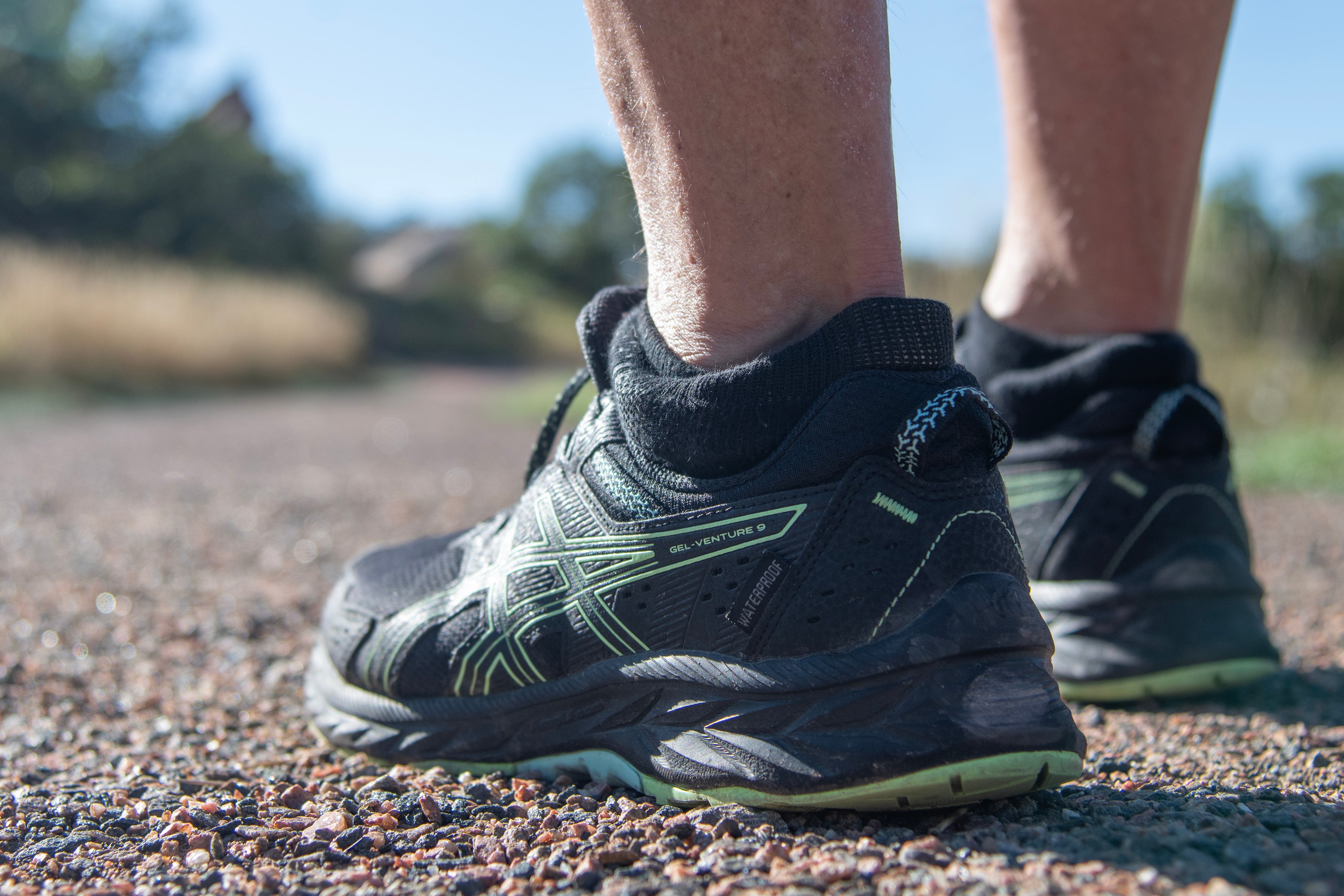
RockResist GEN1 trail socks are designed around that idea. The low-cut design uses an integrated barrier that helps block dirt, sand, and small trail debris at the shoe collar.
Shop RockResist Trail Socks for Your Next Hot-Weather Block
Summer training exposes every weak point in your kit, and your socks are the cheapest place to fix one. Build a rotation, match weight to conditions, and check the collar on your trail shoes before your next long day out.
RockResist GEN1 trail socks give you a debris-blocking barrier, a secure fit, and added comfort at the collar for trail runs, gravel paths, and road miles. View current sizing, pricing, and offers on the RockResist GEN1 product page.
Heat and grit are the two forces that end most summer runs early. RockResist builds gear for both, with an integrated debris-blocking barrier, a non-slip fit that stays put through high-movement activity, and added heel material that helps reduce friction at the collar. Get started with RockResist and keep your feet focused on the terrain ahead.
Frequently Asked Questions
Which socks are best for hot weather running?
Look for a lightweight sock with mesh ventilation zones, a fiber blend that manages sweat, and a snug fit that stays put. Thin, low-cushion running socks reduce heat buildup and dry faster between runs. Avoid heavy cushioning and thick cotton-only socks, which hold moisture against the skin. Match sock height to your shoe collar and terrain, and rotate pairs so each one is fully dry before the next run.
Are merino socks too hot for summer running?
Merino wool can work in warm weather when it is knit thin. Fine-gauge merino moves moisture and resists odor, but a thick merino sock traps heat. For summer training, choose an ultralight merino or a merino-synthetic blend rather than a cushioned winter weight. If you run in high humidity and your feet stay soaked, a lighter synthetic or cotton-blend sock with ventilation panels may suit you better.
How should running socks fit in hot weather?
A hot-weather running sock should fit snug with no bunching at the arch or heel and no extra fabric at the toe. Feet swell during long runs and in heat, so a sock that is already tight can restrict and cause hot spots. Check the manufacturer's size chart rather than guessing, and confirm sizing against the brand's own guide before ordering. Seams should sit flat and the heel pocket should stay locked in place.
Are thin running socks better for summer running?
Thin socks generally run cooler because there is less fabric to trap heat and hold sweat. A low-cushion or ultralight sock with mesh panels dries faster and reduces friction inside the shoe. That said, thin is not automatically better on rough ground: trail runners may want a slightly thicker sock under the foot for abrasion protection. Pick the cushion profile for your terrain, then go as light as comfort allows.
