
Last Updated: November 12, 2026
Quick Summary
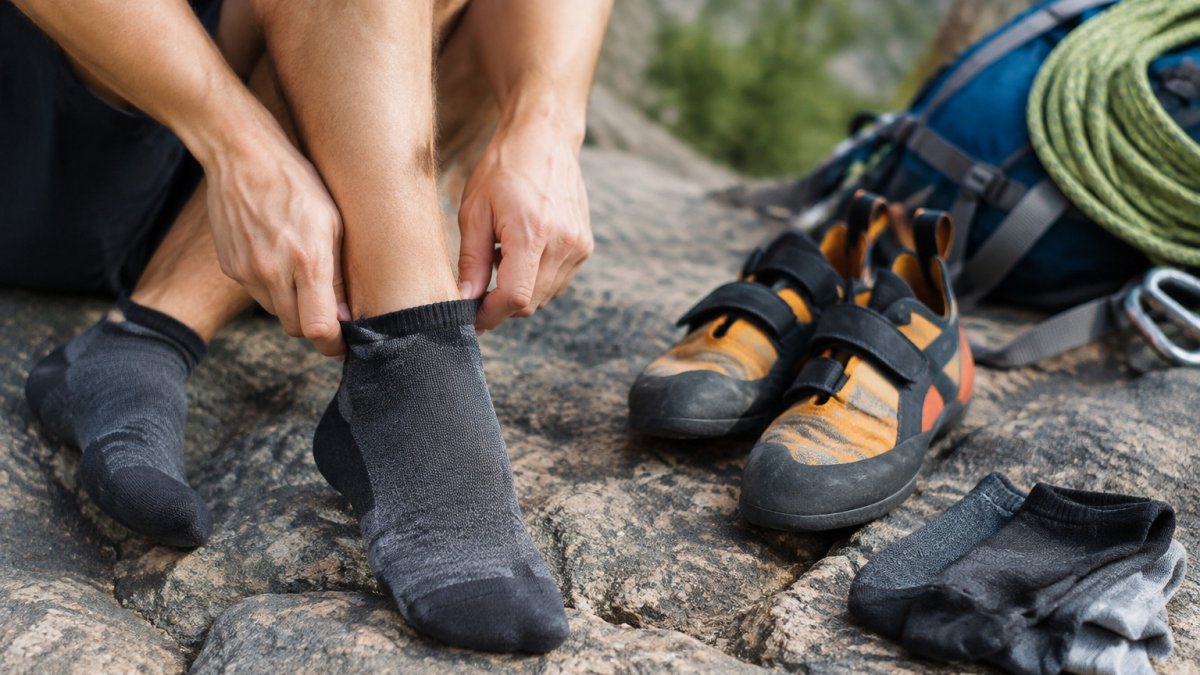
The right climbing sock thickness is the one that keeps your toes flat and your heel seated in your climbing shoes without creating a hot spot. Thin socks suit bouldering and sport climbing, medium socks suit trad and multi-pitch, and thick socks suit cold conditions. Test each sock in your shoes for at least 15 minutes of actual climbing.
- Every sock layer adds volume, so the same shoe can fit differently with different socks.
- Thin socks suit bouldering and sport climbing; medium socks suit trad and multi-pitch.
- Thick socks suit ice climbing and mountaineering, where boots have more internal volume.
- Check toe flatness, heel security, pressure comfort, and feel on the wall during the test.
- Re-run the fit test after 10 to 15 sessions, since shoes stretch and linings compress with break-in.
Table of Contents
- How Sock Thickness Affects Climbing Shoe Fit
- Measuring Sock Thickness Categories Before You Buy
- A Practical Thickness-to-Shoe-Fit Test
- Choosing Thickness by Climbing Discipline and Best Socks for Multi-Pitch Climbing
- Climbing Socks for Cold Weather and Warmth Needs
- Best Material for Climbing Socks and Foot Health Trade-Offs
- Booking Your Next Sock Pick: Put the Checklist to Work
- Frequently Asked Questions
How Sock Thickness Affects Climbing Shoe Fit
Climbing sock thickness is one of the quickest ways to change how a climbing shoe fits. A thin sock leaves more room inside the shoe, while a thick sock takes up space and can make a snug shoe feel tight across the toes and forefoot. Before you buy, know how your shoe fits with the sock you plan to climb in most often.
Why sock thickness changes shoe volume
Every layer inside a shoe adds volume. The shoe itself does not change, but the space your foot has to fill does. A few extra millimeters of sock can turn a precise fit into a painful one, so the same shoe can feel right with one sock and wrong with another.
- Thin socks keep the fit close to the shoe's intended size.
- Thick socks add bulk across the top of the foot and around the toes.
- Cotton blends tend to feel softer, but they also add thickness that changes the fit.
Thin versus thick climbing socks
Thin socks give you more feel for the rock and a closer fit. Thick socks add warmth and cushioning but can crowd your toes. Most climbers do better picking one thickness for their main shoes and sticking with it, rather than switching sock weights and wondering why the fit changed.
Measuring Sock Thickness Categories Before You Buy
Climbing sock thickness is not labeled in a standard way across brands, so it helps to sort socks into rough categories before comparing them. Put socks in three groups: thin liners, medium-weight socks, and thick socks.
- Thin: Close to the foot, good for a precise, sensitive fit.
- Medium: A middle ground for most climbing and trail-style use.
- Thick: Best for cold conditions or when you want extra padding.
A reasonable starting point is a medium-weight sock as a baseline, then moving thinner or thicker only if your fit or conditions call for it.
A Practical Thickness-to-Shoe-Fit Test
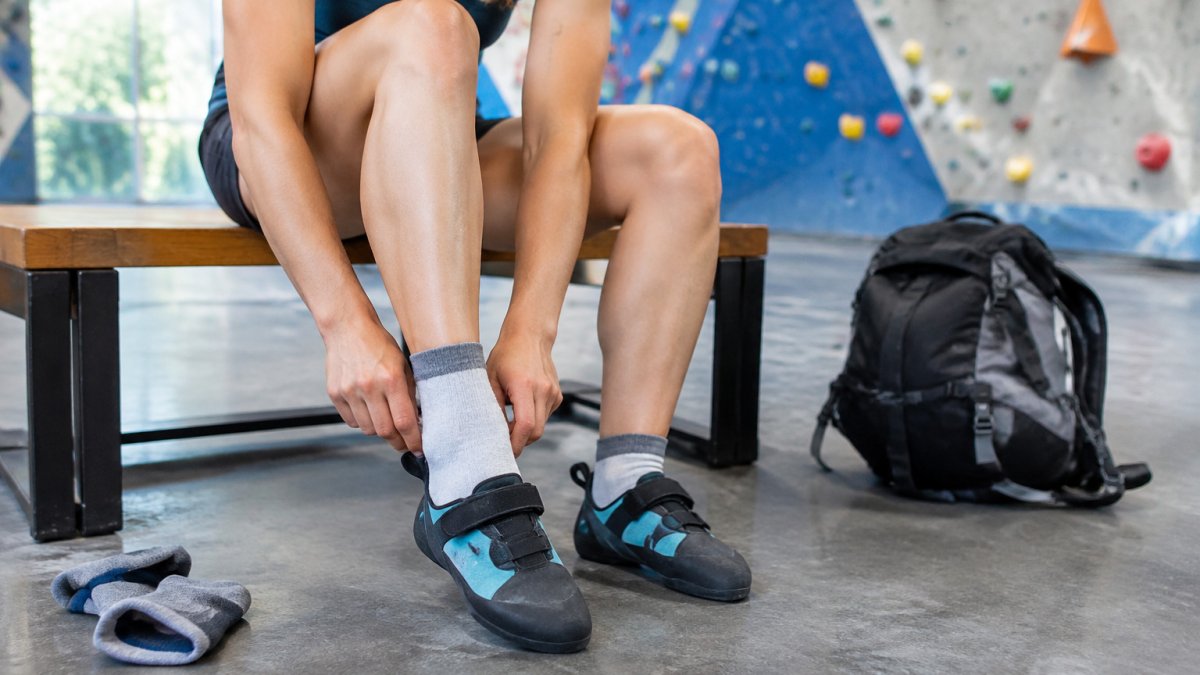
Most climbing-sock advice stops at "try a few pairs." A repeatable test is more useful. Set aside 20 to 30 minutes, bring your climbing shoes, two sock thicknesses (one thin, one medium or thick), and a partner or a phone camera so you can see what your feet are doing.
Step 1: Establish a baseline
Put on the sock you currently climb in and lace or strap your shoes the way you normally would. Stand on flat ground and note three things: where your longest toe sits, whether your heel lifts when you rise onto your toes, and whether any spot feels tight before you even load the foot. Write these down.
Step 2: Check toe position
With the shoe on, press down on the top of the toe box. Your toes should lie flat, with light contact at the front. If the big toe curls or the second toe buckles, the sock is adding too much volume for that shoe. If you can slide a finger between the toe tip and the front of the shoe, the sock may be too thin for a precise fit, or the shoe may be too large.
Step 3: Check heel movement
Rise onto your toes ten times and watch the heel. A small amount of lift is normal in a flat-lasted shoe, but a heel that slides up and down more than about a quarter inch with each rise will rub. That is a friction problem, not a warmth problem, and a thicker sock usually makes it worse by crowding the heel pocket.
Step 4: Map pressure points
Run a thumb along the top of the foot, the sides of the forefoot, and the achilles area. Note any spot that feels sharp, hot, or numb. Pressure at the knuckles of the toes or across the instep usually means the sock is too thick for that shoe. Pressure at the heel or ankle bone can mean the sock's seam or cushioning is sitting in the wrong place.
Step 5: Do a short climb
The at-home test catches obvious problems, but climbing shoes change under load. Do three to five easy boulder problems or a short top-rope lap in each sock. Pay attention to whether your toes stay flat on small footholds, whether the heel stays seated on heel hooks, and whether any pressure point gets worse after ten minutes.
Step 6: Compare and decide
Rank each sock on four criteria: toe flatness, heel security, pressure comfort, and feel on the wall. The right thickness is the one that keeps your toes flat and your heel seated without creating a hot spot. If no sock solves all four, the shoe size or last is the problem, not the sock.
Watch out: Do not judge a fit from the first minute. Climbing shoes and socks both compress with heat and use, so a fit that feels snug at the door can feel painful by the third problem.
If you want to compare a low-cut option during the test, view RockResist Socks & Sizing and check the sizing chart against the manufacturer's guide for your climbing shoes before ordering.
Choosing Thickness by Climbing Discipline and Best Socks for Multi-Pitch Climbing
Sock thickness is not a single decision. The right choice depends on the shoe, the route length, the temperature, and how much sensitivity you are willing to trade for comfort. The table below is a starting point, not a rule; adjust it with the fit test above.
| Discipline | Typical shoe | Suggested thickness | Why |
|---|---|---|---|
| Bouldering | Aggressive, downturned | Thin | Maximum feel on small holds; less volume in a tight toe box |
| Sport climbing | Moderate to aggressive | Thin to medium | Sensitivity on the crux, some cushioning for repeated falls |
| Trad | Neutral to moderate | Medium | Comfort on long pitches and gear placements |
| Multi-pitch | Neutral, roomier | Medium | Hours in the same shoe; moisture and pressure management matter |
| Ice climbing | Rigid, insulated | Medium to thick | Warmth and padding against a stiff boot |
| Mountaineering | Mountaineering boot | Thick | Insulation and cushioning over long approaches and cold temps |
Bouldering and sport climbing
These disciplines reward feel. A thin sock keeps your toes closer to the rubber, which helps on small edges and smears. If your shoes are already tight, a medium sock may be the limit before your toes start to curl. Some climbers keep one thin pair dedicated to their performance shoes so the fit stays consistent.
Trad and multi-pitch
Long routes change the math. You may spend four to eight hours in the same shoes, often with a pack, sometimes in changing weather. A medium sock adds cushioning without crowding the toe box, and it gives you a little margin if your feet swell during the day. Carry a spare pair in your pack for the descent or a wet belay.
Ice climbing and mountaineering
Cold, rigid boots have more internal volume than rock shoes, so thicker socks fit without the same penalty. Look for a sock that fills the boot without bunching at the heel or instep. If your mountaineering boot has a removable liner, test the sock with the liner in place, since the combination changes the fit.
How break-in changes the answer
New climbing shoes stretch and their linings compress. A shoe that feels tight with a medium sock in month one may feel right with that same sock by month three, or it may feel loose enough that a thin sock becomes the better choice. Re-run the fit test after the first 10 to 15 sessions, and again if you resole the shoe.
Multi-pitch sock planning
For multi-pitch routes, plan for three states: dry and warm, wet, and cold. For a step-by-step breakdown of sock choices for long routes, see how to choose socks for multi-pitch climbing. A medium sock handles the first, a spare dry pair handles the second, and a thicker pair for the approach or belay handles the third. Keep the spare pair in a dry bag so it stays useful.
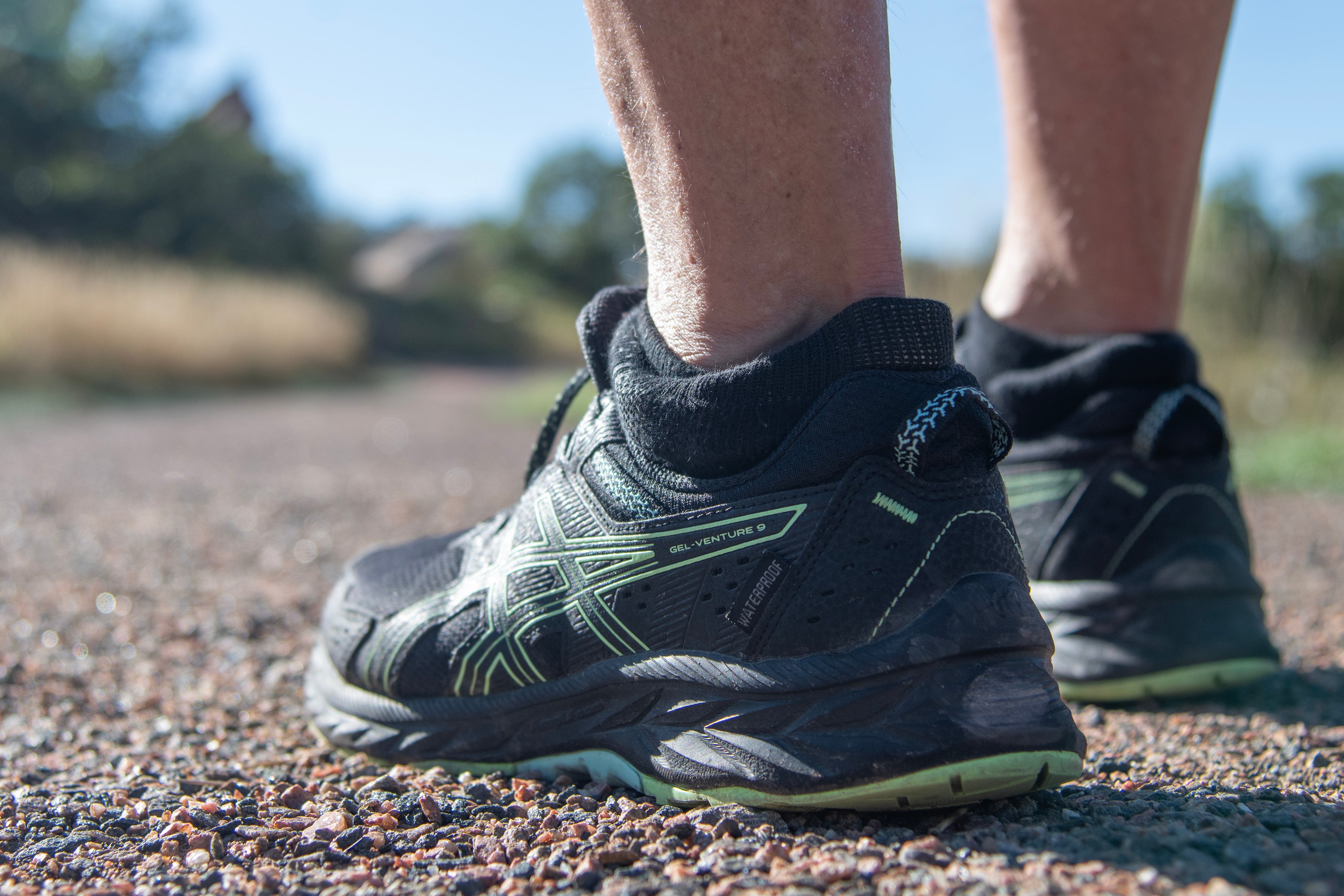
If you want a low-cut option for warmer approaches and trail sections, the RockResist GEN1 is a 75% cotton, 25% terylene sock with an integrated barrier that helps block dirt, sand, and small trail debris at the shoe collar. The barrier can be worn up for loose terrain or tucked in for a lower profile. Shop RockResist Trail Socks to compare current sizing and offers, and check the sizing chart against your shoe manufacturer's guide before ordering.
Climbing Socks for Cold Weather and Warmth Needs
Cold weather changes the math. Thicker socks keep your feet warm, but they also make climbing shoes tighter. Many climbers in cold conditions wear a medium sock inside a slightly roomier shoe, or keep thick socks for the approach and switch to thinner ones for the climb.
- Wear thicker socks on the approach and at belays to stay warm.
- Switch to a thinner sock on the wall so your shoes still fit.
- Keep a dry spare pair to change into if your feet get wet.
For more on warmth-focused options for granite and cold-weather climbs, read our guide to the best socks for granite climbing.
Best Material for Climbing Socks and Foot Health Trade-Offs
Sock material affects both fit and comfort, and different fibers handle moisture and cushioning differently. Pick the material that matches your conditions, and watch for signs of friction or pressure that could lead to blisters or numbness.
Thin versus thick socks also involves comfort trade-offs. A sock that is too thick can press on the toes, and one that is too thin may not protect well against friction.
For a broader comparison of alternatives, including thin liners and going sockless, see our overview of standard climbing sock alternatives. If you want to test how thin socks feel in your shoes, this guide on thin climbing sock sensitivity walks through the process.
Booking Your Next Sock Pick: Put the Checklist to Work
Use this checklist before you buy or switch socks:
- Note the shoe size and fit you climb in now.
- Choose a thickness category: thin, medium, or thick.
- Run the thickness-to-shoe-fit test for at least 15 minutes.
Once you know your thickness, shop RockResist Trail Socks to compare current sizing and offers. Check the sizing chart against the manufacturer's guide before ordering, since sizes run differently across brands.
Frequently Asked Questions
Are thicker or thinner socks better for climbing?
Neither is better across the board. Thinner socks let you keep a snugger, more sensitive fit in climbing shoes, which helps with precise footwork on small holds. Thicker socks add warmth and cushioning but take up volume inside the shoe, which can make a fit that was right in the shop feel loose or tight once you add them. Match thickness to the fit you need for your discipline and to the temperatures you climb in, then test the combination at home before a session.
How thick should climbing socks be for multi-pitch climbing?
Multi-pitch climbing usually calls for medium-weight or thin socks rather than thick ones. You will often wear your shoes for long stretches, and extra bulk can cause pressure points and discomfort on long approaches and belays. A lightweight pair keeps your feet comfortable on the approach and on the rock, and it is easier to pack a second pair if conditions turn cold. Think about the full day, not just the climb.
Do thicker socks make climbing shoes warmer?
Yes, thicker socks add insulation and can make your feet feel warmer, especially in cold conditions or when you are standing at a belay. The trade-off is that they reduce the space inside the shoe, which can make the fit tighter and change how the shoe performs. If you need warmth, try a medium-weight pair first and check that your toes still have room and that circulation feels normal.
How can I tell if my climbing socks are too thick?
Signs that socks are too thick include numbness or tingling in your toes, a shoe that feels uncomfortably tight across the forefoot, and heel slippage or pressure points that appear only after you add the sock. Put on the socks you plan to climb in and test the fit before a session. If the fit changes your ability to feel the rock or causes pain, try a thinner pair.
