
Last Updated: November 10, 2026
Quick Summary
To wash hiking socks at home, turn them inside out and use lukewarm water with a small amount of mild, neutral pH detergent. For merino wool, soak briefly, rinse well, press out water with a towel, and air dry flat. Avoid bleach, fabric softener, and high heat.
- Turn socks inside out to loosen dirt and protect printed or textured areas.
- Use a mild, neutral pH detergent and skip bleach and fabric softener.
- Soak merino wool socks in lukewarm water for about 15 minutes.
- Press out excess water with a towel; never wring or twist the socks.
- Air dry flat, keeping socks away from dryers, radiators, and direct sun.
Table of Contents
- Why Hiking Sock Care Matters on Long Treks
- What You Need Before You Wash Hiking Socks
- How to Wash Merino Wool Socks Step by Step
- How to Dry Merino Wool Socks Without Damage
- Removing Trail Mud, Sap, and Odor From Socks
- How Often to Wash Wool Socks and Rotate Your Pairs
- Start Your Next Trip With a Clean Pair From Your RockResist Rotation
- Frequently Asked Questions
Why Hiking Sock Care Matters on Long Treks
Hiking socks do more than keep your feet warm. They hold grit against your skin, trap sweat, and take a beating on every step.
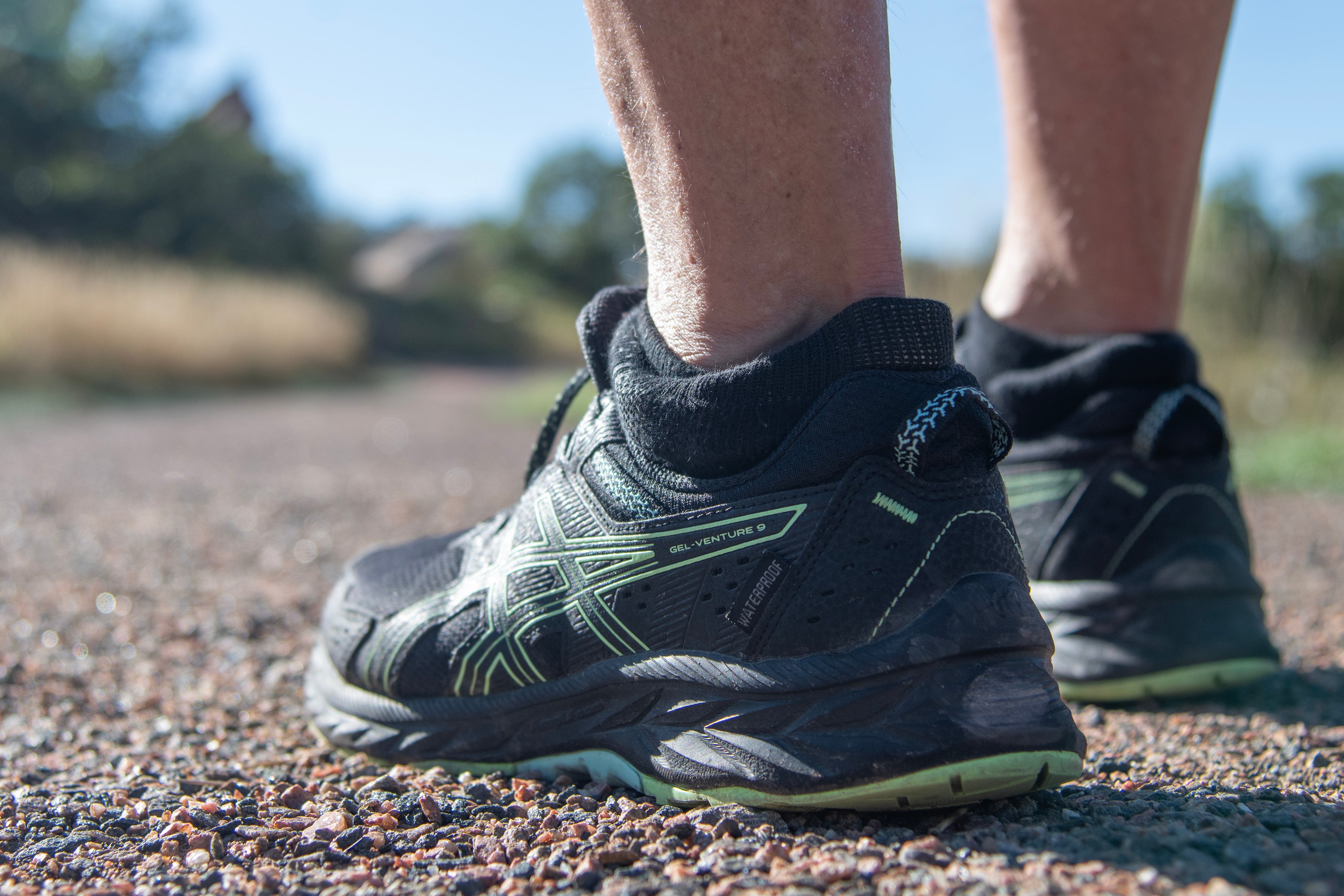
Learning how to care for and wash hiking socks at home is a simple habit that extends the life of each pair. It also keeps a clean pair ready for the next trip. The RockResist GEN1 low-cut sock is made from 75% cotton and 25% terylene, and its integrated barrier helps keep dirt, sand, and small trail debris from sneaking in at the shoe collar.
A few things make this worth your attention:
- Grit wears down fibers. Sand and small stones act like sandpaper inside a sock.
- Odor builds up fast. Bacteria thrive in sweat that is left to sit.
- Clean socks fit better. Stretched-out, stiff socks can bunch and shift.
What You Need Before You Wash Hiking Socks
Gather a few basics before you start. You do not need special equipment, but the right choices protect the fabric.
- A mild, neutral pH detergent. Harsh detergents strip oils and weaken fibers over time.
- A basin or sink for hand washing, filled with lukewarm water.
- A laundry bag if you plan to use a machine, so the socks do not snag or tangle.
- A clean towel to press out extra water.
- A drying rack or a clear spot to lay socks flat.
Avoid bleach and fabric softener, which can break down fibers and fade dark colors.
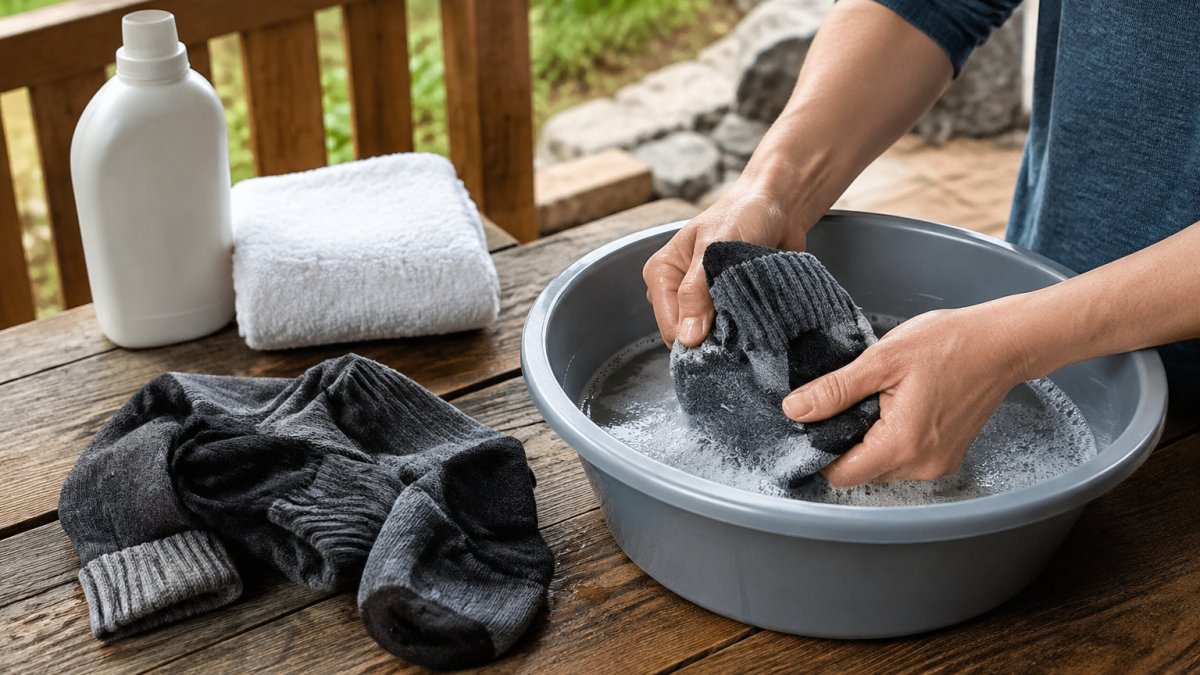
Turn your socks inside out before washing. This loosens dirt from the inner surface, where sweat and skin cells collect, and protects any printed or textured areas on the outside.
How to Wash Merino Wool Socks Step by Step
Merino wool needs a little more care than cotton or synthetic blends. Wool fibers can felt and shrink when they are agitated in heat, so keep the water cool and the motion gentle.
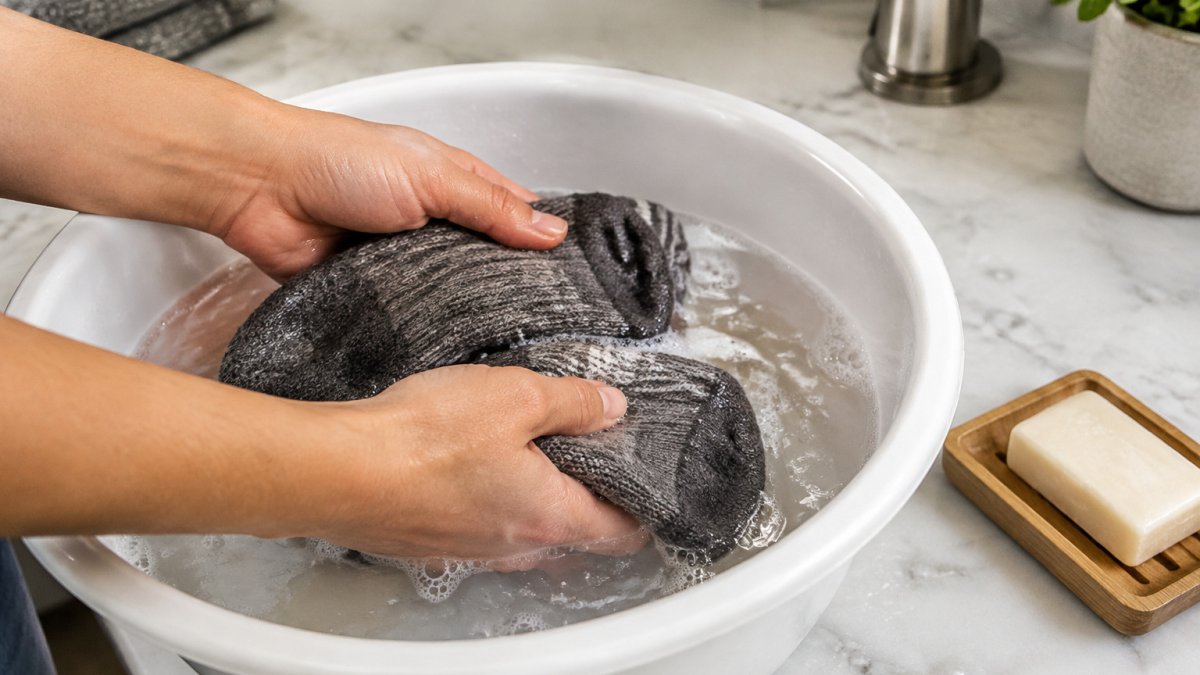
- Turn the socks inside out and check for stains, mud, or sap.
- Pre-treat stains with a small amount of mild soap. Work it in gently with your fingers.
- Fill a basin with lukewarm water and add a small amount of wool wash or neutral detergent.
- Submerge the socks and let them soak for about 15 minutes.
- Rinse thoroughly with clean water of the same temperature until no suds remain.
- Press out excess water with a towel. Do not wring or twist the socks.
A neutral pH detergent is a suitable choice for everyday cleaning.
Hand Washing Wool Socks Without Shrinking Them
Hand washing gives you the most control. Use lukewarm or cool water, never hot. Swish the socks gently through the soapy water instead of rubbing them against each other or against the basin. Keep the soak short and rinse well.
Leaving wool to soak for a long time or squeezing it hard can distort the knit. Lay the socks on a towel, roll the towel up gently, and press to remove water.
Machine Washing on a Gentle Cycle
If you prefer the machine, use a gentle or wool cycle with cold or lukewarm water. Place the socks in a mesh laundry bag to prevent tangling and snagging. Use a small amount of mild detergent and skip fabric softener. Avoid long spin cycles, which can stress the fibers.
How to Dry Merino Wool Socks Without Damage
Drying is where many socks get ruined. Heat is the enemy of wool.
- Air dry flat or lay them over a rack. This is the safest method for merino.
- Reshape each sock before it dries so it keeps its fit.
- Keep them out of direct sun for long periods, which can fade colors.
- Avoid high heat from dryers, radiators, or campfires.
If you use a tumble dryer at all, choose the lowest heat setting, or better yet, use a no-heat or air fluff setting for a short time. Once the socks are almost dry, finish them flat in the open air.
Merino wool can take several hours to dry thoroughly, especially in humid weather. Plan your wash a day or two before you need the pair.
Removing Trail Mud, Sap, and Odor From Socks
Trail mud, sap, and resin behave differently, so treat each one for what it is. If you are wondering whether shielding helps at all, read our honest assessment of whether debris shielding socks work on the trail. The goal is to remove the residue without pushing it deeper into the knit or setting it with heat.
Mud. Let fresh mud dry completely on the sock, then brush or knock off the loose particles over a bin or outdoors. Wet mud worked into the fabric pushes fine grit between the fibers, where it keeps abrading them. Only after the dry debris is gone should you move to a wash, using lukewarm water and a small amount of mild detergent.
Pine sap and resin. Sap is oily, so water alone will not lift it. Rub a small amount of mild dish soap into the spot and let it sit for a few minutes to loosen the bond. Rinse, then check the spot in good light before drying. Heat from a dryer, radiator, or campfire can cure leftover resin into the fibers and make it nearly impossible to remove later.
Odor. Persistent odor usually comes from bacteria living in sweat that has dried into the fabric. A soak in cool water with a small amount of mild detergent for about 15 to 20 minutes addresses most of it. Some hikers add a splash of white vinegar to the final rinse to help neutralize smell.
Washing Socks on the Trail
On multi-day trips, a full machine wash is not an option, so most hikers rinse socks by hand in a stream, lake, or a collapsible basin. A few practical points help:
- Use a small amount of biodegradable, unscented soap, and keep it well away from water sources, following Leave No Trace guidance.
- Work through the socks gently in cool water, then rinse until the water runs clear.
- Wring out gently by rolling each sock in a dry towel, pressing rather than twisting.
- Hang socks from a pack strap or tent line with the cuffs facing down so water drains away from the foot. Drying is slower in humid or shaded conditions, so start early in the afternoon when possible.
Watch out: wet socks left in a sealed pack can develop odor within a day, so air them out as soon as you stop.
Scrubbing hard on wool or thin synthetic knits causes pilling and thinning, so keep the motion gentle even when the stain looks stubborn. Our guide on how debris-focused socks work explains how they help keep grit out in the first place.
How Often to Wash Wool Socks and Rotate Your Pairs
How often you wash depends on how you hike, not just how many days you spend on the trail. Use these triggers rather than a fixed schedule:
- Wash after every multi-day trip, since sweat and grit accumulate across consecutive days.
- Wash after any trip with heavy mud, sap, or water crossings, because residue left in the knit works its way deeper with each step.
- Wash after several short day hikes once the socks start to feel stiff, look grimy, or carry a noticeable smell.
- Rinse and air out between hiking days when you can, so sweat does not dry into the fabric overnight.
A simple rotation keeps your collection in good shape. Carry at least two pairs for any trip longer than a weekend, and keep a third pair at home. That way one pair can dry fully while another is in use, and the fibers get time to recover between wears. Rotating pairs also spreads wear evenly across your collection, so no single pair takes the brunt of every hike.
Mending Small Holes and Thin Spots
Catching a hole early is much easier than repairing a large tear. Check the heel, toe, and ball of the foot after each wash, since those areas take the most abrasion. For a broader look at keeping dirt out of your hiking shoes and socks between washes, see our related guide. For a small hole, a basic darning stitch with a needle and matching yarn closes the gap without bulk. Work the stitch just past the edges of the hole and weave across it to distribute tension. Stop repairing once a thin area spreads, because a sock with a large, poorly reinforced patch is more likely to rub than a retired pair.
Storing Wool Socks Between Seasons
Wool is vulnerable to clothes moths, which lay eggs in fibers that are dirty or left undisturbed. Store only clean, fully dry socks, since body oils and food residue attract larvae. Keep them in a breathable container such as a cotton bag or a lidded bin with a few cedar blocks, rather than an airtight plastic bag that traps humidity. Check the stored socks every few months for small holes or fine webbing, and inspect the storage area for other signs of infestation before putting the pairs away.
Use these triggers to decide when to wash, and how many pairs to carry, based on how you hike.
| Trigger | When to wash | Why |
|---|---|---|
| Multi-day trip | After the trip | Sweat and grit build up across consecutive days |
| Heavy mud, sap, or water crossings | After the trip | Residue works deeper into the knit with each step |
| Several short day hikes | When socks feel stiff, look grimy, or smell | Odor and grime accumulate over time |
| Between hiking days | Rinse and air out when possible | Stops sweat from drying into the fabric overnight |
| Trips longer than a weekend | Carry at least two pairs, plus a third at home | One pair can dry while another is in use |
Start Your Next Trip With a Clean Pair From Your RockResist Rotation
Clean socks make a real difference on the trail. A well-kept pair of RockResist GEN1 socks keeps its integrated barrier at the shoe collar in good shape, helping keep grit out. Keep a fresh pair ready while the other is being washed and dried.
For current pricing, sizing, and offers, Shop RockResist Trail Socks or View RockResist Socks & Sizing to find the right fit for your next outing.
Frequently Asked Questions
How many times can you wear Merino socks before washing?
Merino wool resists odor better than most synthetics, so many hikers wear a pair two or three times between washes on shorter trips. On hot days, heavy sweating, or multi-day treks where the socks stay damp, wash them after each wear. Air the socks out overnight after each use, and check for lingering odor or grit before deciding whether to rewear them.
Can you wash hiking socks in a washing machine?
Yes, most hiking socks can go in a washing machine on a gentle or wool cycle with cold or lukewarm water and a mild, neutral pH detergent. Turn the socks inside out and place them in a mesh laundry bag to reduce friction. Avoid bleach and fabric softener, which can break down fibers over time.
Why do wool socks still smell after washing?
Odor often remains when bacteria survive in the fibers, which can happen if the socks were not fully rinsed, were left damp too long, or were washed in water that was too cool to remove oils. Wash them thoroughly with a mild soap, rinse until the water runs clear, and dry them completely before storing. Persistent smells usually improve with a longer soak in lukewarm water before washing.
How should you dry Merino wool socks?
Lay Merino wool socks flat on a towel or a drying rack away from direct sunlight and heat sources. Avoid hanging them by the cuff, since the weight of the water can stretch the fabric. Tumble drying on low is sometimes used for synthetic blends, but air drying is the safer choice for wool because high heat can cause shrinkage and reduce elasticity.
