
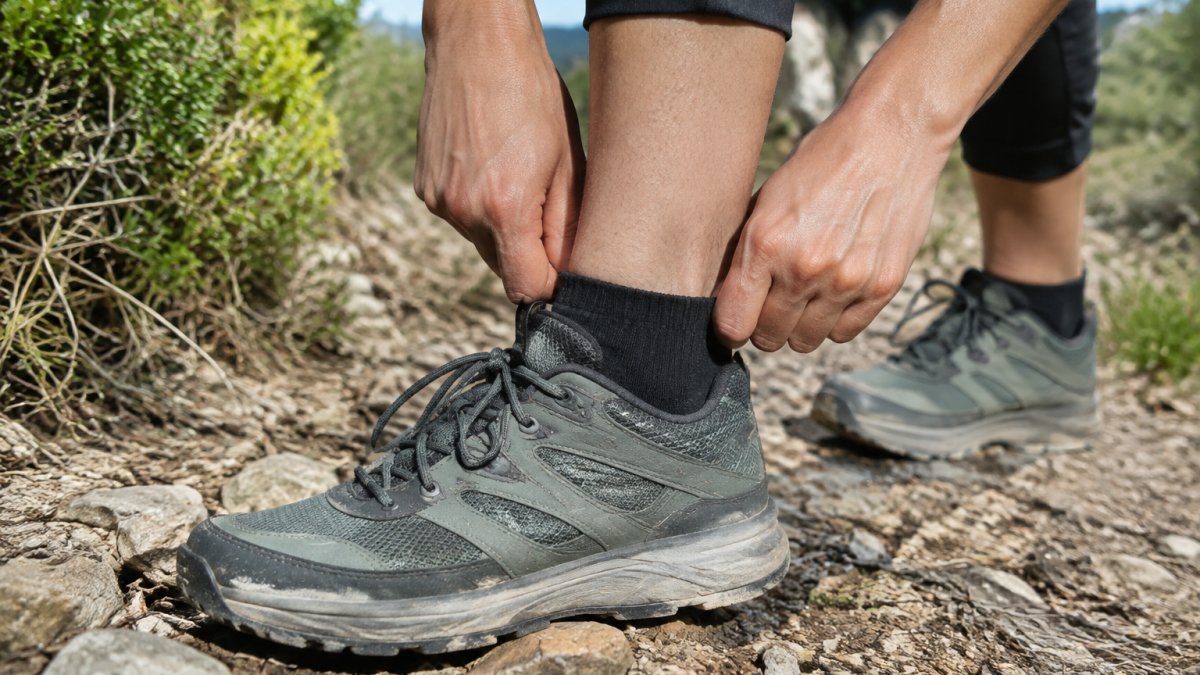
Last Updated: November 8, 2026
Quick Summary
Debris shielding socks work, but only within a narrow job description: they slow grit from entering at the shoe collar, not everywhere on the foot. A sock collar cannot seal a shoe, it can only raise the wall where grit usually slips in.
- Grit enters through the shoe collar, the heel counter gap, and the upper mesh, and only the collar is the sock's job.
- A heel-lock lacing pattern closes the collar gap before the sock does any work.
- The barrier should rise roughly a finger's width above the shoe collar when worn up.
- If you can fit two fingers under the cuff when laced, the barrier will likely slip.
- Hand-wash and line-dry are the recommended care for the RockResist GEN1 sock.
Table of Contents
- What Debris Shielding Socks Actually Do at the Shoe Collar
- How to Keep Sand Out of Running Shoes on Loose Terrain
- Trail Running Gaiters vs. Debris Socks: Which Solves Your Problem
- Debris-Shielding Sock Fit: The Variable That Decides If It Works
- Trail Running Socks with Debris Cuffs: What to Check Before Buying
- Debris Protection and Blister Prevention Are Not the Same Claim
- Shop RockResist Trail Socks and Check Your Size
- Frequently Asked Questions
What Debris Shielding Socks Actually Do at the Shoe Collar
Debris shielding socks are low-cut or crew socks with a fabric barrier built into the collar that sits against the shoe opening and blocks grit from entering. They work, but only within a narrow job description: they slow debris ingress at the ankle, not everywhere on the foot.
A sock collar cannot seal a shoe. It can only raise the wall where grit usually slips in.
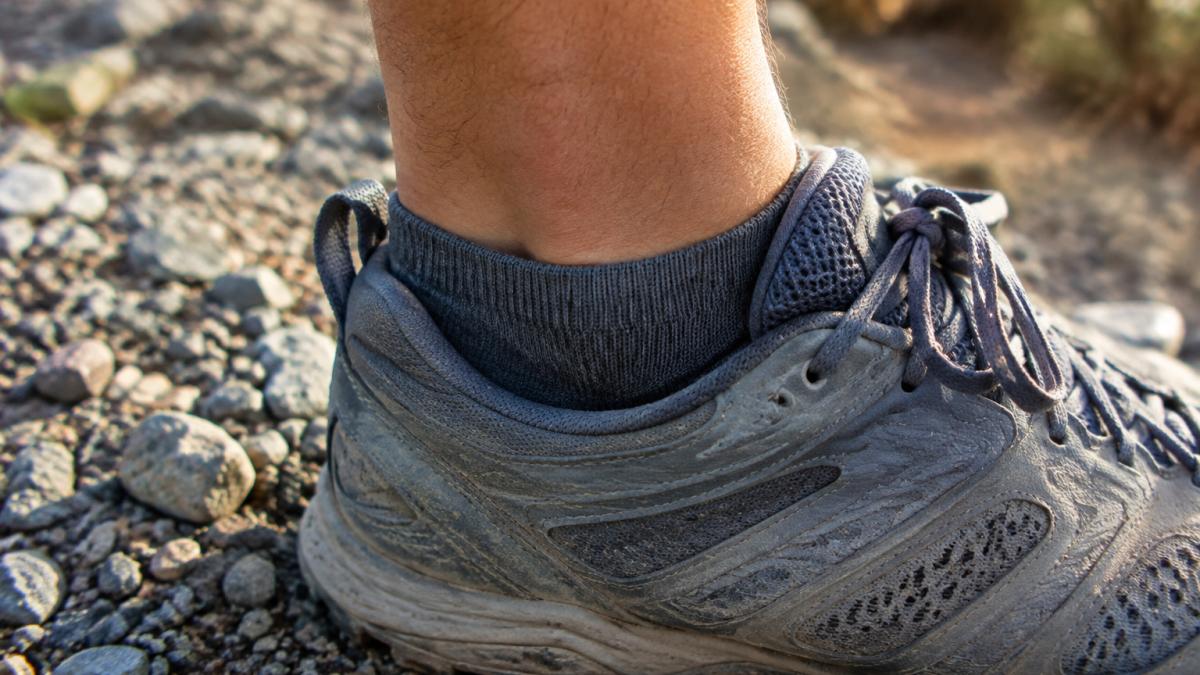
The RockResist GEN1 low-cut sock uses an integrated barrier at the collar, made from 75% cotton and 25% terylene, that you can wear up on loose ground or tuck down for a lower profile.
Where Grit Enters and Where the Barrier Sits
Grit enters through three openings, and only one of them is the sock's job:
- The shoe collar, where the ankle meets the padding. This is the main entry point on loose descents.
- The heel counter gap, which opens when the foot lifts inside a loose shoe.
- Through the upper mesh, which no sock can address.
A debris barrier sits at the first opening, and a fabric lip that overlaps the shoe collar can help pebbles roll off instead of dropping in.
How to Keep Sand Out of Running Shoes on Loose Terrain
Keeping sand out of running shoes comes down to three levers: shoe closure, ankle coverage, and how often you stop to empty them. Socks handle the second lever. The other two are on you.
Start with the lacing. A heel-lock lacing pattern pulls the ankle collar tight against the foot, which closes the gap a debris sock is trying to cover. Do that first, because no collar barrier compensates for a shoe that is flopping.
Then match coverage to terrain:
- Packed dirt and road miles: low-cut socks are fine. Debris ingress is minimal.
- Gravel paths and scree: wear the barrier up so it overlaps the shoe collar.
- Deep sand or loose talus: consider a higher cuff or a gaiter, and plan to empty your shoes at creek crossings.
Wearing a shoe that is too big is a common cause of grit entering, regardless of what is on your ankle. Extra volume lets the foot slide, the collar gapes, and grit walks in regardless of what is on your ankle.
Trail Running Gaiters vs. Debris Socks: Which Solves Your Problem
Trail running gaiters and debris socks solve the same problem at different strengths. Gaiters cover more of the collar and ankle. Debris socks are simpler, with nothing to attach.
A gaiter attaches to the shoe, usually with a hook-and-loop patch or a strap under the arch, and covers the entire collar plus part of the ankle. It blocks more material because it covers more surface. The trade-offs are real: extra hardware, more to wash, and a fit that depends on your specific shoe model.
A debris sock is a sock. Nothing attaches. It covers a narrower band than a gaiter.
Here is the decision in plain terms:
| Situation | Better choice | Why |
|---|---|---|
| Gravel paths, dust, light scree | Debris sock | Covers the entry point with no hardware |
| Deep sand, volcanic grit, long scree descents | Gaiter | Full collar coverage |
| Racing where weight matters | Debris sock | Nothing extra to carry or attach |
| Multi-day trips with abrasive terrain | Gaiter over a debris sock | Layered protection |
| Climbing approaches with rock abrasion | Debris sock | Stays put, no straps to snag |
If you want a deeper walkthrough of shoe-level tactics, our guide on how to keep trail debris out of your hiking shoes covers the mechanical side.
Debris-Shielding Sock Fit: The Variable That Decides If It Works
Fit is the variable that decides whether a debris barrier works at all. A barrier that gaps, bunches, or slides down is decoration.
1. Barrier overlap height versus shoe collar height. The barrier only blocks debris where it physically overlaps the shoe opening. If the barrier's top edge sits below the shoe collar, grit rolls over it and in. If it sits well above a low collar, it bunches and creates folds that channel material downward.
2. Ankle circumference versus sock cuff. A cuff that is loose at the ankle lets the barrier rotate and migrate down during a descent. A cuff that is tight enough to compress the skin can restrict circulation on long efforts.
3. Shoe volume and heel hold. Extra volume inside the shoe lets the foot piston up and down, which opens the collar gap on every step. That gap is the exact opening a debris sock is trying to cover, so a sock cannot compensate for a shoe that is a half size too large or laced loosely.
4. Heel slip and sock rotation. If the heel lifts inside the sock, the whole cuff rotates and the barrier migrates away from the entry point. This is why heel reinforcement and a snug heel pocket matter more than cuff height alone.
Sizing is where most returns happen. RockResist GEN1 uses unisex sizing: small fits women's 7-9 and men's 5-7, medium fits women's 10-12 and men's 8-10, and large fits women's 13-15 and men's 11-13. If you sit between sizes, check the manufacturer's guide rather than guessing, and read our performance sock sizing guide before you order.
Watch out: buying a barrier sock in your usual casual sock size without checking the size chart is the single most common reason people conclude "these don't work." They usually bought the wrong size, and a barrier that is one size off gaps at exactly the collar it was meant to seal.
A quick compatibility check before you commit: confirm the barrier clears your specific shoe's collar height, confirm your ankle measurement lands inside the sock's stated range, and confirm your shoe is not so voluminous that the foot slides. If any of the three fails, the sock is not the problem to solve first.
Trail Running Socks with Debris Cuffs: What to Check Before Buying
Trail running socks with debris cuffs vary widely in construction, and the differences show up after the first wash, and again after the twentieth. Check these factors before you buy, and check them again as the sock ages, because a debris barrier is a wear item.
1. How the barrier is attached. A sewn-in barrier that is part of the sock's knit holds its shape through washing. A folded-over cuff can flatten with wear, and once it flattens it stops overlapping the shoe collar. Look for a barrier that is continuous with the sock body rather than tacked on at the edge.
2. Fabric blend and stretch recovery. What matters for the seal is stretch recovery: a cuff that stretches out and does not spring back will gap.
3. Heel reinforcement. The added heel material helps reduce friction.
4. Non-slip construction. A sock that stays put keeps the barrier where you placed it.
5. Care requirements and wash durability. This is the factor most buyers ignore. Hand-wash and line-dry are the recommended care for this sock.
When the seal starts to fail. Keeping a fresh pair ready while the other is being washed and dried is a practical way to rotate your socks.
How this compares with the low-cost alternatives. A separate ankle gaiter covers more of the collar but adds hardware and depends on your specific shoe model. A debris sock covers the collar entry point without attachments. Whether that trade is worth it depends on how much of your terrain is loose.
For a side-by-side look at what else is on the market, our roundup of the best debris shielding socks puts the options next to each other. To check current sizing and options for the GEN1, see View RockResist Socks & Sizing.

Debris Protection and Blister Prevention Are Not the Same Claim
Debris protection and blister prevention are related but separate claims, and conflating them is the biggest source of disappointment in this category.
Blisters can form from friction, moisture, and heat. Blocking debris can reduce one friction source.
No sock can guarantee blister-free feet, including on a wet, hot, long descent.
Other factors that matter for blisters include:
- Fit, in both shoe and sock, to eliminate shear.
- Moisture management, so skin is not softened by sweat.
- Gradual exposure, so your feet adapt to distance.
- Prompt action on hot spots, before they become blisters.
If sweat is your main problem rather than grit, the trade-off between sweat-wicking and debris-blocking socks is worth reading before you spend money.
Shop RockResist Trail Socks and Check Your Size
You now have the full picture: debris shielding socks work at the shoe collar, they are not a blister guarantee, and fit decides the outcome.
If you want the barrier without the hardware, start with our GEN1 low-cut sock. The integrated barrier sits at the collar, wears up on loose terrain or tucks down for a lower profile, and the added heel material helps reduce friction. It is built for trail running, road miles, hiking, and outdoor training.
Head to Shop RockResist Trail Socks for current sizing and pricing, and confirm your size against the chart before ordering.
Most foot problems on technical terrain come down to a gap you did not know was open. Close the one at your shoe collar and you remove a variable you have been fighting for years. RockResist builds debris-blocking socks with an integrated collar barrier, a two-way wear design for changing terrain, and a non-slip fit that keeps the barrier where you put it. Get started with RockResist and give your feet one less thing to fight.
Frequently Asked Questions
Do debris shielding socks actually keep dirt and sand out of running shoes?
They reduce it, mainly at the shoe collar where grit usually enters. A barrier that sits against the ankle opening is designed to help keep sand, dust, and small pebbles out at the collar. It is not a sealed system, so deep sand and fine dust can still work in over long distances. Think of debris shielding socks as cutting the volume of debris, not eliminating it, and pair them with shoes that fit snugly at the collar.
What is the difference between trail running gaiters vs. debris socks?
Gaiters are separate pieces that attach to the shoe and cover the ankle, so they seal the gap between shoe and leg. Debris socks build a cuff or barrier into the sock itself, which means nothing extra to attach and nothing to lose mid-run. Gaiters block more debris in deep sand or scree; debris socks are lighter and simpler for gravel paths, road miles, and moderate trails. Some runners use both on the roughest terrain.
How should trail running socks with debris cuffs fit?
The cuff needs to sit flush against the ankle without bunching or gaping, and the sock should not slide down during high-movement activity. Check the manufacturer's size chart rather than guessing, since a loose collar leaves a gap for grit and a tight one can bunch and rub. If you fall between sizes, follow the maker's guidance for that specific sock. View RockResist Socks & Sizing for the current unisex size ranges before ordering.
Do debris shielding socks prevent blisters?
No sock can guarantee that. Blisters come from friction, moisture, and heat, and debris is only one contributor. A debris barrier is designed to help keep grit out at the shoe collar. Moisture management and a secure fit still matter just as much. Treat debris protection as one part of a blister strategy that includes well-fitting shoes, dry socks, and building mileage gradually.
