
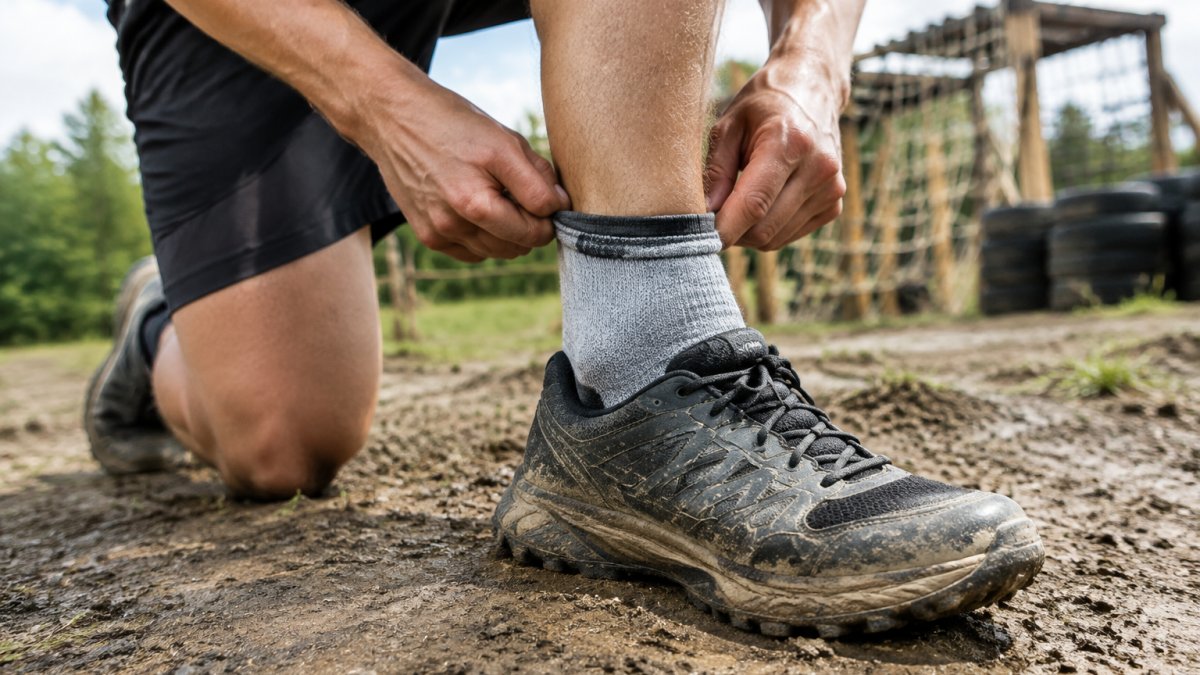
Last Updated: November 6, 2026
Quick Summary
To decide what to look for in socks for obstacle course racing, let the course drive every choice: prioritize drainage and quick-drying synthetics for water crossings and dunk walls, a secure heel lock and flat seams for deep mud, and debris control at the collar for sandy sections. Test the exact sock-and-shoe pair on a wet training run before race day.
- Cotton absorbs and holds water, while polyester and nylon repel water at the fiber level and dry fast.
- Thin construction in the midfoot and heel helps water escape on courses with multiple water features.
- A snug fit with flat seams and no excess fabric at the toe or heel removes the friction that causes blisters.
- A debris-blocking barrier at the ankle collar is the most direct fix for keeping grit out of your shoe.
- Wear the exact sock-and-shoe pair on a training run with at least one deliberate soak before race day.
Table of Contents
- Start With the Course, Not the Sock
- Material and Moisture Management in Obstacle Course Racing Socks
- Drainage, Drying Time, and Water Crossings
- Fit, Seams, and Blister Prevention
- Debris Control: What Keeps Grit Out of Your Shoe
- Best Socks for Spartan Race Starts and Finishes
- Best Socks for Tough Mudder and Long Mud Run Socks
- Trail Running Socks for Obstacle Races: Height, Padding, and Support
- Frequently Asked Questions
Start With the Course, Not the Sock
Most guides tell you to buy the thickest sock you can find. That advice fails the moment you hit a dunk wall. When you're figuring out what to look for in socks for obstacle course racing, the course itself should drive every choice you make. A sock that works on a dry gravel trail can fall apart on a wet, muddy OCR course.
Obstacle course racing is a sport of extremes. You run, you wade, you climb, and you get wet on purpose. A sock has to handle all of it.
Mud, Water, and Dry Sections Change the Requirements
A course with deep mud and chest-high water demands different features than a dry, dusty 5K. Map your race before you shop:
- Water crossings and dunk walls: prioritize drainage and quick-drying fabric
- Deep mud: prioritize a secure fit that won't slide down inside a wet shoe
- Dry, sandy sections: prioritize debris control at the collar
- Mixed terrain: prioritize balance over any single extreme
Material and Moisture Management in Obstacle Course Racing Socks
Material decides how a sock behaves when it's soaked, but the fiber label on the package tells you less than the knit structure and the blend ratio. Two socks can both say "polyester" and perform very differently once they're full of muddy water.
Start with what each fiber family actually does. Cotton absorbs water into the fiber itself and holds it, so a soaked cotton sock gets heavy and stays heavy. Polyester and nylon are hydrophobic at the fiber level: they don't absorb much water into the filament, so moisture sits in the spaces between fibers and can be pushed out by foot pressure and airflow.
But wicking alone doesn't keep feet dry during a race. Saturation is the real enemy. Once a sock is fully soaked, no fabric keeps you dry. What matters is how fast it sheds water and how it feels against your skin while wet.
Knit structure matters as much as fiber.
Cotton, Synthetic, and Blended Fabrics Compared
| Fabric | Water Behavior | Dry Speed | Best For |
|---|---|---|---|
| Cotton | Absorbs and holds water in the fiber | Slow | Dry, short courses; comfort when dry |
| Synthetic (polyester, nylon) | Repels water at the fiber level; moves moisture through the knit | Fast | Wet, muddy races; repeated water crossings |
| Merino blend | Absorbs some moisture without clamminess | Moderate | Cold, wet races where warmth matters |
| Cotton-synthetic blend | Mixed; cotton holds, synthetic drains | Moderate | Mixed conditions; short to mid-distance |
A common mistake is assuming cotton is always wrong. On a dry, dusty course, a cotton-rich sock can feel comfortable and breathe well, and cotton is abrasion-friendly against skin. On a wet course, synthetics have the edge. The honest answer is that the right blend depends on how wet your race will be, which is why the course, not the fabric label, should drive the choice.
Check the fiber percentages on the label rather than front-of-package claims.
For a deeper look at why wicking socks still feel wet, read why moisture-wicking socks leave feet soaked.
Drainage, Drying Time, and Water Crossings
Drainage is the sock's ability to let water escape instead of trapping it. Thick, dense padding can hold more water and take longer to dry.
Look for thinner construction in the midfoot and heel if your course has multiple water features.
Fit, Seams, and Blister Prevention
Fit is where most blister problems start. A sock that bunches, slips, or wrinkles creates friction. Friction creates hot spots. Hot spots become blisters. A snug, secure fit with flat seams removes the friction that causes them.
Obstacle course racing socks should fit close without being tight. There should be no excess fabric at the toe or heel. Seams should sit flat and away from high-pressure zones.
For a full prevention plan, see our guide on how to prevent blisters trail running.
How Obstacle Course Racing Socks Should Fit
- Heel: should sit locked in place, not slide
- Toe box: room to move, no bunching
- Arch: light compression, never pinching
- Collar: snug at the ankle, no gap for grit
If you're between sizes, check the manufacturer's sizing guide before ordering. Getting fit right the first time saves you from a race-day surprise.
Debris Control: What Keeps Grit Out of Your Shoe
Grit enters at the shoe collar. Sand, small stones, and trail debris sneak in through the gap between sock and shoe, then grind against your skin for miles. A debris-blocking barrier at the collar is the most direct fix.
This is where sock design matters more than fabric. A raised or integrated barrier at the ankle can block debris before it reaches your foot. Worn up, it shields against loose terrain. Tucked in, it gives a lower profile.
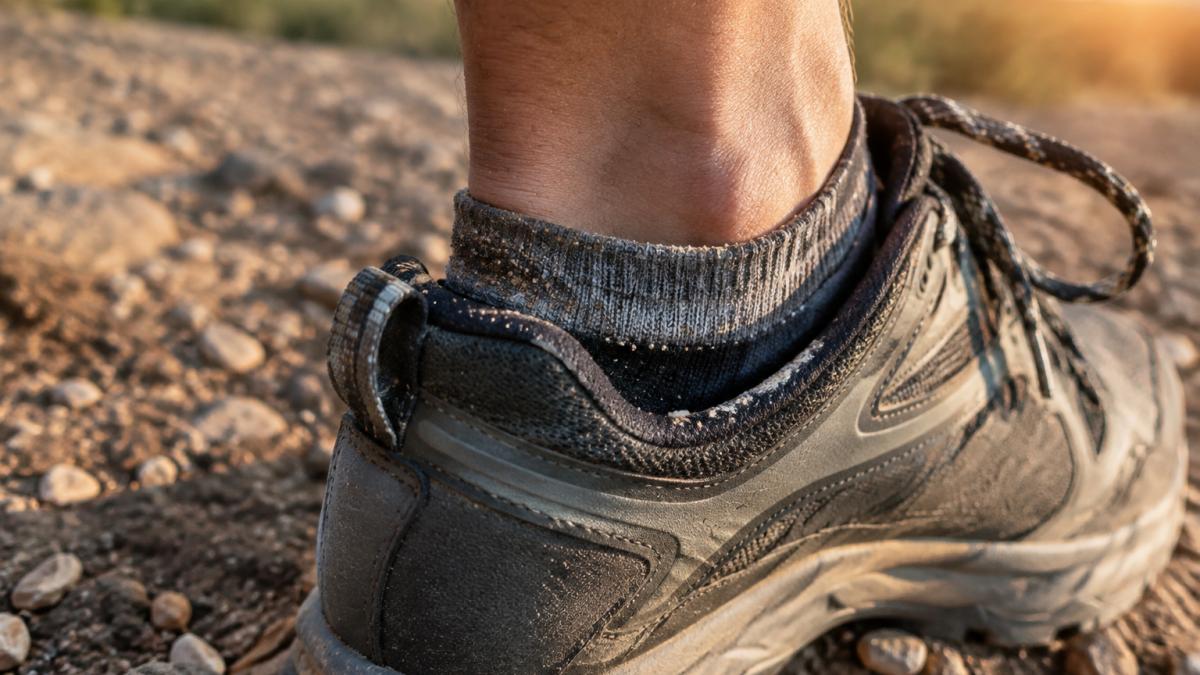
Our own RockResist GEN1 Trail Running Socks, Debris-Blocking Low Cut use an integrated barrier built for exactly this. If you want to compare how different debris-blocking designs stack up, our guide on the best socks for preventing trail debris breaks down the options.

Best Socks for Spartan Race Starts and Finishes
Spartan races mix dry sprints, heavy mud, and water obstacles in a single event. The start is often dry and fast. The finish line usually isn't. Your sock has to handle both without falling apart, and the way to know it will is to test the sock-and-shoe combination before race day, not to trust a product description.
Match the Sock to the Course, Not the Brand
Before you shop, map the race. A sprint-distance event with a handful of water obstacles asks something different from a beast-distance course with repeated full submersion and long muddy carries. Use this decision framework:
- Cold water and long wet stretches: prioritize drainage and a close fit; a soaked sock that slides inside the shoe is worse than a thin one that stays put.
- Hot, dry starts with late-race mud: prioritize breathability and debris control at the collar, since the first miles are dusty and the last miles are gritty.
- Deep mud and heavy carries: prioritize a secure heel lock and flat seams; friction from a slipping sock under load is where hot spots start.
- Rocky trail sections: prioritize strategic cushioning under the heel and forefoot, but keep the midfoot thin so water can escape.
- Long-distance events: prioritize durability at the heel and toe, where abrasion concentrates.
Test the Combination Before Race Day
A practical break-in and training checklist does more for race-day comfort than any spec sheet:
- Wear the exact sock-and-shoe pair on a training run at race pace, including at least one deliberate soak (a creek, a hose, a bucket) followed by a few miles wet.
- Check for bunching at the toe and heel after the soak, if fabric gathers, it will rub.
- Watch the collar during loose-terrain running: grit entering at the shoe collar is the most common debris path, and a barrier worn up or tucked in should sit flush against the shoe without a gap.
- Feel for slipping on descents and after water; a sock that slides down inside a wet shoe is a blister waiting to happen.
- Note dry time by wringing the sock once after the soak and seeing how it feels against the foot a few minutes later.
Watch out: testing a sock only on dry training runs tells you almost nothing about race day. The soak-and-run step is the one most people skip, and it's the one that exposes fit and drainage problems.
If you want a low-cut option with an integrated barrier at the collar, View RockResist Socks & Sizing to confirm fit against the manufacturer's sizing guide before you commit. The best socks for Spartan Race conditions are the ones you've already tested on a wet training run, with a fit that stays locked when everything is soaked.
Best Socks for Tough Mudder and Long Mud Run Socks
Tough Mudder and long mud runs push socks hard. Hours of mud, repeated soakings, and abrasive grit can wear down weak construction, so durability matters as much as comfort here.
For these races, prioritize a snug fit that resists slipping and check seams and heel construction before you commit.
Trail Running Socks for Obstacle Races: Height, Padding, and Support
Sock height changes what the sock protects. No-show socks keep a low profile but leave the ankle exposed to grit. Ankle socks add collar coverage. Crew socks shield more of the lower leg against mud and brush.
Padding should be strategic, not everywhere. Extra cushion under the heel and forefoot absorbs impact.
Trail running socks for obstacle races should match your shoe. A thick sock in a tight shoe causes pressure. A thin sock in a loose shoe lets the foot slide. Test the combination before race day. For a full comparison, read trail running socks vs standard athletic socks.
| Sock Height | Coverage | Best For |
|---|---|---|
| No-show | Minimal | Dry, short courses |
| Ankle | Collar protection | Most OCR courses |
| Crew | Lower leg shield | Muddy, brushy courses |
| Compression | Support and circulation | Long-distance races |
The right sock won't win the race for you, but the wrong one can end it early. Match your sock to the course, test your sock-and-shoe combo before race day, and pack a dry backup pair. RockResist builds gear for harsh, wet, gritty conditions, with a debris-blocking barrier, a secure non-slip fit, and reinforced construction for endurance.
Frequently Asked Questions
Is it better to run in cotton or polyester socks for an obstacle course race?
Neither fabric wins outright. Cotton feels soft and holds its shape, but it absorbs water and dries slowly, which matters after a dunk wall or a water crossing. Polyester and other synthetics shed water faster and dry quicker, but they can feel slick and hold odor. Many racers do best with a blend that balances comfort against drying speed, then test it on a wet training run before committing to it on race day.
How should obstacle course racing socks fit?
They should be snug everywhere without tightness at the ankle or across the toes. Your heel should sit in the sock's heel pocket, and no fabric should bunch under the arch or at the toe box. A sock that slides down during a carry or a crawl will rub, and a sock that is too tight can restrict circulation over a long race. Check the manufacturer's size chart, since unisex sizing often overlaps between men's and women's ranges.
How can I keep dirt and debris out of my shoes during a mud run?
Most grit enters at the shoe collar, not through the upper. A sock with a barrier or cuff that sits above the collar gives debris less of a gap to fall into, and gaiters over the shoe add another layer. Beyond the sock, lace your shoes snugly, empty them at aid stations if the race allows it, and choose a shoe with a close-fitting collar. Test the full sock-and-shoe combination on loose terrain before race day.
Should I wear new socks for an obstacle course race?
No. New socks can have stiffer seams and a different fit than what your feet are used to, and race day is the wrong time to find out how they behave when wet. Break in your race socks on at least two or three long training runs, including one where you soak them with water and keep moving. Rotate two or three pairs in training so you know exactly how each one feels over distance.
