
Last Updated: November 16, 2026
Quick Summary
Replace hiking socks when the toe or heel shows thin spots, holes, or a shiny compressed patch, or when the cuff stretches and no longer holds its shape. Cushioning that stays flat after a thumb press also means the pair is done. Persistent slipping on a fresh pair usually points to boot fit or lacing, not worn socks.
- Check the toe, heel, sole, cuff, and overall condition, one area at a time.
- Hold the sock up to a light to spot thin fabric at the heel and toe.
- Press your thumb into the sole: cushioning that stays dented needs replacing.
- Test a fresh pair of the same size to tell fit problems from worn fabric.
- Retire worn pairs from long hikes and keep at least two or three in rotation.
Table of Contents
- Why Worn-Out Hiking Socks Matter More Than You Think
- Signs Hiking Socks Are Worn Out: A Checklist by Sock Area
- Hiking Sock Cushioning Worn Out: How to Tell
- Slipping, Bunching and Pilling: Fit Problems or Fabric Failure?
- Can Worn-Out Socks Cause Blisters and Hot Spots?
- How Long Do Hiking Socks Last Based on Use and Care?
- How to Care for Hiking Socks So They Last Longer
- Choosing Your Next Pair of Hiking Socks at RockResist
- Frequently Asked Questions
Why Worn-Out Hiking Socks Matter More Than You Think
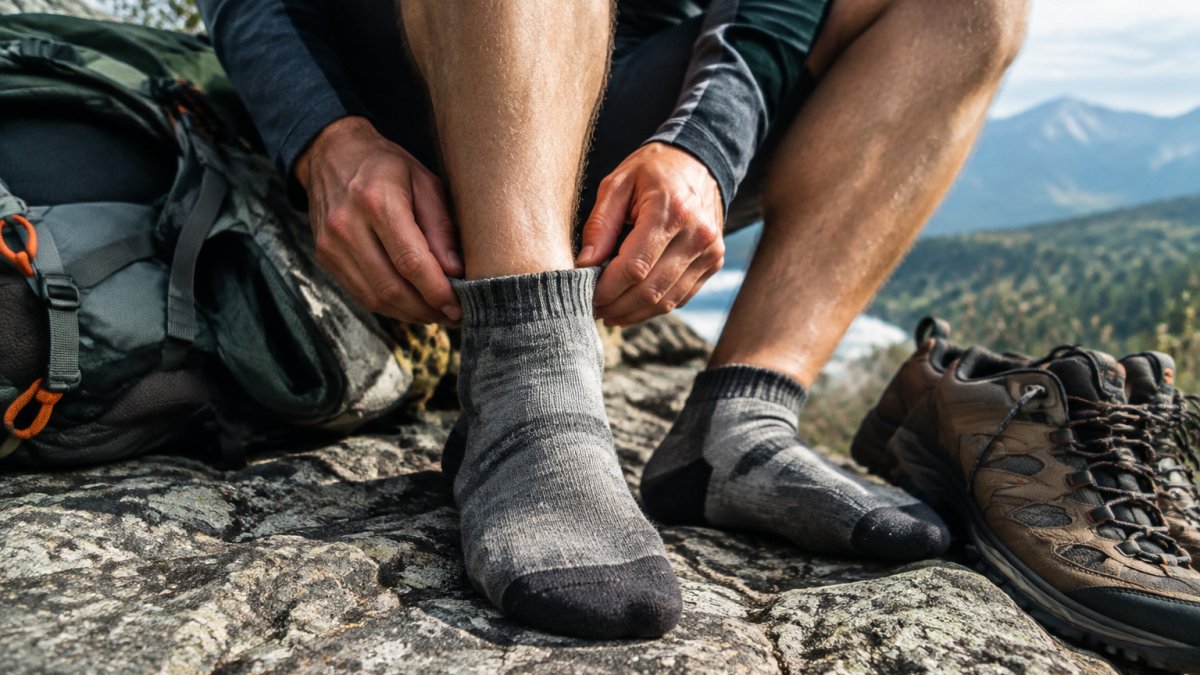
Hiking socks are the one piece of gear that touches your skin for every mile you cover. When they wear out, the problems show up in your feet long before they show up in your gear closet. Knowing the signs that it is time to replace hiking socks can save you from sore heels, slipping, and avoidable blisters on the trail.
Socks wear unevenly. The heel, toe, and ball of the foot take the most friction, so those areas often fail first.
Once you know what worn socks look like, you can decide when it is time for a new pair.
Signs Hiking Socks Are Worn Out: A Checklist by Sock Area
Check your socks the same way you would check your boots: area by area. Start at the toe, then work up to the cuff. Most worn socks show damage in one or two specific zones.
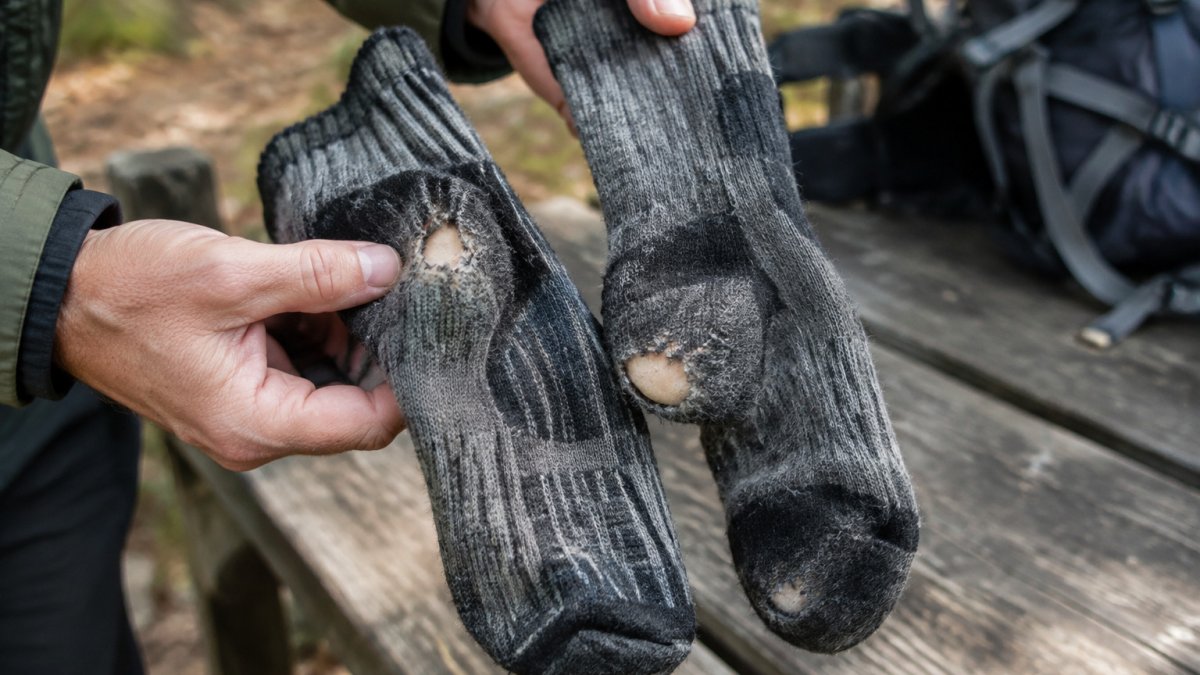
- Toe: thin spots, holes, or fabric that feels rough and papery
- Heel: a shiny or flattened patch where the fibers have compressed
- Sole: visible thinning or a bald spot under the ball of the foot
- Cuff: a loose, wavy edge that no longer holds its shape
- Overall: pilling, faded color, or a sour smell that will not wash out
Watch out: a small hole that you ignore often grows fast. One small tear at the heel can turn into a blister point on your next long day.
Thinning Fabric and Holes at the Heel and Toe
Hold the sock up to a light. If you can see light through the heel or toe, the sock has lost the density it needs. Thin fabric no longer protects the skin from friction, and holes let grit reach your foot directly.
Stretched Cuff and Loss of Elasticity
A cuff that slides down your ankle is a sign of lost elasticity. Once the elastic recovers poorly, the sock will bunch and twist with every step. That shifting is a common cause of hot spots, so a stretched cuff is worth taking seriously.
Use this quick reference to check each area of your socks and decide whether a pair has reached the end of its useful life.
| Sock area | What to look for | Action |
|---|---|---|
| Toe | Thin spots, holes, papery fabric | Retire from long hikes |
| Heel | Shiny or flattened compressed patch | Retire from long hikes |
| Sole | Visible thinning or bald spot under ball of foot | Replace soon |
| Cuff | Loose, wavy edge that no longer holds shape | Replace soon |
| Overall | Pilling, faded color, persistent sour smell | Monitor and track use |
Hiking Sock Cushioning Worn Out: How to Tell
You may notice that your feet feel more tired at the end of a day than they used to, or that pressure points under the ball of the foot and heel feel sharper on descents.
Cushioning fails in two ways. The first is compression: the loft collapses and stays flat. The second is migration: the cushioning shifts or bunches into a ridge, which creates a pressure line instead of spreading load. Both show up in the same high-load zones, the heel, the ball of the foot, and sometimes the toe box.
The thumb-press test: press your thumb firmly into the sole of the sock and hold for a few seconds. Fresh cushioning springs back quickly and feels evenly thick. Flattened cushioning stays dented, feels hard or papery, or shows a visible thin patch when you hold the sock up to a light. Repeat at the heel, the ball, and the toe.
The fold-and-feel test: fold the sock so the sole meets itself and pinch through both layers. You should feel consistent loft. If one spot feels noticeably thinner than the surrounding fabric, that zone has compressed.
The in-shoe test: wear the sock with your hiking shoes and stand on a hard floor. Rock forward onto the ball of your foot and back onto your heel. A worn sock lets you feel more of the shoe's footbed through the fabric, especially at the heel. If the sock feels like a thin liner rather than a cushion, it has lost its job.
Compressed cushioning often appears in the same spots as wear. Look again at the heel and ball of the foot, since those areas take the most load. A sock with a bald spot under the ball is not protecting you on rocky descents, even if the cuff still feels snug.
Watch out: cushioning that has migrated into a ridge can create a pressure point that feels like a hot spot early in a hike, so check for lumps and folds as well as thin spots.
Slipping, Bunching and Pilling: Fit Problems or Fabric Failure?
Not every bunching problem means your socks are worn out. Slipping, bunching, and hot spots can also come from boot fit, lacing, or sock size. Troubleshoot both before you spend money.
Step 1: Isolate the sock. Put on a fresh pair of the same socks and lace your boots the way you normally do. Walk around the block or up and down stairs. If the slipping or bunching disappears, the old pair has likely lost elasticity or shape. For more on keeping socks in place, read Socks That Stay Up Hiking: A How-To Guide.
Step 2: Check sock size against the manufacturer's guide. A sock that is too big will bunch no matter how new it is. A sock that is too small can stretch thin at the heel and toe. Verify your size against the relevant manufacturer's sizing chart rather than guessing from shoe size alone.
Step 3: Check boot volume and lacing. A boot with too much volume lets the foot slide forward on descents, which bunches the sock at the toes. A boot laced too loosely at the ankle lets the heel lift, which wears the sock at the heel and creates friction.
Step 4: Distinguish pilling from failure. Pills are small balls of fiber that form on the outside of the fabric. Light pilling is normal surface wear and does not always mean the sock is done. Pilling combined with thin spots, a stretched cuff, or a shiny compressed heel is fabric failure, and that pair should be retired from long hikes.
- Fit problem: the sock slides even right after washing, the size seems off, or a fresh pair behaves the same way
- Fabric failure: the sock slips more over time and shows pilling, thin spots, or a loose cuff
- Quick check: if the problem started only after many wash cycles, fabric wear is the likely cause
Repair versus replace: a single loose thread or a small, clean hole at a seam can sometimes be darned or stitched, and the sock may still work for around-town wear or short walks.
Watch out: if a fresh pair of the correct size still slips in the same boot, the fix is boot fit or lacing, not another sock purchase.
Can Worn-Out Socks Cause Blisters and Hot Spots?
Yes, worn socks can contribute to blisters and hot spots. Friction is a common cause.
Blisters are a common complaint on long hikes. Worn socks do not guarantee blisters, and fresh socks do not prevent them either. Still, fabric that has lost its structure gives friction more room to work.
A common mistake is to keep wearing a sock that already shows a bald spot because it still feels fine at the start of the hike. Friction problems often show up mid-hike, when you are farthest from the car.
How Long Do Hiking Socks Last Based on Use and Care?
There is no single number for how long hiking socks last. Lifespan depends on how often you hike, how rough your trails are, and how you wash and dry your socks. Frequent hikers on rocky trails will go through socks faster than someone who hikes a few times a season on smooth paths.
A practical approach is to track your use. Write down how many hikes each pair has done and what kind of terrain they saw. When a pair starts showing the signs in the checklist above, retire it or move it to a lower-stress use like around-town wear.
Care changes the timeline too. Harsh machine drying and high heat break down fibers faster. Gentle washing and air drying help socks hold their shape for longer.
How to Care for Hiking Socks So They Last Longer
Good care is the easiest way to extend the life of your socks. Follow these steps after every hike:
- Shake out dirt and sand right after the hike.
- Rinse the socks in cool water to loosen grit.
- Wash them gently, inside out, with mild detergent.
- Avoid fabric softener, which can coat fibers and reduce breathability.
- Air dry flat or on a rack, away from direct heat.
Keep a rotation of at least two or three pairs. For detailed home washing and drying steps, see How to Care for and Wash Hiking Socks at Home. Giving each pair time to dry fully means you are not forced to wear damp socks, and each pair sees less wear overall.
Watch out: tumble drying on high heat can shrink the fabric and weaken elastic. Air drying takes longer, but it protects the sock.
Choosing Your Next Pair of Hiking Socks at RockResist
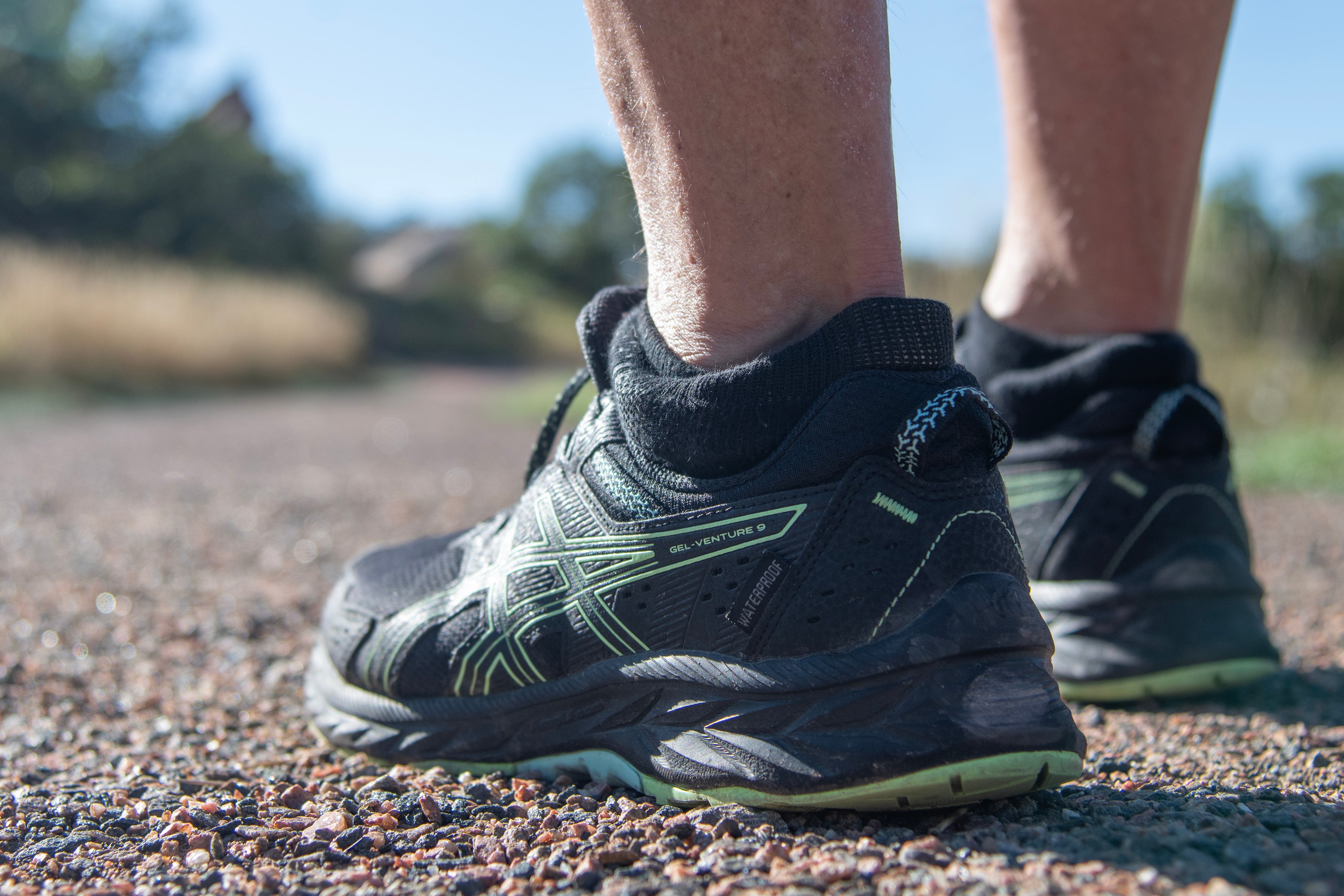
Once you have checked your current socks against the signs above, it is time to choose a replacement. We designed the RockResist GEN1 Trail Running Socks, Debris-Blocking Low Cut for riders who want a low-profile sock with grit protection at the collar. It is made from 75% cotton and 25% terylene, and the integrated barrier helps keep dirt, sand, and small trail debris out of your shoe. You can wear the barrier up for loose terrain or tuck it in for a lower-profile look.
If you go through socks quickly, the RockResist Trail Running Sock Bundle, 3 Pairs gives you a fresh pair ready while the others dry. Hand-wash and line-dry both options to get the most life out of them.

View RockResist Socks & Sizing at https://rockresist.com/products/rockresist-socks for current pricing, sizing, and offers.
Frequently Asked Questions
How long do hiking socks usually last?
Hiking socks typically last anywhere from a few months to about a year of regular use, depending on how often you hike, the terrain, and how you care for them. Frequent hikers on rocky or gritty trails will wear socks out faster than occasional walkers on smooth paths. Rotating two or three pairs gives each pair time to dry fully between wears, which slows fiber breakdown. A practical rule is to inspect your socks after every few outings and retire a pair once thinning, holes, or cushioning loss appear in the heel, toe, or ball of the foot.
How can you tell if hiking socks have lost their cushioning?
Press your thumb into the sole and the heel of the sock. If the fabric feels flat and compressed, and the loops or padding no longer spring back, the cushioning has worn down. Many hikers also notice the sock sliding inside the boot or feeling thin under the foot after a few miles. Compare the current pair with a new one if you have it: a noticeable difference in thickness and softness is a clear sign the socks need replacing.
Can worn-out hiking socks cause blisters?
Yes. Worn socks can contribute to blisters because thinning fabric and lost cushioning let the foot rub against the boot, and bunching or slipping creates friction in the same spots. Holes and stretched cuffs can also let debris and moisture reach the skin. Blisters have many causes, including boot fit and moisture, so a worn sock is one factor to check rather than the only one. If blisters return on the same spots despite a good boot fit, inspect the socks in those areas.
