
Last Updated: October 31, 2026
Quick Summary
Foot glide is worth it for runners who have recurring hot spots on their heels, arches, or the tops of their toes and want a low-mess option they can reapply mid-run. It is not worth buying if your blisters come from a shoe that doesn't fit, a sock that bunches, or debris grinding at the collar.
- Foot glide creates a low-friction layer between your foot, sock, and shoe to interrupt blister formation.
- Sticks are the most popular form for feet because they are less messy and easy to reapply mid-race.
- Most runners get a few hours of protection from a single application, less in heat, rain, or heavy sweat.
- Apply a thin coat to the sides of touching toes and the webbing, then let it set before putting socks on.
- Carry both a stick and a bandage on long runs, because prevention and treatment are different jobs.
Table of Contents
- What Foot Glide Actually Does for Runners
- How to Prevent Blisters Trail Running: The Full Prevention Stack
- Foot Glide vs. Petroleum Jelly, Blister Bandages, and Anti-Chafe Sticks
- How Long Does Body Glide Last for Runners?
- Preventing Blisters Between Toes: Application That Actually Works
- Where Foot Glide Falls Short
- Build Your Blister Kit Before Your Next Long Run
- Frequently Asked Questions
What Foot Glide Actually Does for Runners
Foot glide is a lubricant you apply to your skin that creates a low-friction layer between your foot, your sock, and your shoe.
Runners often treat glide as a magic bullet. It isn't. It reduces friction on the spots you coat, and that's it.
The product comes as a stick, a balm, or a cream.
So what does it actually do well?
- Cuts rubbing on heels, arches, and the tops of toes
- Reduces the sting of an existing hot spot during a run
- Adds a slick layer that helps socks move with the foot instead of against it
- Works fast, with no break-in period
What it can't do is stop debris from grinding into your skin or soak up sweat.
How to Prevent Blisters Trail Running: The Full Prevention Stack
Trail blister prevention is a system, not a single product.
Start with fit. A shoe that's too tight squeezes the toes together.
Next, socks. Proper fabric choice extends beyond your feet, as the same principles of moisture wicking gear apply to the layers you choose for your torso to ensure consistent comfort across your entire run.
Then moisture. Sweat is the enemy. Use a foot powder if your feet run wet.
Finally, friction. This is where glide earns its place. Apply it to known hot spots before you lace up.
If you want the full step-by-step version, our guide on how to prevent blisters on long trail runs walks through the whole routine.
Foot Glide vs. Petroleum Jelly, Blister Bandages, and Anti-Chafe Sticks
Each option solves a slightly different problem. None of them wins everywhere.
| Option | How It Works | Best For | Main Drawback | Mess Level | Typical Reapplication Window |
|---|---|---|---|---|---|
| Foot glide stick | Low-friction barrier on skin | Hot spots, heels, toes | Wears off on very long or wet runs | Low | A few hours; sooner in heat or wet conditions |
| Petroleum jelly | Heavy occlusive barrier | Short runs, cheap backup | Greasy, stains socks, traps heat | High | Long-lasting but migrates; needs heavy reapplication on long efforts |
| Blister bandages | Physical cushion over a spot | Covering an existing blister | Can roll or peel when wet | None | Until it peels; replace when edges lift |
| Anti-chafe stick | Wax-based friction block | Between toes, high-friction zones | Can feel tacky; needs reapplication | Low | Comparable to glide; varies by wax blend |
Petroleum jelly is the old-school answer. It's cheap and it works for short efforts. But it's messy, it soaks into socks, and it doesn't breathe.
Blister bandages are treatment, not prevention. They cushion a spot that's already angry.
Anti-chafe sticks sit between glide and petroleum jelly. They're waxier and last a bit longer in some conditions, but they can feel tacky and need touch-ups.
The Direct Verdict: Is Foot Glide Worth It for Runners?
For most runners, yes, with conditions. Foot glide is worth buying if you have recurring hot spots on your heels, arches, or the tops of your toes, and you want a low-mess option you can reapply mid-run. It is not worth buying if your blisters come from a shoe that doesn't fit, a sock that bunches, or debris grinding at the collar. In those cases, glide masks the symptom for a few miles and then fails.
A simple decision rule:
- Buy it if you've identified a specific friction hotspot and your shoe and sock setup is otherwise sound.
- Skip it if you haven't yet fixed fit, sock choice, or debris entry, solve those first, then add glide.
- Carry both a stick and a bandage if you run long distances, because prevention and treatment are different jobs.
Cost Per Use and Lower-Cost Alternatives
Glide sticks are usually reusable across many applications, while single-use bandages cost more per use and serve a treatment-only role. Petroleum jelly is generally the lowest-cost option per application, though it can add cleanup and sock-replacement costs. For current pricing and sizing, View RockResist Socks & Sizing.
Blister Bandages vs. Anti-Chafe Stick: When Each One Wins
Use a blister bandage when the damage is already done.
Use an anti-chafe stick when you're protecting a zone before it fails. Toes that rub together, the ball of the foot, the heel collar.
If you're weighing bandages against balms and want more options, our breakdown of moleskin alternatives for blisters covers the trade-offs in detail.
The honest take: carry both. A stick for prevention, a bandage for the spot that still goes bad.
How Long Does Body Glide Last for Runners?
Most runners get a few hours of protection from a single application, but the real answer depends on conditions. Sweat, rain, heat, and how much you apply all shorten the clock. A light coat on a cool morning may carry you through a half marathon.
Distance matters too. A short training run rarely needs a reapplication. A long ultra almost always does. Plan to reapply at aid stations or stash a small stick in your vest.
Condition-by-Condition Durability Guide
Rather than guess, match your application to the run you're doing. The matrix below reflects common patterns runners report; your own sweat rate and shoe fit will shift the numbers.
| Run Condition | Application Amount | Expected Protection Window | Reapplication Needed? |
|---|---|---|---|
| Cool, dry, short run (under 10K) | Thin coat on hotspots | Full run | No |
| Cool, dry, half marathon | Moderate coat | Most of the run | Usually no |
| Hot and humid, any distance | Moderate to heavy coat | Shorter than cool conditions | Likely yes on long efforts |
| Rain or wet trails | Heavy coat | Significantly shortened | Yes, plan for it |
| Ultra distance, any weather | Heavy coat plus carry stick | Varies; assume wear-off | Yes, at aid stations |
| High sweat rate runner | Heavy coat | Shorter than average | Yes, more frequent |
How Application Amount Changes the Clock
Watch out: applying too little is a common mistake. A thin smear feels nice and does almost nothing. Lay down a proper coat on your hot spots, then rub it in so it isn't greasy. Too much product, though, can reduce sock grip and let the foot slide inside the shoe, which creates a different kind of friction. The goal is a visible but absorbed layer, not a wet film.
Signs It's Wearing Off
- You feel a warm, rubbing sensation on a spot you coated
- Your sock starts sticking to your skin
- A familiar hot spot starts to sting
When any of those show up, stop and reapply. Pushing through a hot spot is how a blister gets made.
Sweat, Socks, and Why the Clock Isn't Only About the Product
Glide wears off faster when moisture sits against the skin. A sock that holds sweat keeps the product in contact with wet skin, which dilutes and displaces it. A sock that manages moisture and keeps grit out of the collar gives the glide a cleaner surface to work with. For sizing, check the RockResist socks and sizing guide against the manufacturer's chart before you buy.
Preventing Blisters Between Toes: Application That Actually Works
Toe blisters are the worst kind. They hide, they throb, and they're hard to treat once they form. The fix is application technique, not more product.
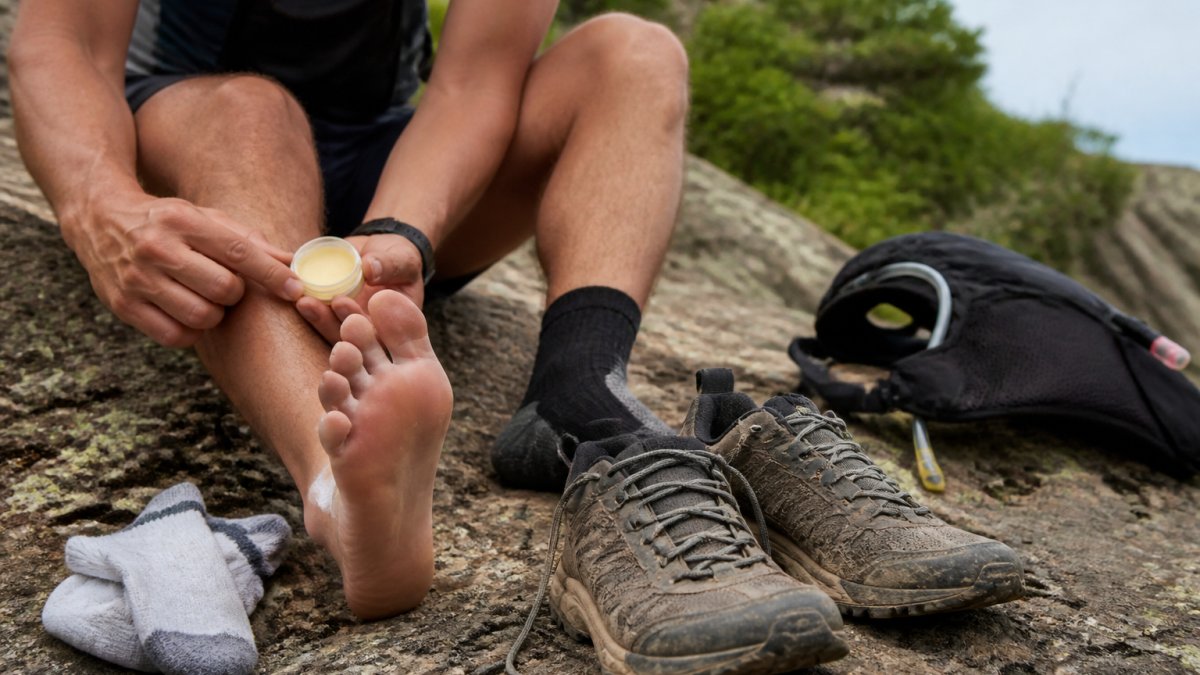
Here's the routine we recommend:
- Start with clean, dry feet. Glide won't stick to wet skin.
- Dry between each toe with a small towel or a dry sock.
- Apply a thin coat to the sides of each toe that touch its neighbor.
- Don't forget the webbing between the toes, where skin folds and rubs.
- Coat the tops of toes that press against the shoe.
- Let it set for a minute before you put socks on.
- Pull on a sock that fits snug with no bunched fabric between toes.
The sock does half the work here. If your sock wrinkles between your toes, no amount of glide will save you. Sizing matters too, so check the RockResist socks and sizing guide against the manufacturer's chart before you buy.
Where Foot Glide Falls Short
Glide is not a fix for a bad setup. If your blisters keep coming back in the same spot, the product isn't the problem. Something else is.
Common culprits:
- Shoe too small or too narrow. Toes get squeezed and rub. No lube fixes that.
- Sock that holds moisture. Wet skin blisters faster. Switch to a sock that manages sweat.
- Debris in the shoe. Sand and grit grind against skin. A debris barrier at the collar helps.
- Lacing too loose. The foot slides forward on descents and hammers the toes.
Glide also can't fix a blister that's already formed. Once the skin is damaged, you need a bandage and rest, not more lubricant.
For the parts glide can't cover, our guide on essential foot health strategies for trail running and hiking fills in the gaps.
Build Your Blister Kit Before Your Next Long Run
A good kit is small, light, and packed before you need it. Build it once and restock after every long effort.
What goes in:
- A glide stick or balm for hot spots
- Two blister bandages in mixed sizes
- A small roll of tape
- A dry pair of socks in a zip bag
- A tiny towel for drying feet
- Foot powder if your feet run wet
Pack it in a waterproof pouch and keep it in your vest or drop bag. Check it before every race. A kit you can't find at mile 40 is a kit you don't have.
Frequently Asked Questions
Does foot glide prevent blisters when running?
Foot glide reduces friction between your skin, socks, and shoes, which is one of the main causes of blisters. It works best as part of a full system: a correct shoe fit, moisture-managing socks, and a barrier that keeps debris out at the collar. A barrier sock like RockResist GEN1 helps block dirt, sand, and small trail debris from entering the shoe at the collar. No single product guarantees blister-free feet, so test your setup on shorter runs before race day.
Is foot glide better than petroleum jelly for preventing foot blisters?
Both reduce friction, but they behave differently. Petroleum jelly is cheap and thick, yet it can feel greasy, stain socks, and collect grit on dusty trails. Anti-chafe sticks dry down to a less tacky film and are easier to reapply mid-run. For long trail efforts where sand and dirt are present, pair either one with socks that seal off the shoe collar so debris does not turn into an abrasive paste against your skin.
Can foot glide make running socks feel slippery?
Yes, if you apply too much. A heavy layer lets your foot slide inside the shoe, which can cause the shoe to feel loose and shift the friction rather than remove it. Use a thin, even coat on hot spots and between toes, let it set for a minute, then put your socks on. Socks with a secure fit and a debris-blocking cuff, such as RockResist GEN1, can help keep debris out of the shoe collar.
How can runners prevent blisters in wet or sweaty conditions?
Wet skin softens and tears more easily, so moisture control matters as much as lubrication. Choose socks that manage sweat, wring them out and change them on very long efforts, and reapply anti-chafe product at aid stations. Keep grit out of the shoe with a barrier cuff, since wet sand against skin is a fast route to a hot spot. Check sizing against the manufacturer's guide so the sock does not bunch, and build up distance gradually to find where your feet rub.
Blisters end more long runs than fitness does. Build the prevention stack, learn where glide helps and where it doesn't, and pack a kit you trust. RockResist builds socks with a debris-shielding cuff and a snug, low-cut fit to keep grit out and friction down on rugged terrain. View the full lineup at Shop RockResist Trail Socks and give your feet one less thing to fight.
