
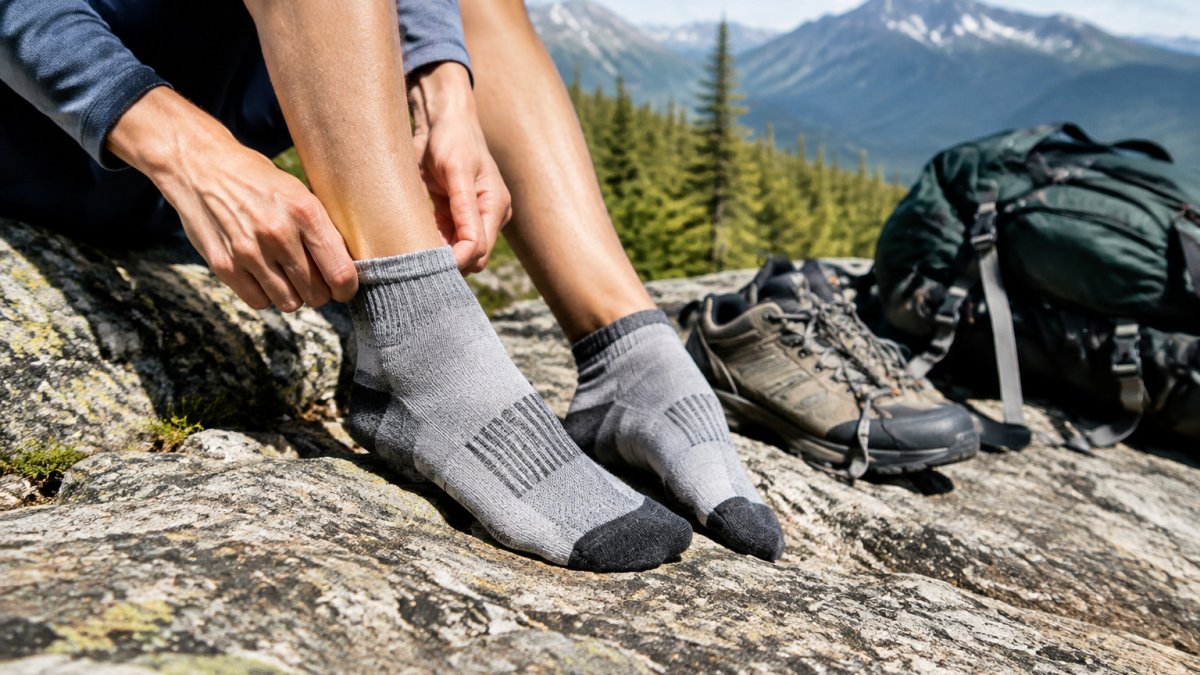
Last Updated: November 21, 2026
Quick Summary
The best sock thickness for long-distance walking is usually midweight, because it adds cushioning under the heel and ball of the foot without crowding the shoe. Thin socks suit warm weather and roomy shoes, while thick socks suit cold weather and heavy loads. Test your sock thickness in the shoes you will wear, checking toe room, heel hold and pressure points.
- Test sock thickness in your actual walking shoes, checking toe room, heel hold and pressure points.
- Thicker socks reduce space inside the shoe, so a sock that is too thick can cause tight spots.
- Fast hikers on maintained trails often do well with thin or lightweight socks.
- Backpackers with heavy loads over long distances often benefit from midweight or thick socks.
- Test a new sock in three stages: a one-hour walk, a half-day walk, then back-to-back days.
Table of Contents
- Why Sock Thickness Matters on Long-Distance Walks
- Defining Thin, Midweight and Thick Socks
- How Sock Thickness Affects Shoe Fit and Volume
- Choosing Hiking Sock Weight for Your Walking Profile
- Materials for Warm Weather: Best Sock Fabric in Summer
- Materials for Cold Weather: Best Sock Fabric in Winter
- Testing a New Sock Thickness Before a Long Walk
- Your Next Step: Matching Socks to Your Shoes and Route
- Frequently Asked Questions
Why Sock Thickness Matters on Long-Distance Walks
Sock thickness has a direct effect on comfort, friction and fit over a long day. On a walk of 10 miles or more, a sock that is too thin can let the foot slide and rub, while one that is too thick can crowd the toes and change how your shoe fits. The question of thickness matters as much as the fabric itself.
Most long-distance problems come from mismatch rather than poor gear. A thick sock in a snug boot can cause pressure points, and a thin sock in a roomy shoe can let the foot move enough to create hot spots. Choosing the right sock weight for your shoes and your route reduces both problems.
The goal of this guide is to help you decide which sock thickness suits your walking profile, your footwear and the conditions you expect to face. For a broader overview of how to choose hiking socks to match your walking style, read How To Choose Hiking Socks Guide.
Defining Thin, Midweight and Thick Socks
Sock thickness is usually described in three broad categories: thin, midweight and thick. Thin socks have minimal cushioning and sit close to the skin, which suits warm weather and roomy footwear. Midweight socks add targeted cushioning under the heel and ball of the foot while keeping the sock light enough for most trail shoes. Thick socks provide the most cushioning and insulation but take up more space inside the shoe.
Cushioning and thickness are related but not the same. A sock can feel thick without offering much impact protection, and a moderately thick sock can have dense cushioning in high-pressure zones. When comparing options, check where the padding sits, not only how the sock feels in your hand.
Thickness also changes how a sock performs when it gets wet.
How Sock Thickness Affects Shoe Fit and Volume
Your shoe is a fixed volume. Every added layer of sock material reduces the space available for your foot, and that space is not distributed evenly. A thicker sock eats room at the heel, across the instep, and above the toes at different rates depending on where its cushioning sits.
Most fit advice stops at "try it on." A more reliable approach is to test thickness in the actual walking shoes you will wear, using three checkpoints.
Toe room. With the sock on and the shoe laced as you would on the trail, stand and press your thumb across the top of the toe box.
Heel hold. Walk a few dozen steps and feel whether your heel lifts. A slight lift is normal; a heel that slides up and down with each step means the sock is too thin for the shoe's volume or the shoe is too loose.
Pressure points. Lace the shoe and stand for a minute, then walk. Run a finger along the top of the instep and around the collar. Any spot that feels tight before you start walking will feel tighter after a few miles, because feet swell and cushioning compresses.
A useful sequence is to test your current sock first, then the next thickness up, then the next thickness down, in the same shoe and on the same short route. Note which combination gives the best balance of toe room, heel hold, and even pressure.
Feet also swell during long walks, often by a noticeable amount over several hours. Test your sock and shoe combination late in the day, when your feet are at their largest, rather than first thing in the morning. A combination that feels perfect at 7 a.m. can feel tight by mid-afternoon.
Watch out: a thick sock can make a slightly oversized shoe feel correct in the store and then feel sloppy once the cushioning packs down, so judge heel hold after at least ten minutes of walking, not on the first few steps.
If you walk in trail shoes where grit at the collar is a concern, the RockResist GEN1 low-cut sock adds a barrier at the shoe opening that can be worn up on loose terrain or tucked in for a lower profile. Test it with the same three checkpoints so the barrier does not change how the shoe fits around your ankle. View RockResist Socks & Sizing for current sizing guidance.
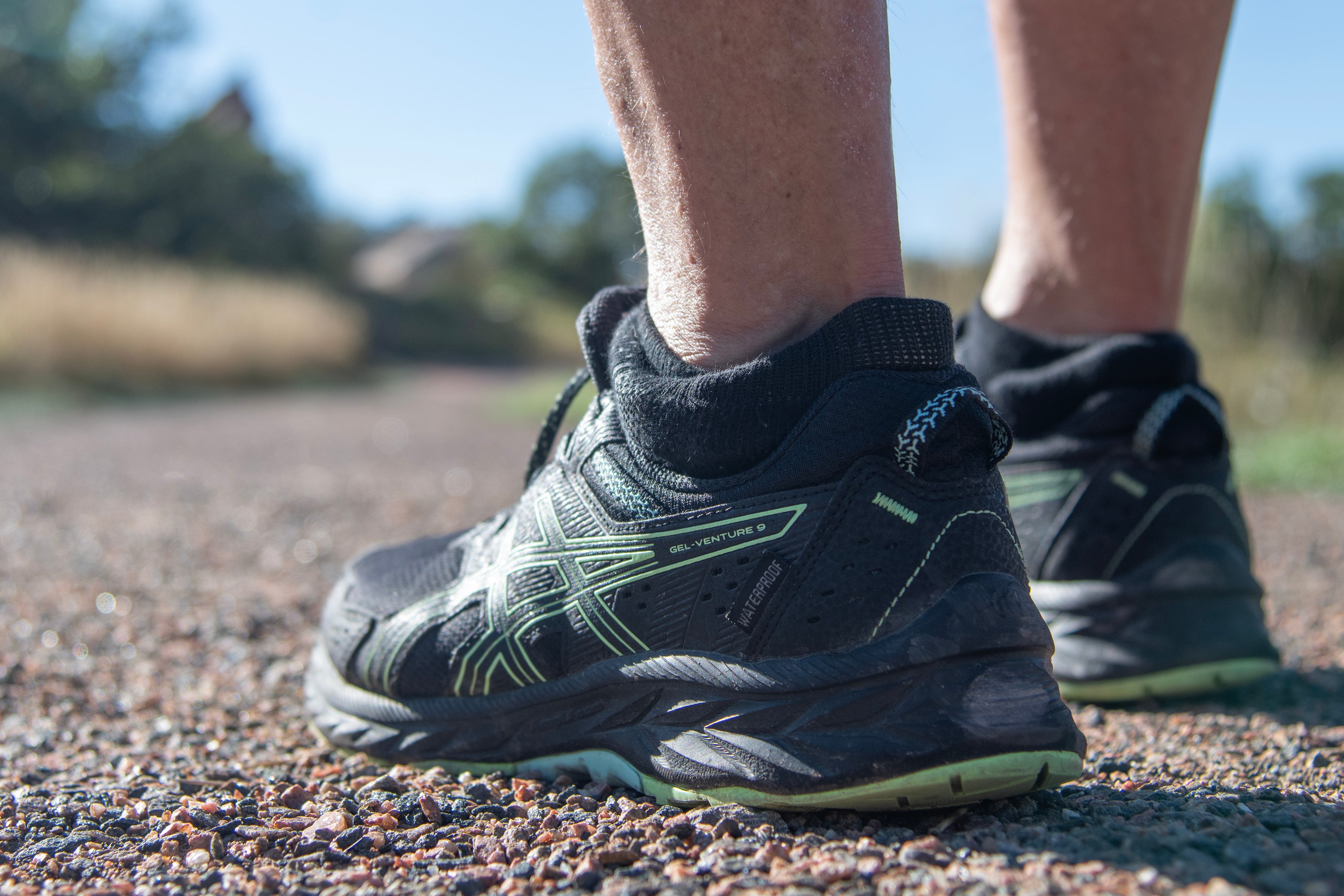
Choosing Hiking Sock Weight for Your Walking Profile
No single thickness suits every walker. Match your choice to how you walk and where you walk.
- Fast, light hikers on well-maintained trails: Thin or lightweight socks usually give enough protection and keep the foot cool.
- Day hikers covering rough or uneven ground: Midweight socks with targeted cushioning balance protection and breathability.
- Backpackers carrying heavy loads over long distances: Midweight or thick socks help absorb impact and reduce fatigue.
- Walkers with sensitive feet or a history of blisters: Choose a sock that fits snugly without bunching, and test it on a shorter walk before a long trip.
A practical rule: if you already get blisters in a particular shoe, changing sock thickness may help more than buying a new shoe.
Materials for Warm Weather: Best Sock Fabric in Summer
In warm weather, the sock fabric matters as much as its thickness. Look for materials that breathe and manage moisture rather than trap heat. To weigh the two main options side by side, see Merino Wool Vs Synthetic Socks For Hiking.
Thinner summer socks keep heat from building up around the foot. Pair them with well-ventilated footwear, and change socks during long hikes if you sweat heavily. A dry sock is less likely to cause friction than a damp one.
RockResist GEN1 low-cut trail socks are made from 75% cotton and 25% terylene. The integrated barrier can be worn up on loose terrain or tucked in for a lower-profile look.
Materials for Cold Weather: Best Sock Fabric in Winter
Cold-weather walking calls for insulation, but more warmth is not always better. Thick socks that trap sweat can leave feet cold once they are damp. Layering a thinner liner under a warmer outer sock often works well, and the right fiber blend can help keep moisture away from the skin.
Check that your shoes or boots still have room for the combined thickness. Winter footwear often runs roomy to accommodate insulation, but adding thick socks to a boot already sized for a thin sock can cause pressure and reduce circulation.
Testing a New Sock Thickness Before a Long Walk
Never make your first real test of a new sock a long, demanding walk. A staged test lets you separate problems that come from the sock from problems that come from the shoe, the lacing, or the route. The goal is to find the failure point on a short walk, not in the middle of a long one.
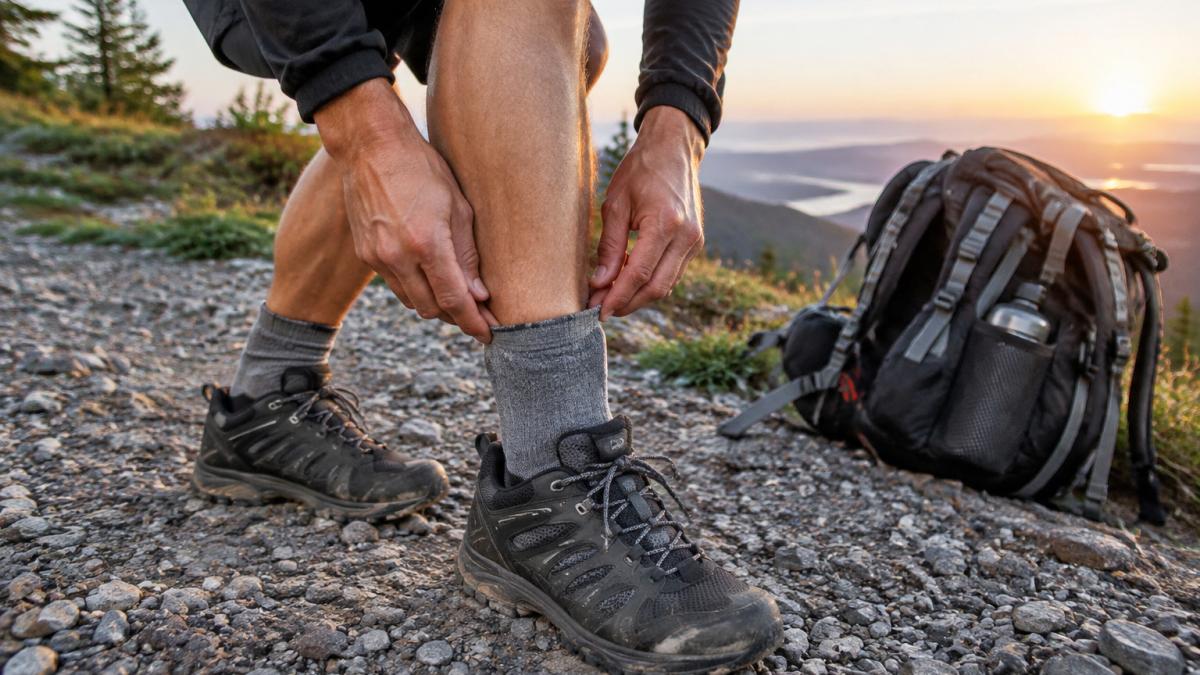
A practical protocol runs in three stages, each longer than the last, all in the shoes and socks you plan to use. To see which sock options are recommended for long-distance hiking before you commit, compare Best Socks For Long Distance Hiking.
Stage 1: The one-hour local walk. Wear the new sock and shoe combination on a route similar to your planned terrain, pavement if you will walk pavement, trail if you will walk trail. Lace the shoes the way you will on the long walk.
Stage 2: The half-day walk. If Stage 1 is clean, repeat on a walk of roughly three to four hours, ideally including a descent and a stretch of the surface you expect most. This is where swelling begins to matter. Recheck the same four signs at the end, and also notice whether the sock has bunched anywhere. Bunching under the arch or at the heel is a fit problem that will worsen over distance.
Stage 3: The back-to-back test. Walk a moderate distance on two consecutive days in the same combination. The second day is the real test, because the sock has been worn, washed or dried, and your feet are already slightly stressed. If the combination is still comfortable on day two, it is a reasonable candidate for a long walk.
Pay attention to these signs during each stage:
- Hot spots or rubbing, especially at the heel and toes
- Toes pressing against the front of the shoe on descents
- Heel slipping or lifting with each step
- Feet feeling cold or damp after prolonged walking
- Sock bunched under the arch or at the heel
If you notice any of these, adjust one variable at a time, sock thickness, lacing, or shoe, and repeat the stage. Changing two variables at once makes it impossible to know which one caused the problem.
For trail use where debris at the collar is a concern, the RockResist GEN1 low-cut sock's integrated barrier can be worn up on loose terrain or tucked in for a lower profile. Shop RockResist Trail Socks to compare options and confirm sizing.
Your Next Step: Matching Socks to Your Shoes and Route
The right sock thickness depends on three things working together: your footwear, your route and your walking style. Start by measuring the fit of your current shoes with your preferred socks, then decide whether a thinner or thicker option would improve comfort on the terrain you cover most.
If you want to try RockResist, the GEN1 low-cut sock suits trail running, hiking and outdoor training where debris at the shoe collar is a concern. View RockResist Socks & Sizing for current sizing guidance and offers. If you want to try a few weights across different shoes and routes, the Shop RockResist Trail Socks three-pair bundle gives you more options to test.
Choose your sock thickness with the same care you give your shoes, and your feet will thank you on the long miles.
Frequently Asked Questions
Are thicker or thinner socks better for walking?
Neither is better across the board. Thinner socks keep shoe volume low and suit warm weather or snug footwear, while midweight and thicker socks add cushioning and fill extra space in roomier boots. For long-distance walking, the right choice depends on how your shoes fit with the sock on, not on sock weight alone. Try your intended pair on with the socks you plan to wear, and walk for at least 20 minutes to check for pressure points, heel slip and toe room before committing to a long route.
How thick should hiking socks be?
Most hikers do well with midweight socks, but the right thickness depends on your boots, climate and walking distance. If your boots fit snugly with thin socks, a midweight pair usually adds comfort without crowding your toes. Thicker socks suit cold conditions or roomy footwear. Measure your sock thickness in millimeters when comparing products, and check whether the shoe still has comfortable toe room and heel hold with the sock you plan to use.
Do thick socks make walking shoes fit tighter?
They can. Thicker socks take up volume inside the shoe, which may cause pressure across the top of the foot or a tight feeling at the toes. This effect is more noticeable with rigid boots than with flexible trail shoes. If a shoe feels tight with a thicker sock, try a midweight option or a half size up, and test the fit on a slope or downhill walk where your toes are most likely to press forward.
Are thin socks better for preventing blisters?
Thin socks do not prevent blisters on their own. Blisters usually come from friction, moisture and shoe fit rather than sock thickness alone. Thin socks can reduce bulk and fit more closely, but a sock that is too thin may let the foot move inside the shoe and rub. Choose a thickness that keeps your foot stable, manage moisture by changing socks on long days, and break in new footwear before a long walk.
